Physical Address
304 North Cardinal St.
Dorchester Center, MA 02124
Physical Address
304 North Cardinal St.
Dorchester Center, MA 02124

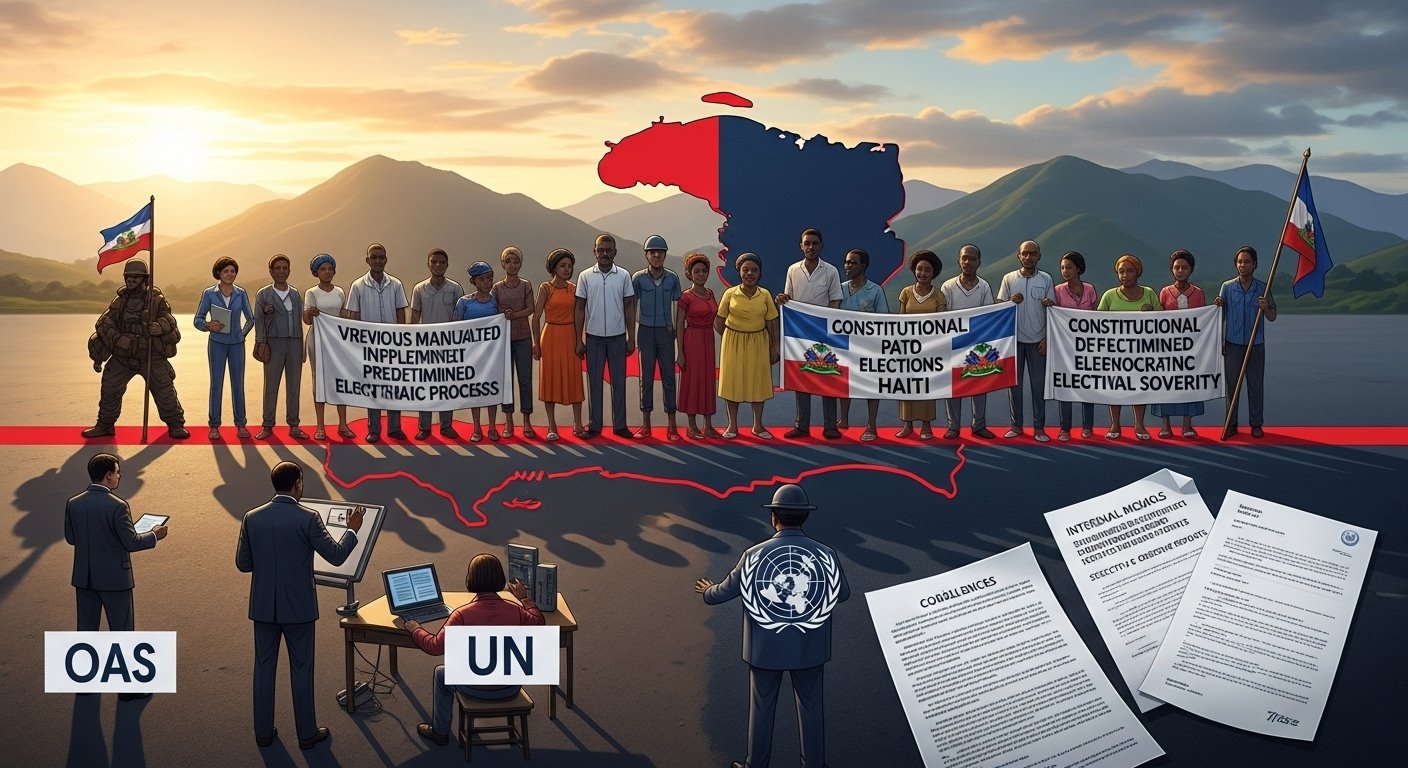
Discover why Haitians must take a stand against the OAS and UN's attempts to manipulate their elections.
The integrity of Haiti’s electoral process is under threat from external interference. The involvement of organizations like the Organization of American States (OAS) and the United Nations (UN) in Haiti’s elections has raised concerns about the country’s electoral sovereignty.
Their participation has been perceived as an attempt to influence the outcome of elections, undermining the democratic rights of the Haitian people. It is crucial for Haitians to be aware of these issues and to stand firm against any form of external manipulation that could compromise their right to choose their leaders.
Electoral sovereignty is a critical issue for Haiti, reflecting the country’s broader struggle for self-determination and independence. The ability to conduct free and fair elections without external influence is fundamental to Haiti’s democratic development.
The right to self-determination is a cornerstone of international law, enshrined in various human rights declarations and covenants. For Haiti, this means having the autonomy to decide its political, economic, and social paths without foreign interference. Haitian self-determination is crucial for the country’s development and democratic consolidation.
As noted by a prominent Haitian leader,
“The future of Haiti is in the hands of its people, not foreign powers.”
This sentiment underscores the importance of self-determination in Haiti’s electoral processes.
Haiti’s history is marked by significant foreign interference, from the early 20th-century U.S. occupation to more recent international interventions. These interventions have often had profound impacts on Haiti’s political landscape, including its electoral processes. The legacy of foreign interference continues to influence Haiti’s struggle for electoral sovereignty.
Understanding the roles of the OAS and UN in Haiti requires a closer look at their mandates and how their activities have impacted the country’s democratic processes. The presence of these international organizations in Haiti’s electoral landscape has been significant, with their involvement sparking both support and criticism.
The OAS has played a crucial role in Haiti’s electoral processes, initially focusing on promoting democracy and stability. Over time, its mandate has evolved to include electoral observation and technical assistance. The OAS has provided support to Haiti’s electoral institutions, helping to strengthen their capacity to manage elections.
The evolution of the OAS’s activities in Haiti reflects the changing needs of the country’s democratic processes. From providing electoral observation to offering technical assistance, the OAS has adapted its role to address the challenges faced by Haiti’s electoral institutions.
| OAS Activities | Impact on Haiti’s Democracy |
|---|---|
| Electoral Observation | Enhanced transparency and credibility of elections |
| Technical Assistance | Strengthened capacity of electoral institutions |
The UN has also played a significant role in Haiti, primarily through its peacekeeping missions. These missions have contributed to maintaining stability, which is essential for democratic processes to function effectively. The UN has also been involved in electoral oversight, providing support to ensure the integrity of Haiti’s elections.
The UN’s peacekeeping missions in Haiti have helped to create a secure environment, allowing for the conduct of elections. The UN’s electoral oversight mechanisms have included the provision of technical assistance and observation, aimed at enhancing the credibility of Haiti’s electoral processes.
Haiti’s electoral history has been marred by instances of manipulation, often influenced by external forces. Understanding these patterns is crucial for grasping the complexities of Haiti’s democratic struggles.
The Organization of American States (OAS) and the United Nations (UN) have played significant roles in Haiti’s electoral processes, sometimes leading to controversy. Two notable examples are the 2010-2011 presidential election and the 2015-2016 electoral crisis.
The 2010-2011 presidential election was marred by allegations of fraud and manipulation, with the OAS and UN being criticized for their handling of the process. The controversy surrounding this election highlighted the challenges of ensuring democratic legitimacy in Haiti.
The 2015-2016 electoral cycle faced significant challenges, including delays and disputes over the electoral process. The OAS and UN were again involved, with their actions being scrutinized by various stakeholders. The crisis underscored the need for more transparent and inclusive electoral processes.
The repeated instances of electoral manipulation have had lasting impacts on Haiti’s democratic institutions. These impacts include eroded public trust and weakened institutional capacity. The reliance on external actors for electoral oversight has contributed to these challenges.
To strengthen its democracy, Haiti must address these issues by promoting more transparent and internally driven electoral processes. This involves not only reforming electoral institutions but also fostering a culture of democratic participation among its citizens.
As Haitians demand electoral sovereignty, the role of the OAS and UN has become a focal point of contention. The interference of these international organizations in Haiti’s electoral processes has significant implications for the country’s democratic legitimacy and national sovereignty.
The involvement of external actors like the OAS and UN in Haiti’s elections poses a substantial threat to democratic legitimacy in Haiti. When foreign entities influence electoral outcomes, the legitimacy of elected representatives is questioned, undermining the democratic process.
This external interference can lead to a disconnect between the government and the governed, as citizens may view their leaders as being beholden to foreign interests rather than the will of the people.

| Impact | Description |
|---|---|
| Legitimacy Crisis | Eroding trust in elected officials due to foreign influence |
| Democratic Backsliding | Undermining the democratic process and institutions |
The OAS and UN’s electoral manipulation in Haiti not only threatens democratic legitimacy but also undermines national sovereignty. By influencing electoral outcomes, these organizations compromise Haiti’s ability to self-govern, making it challenging for the country to chart its own course.
This erosion of sovereignty has long-term implications for Haiti’s development, as decisions are made with consideration for external actors’ interests rather than the needs and aspirations of the Haitian people.
To preserve national sovereignty and ensure democratic legitimacy, Haitians must resist the manipulation of their electoral processes by external actors. This resistance is crucial for building a government that truly represents the will of the people.
External electoral control in Haiti has far-reaching economic consequences, including aid dependency and stunted economic growth. The influence of foreign entities on Haiti’s electoral processes not only undermines its sovereignty but also has profound implications for its economic development.
Haiti’s reliance on foreign aid has created a complex web of dependency that affects its political and economic landscape. The influx of aid often comes with conditions that can lead to political compliance, where Haitian politicians may prioritize the interests of foreign donors over the needs of their constituents. This can result in policies that do not address the root causes of Haiti’s economic challenges, such as lack of infrastructure and limited economic opportunities.
Aid dependency also fosters a culture of dependency rather than self-sufficiency, hindering the development of robust local economies. Moreover, the focus on securing aid can divert attention and resources away from critical domestic issues, further entrenching economic challenges.
The long-term economic development of Haiti is significantly challenged by foreign influence in its electoral processes. External control can lead to the implementation of economic policies that are not tailored to Haiti’s specific needs or context. For instance, foreign-driven economic reforms may prioritize macroeconomic stability over social welfare or local economic development, exacerbating inequality and poverty.
Furthermore, foreign influence can deter local investment and innovation by creating an uncertain economic environment. Investors may be wary of engaging with a country where political stability is perceived to be maintained through external intervention rather than genuine democratic processes.
In conclusion, the economic consequences of external electoral control in Haiti are multifaceted, involving aid dependency and significant long-term economic development challenges. Addressing these issues requires a nuanced approach that prioritizes Haitian sovereignty and self-determination in both political and economic spheres.
Foreign electoral interference in Haiti has profound social and cultural implications that affect the nation’s democratic fabric. The presence of external actors in the electoral process can lead to a decline in public trust in Haiti, as citizens begin to question the legitimacy and fairness of the elections.
The erosion of public trust is a significant consequence of foreign electoral interference. When external entities are perceived to influence election outcomes, Haitian citizens may lose faith in their democratic institutions. This distrust can manifest in various ways, including decreased voter turnout and increased skepticism towards government initiatives.
In response to foreign interference, cultural resistance movements in Haiti have emerged to preserve national identity and promote self-determination. These movements emphasize the importance of cultural heritage and sovereignty, encouraging Haitians to reclaim their political autonomy.
Such movements not only foster a sense of national pride but also serve as a counterbalance to external influences. By promoting Haitian-led initiatives and cultural preservation, these movements help to maintain the integrity of Haiti’s democratic processes.
The quest for electoral independence in Haiti is driven by grassroots movements that are determined to shape the country’s democratic future. These movements are crucial in organizing efforts to ensure free and fair elections.
Grassroots movements in Haiti are at the forefront of the fight for electoral independence. They are organizing at the community level to educate citizens about their rights and the electoral process.
Youth-led initiatives are playing a significant role in promoting electoral transparency. These initiatives use innovative approaches, such as social media campaigns, to engage young people and encourage their participation in the electoral process.
Building coalitions among diverse stakeholders is essential for the success of grassroots movements. By uniting various groups, including community organizations, political parties, and civil society, Haitians can present a united front against electoral manipulation.
International solidarity and advocacy campaigns are vital in supporting Haitian electoral sovereignty. Global partners can amplify the voices of Haitian grassroots movements and put pressure on international organizations to respect Haiti’s sovereignty.
By combining local efforts with international support, Haiti can move towards genuine electoral independence. This multifaceted approach ensures that the country’s democratic processes are not only free from external interference but also reflective of the will of the Haitian people.
In the pursuit of electoral sovereignty, Haiti must explore alternative models for electoral support that prioritize national leadership and transparency. This approach is crucial for ensuring that electoral processes are genuinely representative of the Haitian people’s will.
Haitian-led electoral reforms are essential for building trust in the electoral process. By taking ownership of their electoral institutions, Haitians can ensure that reforms are tailored to their specific needs and context. Institution building should focus on creating robust and independent electoral bodies that can withstand external pressures.
As Jean-Max Bellerive, a former Prime Minister of Haiti, once emphasized, “The key to successful electoral reform lies in the hands of the Haitian people and their leaders.” Haitian-led initiatives can foster a sense of national ownership and legitimacy in the electoral process.
Transparent international observation is a more effective and less intrusive alternative to interventionist approaches. International observers can provide valuable insights and support without undermining national sovereignty. Transparent observation involves clear reporting and engagement with local stakeholders, ensuring that the electoral process is both free and fair.
“The role of international observers should be to support, not to intervene, in the electoral process.”
The use of transparent international observation can help to build confidence in the electoral process while respecting Haiti’s sovereignty. This approach stands in contrast to interventionist methods, which often result in dependency and undermine national self-determination.
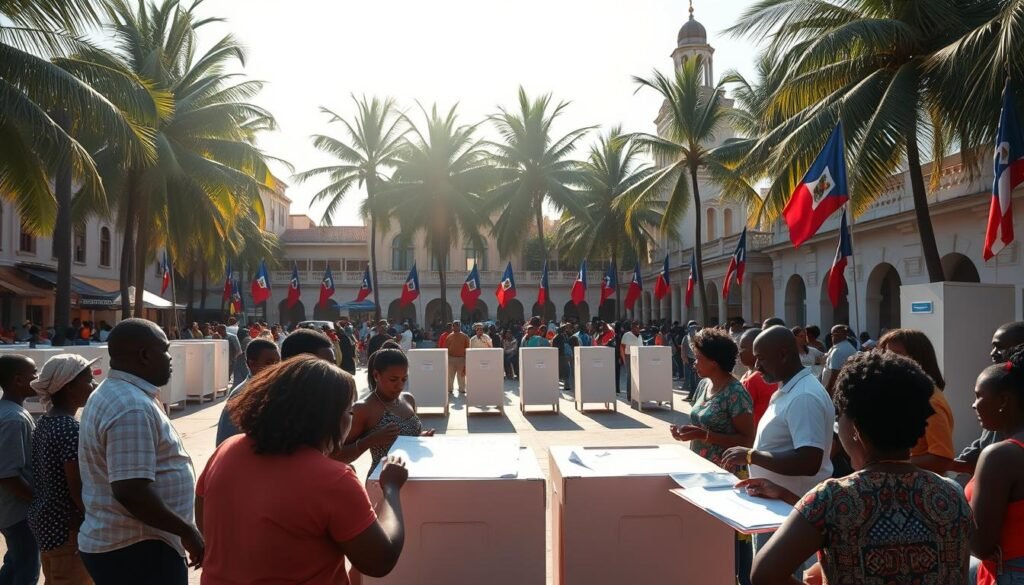
Haitians must continue to stand against OAS and UN electoral manipulation to achieve true electoral sovereignty. The historical context of foreign interference in Haiti’s electoral processes has shown that external control can undermine national sovereignty and self-governance.
A path forward for Haitian electoral sovereignty involves implementing Haitian-led electoral reforms and institution building. This approach can help restore public trust in democratic processes and promote a sovereign and democratic Haiti.
By supporting grassroots movements and civil society organizing, Haitians can work together to achieve electoral independence. International solidarity and advocacy campaigns can also play a crucial role in promoting transparent international observation and reducing interventionist approaches.
The future of Haitian democracy depends on the ability of Haitians to determine their own electoral processes. By working together, Haitians can create a more sovereign and democratic future, ensuring a path forward that prioritizes national sovereignty and self-determination.
The main issue is that their involvement often leads to electoral manipulation, undermining Haiti’s sovereignty and democratic legitimacy.
Historical foreign interference has significantly impacted Haiti’s ability to determine its own electoral processes, often leading to outcomes that do not reflect the will of the Haitian people.
Aid dependency can lead to political compliance, where Haitian leaders may prioritize the interests of foreign donors over the needs and desires of their own citizens.
Haitians can achieve electoral independence through grassroots movements, civil society organizing, and international solidarity and advocacy campaigns that support Haitian-led electoral reforms.
Transparent international observation involves monitoring elections to ensure they are free and fair, while interventionist approaches involve more direct interference in the electoral process, often undermining national sovereignty.
Preserving national identity is crucial for maintaining cultural heritage and ensuring that democratic processes reflect the values and aspirations of the Haitian people.
Youth-led initiatives can play a significant role in promoting electoral transparency by mobilizing young people to demand fair and transparent electoral processes.
International solidarity can support Haitian electoral sovereignty by raising awareness about the issues surrounding OAS and UN involvement in Haitian elections and advocating for Haitian-led electoral reforms.