Physical Address
304 North Cardinal St.
Dorchester Center, MA 02124
Physical Address
304 North Cardinal St.
Dorchester Center, MA 02124


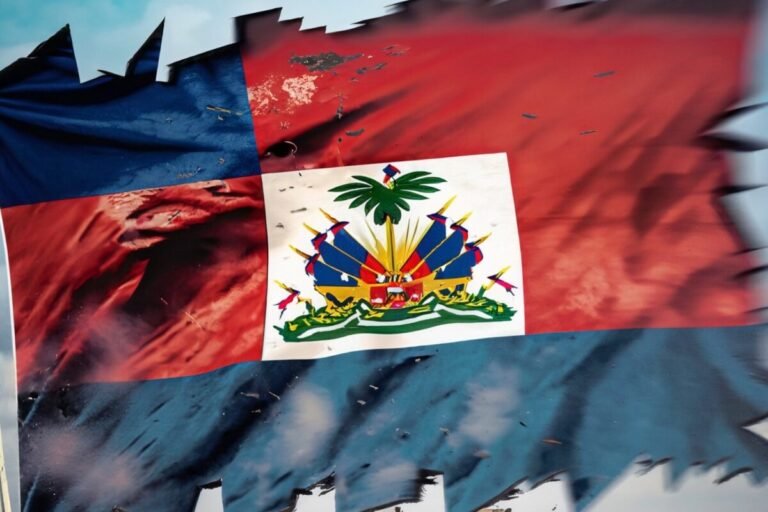
Explore the global hypocrisy on rights and democracy as Haiti serves as the proof when principles collapse.
The struggle for democracy and human rights is a universal theme, yet the international community often turns a blind eye to certain nations. Haiti’s tumultuous history is a stark reminder of the global hypocrisy that pervades discussions on rights and democracy.
The island nation’s fight for independence and self-governance has been met with inconsistent international support, highlighting a discrepancy in global policies. Understanding Haiti’s past is crucial to grasping the implications of current global interventions.
As the first black republic, Haiti’s history is a tale of revolutionary victory and subsequent hardship. The Haitian Revolution, which culminated in independence in 1804, was a groundbreaking event that had far-reaching implications globally.
The Haitian Revolution was not only a national liberation movement but also a momentous occasion in world history, marking the first time a slave revolt led to the establishment of a free nation.
The revolution’s success sent shockwaves throughout the world, challenging the status quo of slavery and colonialism. It inspired movements for independence and equality across the globe.
However, Haiti’s victory came at a high cost. France demanded reparations for the loss of its “property,” including slaves and territory, which severely strained Haiti’s economy.
| Year | Event | Impact |
|---|---|---|
| 1804 | Haitian Independence | Establishment of the first black republic |
| 1915-1934 | U.S. Occupation | Significant foreign intervention in Haitian affairs |
| 1957-1986 | Duvalier Regime | Authoritarian rule was supported during the Cold War |
Haiti’s independence was a beacon of hope for enslaved people worldwide, symbolizing the possibility of freedom and self-determination.
Foreign intervention has played a significant role in shaping Haiti’s history, from the U.S. occupation to the dynamics of the Cold War era under the Duvalier regime.
The U.S. occupation had a lasting impact on Haiti, influencing its political and economic structures.
During the Cold War, Haiti was caught in the geopolitical crossfire, with the Duvalier regime being supported by external powers despite its authoritarian nature.
Global powers have consistently used the language of democracy and human rights when engaging with Haiti, but their actions have not always aligned with these principles. The promises made during significant events, such as post-Duvalier transitions and post-earthquake reconstruction efforts, have been particularly noteworthy.
The international community’s commitment to Haiti has been vocalized through various declarations and agreements. Two critical periods where these promises were made were during the post-Duvalier transition and post-earthquake reconstruction.
Following the departure of Jean-Claude Duvalier in 1986, the international community pledged support for Haiti’s transition to democracy. This included financial aid, technical assistance, and diplomatic backing for democratic institutions.
After the devastating earthquake in 2010, global powers convened to pledge significant financial support for Haiti’s reconstruction. The promises made during the international donors’ conference were substantial, with many countries committing to long-term aid and development programs.
The rhetoric used by global powers often emphasizes liberation and support for Haiti’s democratic aspirations. This language is typically framed within the context of promoting human rights, good governance, and economic development.
Key elements of this rhetoric include:
A critical examination reveals a disconnect between the public commitments made by global powers and their private agendas. Declassified documents have shed light on policy contradictions that suggest ulterior motives behind the rhetoric.
Declassified documents have shown that, despite public declarations of support for democracy and human rights, the actual policies implemented by global powers sometimes served different interests. For instance, historical records have revealed that certain interventions were motivated by strategic or economic interests rather than a genuine commitment to Haitian democracy.
The gap between the rhetoric and reality on the ground in Haiti underscores the need for greater accountability and transparency in international engagements.
The case of Haiti serves as a critical lens through which the global hypocrisy on rights and democracy is exposed. Despite its historical significance as the first black republic and a symbol of revolutionary triumph, Haiti’s experience highlights the disconnect between global democratic principles and their application.
The international community’s response to Haiti’s crises often reveals a stark contrast between professed values and actual practices. A glaring example is the 2004 coup that ousted President Jean-Bertrand Aristide.
The international response to the 2004 coup was muted, with some countries even supporting the removal of Aristide. This reaction starkly contrasts with the vocal condemnations seen in other instances of democratic backsliding around the world.
The global community’s application of democratic principles is often selective, favouring regions of strategic interest. Haiti’s treatment in the international arena is frequently compared unfavorably to that of other nations with similar or lesser human rights records.
A comparison of international responses to democratic crises in different regions reveals a pattern of selective engagement. Countries with significant geopolitical or economic importance receive more stringent scrutiny and support.
| Country | International Response to Democratic Crisis | Economic Aid Received |
|---|---|---|
| Haiti | Mild Condemnation | $100M |
| Strategically Important Country | Strong Condemnation/Sanctions | $1B |
Economic interests often override human rights concerns in international dealings with Haiti. Trade policies, in particular, have a significant impact on Haitian development.
Haiti faces challenges due to unfavourable trade policies that hinder its economic development. The global community’s trade practices often prioritize economic interests over the developmental needs of countries like Haiti.
In conclusion, Haiti’s case starkly illustrates the global hypocrisy on rights and democracy. The gap between words and actions, the selective application of democratic principles, and the prioritization of economic interests over human rights all contribute to this troubling narrative.
The cycle of failed interventions in Haiti is a complex issue that warrants closer examination. Despite numerous efforts to stabilize and develop the country, international interventions have often resulted in unintended consequences.
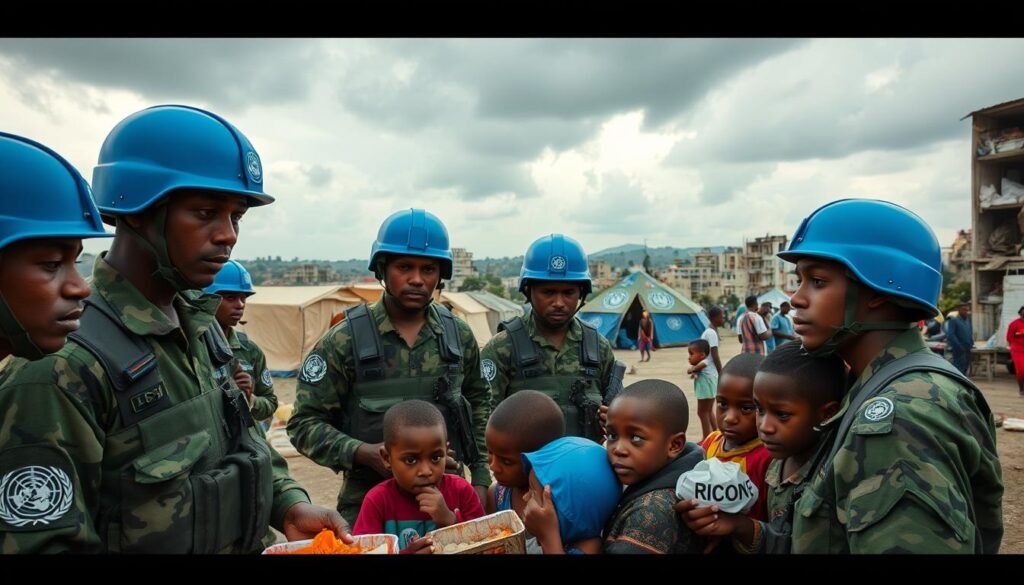
The United Nations has deployed several peacekeeping missions to Haiti, with the most notable being the MINUSTAH (2004-2017). While intended to stabilize the country, MINUSTAH’s legacy is controversial.
MINUSTAH was criticized for its handling of various issues, including its role in the cholera outbreak. The mission’s presence was initially seen as a stabilizing force, but it ultimately led to significant problems.
The cholera outbreak introduced by UN peacekeepers in 2010 resulted in a devastating epidemic that killed thousands of Haitians. The UN’s response to the crisis was widely criticized.
The UN’s acknowledgment of responsibility for the cholera outbreak was a significant step, but the delivery of justice and compensation to affected Haitians has been slow.
Following the 2010 earthquake, Haiti received billions of dollars in aid. However, the distribution of these funds was marred by controversy.
The Red Cross was criticized for its handling of housing reconstruction, with many homes remaining unbuilt despite significant funding.
The Clinton Foundation, led by former U.S. President Bill Clinton, was involved in several initiatives in Haiti post-earthquake. However, some of these efforts were marred by controversy, including allegations of improper land deals.
| Organization | Initiative | Outcome |
|---|---|---|
| UN | MINUSTAH Peacekeeping Mission | Controversy, cholera outbreak |
| Red Cross | Housing Reconstruction | Scandal, unbuilt homes |
| Clinton Foundation | Various Initiatives | Controversy, land deal allegations |
The cycle of failed interventions in Haiti highlights the need for a more thoughtful and accountable approach to international aid and peacekeeping.
U.S. policy towards Haiti reflects a broader paradox in American foreign policy, where democratic ideals are weighed against strategic interests. This dichotomy is evident in the varying approaches adopted by different U.S. administrations towards Haiti.
The U.S. approach to Haiti has evolved significantly across different administrations. From Clinton to Biden, each presidency has brought its own priorities and strategies.
Domestic politics in the U.S. significantly influence its foreign policy towards Haiti. Issues such as Haitian migration have a direct impact on U.S. border policies.
Haitian migration to the U.S. has been a contentious issue, affecting bilateral relations. U.S. border policies often reflect domestic political considerations rather than purely foreign policy objectives.
The inconsistency between U.S. strategic interests and its stated values is a recurring theme in its policy towards Haiti.
| Administration | Stated Values | Strategic Interests |
|---|---|---|
| Clinton | Democracy Promotion | Economic Support |
| Bush | Democratization | Security Cooperation |
| Obama | Humanitarian Aid | Reconstruction Efforts |
| Trump | Border Security | Immigration Control |
| Biden | Democratic Governance | Humanitarian Assistance |
This table illustrates the varying priorities across different U.S. administrations, highlighting the tension between stated values and strategic interests in U.S. policy towards Haiti.
International organizations have played a significant role in Haiti, but their actions have often been at odds with their stated mandates. The United Nations, International Monetary Fund (IMF), and World Bank have been involved in various capacities, aiming to promote stability and development. However, their interventions have frequently resulted in unintended consequences.
The UN’s involvement in Haiti has been marked by controversy, particularly regarding its peacekeeping missions. While intended to maintain peace and security, these missions have sometimes led to significant problems.
One of the most serious issues has been the sexual abuse scandals involving UN peacekeepers. The lack of accountability for these abuses has severely damaged the UN’s credibility in Haiti.
The IMF and World Bank have provided financial assistance to Haiti, but their policies have often been criticized for exacerbating the country’s economic challenges.
The structural adjustment programs imposed by these institutions have led to a range of negative outcomes, including increased poverty and inequality.
The proliferation of NGOs in Haiti has created what is often referred to as the “Republic of NGOs.” While these organizations have provided essential services, they have also contributed to a culture of dependency.
The dominance of NGOs in Haiti’s social service sector has undermined the government’s ability to provide for its citizens, perpetuating a cycle of dependency on foreign aid.
In conclusion, the role of international organizations in Haiti is complex and multifaceted. While they have provided necessary assistance, their actions have often been counterproductive, highlighting the need for a more nuanced and sustainable approach to international engagement.
Haiti’s ongoing struggles with food insecurity, healthcare collapse, and gang violence underscore the human cost of global hypocrisy. The country’s humanitarian crises are multifaceted, with various factors contributing to its dire situation.
The humanitarian situation in Haiti is dire, with widespread food insecurity and malnutrition being significant concerns.
Haiti faces severe food insecurity, with a significant portion of its population relying on external aid for sustenance. Malnutrition is rampant, particularly among children, exacerbating health issues.
The healthcare system in Haiti is on the brink of collapse, lacking adequate infrastructure, personnel, and resources. This has been further strained by natural disasters and political instability.
The political landscape in Haiti is marked by instability, with gang violence being a significant contributor to the country’s insecurity.
The assassination of President Jovenel Moïse in 2021 plunged Haiti into further chaos, with a power vacuum that has been exploited by gang violence, leading to increased insecurity and humanitarian needs.
The plight of the Haitian diaspora is another critical aspect, with many Haitians forced to migrate due to the country’s instability.
Haitian migrants face significant challenges at the U.S. border, often being met with harsh treatment and deportation, highlighting the need for more compassionate and comprehensive migration policies.
Reimagining the relationship between Haiti and the global community requires a fundamental shift in how we approach development and cooperation. This involves moving beyond traditional models of aid and intervention towards a more equitable and sustainable partnership.
Successful development approaches from other contexts can provide valuable lessons for Haiti. For instance, the microfinance models implemented in Bangladesh and rural development programs in Rwanda offer insights into effective strategies for empowering local communities.
Examining international examples can help identify best practices. A notable example is the Grameen Bank’s microfinance initiative in Bangladesh, which has been replicated in various forms around the world.Centring Haitian Voices and Leadership
It’s essential to prioritize Haitian perspectives and involve local leaders in decision-making processes. Grassroots movements and civil society organizations are crucial in this regard, as they represent the interests and needs of the Haitian people.
Organizations such as the Haitian Platform for an Alternative Development (PAPDA) have been instrumental in advocating for the rights of Haitian citizens and promoting sustainable development.
To ensure responsible engagement, it’s necessary to establish robust accountability mechanisms. This can be achieved through legal and diplomatic reforms that promote transparency and accountability.
Reforms such as the establishment of an independent oversight body could help monitor the activities of international actors in Haiti and address any misconduct.
| Mechanism | Description | Benefit |
|---|---|---|
| Independent Oversight Body | Monitors international actors’ activities | Promotes accountability and transparency |
| Local Leadership Empowerment | Enhances Haitian decision-making capacity | Fosters sustainable development |
| Community-Based Initiatives | Supports grassroots development projects | Encourages community engagement |

Haiti’s story is a stark reminder of the global community’s failure to uphold the principles of democracy and human rights. The historical context of Haiti’s struggle for independence and self-determination has been marred by foreign intervention and a persistent gap between the rhetoric of global powers and their actions.
The lessons from Haiti highlight the need for genuine international engagement that prioritizes Haitian voices and leadership. The cycle of failed interventions, from UN peacekeeping missions to post-earthquake aid, underscores the importance of accountability mechanisms for international actors.
To move forward, it is crucial to reimagine international engagement with Haiti, focusing on models for genuine partnership and centring Haitian perspectives. By doing so, the global community can begin to address the systemic issues that have perpetuated global hypocrisy on rights and democracy, ultimately fostering a more equitable and just world order.
The path forward requires a commitment to transparency, accountability, and the empowerment of local communities. By learning from Haiti’s experiences, the international community can work towards a more democratic and inclusive future.
Haiti’s 1804 revolution was the first successful slave revolt in modern history, leading to the establishment of Haiti as the first black republic. This event had far-reaching implications for the world, challenging the institution of slavery and influencing liberation movements globally.
Global powers, including France, the United States, and international organizations like the UN and IMF, have contributed to Haiti’s struggles through various means, such as imposing reparations, intervening militarily, and implementing economic policies that have hindered Haiti’s development.
The U.S. occupation of Haiti from 1915 to 1934 had a profound impact on the country, shaping its political, economic, and social structures. The occupation led to the modernization of Haiti’s infrastructure but also suppressed Haitian autonomy and reinforced U.S. influence in the region.
The Duvalier regime, which lasted from 1957 to 1986, was marked by authoritarian rule, human rights abuses, and economic mismanagement. The regime’s policies and actions significantly hindered Haiti’s development, creating long-lasting social, economic, and political challenges.
The UN’s peacekeeping mission, MINUSTAH, is widely acknowledged to have introduced cholera to Haiti in 2010, resulting in a devastating outbreak that killed thousands and infected hundreds of thousands. The UN’s response and subsequent accountability efforts have been criticized, highlighting the need for greater responsibility in international interventions.
International aid and NGO activities have had a mixed impact on Haiti, with some efforts providing crucial humanitarian assistance and others perpetuating dependency and undermining local capacities. The phenomenon of the “Republic of NGOs” in Haiti highlights the complexities and challenges associated with external aid.
Haiti continues to face significant humanitarian challenges, including food insecurity, malnutrition, a collapsing healthcare system, and gang violence. These issues are exacerbated by political instability, poverty, and the legacy of past interventions.
Reimagining international engagement with Haiti involves centring Haitian voices and leadership, adopting models for genuine partnership, and ensuring accountability mechanisms for international actors. This includes supporting grassroots movements and civil society, and implementing legal and diplomatic reforms to promote more responsible and effective engagement.
Centring Haitian voices and leadership is crucial for ensuring that development approaches are contextually appropriate, effective, and sustainable. It involves empowering local communities and supporting Haitian-led initiatives, rather than imposing external solutions.
Haiti’s experiences offer valuable lessons on the importance of genuine partnership, the need for accountability in international interventions, and the dangers of global hypocrisy on rights and democracy. Understanding these lessons can inform more equitable and effective approaches to international engagement.