Physical Address
304 North Cardinal St.
Dorchester Center, MA 02124
Physical Address
304 North Cardinal St.
Dorchester Center, MA 02124

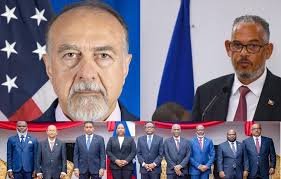
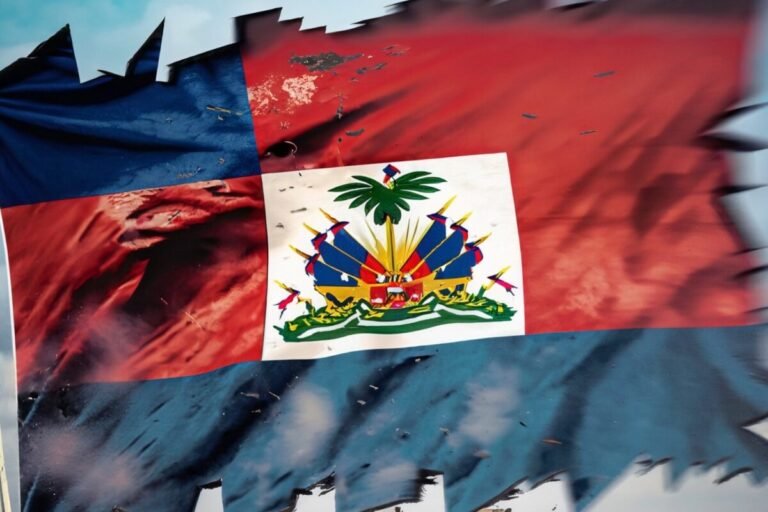
Explore the influence of foreign embassies on Haiti's decision-making in this in-depth article, "When Embassies Govern: Foreign Interference in Haiti's Decision-Making."
The Caribbean nation of Haiti has long been a focal point of international attention due to its complex political landscape. The influence of foreign entities, particularly through embassy interventions, plays a significant role in shaping Haiti’s decision-making processes.
This phenomenon raises critical questions about the sovereignty of Haiti and the extent to which external forces dictate its political trajectory. Understanding the dynamics of foreign interference is crucial for grasping the intricacies of Haiti’s political environment.
Since gaining independence, Haiti has been subject to various forms of foreign interference. This historical context is crucial in understanding the current state of foreign influence in Haiti’s decision-making processes.
Haiti gained independence in 1804 after a successful slave revolt, making it the first independent black nation in the world. However, this freedom came at a high cost. The newly independent nation was ostracized by the international community, particularly by slave-holding nations that feared the spread of slave revolts.
This isolation had a lasting impact on Haiti’s development, limiting its access to foreign investment, technology, and diplomatic recognition.
The United States occupied Haiti from 1915 to 1934, a period that significantly shaped Haiti’s political and economic structures. The occupation was justified as a means to stabilize the country and protect American business interests.
During this period, the U.S. controlled Haiti’s finances, infrastructure, and even its military. This period of occupation laid the groundwork for future foreign interference in Haiti’s internal affairs.
During the Cold War, Haiti’s geographical position made it a strategic location for the United States and other global powers. The U.S. provided significant economic and military aid to Haiti, often with conditions tied to anti-communist policies.
This period saw Haiti becoming increasingly dependent on foreign aid, which in turn influenced its domestic policies and political landscape.
The architecture of modern diplomatic control in Haiti involves multiple stakeholders and interests. This complex system has evolved, shaping the country’s political landscape in profound ways.
The Core Group is a formal mechanism through which foreign influence is exerted in Haiti. It comprises various international actors, including major donor countries and international organizations. The Core Group plays a significant role in coordinating foreign aid and policy interventions in Haiti.
Several key embassy players are actively involved in shaping Haiti’s political and economic trajectory. The U.S., France, and Canada are among the most influential, with their embassies working closely with the Haitian government on various initiatives. As noted by a former Haitian official, “The influence of these embassies is not limited to policy advice; they often play a crucial role in decision-making processes.”
“The Core Group’s influence extends beyond mere policy advice, often shaping the very fabric of Haiti’s governance.”
Regional powers, including the U.S., France, and Canada, have competing interests in Haiti. These interests sometimes align with Haiti’s national goals but can also create tensions. Understanding these dynamics is crucial to grasping the complexities of diplomatic control in Haiti.
As Haiti navigates its complex diplomatic landscape, understanding the architecture of modern diplomatic control is essential. The interplay between the Core Group, key embassy players, and regional powers will continue to shape Haiti’s future.
Foreign embassies play a crucial role in shaping Haiti’s policy formation. Their influence extends beyond public diplomacy, often involving direct intervention in the country’s decision-making processes. This complex dynamic has significant implications for Haiti’s governance and sovereignty.
Embassy influence on Haiti’s policy formation is multifaceted. It involves a range of activities, from providing financial and technical assistance to directly advising on policy decisions. These actions can significantly impact the direction of the Haitian government.
Financial and Technical Assistance: Embassies often provide aid that is conditional on specific policy changes or reforms. This assistance can be a powerful tool for influencing policy.
Direct Advising: Embassy officials frequently engage in direct dialogue with Haitian policymakers, offering guidance that can shape policy decisions.
The influence exerted by embassies can be both overt and covert. Public statements by embassy officials can have a significant impact, but it’s often the private pressure that shapes key decisions.
Ambassadors and embassy officials often play a crucial role in the selection of Haitian leaders. Their influence can be decisive in determining who comes to power and how they govern.
The selection process for key positions, such as the prime minister or cabinet members, can be heavily influenced by foreign embassies. This can lead to leaders who are more accountable to their foreign backers than to the Haitian people.
The economic dependency of Haiti on foreign aid and remittances has become a critical factor in its governance. This reliance on external financial support has significant implications for the country’s decision-making processes and overall sovereignty.

Foreign aid to Haiti often comes with conditions that can influence the country’s policy decisions. Donors may tie their aid to specific reforms or political changes, effectively giving them leverage over Haiti’s governance. This conditionality can limit the Haitian government’s ability to implement its own policies, as it must comply with the requirements set by its donors.
The International Monetary Fund (IMF) and the World Bank have played significant roles in shaping Haiti’s economic policies through Structural Adjustment Programs (SAPs). These programs, designed to stabilize and liberalize the economy, have often led to controversies regarding their impact on the country’s development and sovereignty. The conditions attached to IMF and World Bank loans have sometimes resulted in austerity measures that affect the most vulnerable populations.
Remittances from the Haitian diaspora are a crucial component of the country’s economy, often providing a vital source of income for many families. While remittances can help alleviate poverty, they also represent another form of economic influence. The reliance on remittances can affect economic stability and influence political decisions, as the flow of these funds can be affected by policies in host countries.
In conclusion, Haiti’s economic dependency on foreign aid, international financial institutions, and remittances creates a complex web of influences that impact its governance and sovereignty. Understanding these dynamics is crucial for addressing the challenges faced by Haiti.
The impact of foreign intervention on Haiti’s governance and stability is a complex issue that warrants closer examination. Throughout the country’s recent history, external forces have played a significant role in shaping Haiti’s political landscape.
The 2004 coup that ousted President Jean-Bertrand Aristide was a pivotal moment in Haiti’s modern history. Controversy surrounds the role of external powers in this event, with many questioning whether the U.S. and France facilitated Aristide’s removal. The aftermath of the coup saw a UN stabilization mission deployed to Haiti, which remained in the country for over a decade.
Following the devastating 2010 earthquake, the international community responded with a massive relief effort. However, this response also led to a significant increase in foreign control over Haiti’s governance. The Haitian government was largely sidelined as international actors took the lead in coordinating relief efforts.
The earthquake response highlighted the challenges of coordinating international aid and the potential for external interference in domestic affairs. The establishment of a reconstruction commission led by foreign actors further entrenched external influence in Haiti’s governance.
The assassination of President Jovenel Moïse in 2021 sent shockwaves through Haiti and prompted a strong reaction from the international community. The U.S., Canada, and other foreign governments condemned the assassination and called for stability. However, their responses also raised questions about the potential for foreign interference in Haiti’s political processes.
In conclusion, these case studies illustrate the complex and often contentious nature of foreign intervention in Haiti. Understanding these dynamics is crucial for developing effective strategies that support Haitian sovereignty and stability.
The role of foreign entities in shaping Haiti’s electoral outcomes cannot be overstated. Haiti’s electoral landscape has been a complex interplay of domestic aspirations and international influences.
Foreign embassies have been known to fund political parties and candidates in Haiti, significantly influencing the electoral process. This financial backing can make or break a candidate’s campaign, often leading to a dependence on foreign support.
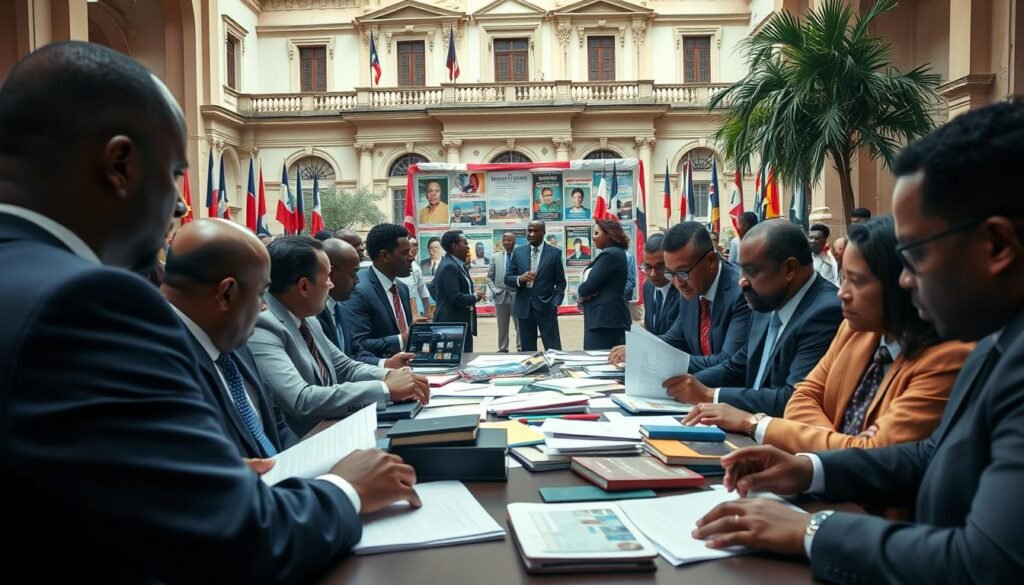
International election observers play a crucial role in Haiti’s electoral processes. While their presence is intended to ensure fairness and transparency, their influence can sometimes be perceived as undue interference in the electoral process.
Foreign powers have, on occasion, questioned the legitimacy of Haitian electoral results. This external skepticism can undermine the credibility of elected officials and the overall electoral process, potentially destabilizing the political landscape.
In conclusion, Haiti’s electoral politics are deeply intertwined with foreign influences, from funding to observation and the questioning of electoral results. Understanding these dynamics is crucial for grasping the complexities of Haitian politics.
The security landscape in Haiti has been significantly shaped by foreign interventions, particularly in the military and peacekeeping domains. This influence has been exerted through various channels, including the dismantling and rebuilding of Haiti’s military forces, as well as the presence of international peacekeeping missions.
Haiti’s military has undergone significant transformations due to foreign intervention. The disbandment of the Haitian army in 1995 and its subsequent reconstitution efforts have been influenced by international actors. The role of foreign powers in shaping Haiti’s military capabilities has been a subject of debate, with some arguing it is necessary for stability, while others see it as an infringement on sovereignty.
The United Nations has played a significant role in Haiti’s security sector through missions like MINUSTAH (United Nations Stabilization Mission in Haiti) and BINUH (United Nations Integrated Office in Haiti). These missions have had varying impacts on Haiti’s security landscape. As noted by a former Haitian official, “The presence of MINUSTAH was both a blessing and a curse; it brought stability but also introduced cultural and social challenges.”
“The UN’s role in Haiti is complex, involving both peacekeeping and development objectives,” said a UN spokesperson.
| Mission | Duration | Key Objectives |
|---|---|---|
| MINUSTAH | 2004-2017 | Stabilization, Security, Humanitarian Assistance |
| BINUH | 2019-Present | Peacebuilding, Human Rights, Institutional Strengthening |
The 2023 Multinational Security Support Mission represents a new iteration of foreign security involvement in Haiti. While framed as a response to gang violence, it raises questions about the long-term implications for Haiti’s sovereignty and security apparatus. The mission’s success will depend on its ability to balance security needs with respect for Haitian autonomy, as the complexity of security issues in Haiti requires a nuanced approach.
Haiti’s history is replete with examples of resistance and accommodation in response to foreign influence, shaping the nation’s path to self-determination. The complex dynamics between foreign powers and Haitian actors have led to a multifaceted landscape of collaboration and resistance.
Civil society in Haiti has been a significant force against foreign interference, advocating for sovereignty and self-determination. Various organizations and movements have emerged over the years, challenging foreign influence and promoting Haitian autonomy.
For instance, groups like the Plateforme des Organizations Haïtiennes de Développement have been vocal about the need for Haitians to take control of their development agenda, free from external dictates.
The Haitian political elite has employed various strategies in dealing with foreign influence, ranging from collaboration to resistance. Some political leaders have aligned themselves with foreign powers to further their political careers, while others have resisted external pressures to maintain their independence.
“The Haitian political class must navigate a complex web of international alliances and rivalries, all while trying to maintain the country’s sovereignty.”
Public discourse in Haiti frequently centers around the themes of sovereignty and self-determination, with many Haitians calling for greater control over their country’s affairs. This discourse is reflected in various media outlets, public forums, and social media platforms.
The interplay between Haitian resistance and accommodation is a nuanced and ongoing process, influenced by both internal dynamics and external pressures. As Haiti continues to navigate its complex relationship with foreign powers, the voices of its people remain crucial in shaping the country’s future.
Understanding the legal dimensions of foreign influence in Haiti is crucial for addressing the country’s sovereignty challenges. The legal frameworks that govern foreign interference and questions of sovereignty are complex and multifaceted.
International law emphasizes the principle of non-interference in the domestic affairs of sovereign states. The United Nations Charter Article 2(4) prohibits the use of force against the territorial integrity or political independence of any state. However, the interpretation and application of this principle can be challenging, especially in cases where humanitarian intervention is considered.
The concept of a “failed state” has been used to justify foreign intervention in various contexts. In Haiti’s case, this narrative has been employed to rationalize external involvement in governance and security matters. However, this label is controversial and can be seen as undermining Haitian sovereignty.
The concept of sovereignty is evolving, with new challenges and complexities arising in the 21st century. The impact of globalization, international law, and humanitarian concerns is redefining what sovereignty means for states like Haiti.
| Aspect | Traditional Sovereignty | Evolving Sovereignty |
|---|---|---|
| International Influence | Emphasis on state autonomy | Increasing international cooperation |
| Humanitarian Intervention | Non-interference principle | Balancing non-interference with humanitarian concerns |
| Globalization Impact | State-centric approach | Interconnectedness and shared sovereignty |
As gang violence escalates in Haiti, the call for foreign intervention has become a contentious issue. The current crisis in Haiti is multifaceted, involving not only domestic turmoil but also a complex web of international interests.
The surge in gang violence has led to a significant deterioration in security, prompting calls for international intervention. The United Nations and other global bodies have been urged to take action to stabilize the situation. However, this call for intervention is not without controversy, as many Haitians fear that foreign intervention could undermine the country’s sovereignty.
China’s increasing presence in Haiti is a significant factor in the current geopolitical landscape. Through investments and diplomatic efforts, China is expanding its influence in the region. In response, the United States is implementing countermeasures to maintain its own interests. This geopolitical rivalry is playing out against the backdrop of Haiti’s crisis, with both powers vying for influence.
Other Caribbean regional powers are also playing a crucial role in Haiti’s current situation. Countries like the Dominican Republic and Jamaica are exploring alternative models for addressing the crisis, potentially offering a more regionally sensitive approach. These models may provide a more nuanced understanding of the crisis and potential solutions that are tailored to the specific context of Haiti.
The interplay of these foreign agendas is complex, and their impact on Haiti’s sovereignty and stability is significant. Understanding these dynamics is crucial for addressing the current crisis effectively.
Haiti’s long history of foreign interference has significantly impacted its sovereignty. From historical occupations to modern diplomatic control, external influences have shaped the country’s decision-making processes. Understanding these dynamics is crucial for exploring pathways to Haitian sovereignty.
The current crisis in Haiti, marked by gang violence and competing foreign agendas, underscores the need for a sovereign and self-determined future. Reclaiming sovereignty requires a multifaceted approach, including reducing economic dependency and promoting domestic political processes.
Pathways to sovereignty involve strengthening Haitian institutions, enhancing civil society engagement, and fostering a national dialogue on self-determination. International cooperation is essential, but it must be based on mutual respect and a commitment to non-interference.
By charting a course that prioritizes Haitian sovereignty, the country can move towards a more stable and prosperous future. This involves not only resisting external control but also building robust internal mechanisms for governance and development.
The historical context of foreign influence in Haiti dates back to its independence, followed by the U.S. occupation from 1915 to 1934, and the Cold War era, which have all contributed to the current state of foreign interference in Haiti’s decision-making processes.
Embassies exert influence through various means, including the Core Group, key embassy players such as the U.S., France, and Canada, and regional powers with competing interests, shaping Haiti’s political landscape.
Foreign aid conditionality is a significant factor in Haiti’s economic dependency, as it often comes with political leverage, influencing Haiti’s decision-making processes and impacting the country’s sovereignty.
Foreign powers have influenced Haiti’s electoral politics through embassy funding of political parties and candidates, international election observers, and the delegitimization of electoral results, affecting the democratic process.
Foreign control has significantly impacted Haiti’s security sector, with the dismantling and rebuilding of Haiti’s military, the presence of MINUSTAH, BINUH, and the 2023 Multinational Security Support Mission, shaping the country’s security apparatus.
Haitians have resisted and accommodated foreign interference through civil society movements, political elite strategies, and public discourse on sovereignty, highlighting the complex dynamics of resistance and collaboration.
Foreign interference has significant implications for Haiti’s sovereignty, with the country’s decision-making processes and governance structures being influenced by external actors, raising questions about its ability to self-determine its future.
The current state of foreign influence in Haiti is characterized by competing foreign agendas, including the role of the U.S., China, and other regional powers, amidst the ongoing crisis and gang violence, further complicating Haiti’s path to sovereignty.
Reclaiming sovereignty will require Haiti to address the complex dynamics of foreign interference, including economic dependency, security sector reform, and the influence of external actors on its decision-making processes, through a combination of domestic and international efforts.