Physical Address
304 North Cardinal St.
Dorchester Center, MA 02124
Physical Address
304 North Cardinal St.
Dorchester Center, MA 02124


Rethink Haiti's approach to CARICOM partnerships and prioritize trade over politics.
The relationship between Haiti and the Caribbean Community (CARICOM) is at a crossroads. While political ties have long been a cornerstone of their partnership, a shift in focus towards trade relations could be the key to unlocking new opportunities for growth and development.
As Haiti navigates its role within CARICOM, reevaluating the partnership’s priorities is essential. By prioritizing trade, Haiti can strengthen its economic ties with other member states, fostering a more robust and resilient regional economy.
The current state of Haiti-CARICOM relations is characterized by both cooperation and challenges. This complex relationship involves various aspects, including political dynamics and economic engagement.
The political landscape between Haiti and other CARICOM member states is intricate. Diplomatic efforts are ongoing to strengthen ties, but there are also challenges that need to be addressed.
Diplomatic challenges include navigating differences in political priorities and addressing historical grievances. Effective communication is key to overcoming these hurdles.
Regional perception issues also play a significant role. Haiti’s image within CARICOM is influenced by various factors, including its political stability and economic performance.
Economic engagement between Haiti and CARICOM is another crucial aspect of their relationship. While there are opportunities for trade and cooperation, there are also limitations that need to be addressed.
Analyzing trade volumes between Haiti and CARICOM member states reveals both opportunities and challenges. The current trade volume is a starting point for further economic integration.
Despite the potential for economic integration, several barriers exist, including regulatory differences and infrastructure challenges. Addressing these barriers is essential for enhancing trade relations.
By understanding the current state of Haiti-CARICOM relations, including both the political dynamics and economic engagement metrics, we can better navigate the complexities of this relationship and identify opportunities for growth and cooperation.
As Haiti became a member of CARICOM in 2002, it embarked on a journey of deeper regional integration and cooperation. This move was significant for Haiti’s economic and political development within the Caribbean region.
Haiti’s accession to CARICOM was the result of a long process of diplomatic efforts and negotiations. The membership marked a new era in Haiti’s relations with the Caribbean community, providing opportunities for economic cooperation and cultural exchange.
Over the years, Haiti’s participation in CARICOM has been marked by several key milestones, including cooperation in trade and agriculture. However, the partnership has also faced setbacks, such as diplomatic tensions and challenges in implementing regional policies.
| Year | Milestone/Setback | Description |
|---|---|---|
| 2002 | Haiti joins CARICOM | Accession to the Caribbean Community |
| 2005 | Trade Agreement | Signing of a trade agreement to enhance economic cooperation |
| 2010 | Diplomatic Tension | Strained relations due to political differences |
Two decades of membership in CARICOM have provided Haiti with valuable lessons on the importance of regional cooperation and the challenges of integrating into a regional community. Haiti has learned to navigate diplomatic complexities and to leverage its membership for economic benefits.
The experience has shown that while there are challenges, the benefits of regional integration can be significant for Haiti’s development.
Despite its potential, Haiti’s relationship with CARICOM is currently impeded by several political issues. The regional cooperation that CARICOM aims to foster is being challenged by internal governance issues and diplomatic tensions.
Haiti faces significant governance challenges, including political instability and corruption. These issues not only affect Haiti’s internal development but also its ability to effectively participate in regional integration efforts. Strengthening governance structures is crucial for enhancing trade relations with other CARICOM members.
Diplomatic tensions between Haiti and other CARICOM members have arisen due to various political differences. These tensions can hinder the progress of regional projects and cooperation. Efforts to resolve these tensions through diplomatic channels are essential for maintaining a cohesive regional community.
Political instability in Haiti has a direct impact on its ability to integrate effectively into the CARICOM community. It affects not only the country’s economic development but also its participation in regional decision-making processes. Stability is key to fostering stronger trade relations and achieving the goals of regional integration.
The future of Haiti-CARICOM relations hinges on adopting a trade-first approach, potentially transforming the dynamics of regional cooperation. By prioritizing economic integration, Haiti can strengthen its position within the Caribbean community.
Economic integration is crucial for Haiti’s growth within CARICOM. Focusing on trade can help mitigate political tensions and foster a more stable regional environment.
Adopting a trade-first approach can lead to increased economic benefits for Haiti. This includes enhanced market access, improved trade balances, and the potential for increased foreign investment. Trade agreements that focus on economic cooperation can create new opportunities for Haitian businesses.
Commerce can be a powerful tool for building trust among CARICOM member states. By engaging in mutually beneficial trade practices, Haiti can strengthen its relationships with other member countries. Trust built through trade can lead to more effective regional cooperation.
To advance trade within CARICOM, Haiti must navigate the complex landscape of regional politics. Separating trade from political complications is essential for achieving economic goals. This can be accomplished by focusing on areas of common economic interest and engaging in diplomatic efforts to resolve political disputes.
“Trade is the lifeblood of economies, and when nations come together to facilitate trade, they not only boost their own economies but also strengthen regional stability.”
A practical example of this approach can be seen in the trade facilitation efforts within CARICOM, where streamlined customs procedures and reduced tariffs have enhanced trade among member states.
| Trade Facilitation Measure | Impact on Haiti-CARICOM Trade | Potential Economic Benefit |
|---|---|---|
| Simplified Customs Procedures | Reduced clearance times for goods | Increased trade volumes |
| Reduced Tariffs | Lower costs for importers and exporters | Enhanced competitiveness |
| Harmonized Trade Standards | Easier compliance for businesses | Increased trade in goods and services |
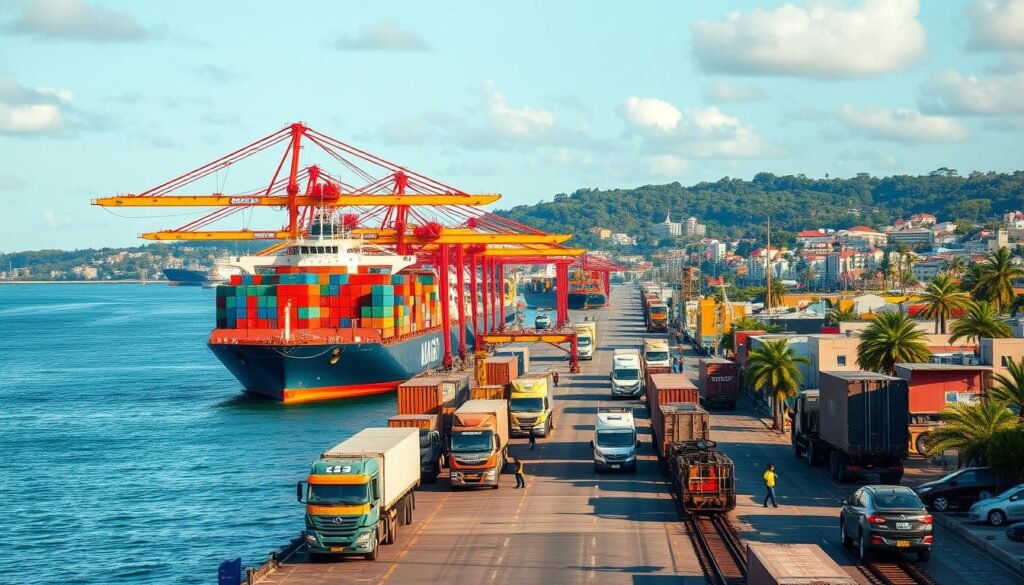
The potential for trade between Haiti and CARICOM member states remains largely untapped. Despite being a part of the Caribbean Community since 2002, Haiti’s trade with other member states has not reached its full potential.
Haiti and CARICOM member states have complementary economic sectors that can foster trade. For instance, Haiti’s agricultural sector can supply products to other Caribbean nations, while CARICOM countries like Trinidad and Tobago can provide Haiti with energy resources.
There are significant market access opportunities for Haiti within CARICOM. By reducing trade barriers and simplifying customs procedures, Haitian businesses can expand their reach into the regional market.
Haiti has several comparative advantages that it can leverage to enhance its trade with CARICOM. These include its manufacturing capabilities and agricultural specialization.
Haiti has a growing manufacturing sector, particularly in textiles and apparel. By leveraging its proximity to the US market and CARICOM’s trade agreements, Haiti can become a competitive manufacturing hub.
Haiti’s agricultural sector is another area of comparative advantage. The country can specialize in producing tropical crops like mangoes, coffee, and cocoa, which are in high demand within CARICOM.
| Economic Sector | Haiti’s Strengths | CARICOM Opportunities |
|---|---|---|
| Agriculture | Tropical crops production | Supplying to other Caribbean nations |
| Manufacturing | Textiles and apparel production | Becoming a competitive manufacturing hub |
| Energy | Potential for renewable energy | Importing energy resources from CARICOM |
The Caribbean region has seen notable successes in trade-first approaches, with the Dominican Republic and Jamaica serving as prime examples. These countries have demonstrated that by prioritizing trade, nations can foster stronger regional cooperation and improve trade relations.
The Dominican Republic has been proactive in strengthening its trade ties with CARICOM member states. By implementing strategic trade policies, the country has been able to increase its exports and deepen its economic integration within the region.
Haiti can draw valuable lessons from the Dominican Republic’s experience, particularly in terms of negotiating favorable trade agreements and diversifying its export base to enhance regional cooperation.
Jamaica’s economic diplomacy model has been characterized by a proactive approach to trade relations. The country has successfully leveraged its strategic location and resources to strengthen its economic ties within the Caribbean.
Jamaica has focused on developing key industries such as tourism and agriculture, which have been instrumental in driving economic growth and enhancing trade relations.
Haiti can strengthen its CARICOM trade relations by implementing several practical steps. To achieve this, Haiti needs to focus on regulatory alignment, infrastructure development, and industry enhancement.
One of the key steps is to align Haiti’s regulatory framework with CARICOM standards. This involves adopting common standards and simplifying customs procedures to facilitate smoother trade. Regulatory alignment will reduce barriers and make it easier for Haitian businesses to export to other CARICOM countries.
Investing in trade facilitation infrastructure is crucial for enhancing Haiti’s trade with CARICOM. This includes improving transportation networks, upgrading ports, and implementing modern customs clearance systems. Efficient infrastructure will reduce costs and increase the competitiveness of Haitian exports.
To increase trade with CARICOM, Haiti needs to develop industries that are export-ready. This involves providing support to businesses, enhancing product quality, and promoting Haitian products in regional markets.
Improving quality control is essential for making Haitian products more competitive in CARICOM markets. This can be achieved by implementing international quality standards and providing training to businesses.
Optimizing supply chains is critical for reducing costs and improving the efficiency of trade. This involves streamlining logistics, reducing transit times, and improving inventory management.
As CARICOM continues to evolve, the private sector’s contribution becomes indispensable for meaningful regional integration. The private sector can drive economic growth, foster innovation, and enhance trade relations among member states.

Business-to-business partnerships are crucial for enhancing regional cooperation. By collaborating across borders, businesses can leverage each other’s strengths, share knowledge, and expand their market reach. This, in turn, fosters a more integrated and robust regional economy.
Industry associations play a vital role in promoting trade relations within CARICOM. They facilitate dialogue between businesses and policymakers, advocate for favorable trade policies, and provide platforms for businesses to connect and collaborate.
Cross-regional ventures offer significant investment opportunities within CARICOM. By investing in diverse sectors across the region, businesses can capitalize on emerging trends, drive innovation, and contribute to the region’s economic development.
In conclusion, the private sector is a key driver of CARICOM integration. Through business-to-business partnerships, industry associations, and cross-regional investment opportunities, the private sector can significantly enhance regional cooperation and trade relations within the Caribbean region.
By prioritizing trade over politics, Haiti can unlock new opportunities beyond its CARICOM partnerships. A trade-first diplomacy approach enables Haiti to strengthen its economic ties with other regions, fostering global trade relations.
Haiti’s membership in CARICOM provides a strategic platform to access broader international markets. By leveraging this membership, Haiti can benefit from:
CARICOM has established trade agreements with several countries and regions, including the EU through the CARIFORUM-EU EPA. Haiti can utilize these agreements to expand its export markets.
Being part of CARICOM allows Haiti to benefit from regional branding, enhancing its reputation as a reliable trading partner in the Caribbean.
Consistently delivering quality goods and services on time can significantly enhance Haiti’s reputation in the global trade arena. This involves:
| Strategy | Benefits |
|---|---|
| Leveraging CARICOM membership | Access to broader international markets |
| Improving product quality | Enhanced reputation as a reliable trading partner |
| Fostering business relationships | Stronger economic ties globally |
By adopting a trade-first diplomacy approach, Haiti can not only strengthen its economic integration within CARICOM but also expand its global trade relations, ultimately contributing to its economic growth and development.
Haiti’s participation in the Caribbean Community, facilitated through its CARICOM partnership, holds significant potential for economic growth and regional integration. By rethinking its approach to prioritize trade over politics, Haiti can unlock new opportunities and strengthen its position within the Caribbean community.
Fostering a trade-first diplomacy strategy can help Haiti navigate the complexities of regional politics while advancing its economic interests. This approach can lead to increased trade facilitation, improved market access, and enhanced economic cooperation with other CARICOM member states.
By leveraging its unique cultural heritage, geographical location, and natural resources, Haiti can establish itself as a valuable trading partner within the Caribbean community. As Haiti moves forward, it is essential to maintain a commitment to economic integration and cooperation, ultimately contributing to a more prosperous and stable region.
The main challenges include diplomatic tensions, governance issues, and regional perception problems, which have hindered the progress of Haiti-CARICOM relations.
Haiti can prioritize economic integration by focusing on trade facilitation, regulatory alignment, and building trade infrastructure, which can help to increase trade volumes and strengthen economic ties.
A trade-first approach can bring numerous benefits, including increased economic growth, improved market access, and enhanced trust through commerce, ultimately contributing to Haiti’s economic development.
Haiti can leverage its manufacturing capabilities, agricultural specialization, and other comparative advantages to boost trade with CARICOM, by developing export-ready industries and improving quality control.
The private sector can play a vital role in driving CARICOM integration by fostering business-to-business partnerships, promoting industry associations, and identifying investment opportunities in cross-regional ventures.
By adopting a trade-first diplomacy approach, Haiti can leverage CARICOM as a stepping stone to international markets, access third-party trade agreements, and build its reputation as a reliable trading partner, ultimately benefiting from increased global trade.
Haiti can take practical steps, including regulatory alignment, building trade facilitation infrastructure, and developing export-ready industries, to enhance its trade relations with CARICOM and strengthen economic cooperation.