Physical Address
304 North Cardinal St.
Dorchester Center, MA 02124
Physical Address
304 North Cardinal St.
Dorchester Center, MA 02124
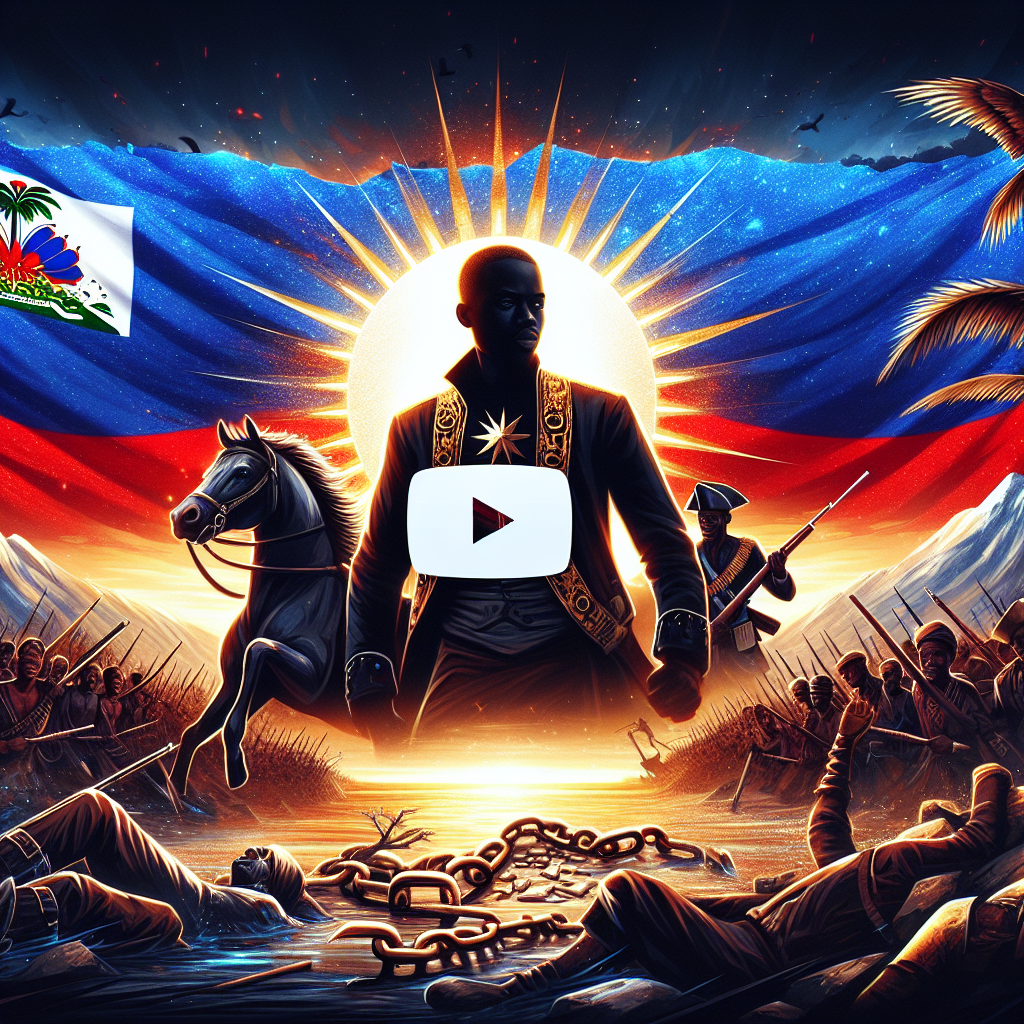

Uncover the hidden history of Haiti's revolution in "The Whitewashed Revolution: How Haiti's True History Has Been Sanitized."
Haiti’s revolution is a pivotal event in world history, yet it remains shrouded in mystery. The story of Toussaint Louverture, a key figure in the revolution, is often overshadowed by a sanitized narrative.
The whitewashed history of Haiti’s struggle for independence has led to a lack of understanding about the true significance of the revolution. By exploring the untold stories and overlooked facts, we can gain a deeper appreciation for the courage and resilience of the Haitian people.
As the first successful slave rebellion in history, Haiti’s Revolution sent shockwaves across the globe, challenging the very foundations of colonial systems. This pivotal event not only changed the fate of Haiti but also had far-reaching consequences for the world.
Haiti’s Revolution was a landmark event that marked the first time a slave uprising was successful, leading to the establishment of Haiti as an independent nation. This achievement was significant because it:
The Haitian Revolution had a profound impact on global colonial systems. It:
The Haitian Revolution remains relevant today because it:
In conclusion, the significance of Haiti’s Revolution in world history is multifaceted, influencing not only the course of Haitian history but also global attitudes towards slavery, colonialism, and independence.
In the late 18th century, Saint-Domingue was a powder keg, with the French colonial system creating an environment ripe for rebellion through its relentless exploitation and oppression. The colony, which would eventually become Haiti, was the most profitable in the Caribbean, driven primarily by its lucrative sugar industry.
French colonial rule in Saint-Domingue was characterized by extreme brutality. The enslaved population was subjected to harsh treatment, with punishments for even the slightest infractions being severe.
The sugar economy was the backbone of Saint-Domingue’s prosperity, but it came at a terrible human cost. Enslaved Africans were forced to work under grueling conditions, with high mortality rates due to disease, overwork, and brutal treatment.
Daily life for enslaved individuals was marked by hard labor, minimal sustenance, and constant surveillance. The enslaved had little to no rights, and their existence was controlled in every aspect by their enslavers.
Saint-Domingue’s society was divided into three distinct tiers: the white colonizers at the top, followed by the mixed-race population (gens de couleur), and the enslaved Africans at the bottom. This structure was maintained through a complex system of laws and social norms that reinforced the superiority of the white population.
Despite the oppressive conditions, enslaved individuals found ways to resist their enslavement. One form of resistance was marronage, where enslaved people would escape to form communities in the island’s mountainous regions. These acts of defiance were a precursor to the larger rebellion that would eventually become the Haitian Revolution.
Understanding the true nature of the Haitian Revolution involves examining its often-misrepresented timeline. The revolution was a complex series of events that led to the establishment of Haiti as an independent nation.
The revolution began with a Vodou ceremony at Bois Caïman on August 14, 1791, led by Dutty Boukman, a slave and Vodou priest. This event marked the beginning of the end of French colonial rule in Saint-Domingue. The uprising was a response to the brutal conditions of slavery and the social hierarchy imposed by the French.
As the revolution progressed, the Haitian leaders formed complex alliances with European powers. Toussaint Louverture, a key figure in the revolution, allied with the French to fight against the Spanish and British, who were attempting to gain control over the island. These alliances were crucial in the fight for independence but also led to internal conflicts.
The final battles for independence were fought between the Haitian army, led by Jean-Jacques Dessalines, and the French forces. The Haitians successfully defeated the French at the Battle of Vertières on November 18, 1803. This victory paved the way for the declaration of independence.
On January 1, 1804, Dessalines declared Haiti’s independence, making it the first independent black nation in the world. The declaration marked the culmination of the revolution and the end of French colonial rule. It was a significant moment in world history, challenging the prevailing narratives of slavery and colonialism.
The Haitian Revolution’s timeline is a testament to the resilience and determination of the Haitian people. By understanding the key events and correcting misrepresentations, we can gain a deeper appreciation for this pivotal moment in history.
Behind the veil of history, the true stories of key figures in the Haitian Revolution have been obscured, awaiting rediscovery. The revolution was a complex interplay of various personalities, each contributing uniquely to the fight for independence.
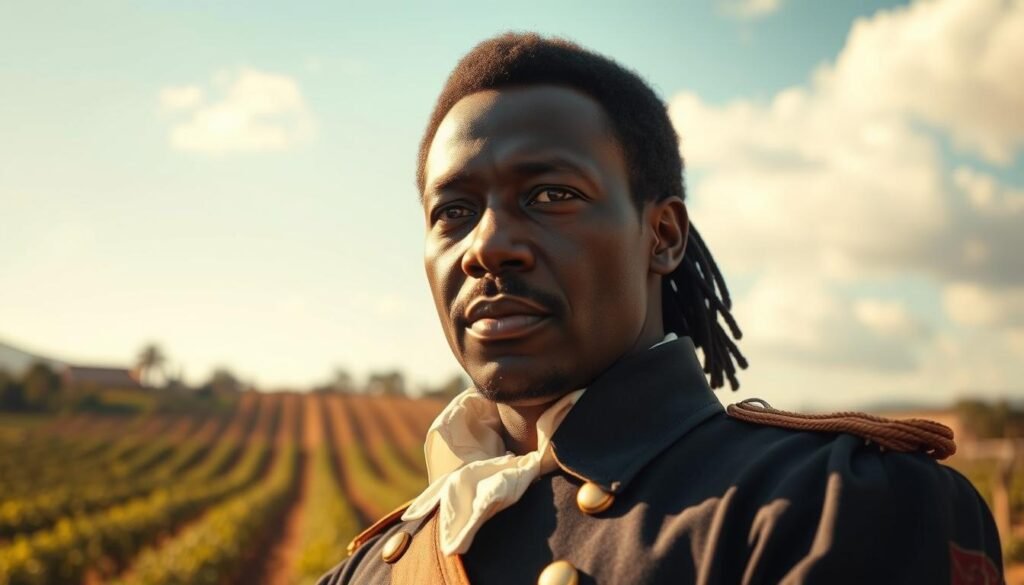
Toussaint Louverture is often portrayed as the “Black Napoleon,” a label that simplifies his multifaceted role in the revolution. However, this narrative overlooks his profound impact beyond military prowess.
Louverture’s military strategies were instrumental in the initial successes of the revolution. His ability to form alliances and negotiate with European powers showcased his political acumen.
Despite his achievements, Louverture was betrayed and captured by the French. His eventual death in prison marked the end of an era, but his legacy continued to inspire the revolutionaries.
Jean-Jacques Dessalines is another figure whose legacy has been distorted. Often depicted as a bloodthirsty tyrant, his role in leading the revolution to its ultimate victory is frequently overshadowed.
Dessalines’ leadership was crucial in the final battles against the French. His determination and strategic thinking were key factors in achieving independence.
The Haitian Revolution was not just led by men; women played a significant role, often behind the scenes. Figures like Marie-Jeanne Lamartinière and Sanité Bélair demonstrated remarkable courage and resilience.
Marie-Jeanne Lamartinière fought bravely alongside her husband, showcasing her combat skills and strategic thinking. Her contributions have often been overlooked in historical accounts.
Sanité Bélair, known for her bravery, was a lieutenant in the revolutionary army. Her story, like that of many women, was largely forgotten until recent historical efforts brought her to the forefront.
The stories of these individuals highlight the complexity and richness of the Haitian Revolution. By revisiting their narratives, we can gain a deeper understanding of this pivotal moment in history.
For centuries, the story of Haiti’s revolution has been told through a distorted lens, stripping it of its complexity and revolutionary fervor. This sanitization of history has been perpetuated through various channels, including historical accounts, educational materials, and media representations.
Historical narratives from Europe and America have often portrayed the Haitian Revolution in a simplistic or negative light. Many accounts focused on the brutality of the revolutionaries rather than the brutality of the colonial system they fought against. This biased perspective has contributed significantly to the whitewashed history of the revolution.
Early historians often depicted Toussaint Louverture and other leaders through a lens of European cultural superiority, diminishing their achievements and the significance of their struggle.
Textbooks have played a crucial role in perpetuating a sanitized version of the Haitian Revolution. Omissions and distortions in educational materials have resulted in generations of students receiving an incomplete understanding of this pivotal historical event.
Many textbooks either gloss over the revolution or focus solely on its violent aspects, failing to provide context about the brutal conditions under French colonial rule that led to the uprising.
The media has also contributed to the distorted narrative surrounding the Haitian Revolution. From literature to film, representations of the revolution have varied, often reflecting the biases of their time.
In the early 19th century, literature often portrayed the Haitian Revolution in a negative light, emphasizing its violence and portraying the revolutionaries as savage. This literary representation reinforced the negative stereotypes prevalent in European and American societies.
Modern media, including films and television series, have begun to revisit the Haitian Revolution, offering more nuanced portrayals. However, some representations still fall into the trap of sensationalism, focusing on the conflict’s more violent aspects rather than its historical significance.
Despite these challenges, there is a growing trend towards more accurate and respectful representations of Haiti’s history, reflecting a broader recognition of its importance.
The Haitian Revolution’s success was met with isolation and economic reprisal from global powers. After declaring independence in 1804, Haiti faced a concerted effort to undermine its economy and isolate it from the international community.
In 1825, France issued an ordinance that would have a lasting impact on Haiti’s economy.
The ordinance required Haiti to pay a significant indemnity to France in exchange for recognizing its independence. This debt, known as the “French indemnity,” was a staggering 150 million gold francs, a sum that far exceeded Haiti’s annual revenue.
The burden of this indemnity was crippling. It led to a cycle of debt that Haiti struggled to escape for over a century, diverting resources away from development and towards debt repayment. The financial strain also had social and political repercussions, contributing to instability within the country.
Haiti faced not only the French indemnity but also an international embargo imposed by major world powers. This embargo restricted Haiti’s ability to engage in international trade, severely limiting its economic growth. The long-term effects of this isolation were profound, hindering Haiti’s development and contributing to its status as one of the poorest countries in the Western Hemisphere.
The United States, in particular, refused to recognize Haiti’s sovereignty until 1862, more than 50 years after its declaration of independence. This refusal was a significant component of the economic punishment, as it prevented Haiti from accessing crucial diplomatic and trade relationships that could have fostered economic development.
The economic punishment meted out to Haiti after its revolution had far-reaching consequences. It not only stifled the country’s economic potential but also had lasting social and political impacts. Understanding this history is crucial to grasping the complexities of Haiti’s current challenges and the resilience of its people.
Modern Haitian historians are at the forefront of reclaiming the narrative of the Haitian Revolution, challenging centuries-old distortions. For too long, the story of Haiti’s struggle for independence has been told through the lens of colonial powers. However, contemporary Haitian scholars are working tirelessly to correct these historical inaccuracies.
Their efforts are not only about setting the record straight but also about reclaiming a proud heritage that has been obscured by the dominant narratives of European and American historians.
One of the most influential works in this area is Michel-Rolph Trouillot’s Silencing the Past: Power and the Production of History. Trouillot’s work critiques the ways in which historical narratives are constructed and how certain events are silenced or marginalized. He argues that the Haitian Revolution was a significant event that was often silenced or trivialized in historical accounts.
“The universal silencing of the slave revolution is a silence born of Eurocentric epistemologies.”
Contemporary scholars are building on Trouillot’s work, using new methodologies and perspectives to challenge the dominant narrative of the Haitian Revolution. These scholars are not only Haitian but also come from diverse backgrounds, all united in their quest for historical accuracy.
| Scholar | Contribution |
|---|---|
| Laurent Dubois | Avengers of the New World: The Story of the Haitian Revolution |
| Carolyn Fick | The Making of Haiti: The Saint Domingue Revolution from Below |
The advent of digital archives and new research methods has also played a crucial role in reclaiming the narrative of the Haitian Revolution. Digital archives have made it possible for researchers to access previously inaccessible documents, while new research methods have enabled a more nuanced understanding of historical events.
By leveraging these tools, modern Haitian historians are not only challenging the dominant narrative but also providing a more accurate and nuanced understanding of their revolutionary heritage.
The way Haiti’s revolutionary history has been sanitized affects not only how we perceive Haiti but also how Haitians perceive themselves. This sanitization has significant implications for understanding the island nation’s current challenges and its place in the world.
Current perceptions of Haiti are often influenced by a sanitized version of its revolutionary history. This has led to a distorted view of the nation, focusing on its struggles rather than its achievements. For instance, the portrayal of Haiti as a country plagued by poverty and instability overshadows its historical significance as the first independent black nation in the world.
The narrative that Haiti’s success was solely due to external factors, rather than the resilience and determination of its people, perpetuates a negative stereotype. This not only affects how the international community views Haiti but also impacts Haitians’ self-perception and national identity.
Historical narratives have the power to shape present realities by influencing how we understand and interact with the world around us. In the case of Haiti, a sanitized history has contributed to a lack of appreciation for its revolutionary achievements and their ongoing impact. By reclaiming and accurately representing Haiti’s history, we can work towards a more nuanced understanding of the country’s current situation and its potential for the future.
This involves recognizing the agency and resilience of Haitian people throughout history, rather than portraying them as passive recipients of external events. By doing so, we can foster a more accurate and respectful understanding of Haiti’s past, present, and future.
The Haitian Revolution stands as a pivotal moment in world history, marking the first successful slave rebellion and the birth of the first independent black nation. Restoring the truth about this revolution is crucial for understanding its profound impact on global colonial systems and its continued relevance today.
Throughout this article, we have explored how the narrative of the Haitian Revolution has been sanitized and distorted over time, often to serve the interests of colonial powers and to diminish the achievements of the revolutionaries. By reclaiming and accurately representing this history, we can better appreciate the revolutionary legacy that has shaped not only Haiti but the world.
Accurately understanding the Haitian Revolution is essential for grasping its ongoing influence on contemporary society, from issues of racial justice to the economic challenges faced by Haiti. By restoring the truth about this pivotal event, we can work towards a more nuanced and equitable understanding of history, ultimately enriching our present and future.
The Haitian Revolution was a successful slave rebellion that took place in the late 18th century in Saint-Domingue, a French colony on the island of Hispaniola. It led to the establishment of Haiti as an independent nation in 1804.
Toussaint Louverture was a key leader in the Haitian Revolution. He is known for his military genius and political vision, playing a crucial role in the fight for Haiti’s independence.
The Haitian Revolution was the first successful slave rebellion in history, impacting global colonial systems and shaping the course of modern history. It remains relevant today, influencing contemporary discussions around identity, power, and social justice.
European and American historical accounts often sanitized or omitted key aspects of the Haitian Revolution, perpetuating a distorted narrative that downplayed the significance of the event and its leaders.
The French indemnity was a payment demanded by France from Haiti in 1825 in exchange for recognizing Haiti’s independence. The indemnity had a long-term financial impact on Haiti, contributing to its economic struggles.
Modern Haitian historians, such as Michel-Rolph Trouillot, have challenged dominant narratives and uncovered new insights into the Haitian Revolution through their research and writings. Digital archives and new research methods have also contributed to a more nuanced understanding of the event.
Accurately representing the Haitian Revolution is crucial for understanding its significance and ongoing impact on contemporary society. It helps to challenge dominant narratives and promote a more nuanced understanding of history.
The sanitization of Haiti’s history has contributed to negative perceptions and stereotypes about the country and its people. Accurately representing the Haitian Revolution and its significance can help to challenge these narratives and promote a more positive understanding of Haiti.