Physical Address
304 North Cardinal St.
Dorchester Center, MA 02124
Physical Address
304 North Cardinal St.
Dorchester Center, MA 02124
Explore the shocking revelations about Haiti's illegitimate government in "The TPC Charade: Haiti's Illegitimate Government Exposed."
Haiti is facing a severe political crisis, with the legitimacy of its government being called into question. The Transitional Presidential Council (TPC) has been at the center of this controversy, sparking debates about its authority and the impact on the country’s stability.
The situation in Haiti is complex, with political instability hindering progress and affecting the lives of its citizens. The TPC’s role in this context has raised concerns about the nation’s future.
Understanding the intricacies of Haiti’s political landscape is crucial for grasping the implications of the TPC’s actions. This article aims to shed light on the issues surrounding the TPC and its effects on Haiti’s governance.
The history of Haiti’s political scene is a complex tapestry of internal strife and external influence. Understanding this context is crucial to grasping the current situation.
Haiti has long been plagued by political instability, with frequent regime changes and coups. Foreign intervention has often played a significant role in shaping the country’s political trajectory.
“Haiti’s political history is marked by a persistent cycle of unrest and foreign involvement.”
The assassination of President Jovenel Moïse in July 2021 sent shockwaves through Haiti’s political landscape. This event created a power vacuum that further destabilized the country.
The aftermath of Moïse’s assassination saw a struggle for control, with various factions vying for power. It was in this context that the Transitional Presidential Council (TPC) emerged.
| Event | Year | Impact |
|---|---|---|
| US Occupation | 1915-1934 | Significant influence on Haiti’s political and economic structures |
| Duvalier Regime | 1957-1986 | Authoritarian rule with international backing |
| Assassination of Jovenel Moïse | 2021 | Power vacuum leading to TPC’s rise |
The formation of the Transitional Presidential Council (TPC) in Haiti was marked by controversy and haste. This newly established council has been at the center of Haiti’s political landscape, raising questions about its legitimacy and the process of its creation.
The TPC was formed through a series of meetings and decisions that were criticized for lacking transparency and inclusivity. Key meetings were held behind closed doors, with limited stakeholders involved.
Several crucial decisions were made during these meetings, shaping the future of the TPC. However, the lack of detailed minutes and public disclosure raised concerns about accountability.
Many significant stakeholders were excluded from the formation process, including representatives from various Haitian civil society groups. This exclusion has been a point of contention, with many arguing that it undermines the TPC’s legitimacy.
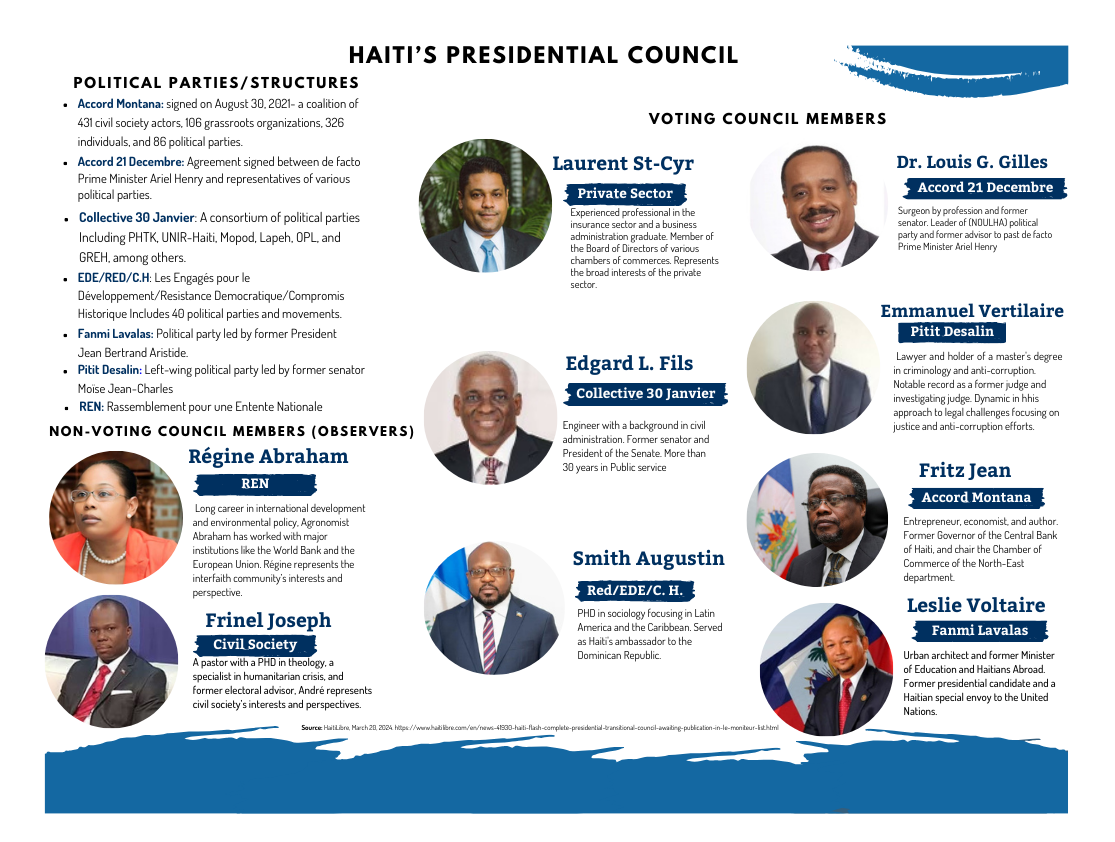
The appointments to the TPC have been controversial, with some members having questionable backgrounds. Critics argue that these appointments were made to consolidate power rather than to serve the public interest.
Initially, the TPC promised to restore order and ensure a smooth transition to democratic governance. However, a review of Haiti’s constitutional framework reveals significant discrepancies between these promises and the current reality.
| Promise | Constitutional Reality |
|---|---|
| Restore Order | Increased political tension |
| Democratic Transition | Lack of an inclusive electoral process |
| Transparency | Limited public disclosure |
The TPC’s rise to power in Haiti has been characterized by allegations of external interference and constitutional breaches. This has led to widespread criticism regarding its legitimacy and the manner in which it was established.
The TPC’s formation has been criticized for violating several key articles of Haiti’s constitution. Specifically, it has been argued that the process breached Articles 111 and 149, which pertain to the appointment and dismissal procedures for certain government officials.
Legal experts have weighed in on the TPC’s legitimacy, with many expressing concerns about its constitutional grounding. As noted by one expert, “The TPC’s establishment represents a significant departure from Haiti’s constitutional norms.”
“The TPC’s actions are a clear violation of the Haitian constitution and undermine the rule of law.”
The TPC was formed without a public mandate or consultation, further eroding its legitimacy. This lack of democratic process has been widely criticized by Haitian civil society.
There is substantial evidence to suggest that external actors played a significant role in the TPC’s formation. This has raised concerns about the council’s independence and its ability to act in the best interests of Haiti.
| Aspect | Description | Implication |
|---|---|---|
| Constitutional Violations | Breaches of Articles 111 and 149 | Undermines legal legitimacy |
| External Manipulation | Evidence of foreign interference | Compromises independence |
| Lack of Public Consultation | No electoral mandate or public input | Erodes democratic legitimacy |
US involvement in the TPC’s formation has raised questions about the council’s legitimacy and independence. The influence of foreign powers, particularly the United States, has been a significant factor in shaping the TPC’s structure and decisions.
The US has played a direct role in selecting members of the TPC, with diplomatic cables revealing the extent of American involvement in the council’s composition. This level of intervention has sparked concerns about the TPC’s ability to represent Haitian interests.
Leaked diplomatic communications have exposed the degree of external control exerted over the TPC. These revelations have highlighted the council’s lack of autonomy and its susceptibility to foreign influence.
The US and other foreign entities have used financial leverage to influence the TPC’s decision-making processes. By controlling the flow of aid and resources, external actors have been able to shape the council’s policies and actions.
The significant foreign influence in the TPC’s formation and operations underscores the need for greater transparency and accountability in Haitian governance. As the situation continues to evolve, it is crucial to monitor the impact of external involvement on Haiti’s political stability and sovereignty.
The TPC’s leadership has been marred by allegations of economic exploitation, raising concerns about the future of Haiti’s economy.
Several high-profile deals have been struck under the TPC, with many questioning their legitimacy. For instance, contracts for major infrastructure projects have been awarded to foreign companies without transparent bidding processes.
There are allegations that foreign aid and relief funds have been misappropriated by TPC officials. This misappropriation not only harms Haiti’s development but also erodes trust in international aid efforts.
The TPC’s economic policies have been criticized for prioritizing foreign interests at the expense of Haitian needs. This has led to widespread discontent among the Haitian populace, who feel their country is being exploited for external gain.
In conclusion, the economic exploitation under the TPC leadership has severe implications for Haiti’s economic stability and its people’s well-being.
As the TPC continues to shape Haiti’s political future, a manufactured security crisis has emerged, threatening the nation’s stability. This crisis is characterized by an alarming increase in violence and insecurity, which has been selectively enforced against political opponents, raising questions about the TPC’s true intentions.
There are disturbing reports of the TPC collaborating with criminal elements, further complicating the security landscape. “The level of coordination between the TPC and these groups suggests a sinister motive,” stated a recent report by a human rights organization. Such collaborations undermine efforts to establish a stable and secure environment.
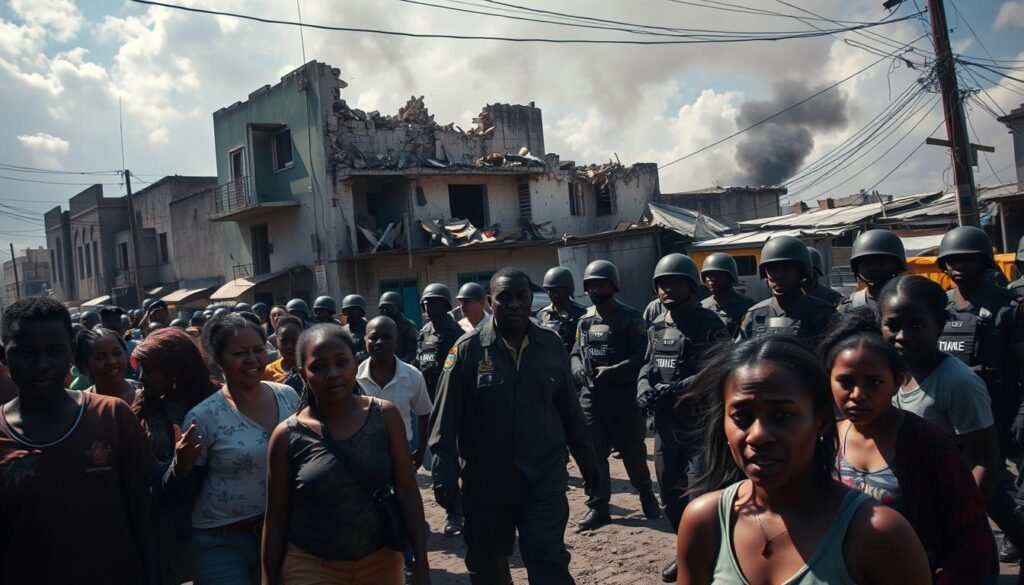
The TPC has been accused of using security forces to target political opponents, creating an uneven playing field. This selective enforcement has led to widespread criticism and allegations of political repression. As one observer noted,
“The security apparatus is being weaponized against those who dare to challenge the TPC’s authority.”
The Multinational Security Support Mission, backed by foreign powers, has been deployed to Haiti under the guise of providing security. However, many Haitians view this mission as a form of occupation, questioning whether its true purpose is to protect the population or to prop up the TPC’s controversial regime.
The unfolding security crisis in Haiti demands a closer examination of the TPC’s actions and the international community’s role in supporting or challenging its authority.
The TPC’s rise to power has been marked by a disturbing trend of human rights abuses, creating a climate of fear and repression in Haiti.
The TPC has been accused of arbitrarily detaining political opponents, with several documented cases of political imprisonment. These actions undermine the rule of law and violate international human rights standards.
Journalists in Haiti have faced harassment and intimidation, leading to a chilling effect on free speech. The TPC’s administration has been criticized for censoring media outlets that are critical of its policies.
| Violation Type | Number of Cases | Impact |
|---|---|---|
| Political Imprisonment | 15+ | Undermines political dissent |
| Media Censorship | 10+ | Restricts free speech |
| Violent Protests Suppression | 5+ | Creates public fear |
The TPC has been criticized for its heavy-handed response to peaceful protests, using force to disperse demonstrators. This has led to injuries and, in some cases, fatalities.
A growing people’s resistance is emerging in Haiti, driven by the TPC’s failure to address the nation’s pressing needs. Haitian civil society is organizing to challenge the illegitimate government and push for authentic democracy.
Grassroots movements across Haiti are actively questioning the TPC’s legitimacy. These movements are characterized by their commitment to non-violent resistance and their demand for a return to constitutional governance.
For instance, a recent survey highlighted that over 70% of Haitians oppose the TPC, citing its lack of electoral mandate and foreign influence.
In response to the TPC’s inadequacies, alternative governance structures are beginning to emerge. These initiatives are driven by local communities and aim to provide more effective and accountable leadership.
The Haitian diaspora and international human rights organizations are forming solidarity networks to support the people’s resistance. These networks are crucial in amplifying the voices of Haitian civil society on the global stage.
| Key Players | Role in Resistance | Impact |
|---|---|---|
| Grassroots Movements | Challenging TPC Legitimacy | Raising Awareness |
| Local Communities | Establishing Alternative Governance | Providing Effective Leadership |
| International Solidarity Networks | Amplifying Haitian Voices Globally | Increasing International Pressure |
The people’s resistance in Haiti represents a crucial step towards reclaiming the country’s democratic future. As these movements continue to grow, they must receive support from both local and international communities.
“The Haitian people will not be silenced. We will continue to resist and fight for our right to self-determination.” – Haitian Activist
The human cost of the TPC’s rule is evident in the everyday lives of Haitians. The lack of legitimate governance has led to a deterioration in access to necessities.
The situation on the ground is dire, with many Haitians struggling to access fundamental needs. Key statistics highlight the severity of the issue:
According to recent reports, food insecurity has increased by 30% in the past year alone, leaving a significant portion of the population without reliable access to nutritious food.
The healthcare system is severely strained, with many hospitals lacking essential supplies and staff. This has resulted in a significant increase in mortality rates.
The instability caused by the TPC’s rule has led to a surge in forced displacement and migration. Many Haitians are fleeing their homes in search of safety and security.
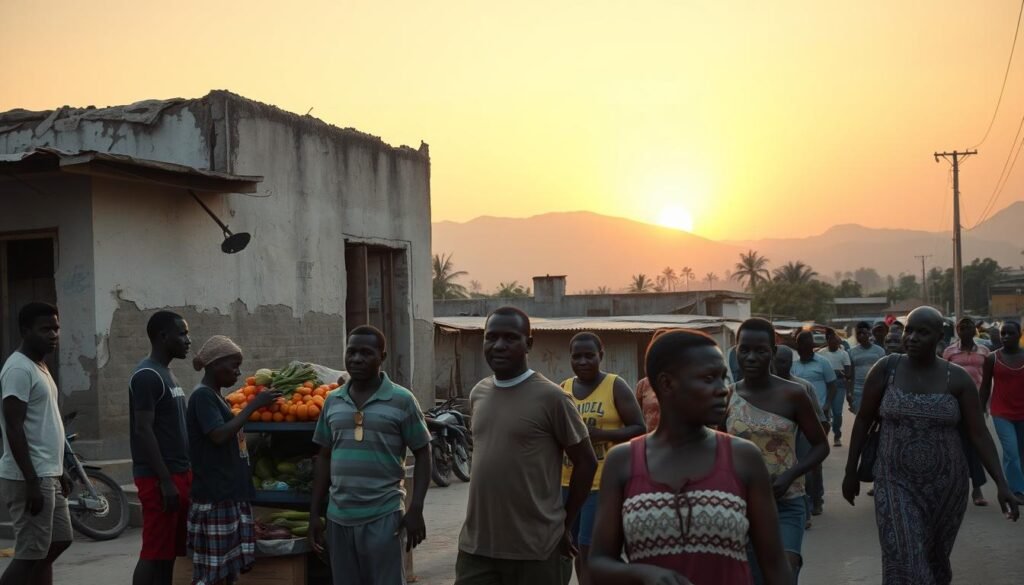
The psychological toll of living under an illegitimate government cannot be overstated. The constant uncertainty and fear have taken a significant mental health toll on the population.
The discrepancy between the international community’s acceptance of the TPC and the dire situation in Haiti raises critical questions about diplomatic double standards. While the international community has extended recognition to the Transitional Presidential Council (TPC), the reality on the ground tells a different story.
The international community’s swift recognition of the TPC stands in contrast to its historical reluctance to acknowledge governments formed through similar processes in other contexts. This diplomatic double standard suggests that geopolitical interests may be influencing the decision-making process.
Mainstream media narratives often portray the TPC as a necessary step towards stability, contradicting on-the-ground reports of human rights abuses and political repression. This disparity highlights the need for more nuanced and accurate reporting.
Despite their suffering and resilience, the voices of ordinary Haitians are often drowned out by the louder narratives of international diplomats and media outlets. It is crucial to listen to and amplify these voices to understand the true impact of the TPC’s rule.
The legitimacy of the TPC is a complex issue, influenced by both internal and external factors. Understanding the legitimacy facade requires a critical examination of diplomatic actions, media narratives, and the experiences of Haitian citizens.
The quest for authentic Haitian sovereignty is a complex process that involves constitutional reform, democratic elections, and the establishment of governance institutions free from external control. Achieving this requires a multifaceted approach that addresses the country’s deep-seated political and social issues.
A crucial step towards authentic sovereignty is constitutional reform led by Haitian civil society. This involves:
Genuine democratic elections are fundamental to establishing a legitimate government. Key requirements include:
Despite these requirements, challenges such as political violence, voter suppression, and external interference must be addressed.
To achieve authentic sovereignty, Haiti must build governance institutions that are free from external control. This can be accomplished by:
The Transitional Presidential Council (TPC) in Haiti represents a significant obstacle to the country’s democratic aspirations. As we have seen, its formation was marred by constitutional violations, external manipulation, and a lack of public consultation.
Dismantling the TPC is crucial for restoring Haitian self-determination. This involves not only removing the current illegitimate government but also establishing a genuine democratic process led by Haitian civil society. Constitutional reform and free elections are essential steps toward achieving this goal.
The international community must recognize the legitimacy crisis in Haiti and adjust its approach accordingly. Rather than propping up the TPC, international actors should support Haitian-led initiatives for democratic governance and human rights.
The path forward requires a commitment to transparency, accountability, and the rule of law. By supporting Haitian self-determination, we can help create a more just and equitable society for all Haitians. The journey to dismantling the TPC and restoring democracy will be challenging, but it is a necessary step toward a brighter future for Haiti.
The Transitional Presidential Council (TPC) is a governing body in Haiti that has been criticized for its illegitimate formation and lack of constitutional legitimacy.
The TPC is considered illegitimate due to its hasty creation process, exclusion of key stakeholders, and lack of electoral mandate or public consultation.
The United States played a significant role in the formation of the TPC, with evidence suggesting direct involvement in selecting council members and exerting financial leverage to control TPC decision-making.
The TPC’s leadership has been associated with suspicious resource deals, misappropriation of foreign aid, and economic policies that favour foreign interests over Haitian needs, exacerbating economic exploitation.
Human rights abuses have been documented under the TPC, including political imprisonment, attacks on journalists, media censorship, and violent suppression of peaceful protests.
Haitian civil society is actively challenging the TPC’s legitimacy through grassroots movements, emerging alternative governance structures, and seeking international solidarity to support authentic democracy.
Pathways to authentic Haitian sovereignty include constitutional reform led by Haitian civil society, genuine democratic elections, and building governance institutions free from external control.
The international community has shown diplomatic double standards in recognizing the TPC, with some countries and organizations supporting it despite its illegitimacy, while others have raised concerns.
Living under the TPC’s rule has resulted in deteriorating access to necessities like food and healthcare, forced displacement, and a significant psychological impact on the population.