Physical Address
304 North Cardinal St.
Dorchester Center, MA 02124
Physical Address
304 North Cardinal St.
Dorchester Center, MA 02124
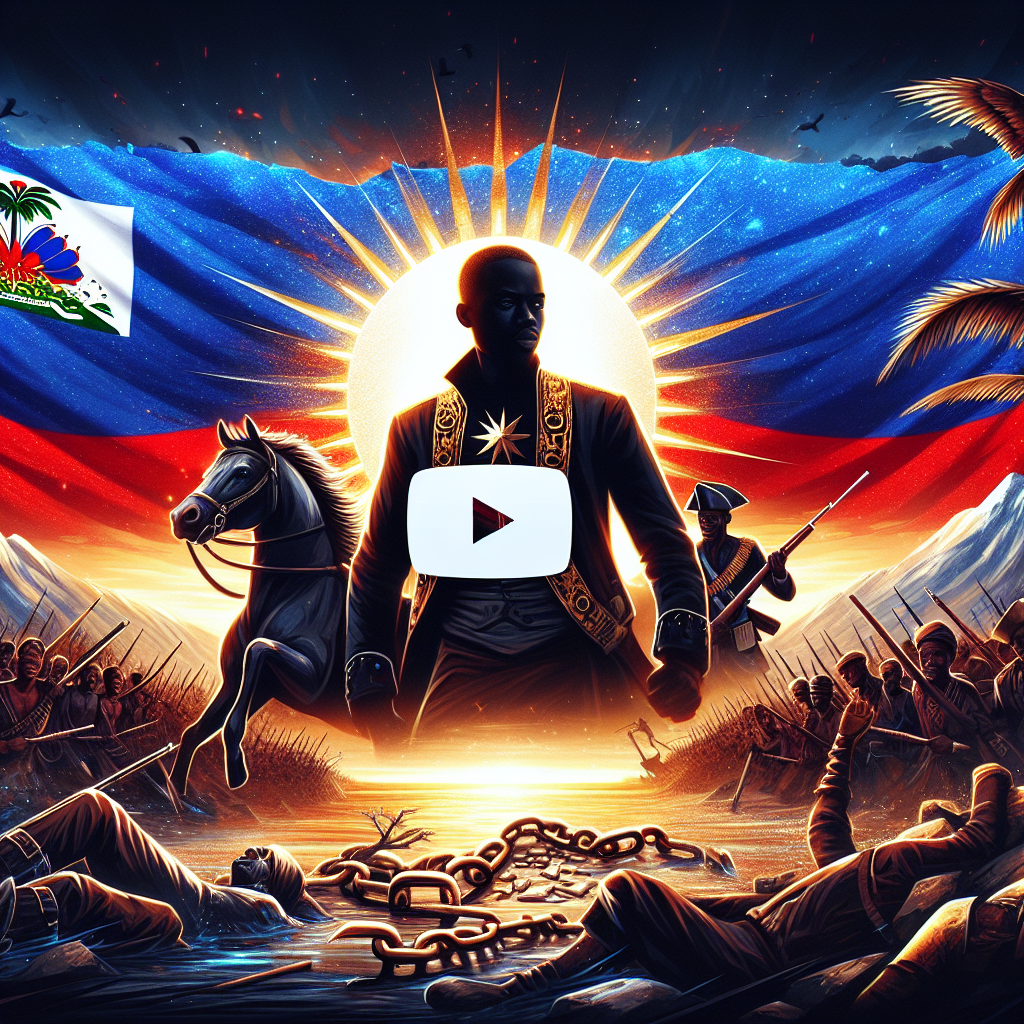
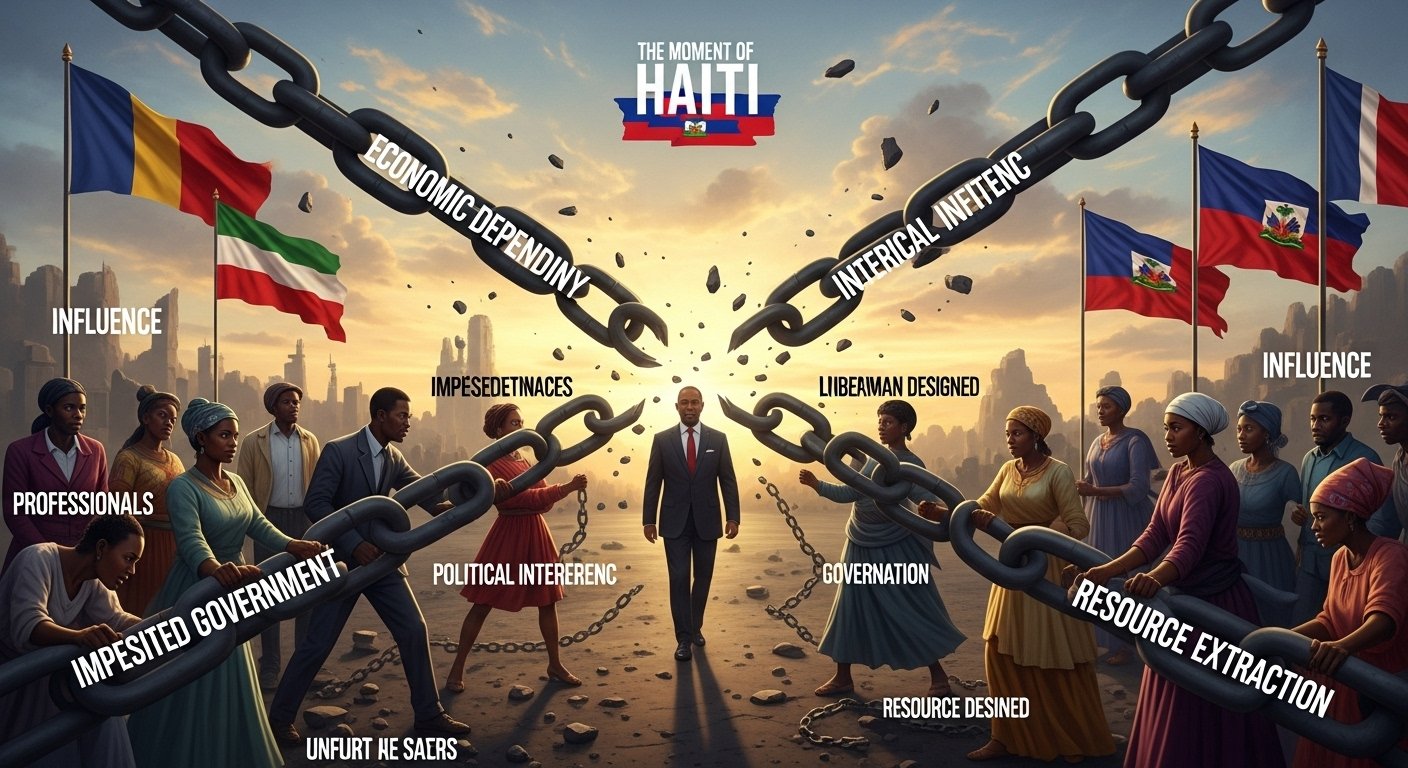
Explore Haiti's urgent need to break free from external control and the pivotal moment for change.
Haiti’s history is marked by a struggle for Haitian sovereignty and independence. For centuries, the nation has faced challenges stemming from external control, hindering its path to self-determination.
The impact of external influences on Haiti’s development has been profound, affecting its economic, political, and social structures. As Haiti navigates these complexities, the need for change is becoming increasingly urgent.
It’s time for Haiti to assert its independence and move towards a future where it can exercise full control over its affairs. This journey is not just about political freedom but also about economic and social empowerment.
Haiti’s journey to self-determination has been hindered by centuries of external control and intervention. Understanding this history is crucial to grasping the complexities of Haiti’s current situation.
Haiti was a French colony, Saint-Domingue, known for its lucrative sugar and coffee plantations worked by enslaved Africans. The Haitian Revolution (1791-1804) was a successful slave revolt that led to Haiti becoming the world’s first independent black nation.
Haiti’s revolutionary victory was significant not only for its people but also for its impact on the world. It challenged the institution of slavery and inspired movements for independence and equality globally.
In 1825, France demanded that Haiti pay an “independence debt” in exchange for recognizing its sovereignty. This debt had a lasting impact on Haiti’s economy, draining its resources for over a century.
Haiti has faced numerous foreign interventions since its independence. These interventions have shaped its political, economic, and social landscape.
The US occupied Haiti from 1915 to 1934, modernizing infrastructure but also suppressing Haitian culture and reinforcing US influence. This period had a lasting impact on Haiti’s political and economic structures.
Today, external control in Haiti manifests through various means, including economic aid, international organizations, and political influence. These modern patterns continue the legacy of foreign intervention in Haiti’s affairs.
| Period | Event | Impact on Haiti |
|---|---|---|
| 1791-1804 | Haitian Revolution | Independence from France |
| 1915-1934 | US Occupation | Modernization and cultural suppression |
| 1825 | Independence Debt | Economic strain |
Understanding Haiti’s current crisis requires examining the intricate web of political, economic, and social factors that have led to the country’s precarious state.
The assassination of President Jovenel Moïse in July 2021 marked a critical turning point in Haiti’s political instability, plunging the country into a deeper governance crisis.
The assassination of President Moïse not only removed a key figure from the political landscape but also exposed the vulnerabilities in Haiti’s security apparatus. The aftermath has seen a power vacuum, with various factions vying for control.
Gang violence has escalated, with armed groups controlling significant portions of the capital, Port-au-Prince. This has led to a dire security situation, with widespread kidnapping, murder, and displacement of civilians.
Haiti’s economy is heavily reliant on foreign aid, which has created a complex dynamic where external assistance often undermines local governance structures.
The proliferation of NGOs in Haiti has led to what is termed the “NGO Republic,” where external aid bypasses the state, weakening its capacity to govern and provide basic services.
Haiti’s economy is structurally vulnerable due to its dependence on imported goods, lack of industrial development, and susceptibility to natural disasters, making it challenging to achieve sustainable economic growth.
Haiti’s journey towards self-determination is significantly impacted by the presence of international organizations. These entities have been involved in various aspects of Haitian life, from peacekeeping missions to economic policy formulation.
The United Nations has been involved in Haiti through several missions, starting with the establishment of MINUSTAH in 2004. MINUSTAH was tasked with maintaining stability and promoting democratic governance in Haiti.
Despite its mandate, MINUSTAH faced numerous controversies, including allegations of sexual misconduct by its personnel and the introduction of cholera to Haiti, which led to a devastating epidemic.
The cholera epidemic, which started in 2010, resulted in thousands of deaths and highlighted issues of accountability within UN missions. The UN’s response to the epidemic and its reluctance to accept responsibility for the outbreak sparked widespread criticism.
The International Monetary Fund (IMF) and the World Bank have played significant roles in shaping Haiti’s economic policies. Their interventions have often been through Structural Adjustment Programs (SAPs).
SAPs have been criticized for promoting neoliberal economic policies that favor foreign investors over local populations, leading to increased economic inequality and dependency on foreign aid.
Haiti’s debt burden, partly a result of IMF and World Bank policies, continues to undermine its financial sovereignty. The country’s inability to manage its finances independently is a significant challenge to its self-determination.
| International Organization | Role in Haiti | Impact on Sovereignty |
|---|---|---|
| UN | Peacekeeping and Stability | Controversies and Loss of Trust |
| IMF/World Bank | Economic Policy Formulation | Dependency and Debt Burden |
The complex interplay of foreign influences in Haiti is a critical factor in understanding the country’s current predicament. Haiti’s geopolitical significance has made it a focal point for various foreign powers, each with their own distinct interests and agendas.
US policy toward Haiti has evolved significantly over the decades, yet certain constants remain. Historically, the US has been a dominant player in Haitian affairs, driven by a mix of security concerns, economic interests, and humanitarian considerations.
The US has often found itself torn between promoting democracy in Haiti and addressing security concerns. While democracy promotion is a stated goal, security issues, particularly related to gang violence and instability, have frequently taken precedence.
Migration management has become an increasingly significant driver of US policy toward Haiti. The US has sought to address the root causes of migration from Haiti, often linking aid and diplomatic engagement to efforts to stem the flow of migrants.
The Core Group, comprising various international actors including the US, France, Canada, and others, plays a pivotal role in shaping Haiti’s political landscape. This group exerts significant influence through diplomatic interventions and coordination of international aid.
The Core Group has been actively involved in Haitian politics, often mediating between conflicting political factions and influencing the governance structure. Their interventions have had mixed results, sometimes stabilizing the political environment and other times exacerbating tensions.
While the Core Group represents a coordinated international effort, individual countries within the group often have competing agendas. These competing interests can complicate efforts to achieve a unified approach to Haitian issues.
| Foreign Power | Primary Interests | Methods of Influence |
|---|---|---|
| United States | Security, Migration Management | Aid, Diplomatic Engagement |
| Core Group | Political Stability, Governance | Diplomatic Interventions, Aid Coordination |
| Other International Actors | Economic, Humanitarian | Aid, Development Projects |
The current moment in Haitian history is ripe for a shift away from external control and toward sovereignty. For too long, Haiti’s development and governance have been influenced by foreign powers, hindering the nation’s ability to self-determine its future.
Haiti is at a critical juncture, with the years 2023-2024 representing a significant turning point. This period is marked by heightened instability and growing calls for change.
The convergence of political, economic, and social factors has created a perfect storm, making it imperative for Haiti to reassess its relationship with external actors. The ongoing crisis has exposed the weaknesses of foreign-led solutions, paving the way for Haitian-led initiatives.
There is a growing consensus among Haitians that solutions to the country’s problems must come from within. This sentiment is driving a movement toward self-determination and sovereignty, with many calling for an end to external control.
Despite receiving massive aid, Haiti continues to struggle with development failures, highlighting the human cost of foreign dependency. The lack of sovereignty has hindered sustainable development, perpetuating a cycle of poverty and instability.
Haiti has received billions in aid over the decades, yet it remains one of the poorest countries in the Western Hemisphere. This paradox underscores the failure of external solutions to address Haiti’s core issues.
Achieving sovereignty is crucial for Haiti’s sustainable development. By taking control of its governance and development trajectory, Haiti can break the cycle of dependency and forge a path toward self-sufficiency.
| Aspect | Current State | Desired State |
|---|---|---|
| Governance | External influence | Haitian-led |
| Development | Aid-dependent | Self-sufficient |
| Sovereignty | Limited control | Full sovereignty |
Haiti stands at a critical juncture, with recent events highlighting the necessity for a shift away from external control. The country’s path forward is fraught with challenges, but also opportunities for meaningful change.
The introduction of the multinational security support mission has been a point of contention, raising questions about the implications for Haiti’s sovereignty. This mission, intended to bolster security, has sparked debate among Haitians and international observers alike.
The deployment of Kenyan police as part of this mission has elicited a mixed response from the Haitian public. While some see it as a necessary measure to address security concerns, others view it as an infringement on national sovereignty. The controversy underscores the need for transparent dialogue about the role of international forces in Haiti.
A critical issue surrounding the multinational security support mission is the question of legitimacy and consent. Concerns have been raised about whether the Haitian government has fully consented to the terms of the mission and whether it truly addresses the needs and concerns of the Haitian people.
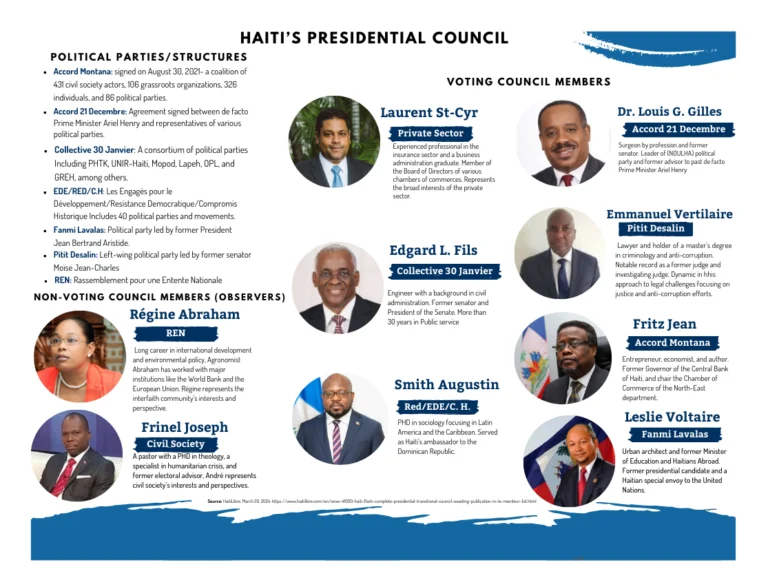
In response to the challenges posed by external interventions, Haitian civil society has begun to mobilize in favor of Haitian-led solutions. This movement seeks to empower local communities and ensure that the country’s future is determined by its own people.
The Montana Accord represents one such initiative, offering an alternative governance proposal that prioritizes Haitian interests. This and similar efforts are crucial in shaping a future that is self-determined and equitable.
Alongside formal accords, grassroots movements are playing a vital role in advocating for self-determination. These movements, driven by the needs and aspirations of local communities, are essential in pushing for a Haiti that is truly sovereign.
The path forward for Haiti requires a delicate balance between addressing immediate needs and fostering long-term sovereignty. As the country navigates these complex issues, the role of civil society and the importance of Haitian-led solutions cannot be overstated.
Haiti’s journey to self-determination is fraught with challenges that can be broadly categorized into internal obstacles and external resistance. Understanding these challenges is crucial for devising effective strategies to overcome them.
Internally, Haiti faces several obstacles that hinder its path to sovereignty. Two significant challenges are elite capture and political fragmentation, alongside capacity gaps and institutional weaknesses.
Elite capture refers to the phenomenon where a small group of powerful individuals or families control a disproportionate amount of resources and influence, often at the expense of the broader population. In Haiti, this has led to political fragmentation, where various factions vie for power, creating instability and undermining efforts towards unified governance.
Haiti also struggles with significant capacity gaps and institutional weaknesses. The country’s institutions lack the necessary resources, expertise, and infrastructure to effectively govern and provide services to the population. This weakness hampers the implementation of policies and the delivery of essential services, further complicating Haiti’s path to self-determination.
Externally, Haiti faces resistance to its autonomy primarily through geopolitical interests in the Caribbean and the paradox of international “assistance.”
The Caribbean region is of strategic interest to various global powers, and Haiti’s location makes it a point of interest. These geopolitical interests can sometimes manifest as external control or influence over Haiti’s internal affairs, complicating its quest for sovereignty.
International assistance, while often provided with the intention of helping, can create dependency and undermine Haiti’s autonomy. The influx of foreign aid can distort local economies and create a reliance on external funding, rather than encouraging self-sufficiency.
Haiti’s path to true sovereignty begins with strengthening its internal institutions. This involves a multi-faceted approach to enhance both democratic governance and economic self-sufficiency.
A robust democratic system is foundational to Haiti’s institutional capacity. This can be achieved through electoral reform and ensuring judicial independence.
Electoral reform is crucial for ensuring that Haiti’s political representation is truly reflective of its populace. This involves creating a fair and transparent electoral process that encourages participation and trust among citizens.
An independent judiciary is essential for upholding the rule of law and ensuring that the rights of citizens are protected. This requires not only legal reforms but also measures to ensure the judiciary’s independence from political pressures.
Economic self-sufficiency is another critical pillar for Haiti’s institutional capacity. This can be achieved by revitalizing agriculture and diversifying the economy.
Agricultural revitalization is key to achieving food sovereignty. By investing in agricultural infrastructure and supporting local farmers, Haiti can reduce its reliance on imported food and enhance its economic stability.
Diversifying the economy is crucial for reducing Haiti’s dependence on foreign aid. This involves promoting other sectors such as manufacturing, tourism, and renewable energy to create a more resilient economy.
The following table illustrates the potential impact of these strategies on Haiti’s institutional capacity:
| Strategy | Short-term Impact | Long-term Impact |
|---|---|---|
| Electoral Reform | Increased citizen trust in government | More representative government |
| Judicial Independence | Improved legal framework | Enhanced rule of law |
| Agricultural Revitalization | Improved food security | Economic self-sufficiency |
| Economic Diversification | Reduced aid dependence | Resilient economy |
As Haiti seeks to break free from external control, the diaspora community emerges as a vital force. The Haitian diaspora, spread across various countries, brings a wealth of resources, knowledge, and experience that can significantly contribute to the nation’s sovereignty.
The diaspora’s contribution is multifaceted, involving both financial and intellectual resources. Two key areas where their impact is felt are remittances and investment, as well as professional expertise and brain circulation.
Remittances from the diaspora are a crucial source of foreign exchange for Haiti, supporting families and stimulating local economies. Moreover, diaspora investments can drive economic growth, create jobs, and foster development. Key areas for investment include agriculture, renewable energy, and infrastructure.
The diaspora brings professional expertise that can be channeled into various sectors, including healthcare, education, and technology. Brain circulation – the flow of skilled individuals between Haiti and other countries – can enhance institutional capacity and promote innovation. This exchange can also facilitate the transfer of modern technologies and management practices.
To maximize the diaspora’s impact, it is essential to create effective partnerships that leverage their resources and expertise. This involves diaspora engagement in policy formation and political participation.
Diaspora communities can play a significant role in shaping policies that affect Haiti. By engaging in policy discussions, they can ensure that their insights and experiences inform decision-making processes. This can lead to more inclusive and effective governance.
Dual citizenship can facilitate the diaspora’s political participation, enabling them to contribute to Haiti’s political processes. This can enhance the representation of diaspora interests and promote accountability. It also allows for a more nuanced understanding of Haitian politics and society.
Haiti’s path to sovereignty requires a fundamental shift in how the international community engages with the country, moving from dependency to partnership. This change is crucial for Haiti to achieve true autonomy and self-determination.
To achieve a genuine partnership, it is essential to respect Haitian leadership and decision-making processes. This involves not only acknowledging the country’s right to self-governance but also supporting its capacity-building efforts.
International actors must prioritize Haitian perspectives and involve local leaders in the decision-making process. This collaborative approach ensures that solutions are tailored to Haiti’s specific needs and context.
Establishing robust accountability mechanisms is vital to prevent the misuse of foreign aid and ensure that international actors are transparent in their operations. This can be achieved through regular audits and assessments.
Reparative justice is a critical component of Haiti’s path to sovereignty. It involves acknowledging and addressing the historical injustices and colonial debts that have contributed to the country’s current challenges.
Haiti has long been burdened by the legacy of colonialism and exploitation. Providing reparations and restitution can help to rectify these historical wrongs and support the country’s development.
While international solidarity is crucial, it must be distinguished from intervention. Solidarity involves supporting Haiti’s efforts to achieve sovereignty, rather than imposing external solutions.
| Key Elements | Current State | Proposed Change |
|---|---|---|
| Leadership Respect | Limited Haitian involvement | Prioritize Haitian decision-making |
| Accountability | Lack of transparency | Regular audits and assessments |
| Reparative Justice | Ignoring historical injustices | Acknowledge and address colonial debts |
Haiti’s journey toward self-determination is at a critical juncture. The country’s historical struggle with external control has hindered its ability to achieve true sovereignty. To break free from this cycle, Haiti must adopt Haitian-led solutions that prioritize the needs and aspirations of its people.
Building institutional capacity is crucial to this process. Strengthening democratic governance and developing economic self-sufficiency will enable Haiti to assert its autonomy and make informed decisions about its future. A new framework for international engagement is also necessary, one that prioritizes genuine partnership and reparative justice.
The path to Haitian sovereignty requires a collective effort from the Haitian people, diaspora communities, and international partners. By working together, Haiti can overcome the challenges that have long hindered its progress and achieve the self-determination it deserves, ultimately paving a clear path to sovereignty.
Haiti’s struggle with external control dates back to its colonial past and the subsequent foreign interventions, including the US occupation from 1915 to 1934, and the impact of the “independence debt” imposed by France.
International organizations, such as the UN, IMF, and World Bank, have had a significant impact on Haiti’s sovereignty, with controversies surrounding UN missions, including the cholera epidemic, and the control of Haiti’s economic policy through structural adjustment programs.
The Haitian diaspora plays a crucial role in contributing to national sovereignty through the transfer of resources and knowledge, including remittances, investments, and professional expertise.
Haiti faces internal obstacles, such as elite capture and political fragmentation, as well as capacity gaps and institutional weaknesses, and external resistance, including geopolitical interests in the Caribbean and the paradox of international “assistance.”
Building Haitian institutional capacity requires strengthening democratic governance through electoral reform and judicial independence, and developing economic self-sufficiency by revitalizing agriculture and diversifying the economy beyond aid dependence.
The proposed new framework shifts from dependency to genuine partnership by respecting Haitian leadership and decision-making, and includes accountability mechanisms for foreign actors, and the importance of reparative justice and historical accountability.
The “independence debt” imposed by France has had a lasting impact on Haiti’s economy and sovereignty, representing a significant burden and a symbol of external control.
Foreign powers, particularly the US, have influenced Haitian politics through diplomatic interventions, security concerns, and migration management, with competing foreign agendas often shaping Haitian politics.
Gang violence and security challenges are significant concerns in Haiti, with the assassination of President Moïse and the subsequent instability highlighting the need for Haitian-led solutions to security challenges.
The Montana Accord represents an alternative governance proposal, reflecting the efforts of civil society to promote Haitian-led solutions and self-determination, and highlighting the growing calls for Haitian solutions to Haitian problems.