Physical Address
304 North Cardinal St.
Dorchester Center, MA 02124
Physical Address
304 North Cardinal St.
Dorchester Center, MA 02124

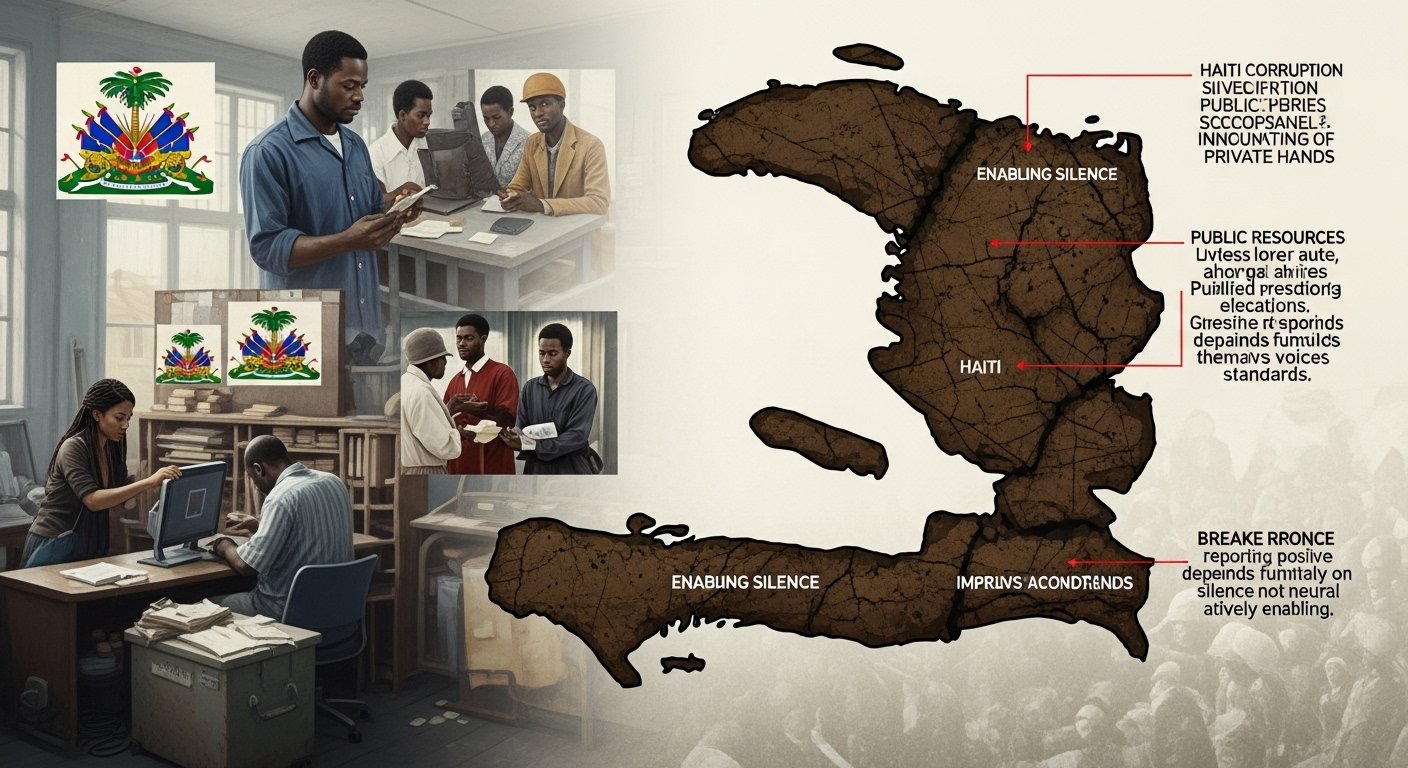
Uncover the silent acceptance enabling Haiti's corrupt status quo.
Haiti’s struggle with corruption is a deeply ingrained issue that has been perpetuated by public inaction. When citizens remain silent in the face of corruption, they inadvertently allow it to continue, creating a corrupt status quo that is difficult to challenge.
The country’s history of corruption has led to a culture of silent acceptance, where citizens feel that their actions will not lead to change. However, this mindset only perpetuates the problem, allowing corruption to thrive.
Understanding Haiti’s corruption requires a look into its past, where colonial legacy and post-independence power struggles laid the groundwork for modern-day corruption. The historical context provides crucial insights into how corruption has become entrenched in Haitian society.
Haiti’s history of corruption began with its colonial past. The exploitation by European colonizers created a system where power was concentrated among a few, fostering an environment of corruption. This legacy continued even after independence, influencing governance structures.
After gaining independence, Haiti’s power structures were shaped by those who controlled the military and economy. This led to a continuation of the exploitative practices started during colonial times, with new leaders often prioritizing personal gain over public welfare.
Key factors included:
The Duvalier regime, known for its authoritarian rule, further entrenched corruption in Haiti. The regime’s practices, including forced labor and expropriation of resources, normalized corruption and created a culture of fear and compliance.
The effects of the Duvalier era are still seen today, with many of the governance issues rooted in practices established during that time.
The current state of corruption in Haiti is a pressing concern that requires immediate attention. Corruption permeates various aspects of Haitian society, hindering development and exacerbating social issues.
Corruption in Haiti affects several key sectors, including government and public administration, as well as aid distribution and NGO operations.
In the government and public administration sector, corruption manifests through bribery, embezzlement, and nepotism. These practices undermine the effectiveness of public services and erode trust in government institutions.
The aid distribution sector is also significantly impacted by corruption. NGOs operating in Haiti often face challenges related to transparency and accountability, which can lead to the misappropriation of funds intended for humanitarian assistance.
Haiti’s corruption rankings provide a quantitative insight into the severity of the issue. According to Transparency International’s Corruption Perceptions Index (CPI), Haiti has consistently ranked among the most corrupt countries in the world.
| Year | CPI Score | Global Rank |
|---|---|---|
| 2020 | 20 | 170/180 |
| 2021 | 19 | 174/180 |
| 2022 | 18 | 176/180 |
Recent high-profile corruption cases in Haiti have drawn significant attention to the issue. For instance, the embezzlement of funds from the PetroCaribe program, a Venezuelan-Haitian initiative aimed at providing affordable oil to Haiti, has been a major scandal.
Such cases highlight the need for greater transparency and accountability in government and public administration.
Haiti’s corrupt status quo is enabled by a complex interplay of factors, including the silent acceptance of its citizens. This phenomenon is not merely a passive stance but an active facilitation of the corrupt system.
“Silent acceptance” refers to the widespread tolerance or acquiescence to corrupt practices among Haitians. This acceptance can stem from fear, resignation, or a lack of awareness about alternative systems.
The psychological underpinnings of collective inaction are multifaceted. Fear of retribution and learned helplessness play significant roles. When citizens feel that speaking out against corruption will result in negative consequences, they are less likely to act.
| Mechanism | Description | Impact |
|---|---|---|
| Fear of Retribution | Fear of negative consequences for speaking out | Suppresses dissent |
| Learned Helplessness | Belief that individual actions won’t change the status quo | Reduces civic engagement |
Corruption becomes normalized when it is embedded in everyday transactions and interactions. This normalization desensitizes the population to its negative impacts, making it a pervasive and entrenched issue.
In conclusion, the silent acceptance of corruption in Haiti is a complex issue rooted in psychological, social, and economic factors. Understanding these dynamics is crucial for developing effective strategies to combat corruption.
Haitian citizens play a complex role in the country’s corruption dynamics, often caught between survival and moral compromise. The harsh realities of life in Haiti, including widespread poverty and lack of access to basic services, force many into a daily struggle for survival.
In this context, survival mechanisms often lead to corruption participation. For instance, bribing officials to expedite services or to secure employment is a common practice. As one Haitian citizen noted, “To survive, you have to play by the rules, even if those rules are corrupt.” This normalization of corruption in daily life makes it challenging to distinguish between right and wrong.
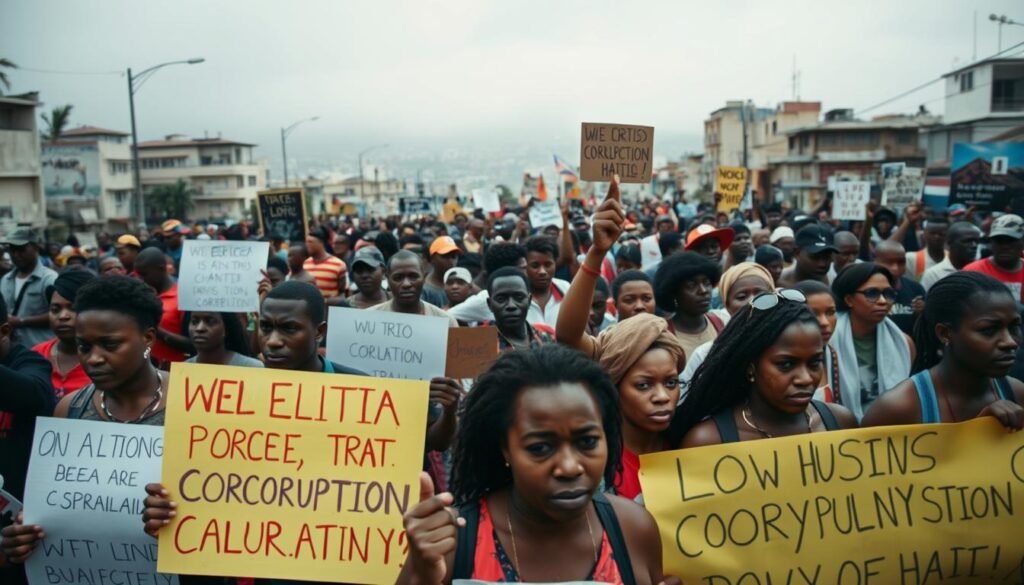
Despite the desire for change, civic engagement and protest are often hindered by various barriers. Fear of reprisal, lack of trust in institutions, and the belief that individual actions won’t effect change are significant deterrents. As a result, many Haitian citizens feel disenfranchised, caught in a cycle that perpetuates the corrupt status quo.
“The system is so entrenched that it feels impossible to change. You risk everything for little gain.”
This sentiment highlights the complexity of the issue and the need for multifaceted solutions to encourage civic participation and challenge corruption.
The international community’s inaction has significantly contributed to the perpetuation of corruption in Haiti. Despite receiving substantial foreign aid, Haiti remains one of the most corrupt countries in the world.
One of the primary factors enabling this corruption is the lack of accountability measures attached to foreign aid. Billions of dollars in aid have been disbursed without stringent oversight, allowing corrupt officials to exploit these funds for personal gain.
Foreign aid to Haiti has often been provided without adequate mechanisms to ensure its effective use. This lack of accountability has led to widespread misuse of funds, further entrenching corruption.
| Year | Aid Amount (USD) | Accountability Measures |
|---|---|---|
| 2010 | 1.2 billion | Limited |
| 2015 | 1.5 billion | Moderate |
| 2020 | 2.0 billion | Minimal |
Geopolitical interests often take precedence over governance concerns in Haiti, leading to a lack of pressure on the Haitian government to reform. This prioritization of geopolitical interests over good governance has allowed corruption to persist.
The United States has historically played a significant role in Haiti’s affairs, often prioritizing its own geopolitical interests over Haitian governance and stability. This complex relationship has contributed to the current state of corruption in Haiti.
In conclusion, the international community’s inaction, particularly in terms of foreign aid without accountability and geopolitical interests overshadowing governance concerns, has significantly contributed to Haiti’s corruption crisis.
The media’s portrayal of Haiti significantly influences public perception. The way Haiti is covered in international news can shape global understanding and attitudes towards the country.
“Disaster fatigue” is a phenomenon where the public becomes desensitized to recurring negative news about a particular region. Haiti, being one of the most disaster-prone countries, often falls victim to this kind of media fatigue. As a result, the severity of its issues may be downplayed or overlooked.
“The constant stream of negative news about Haiti can lead to a sense of hopelessness among the public, making it seem like the country’s problems are insurmountable.”
Inconsistent international attention also affects how Haiti is perceived globally. When major disasters occur, Haiti receives a surge of media coverage, but this attention is often short-lived. The table below illustrates the fluctuation in media attention towards Haiti over the years.
| Year | Major Events | Media Coverage Index |
|---|---|---|
| 2010 | Earthquake | 80 |
| 2016 | Hurricane Matthew | 60 |
| 2021 | Assassination of President Moïse | 70 |
This inconsistency can lead to a lack of sustained public interest and engagement, ultimately affecting the country’s ability to garner long-term support for its development.
The tolerance of corruption in Haiti has far-reaching economic implications that affect its development trajectory. Corruption tolerance not only hampers economic growth but also discourages foreign investment, perpetuates poverty, and stifles local entrepreneurship.
One of the significant economic consequences of corruption tolerance is the deterrence of foreign investment. Investors are wary of investing in environments where corruption is rampant, as it increases the risk of their investments being compromised. Corruption acts as an informal tax, making it costly to do business in Haiti. Moreover, corruption facilitates capital flight, as corrupt officials and businesspeople often stash their illicit gains abroad, depriving the country of much-needed capital for development.
Corruption and poverty are interlinked in a vicious cycle. Corruption exacerbates poverty by diverting resources meant for public welfare into private pockets. This misappropriation reduces the government’s ability to provide essential services, further impoverishing the population. In turn, poverty makes the population more vulnerable to corrupt practices, as people may be forced to bribe officials to access basic services.
| Indicator | Corruption Impact | Economic Consequence |
|---|---|---|
| Foreign Investment | Decreased due to corruption risk | Reduced capital inflow |
| Poverty Levels | Increased due to resource misappropriation | Higher poverty rates |
| Local Entrepreneurship | Hindered by corrupt practices | Stunted economic growth |
The tolerance of corruption also has a detrimental effect on local entrepreneurship and development. Corrupt practices create an uneven playing field, where businesses that bribe officials have a competitive advantage over those that operate ethically. This environment discourages innovation and entrepreneurship, as businesses focus on maintaining corrupt relationships rather than improving their products or services.
In conclusion, the economic consequences of corruption tolerance in Haiti are multifaceted and far-reaching. Addressing corruption is crucial for fostering a conducive business environment, attracting foreign investment, and promoting sustainable development.
As corruption becomes entrenched in Haitian society, the social consequences are profound and multifaceted. The pervasive nature of corruption affects not only the economy but also the social fabric, leading to a breakdown in trust and social cohesion.
The erosion of trust in institutions is a significant social cost of corruption. When citizens perceive that institutions are corrupt, they are less likely to trust them, leading to disengagement and disillusionment. This mistrust can undermine the legitimacy of institutions and hinder efforts to address societal problems.
Corruption also contributes to brain drain and diaspora formation. Talented individuals often seek opportunities abroad to escape the corrupt environment, leading to a loss of skilled professionals who could contribute to Haiti’s development. This diaspora, while sometimes a source of remittances, represents a significant loss of human capital.
Furthermore, generational attitudes toward corruption are shaped by the normalization of corrupt practices. Younger generations may view corruption as an inevitable part of life, making it challenging to instill a culture of transparency and accountability. This perpetuates a cycle of corruption that is difficult to break.

The fight against corruption in Haiti is being led by courageous individuals and organizations at the grassroots level. These anti-corruption initiatives are crucial in challenging the entrenched corrupt status quo and fostering a culture of transparency and accountability.
Grassroots movements in Haiti are pivotal in the fight against corruption. Organizations such as the Haitian Coalition for Transparency are working tirelessly to expose corrupt practices and empower citizens. For instance, a recent survey highlighted that 70% of Haitians believe that collective action can make a difference in reducing corruption.
“Corruption is not just a Haitian problem, it’s a global issue that requires local solutions,” said a representative from the Haitian Coalition for Transparency.
International transparency programs have shown significant promise in combating corruption in Haiti. Initiatives such as the Extractive Industries Transparency Initiative (EITI) have improved transparency in the extractive sector. A comparative analysis of EITI implementation in various countries is shown in the table below:
| Country | EITI Implementation Year | Corruption Perception Index Score |
|---|---|---|
| Haiti | 2014 | 20 |
| Norway | 2009 | 84 |
| Nigeria | 2007 | 27 |
Digital solutions are playing an increasingly important role in anti-corruption efforts. Technologies such as blockchain are being used to track transactions and ensure transparency. For example, a blockchain-based platform is being piloted to monitor aid distribution in Haiti, ensuring that funds reach their intended recipients.
Achieving accountability and reform in Haiti requires a multifaceted approach that addresses the root causes of corruption. This involves a combination of legal, institutional, and social changes that promote transparency and civic engagement.
Effective reform in Haiti must include legal and institutional changes that strengthen anti-corruption laws and enhance the capacity of institutions to enforce these laws. This includes reforming the judiciary, improving law enforcement training, and implementing robust accountability mechanisms.
Civic engagement is crucial for demanding accountability. Strategies to build civic engagement include supporting grassroots movements, enhancing civic education, and creating platforms for citizens to participate in decision-making processes.
Education plays a vital role in changing cultural attitudes towards corruption. Initiatives that promote integrity and transparency in schools and communities can help foster a culture that rejects corrupt practices. This includes incorporating anti-corruption education into school curricula and promoting community-based programs that encourage ethical behavior.
Haiti’s corruption crisis is a complex issue that requires a multifaceted solution. The silent acceptance of corruption has enabled the status quo, but it’s time for a change. By understanding the historical context and current state of corruption, we can begin to break the cycle of inaction.
Combating corruption requires collective action and a shift from silent acceptance to active resistance. Haitian citizens, the international community, and local institutions must work together to promote transparency and accountability.
Successful anti-corruption initiatives, such as grassroots movements and digital solutions, offer promising pathways to reform. By building on these efforts and fostering a culture of resistance against corruption, Haiti can move towards a more equitable and just society.
The journey to combating corruption is ongoing, but with persistence and collective action, it’s possible to create a brighter future for Haiti. Active resistance against corruption can lead to meaningful change and a better quality of life for the Haitian people.
The main cause of corruption in Haiti is a complex issue with multiple factors, including a colonial legacy, post-independence power structures, and the impact of the Duvalier era, which have all contributed to the current state of corruption.
Corruption in Haiti deters investment, fuels capital flight, perpetuates the poverty-corruption cycle, and impacts local entrepreneurship and development, ultimately hindering the country’s economic growth and stability.
Haitian citizens may participate in corruption as a survival mechanism, and barriers to civic engagement and protest can prevent them from actively resisting corruption, thereby perpetuating the status quo.
The international community’s inaction, including foreign aid without accountability measures, geopolitical interests overshadowing governance concerns, and the historical relationship between the US and Haiti, can all contribute to Haiti’s corruption.
Successful anti-corruption initiatives in Haiti include grassroots movements, international transparency programs, and digital solutions and technological approaches, which can help combat corruption and promote accountability.
Addressing corruption in Haiti requires a multi-faceted approach, including legal and institutional reforms, building civic engagement and resistance, and education and cultural change approaches, which can help promote accountability and transparency.
Corruption in Haiti erodes trust in institutions, fuels brain drain and diaspora formation, and shapes generational attitudes toward corruption, ultimately having a profound impact on the social fabric of the country.
Media coverage can influence public perception of Haiti by creating “disaster fatigue” and inconsistent international attention, which can impact how the international community responds to Haiti’s issues.