Physical Address
304 North Cardinal St.
Dorchester Center, MA 02124
Physical Address
304 North Cardinal St.
Dorchester Center, MA 02124

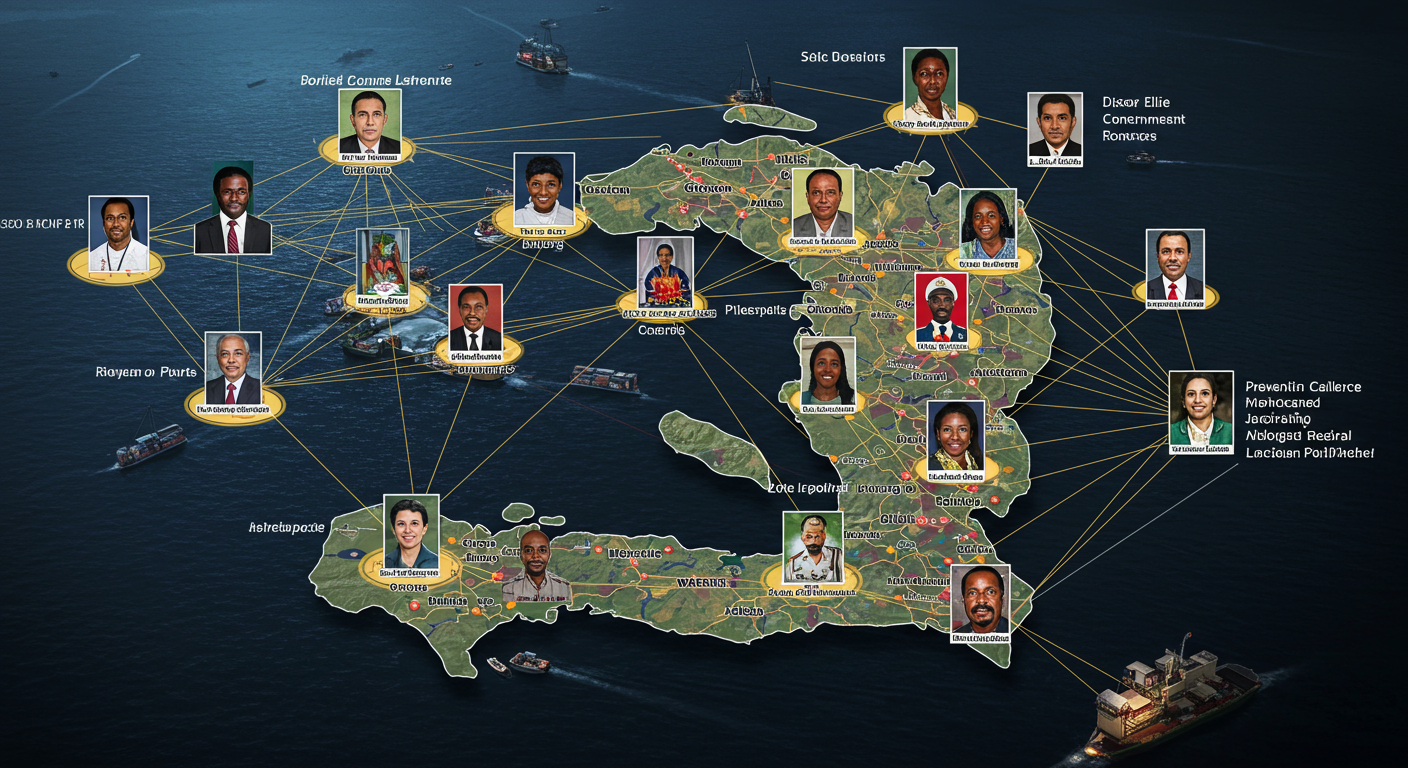
Explore the shocking reality of 500 corrupt individuals controlling Haiti's future in "The Rule of the Few".
Haiti, a country with a rich history and culture, is plagued by corruption that affects its development and future. At the heart of this issue are a few hundred individuals who wield significant power and influence.
The grip of corrupt individuals on Haiti’s political and economic systems is a major obstacle to progress. This small group controls key sectors, including government and business, hindering efforts to bring about positive change and shape Haiti’s destiny.
Haiti’s history is marked by a revolutionary birth that set the stage for its future vulnerabilities. The nation’s journey to independence was a complex process that laid the groundwork for its modern-day issues.
The Haitian Revolution, which began in 1791, was a pivotal event in Haitian history. Led by figures such as Toussaint Louverture, Boukman Dutty, and Jean-Jacques Dessalines, the revolution was a successful slave revolt that led to Haiti becoming the first independent black nation in the world. This revolution was not only a significant moment for Haiti but also had far-reaching implications for the world, challenging the institution of slavery and inspiring other independence movements.
Following its independence in 1804, Haiti faced numerous challenges, including economic isolation and foreign interference. The new nation was forced to pay indemnities to France, its former colonizer, which drained its resources and hindered its development. This period also saw the rise of internal conflicts and power struggles that further weakened the nation. The influence of foreign powers continued to shape Haiti’s destiny, often to the detriment of its sovereignty.
The historical context of Haiti laid the seeds for modern corruption. The legacy of foreign interference, coupled with internal power struggles, created an environment conducive to corruption.
“Corruption is a major obstacle to Haiti’s development, and its roots are deeply embedded in the country’s history and political system.”
Understanding this historical context is crucial to addressing the issue of corruption and its impact on Haiti’s vulnerability.
At the heart of Haiti’s turmoil lies a complex network of influential individuals who wield significant power over the country’s destiny. This small group, estimated to be around 500 people, has managed to control key aspects of Haitian society, from politics and economy to social structures.
The power elite in Haiti is composed of various individuals and groups, each playing a crucial role in maintaining their collective influence. Two primary categories within this elite group are political figures and business oligarchs.
Political figures in Haiti often have extensive networks that span across government institutions, political parties, and even some civil society organizations. These networks enable them to exert control over policy-making processes and governance structures. For instance, former presidents and high-ranking government officials often maintain significant influence even after leaving office, using their connections to shape political outcomes.
Business oligarchs in Haiti control key sectors of the economy, including finance, trade, and natural resources. Their economic dominance allows them to influence government policies and decisions, often to their advantage. By financing political campaigns and maintaining close relationships with political leaders, these oligarchs ensure that their interests are protected and advanced.
The power elite in Haiti is characterized by a highly interconnected web of relationships. Political figures, business oligarchs, and other influential individuals often have overlapping interests and alliances. This interconnectedness strengthens their collective grip on Haitian society, making it challenging for outsiders to penetrate or challenge their dominance.
For example, marriages between families of political leaders and business oligarchs can solidify alliances and create powerful clans that control significant portions of Haiti’s economy and politics. Additionally, shared business ventures and investments further entwine their interests, making it difficult to distinguish between personal and public interests.
The power elite in Haiti employs various methods to maintain their control and manipulate the system to their advantage. These methods include political patronage, electoral fraud, and the strategic use of violence or intimidation. By controlling key institutions, such as the judiciary and security forces, they can suppress opposition and dissent, ensuring their continued dominance.
Furthermore, they often use their influence to shape public opinion through media control and manipulation, creating narratives that support their interests and undermine their opponents.
The institutionalization of corruption in Haiti is a complex phenomenon rooted in historical and contemporary factors. It is a process that has been fueled by a combination of political, economic, and external influences.
Political patronage has played a crucial role in entrenching corruption in Haiti. This system involves the exchange of goods and services for political loyalty, creating a dependency that fosters an environment ripe for corrupt practices. Leaders often use state resources to reward supporters, thereby consolidating their power and ensuring their continued influence.
Economic capture strategies have been employed to further entrench corruption. Elites have manipulated economic policies and controlled key sectors to accumulate wealth and maintain their grip on power. This has resulted in a lack of economic opportunities for the broader population, exacerbating inequality and poverty.
External support and aid have also contributed to the institutionalization of corruption. While intended to support development, foreign aid has often been misappropriated by corrupt officials. This has not only undermined the effectiveness of aid but also perpetuated a cycle of dependency and corruption.
As noted by a prominent observer,
“Corruption in Haiti is not just a matter of individual malfeasance but a systemic issue that requires a comprehensive approach to address.”
Understanding these dynamics is crucial for developing strategies to combat corruption and promote sustainable development in Haiti.
Haiti’s economic stranglehold is a result of systemic corruption and elite capture of key resources. This has led to a situation where a small group of powerful individuals controls the majority of the country’s economy.
The corrupt elite in Haiti has managed to gain control over key industries such as agriculture, manufacturing, and trade. This control allows them to dictate market prices, manipulate supply chains, and monopolize lucrative business opportunities. As a result, they accumulate vast wealth while the general population suffers from poverty and lack of access to basic goods and services.
“The control of key industries by a few individuals has stifled competition and innovation, further exacerbating Haiti’s economic woes.”
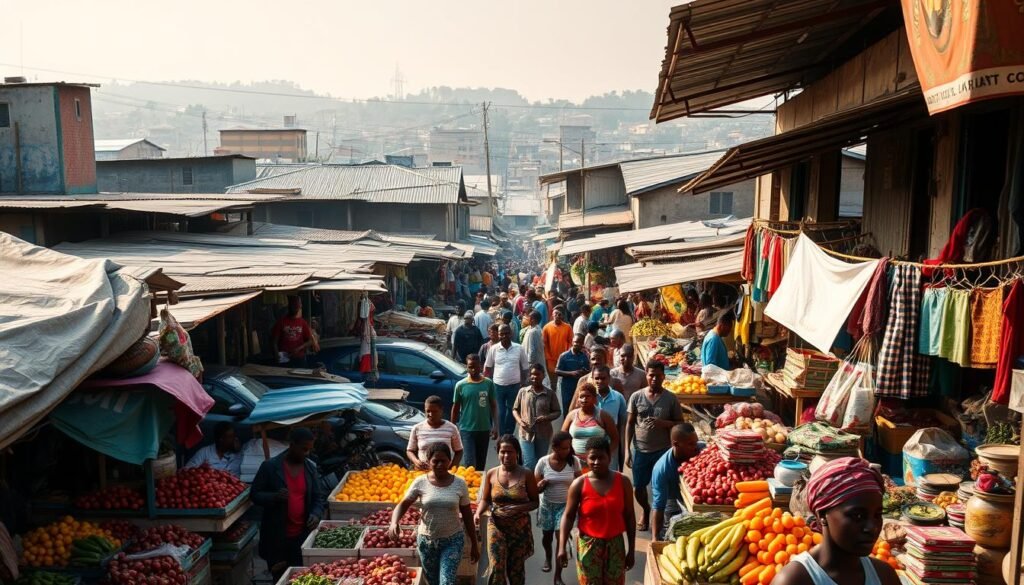
A significant portion of Haiti’s economy operates in the informal sector, with many transactions occurring outside of official channels. This informal economy is often linked to black markets, where goods are sold without regulation or taxation. The corrupt elite benefit from these operations through various means, including extortion and bribery.
Wealth extracted from Haiti is often laundered through offshore banking systems, hiding the true ownership and source of the funds. This process involves complex financial transactions that allow the corrupt elite to maintain their wealth and power.
One of the primary methods used by the corrupt elite to maintain their wealth is through tax evasion. By exploiting loopholes and using complex financial structures, they avoid paying taxes on their vast fortunes.
Money laundering operations are another critical aspect of how the corrupt elite maintain their grip on Haiti’s economy. By laundering money through various channels, they are able to legitimize their ill-gotten gains and continue to accumulate wealth.
The economic stranglehold on Haiti can only be broken by addressing these systemic issues and promoting transparency and accountability.
Haiti’s governance has been marred by political manipulation, serving as a tool for personal enrichment. This manipulation undermines the country’s political stability and governance, affecting the lives of millions.
Electoral processes in Haiti have been compromised by interference and fraud, influencing the outcome of elections. This not only erodes trust in the electoral system but also skews representation, favoring those with power and influence.
The judicial system in Haiti is plagued by corruption, with the rule of law often being bent to serve personal or political interests. This corruption undermines justice and perpetuates inequality.
Security forces, instead of serving the public interest, are sometimes used as private armies for those in power. This abuse of power further destabilizes the political landscape and intimidates opposition.
| Aspect of Governance | Impact of Political Manipulation | Consequences |
|---|---|---|
| Electoral Process | Interference and Fraud | Undermined Trust, Skewed Representation |
| Judicial System | Corruption | Undermined Justice, Perpetuated Inequality |
| Security Forces | Abuse of Power | Destabilized Political Landscape, Intimidation |
The pervasive corruption in Haiti has led to a myriad of societal issues, most notably a significant human cost. This cost is not just financial; it encompasses the degradation of living standards, health outcomes, education, and overall well-being of the Haitian people.
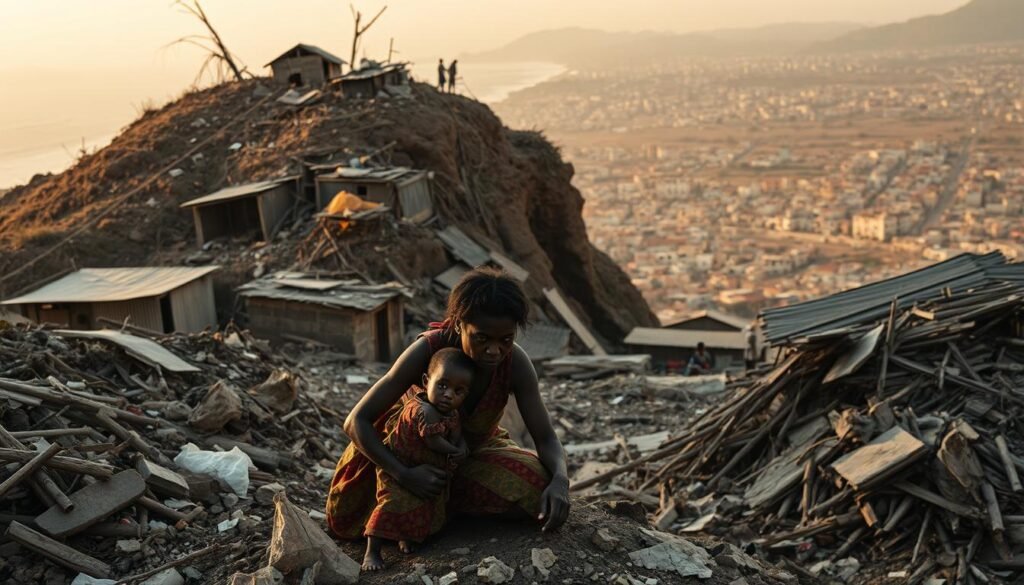
Corruption has exacerbated poverty and inequality in Haiti, creating a vast chasm between the rich elite and the impoverished majority. The concentration of wealth among a few individuals has led to a lack of access to basic services for the majority, perpetuating a cycle of poverty.
According to recent statistics, a significant portion of Haiti’s population lives below the poverty line, with limited access to clean water, sanitation, and healthcare. This economic disparity is further complicated by the lack of opportunities for social mobility.
| Indicator | Haiti’s Rank | Regional Average |
|---|---|---|
| Poverty Rate | 60% | 40% |
| Inequality Index | 0.6 | 0.5 |
The corruption has also led to significant challenges in the healthcare and education sectors. Underfunding, lack of infrastructure, and brain drain have resulted in a healthcare crisis, making it difficult for Haitians to access quality medical care.
“The healthcare system in Haiti is on the brink of collapse. Corruption and lack of investment have led to a severe shortage of medical supplies and personnel.”
The education crisis is equally dire, with many schools lacking basic facilities and trained educators. This has resulted in a poorly educated workforce, further hindering the country’s development.
The dire conditions in Haiti have led to a significant migration of its citizens, seeking better opportunities abroad. This brain drain has deprived the country of its most talented individuals, further exacerbating the societal challenges.
The loss of skilled workers not only affects the economy but also the social fabric of Haiti, as families are separated and communities are left without leaders and innovators.
Foreign entities play a crucial role in enabling and benefiting from Haiti’s corrupt system. The international dimensions of corruption in Haiti are complex and multifaceted, involving foreign aid diversion, international business complicity, and diplomatic relationships that often prioritize political or economic interests over the welfare of the Haitian people.
One of the significant international dimensions is the diversion and mismanagement of foreign aid. Despite receiving substantial aid, Haiti remains one of the poorest countries in the Western Hemisphere. A considerable portion of this aid is diverted through corrupt practices, with funds often ending up in the pockets of corrupt officials rather than being used for their intended purposes.
“The aid system in Haiti is broken. Much of the aid is not reaching the people who need it most, and it’s being misused by corrupt officials,” said a former USAID official.
International businesses also play a role in Haiti’s corruption. Companies operating in Haiti often engage in practices that perpetuate corruption, such as bribing officials to secure contracts or ignoring environmental and labor regulations. This complicity not only harms the Haitian economy but also undermines efforts to combat corruption.
| Company | Industry | Allegations |
|---|---|---|
| XYZ Inc. | Construction | Bribery of government officials |
| ABC Corp. | Manufacturing | Violation of labor laws |
Diplomatic relationships also significantly impact Haiti’s corruption landscape. Foreign governments often provide support to Haitian political figures or parties that align with their interests, sometimes turning a blind eye to corrupt practices. This political leverage can perpetuate corruption by protecting corrupt officials from accountability.
The international community must recognize its role in enabling Haiti’s corruption and take steps to address these issues. This includes reforming aid delivery mechanisms, holding international businesses accountable for their practices in Haiti, and ensuring that diplomatic relationships are not used to shield corrupt officials.
Despite the overwhelming control exerted by a few corrupt individuals, Haitian civil society remains a powerful force against corruption. The resilience of Haitian opposition is a testament to the strength and determination of its people.
Civil society organizations in Haiti are at the forefront of the battle against corruption. They work tirelessly to expose corrupt practices and advocate for transparency and accountability. These organizations often face significant challenges, including limited resources and hostile environments.
Grassroots movements are crucial in mobilizing communities against corruption. These movements often involve local leaders and ordinary citizens who are determined to bring about change. They use various strategies, including protests, awareness campaigns, and community organizing.
| Movement | Focus Area | Impact |
|---|---|---|
| Komisyon Fanm Viktim pou Viktim | Women’s Rights and Anti-Corruption | Advocacy and Support for Victims |
| Rasanbleman pou Diyite Ayiti | Human Rights and Transparency | Community Mobilization and Awareness |
Independent media plays a vital role in uncovering corruption, while whistleblowers risk their safety to reveal the truth. Together, they bring to light corrupt practices that might otherwise remain hidden.
Whistleblowers and journalists often face severe repercussions for their actions, including threats, violence, and intimidation. Despite these dangers, many continue to speak out against corruption.
Despite the challenges, there have been significant successes in the fight against corruption, with some cases leading to the prosecution of corrupt officials. These successes demonstrate the impact that dedicated individuals and organizations can have.
Breaking the cycle of corruption in Haiti demands a comprehensive strategy that involves institutional reform, international cooperation, and civil society empowerment. To achieve meaningful change, it’s essential to understand the complex interplay of factors that have perpetuated corruption.
Institutional reform is critical to Haiti’s development. Strengthening the judiciary, enhancing transparency in government contracting, and improving public financial management are key areas of focus. Institutional reforms can help reduce corruption and increase trust in government.
Reforming the security sector is also vital, ensuring that the police and other security forces serve the public interest rather than private or political agendas. This involves professionalizing the security forces and ensuring they are accountable to civilian authorities.
International accountability mechanisms can play a crucial role in supporting Haiti’s reform efforts. This includes ensuring that international aid is used effectively and that foreign businesses operating in Haiti adhere to high standards of transparency and integrity.
Mechanisms such as automatic exchange of tax information and beneficial ownership registries can help prevent the misuse of Haiti’s resources by corrupt elites and their international enablers.
Empowering Haitian civil society is essential for sustaining reform efforts. Civil society organizations are crucial in holding governments accountable, advocating for the rights of marginalized communities, and providing essential services.
Supporting civil society involves not just financial assistance but also capacity-building initiatives that enhance their ability to advocate for change and monitor government activities. By empowering civil society, Haiti can build a more inclusive and equitable society.
In conclusion, breaking the cycle of corruption in Haiti requires a multifaceted approach that includes institutional reform, international accountability, and civil society empowerment. By working together, these pathways can help create a more just and equitable society.
Haiti’s destiny, controlled by a mere 500 corrupt individuals, paints a grim picture of a nation held hostage by a power elite. The historical context, institutionalized corruption, economic stranglehold, and political manipulation have all contributed to the country’s dire state.
The human cost of this corruption is evident in the widespread poverty, inequality, and crises in healthcare and education. However, amidst this adversity, Haitian civil society has shown remarkable resilience and resistance. Grassroots movements, independent media, and whistleblowers continue to challenge the status quo.
Breaking the cycle of corruption requires a multifaceted approach, including institutional reform, international accountability mechanisms, and empowering Haitian civil society. As Haiti looks to the future, there is a glimmer of hope that the rule of the few can be overcome. By understanding the complex web of influence and control, Haitians and the international community can work together to create a more equitable society.
Haiti’s future beyond the rule of the few is possible, but it demands sustained effort and commitment to transparency and accountability. The path forward is fraught with challenges, but the resilience of the Haitian people offers a beacon of hope for a brighter future.
The article explores how a small group of corrupt individuals controls Haiti’s future, highlighting the main keyword and setting the stage for a detailed analysis.
Haiti’s revolutionary birth, post-independence challenges, and foreign interference have all contributed to its current state, shaping its present and making it vulnerable to corruption.
The power elite includes political figures and business oligarchs who maintain their influence through interconnected networks, controlling key industries, trade, and the informal economy.
Corruption became ingrained through political patronage systems, economic capture strategies, and the leveraging of external support and aid, which perpetuated corrupt practices.
Corruption has led to poverty, inequality, healthcare and education crises, and migration, having a devastating human cost on Haitian society.
Foreign aid diversion and mismanagement, as well as international business complicity, have contributed to Haiti’s corruption, with diplomatic relationships also playing a role.
Haitian civil society organizations, grassroots movements, and independent media are resisting corruption, despite facing challenges and dangers, and have achieved some successes.
Institutional reform strategies, international accountability mechanisms, and empowering Haitian civil society are being explored as potential pathways to break the cycle of corruption and promote positive change.
Understanding Haiti’s corruption is crucial to addressing its impact on the country and its people, and to promoting reform and positive change.