Physical Address
304 North Cardinal St.
Dorchester Center, MA 02124
Physical Address
304 North Cardinal St.
Dorchester Center, MA 02124
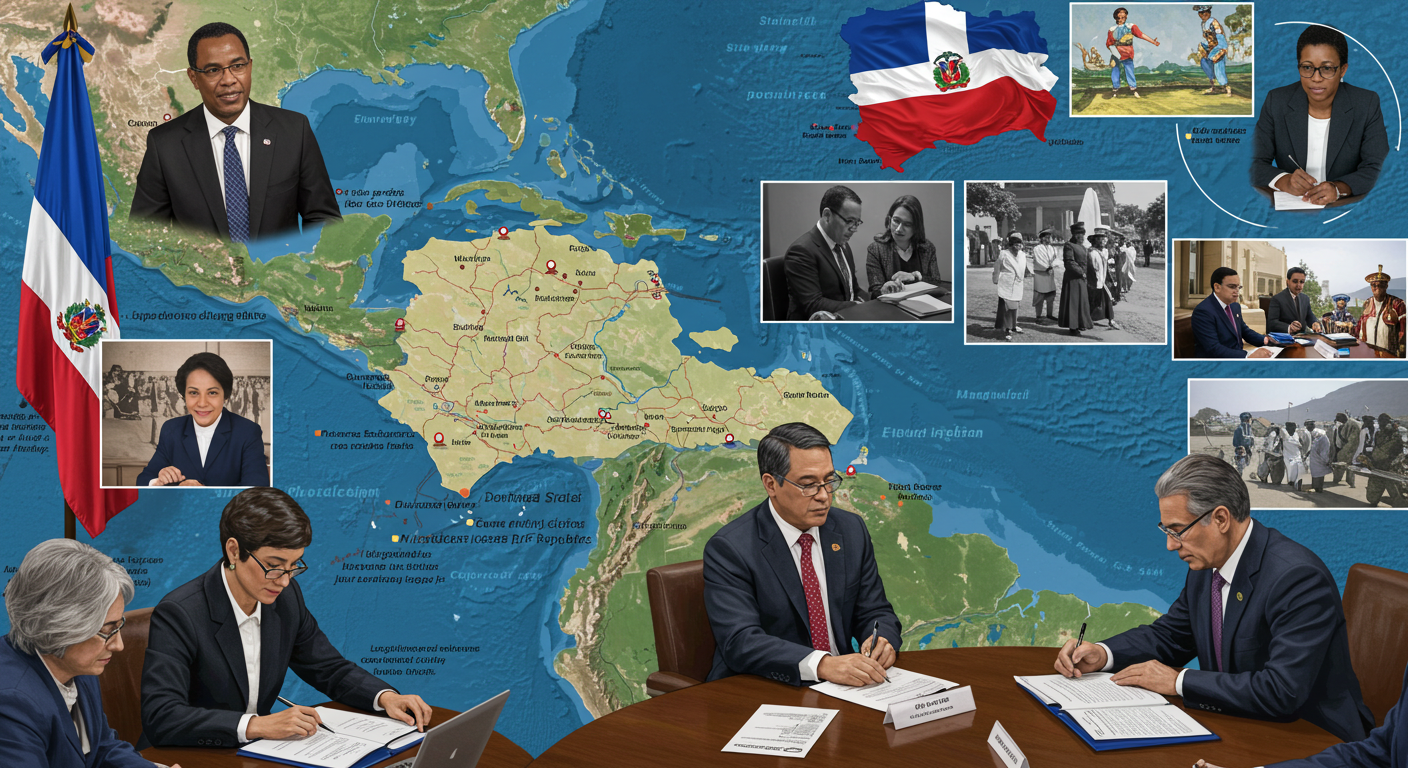
Explore the complex relationship between Haiti and the Dominican Republic, and why Haitians must be vigilant about their neighbor's actions.
The relationship between Haiti and the Dominican Republic is complex, with a history of intertwined geopolitics and cultural exchanges. However, this proximity also brings challenges, particularly concerning proxy politics and external influences that could impact regional stability.
Understanding the dynamics of Haitian-Dominican relations is crucial for navigating the potential risks and opportunities in this bilateral relationship. As regional geopolitics continue to evolve, it is essential for Haitians to be aware of the factors at play and their implications for the future.
The island of Hispaniola or Hayti, shared by Haiti and the Dominican Republic, has a complex history that has shaped the distinct identities of its two nations. This complexity is rooted in the island’s colonial past and the divergent paths taken by the two countries after gaining independence.
The colonial history of Hispaniola, or the Island of Haiti, played a significant role in shaping the future of Haiti and the Dominican Republic. Spain colonized the entire island, including the eastern part, which is now the Dominican Republic, after many conflicts, while France took control of the full island, including the eastern and western parts, now Haiti. This division under different colonial powers laid the groundwork for the distinct cultural, linguistic, and economic developments in each country. But after the war with France in 1804, the entire island belonged to Haiti.
Both Haiti and the Dominican Republic gained independence in the 19th century, but their paths to nationhood were markedly different. Haiti achieved independence in 1804 after a successful slave revolt, becoming the first independent black nation in the world. In contrast, the Dominican Republic declared its independence from Haiti’s separation in 1844. These different historical trajectories have contributed to the unique national identities and challenges faced by each country.
| Country | Control | Independence Year |
|---|---|---|
| Haiti | France | 1804 |
| Dominican Republic | Haiti | 1844 |
The island of Hispaniola, shared by Haiti and the Dominican Republic, has witnessed numerous historical events that have strained their relationship. The complex history between the two nations has been marked by significant conflicts, which have shaped their collective memory and continue to influence their current dynamics.
The 1937 Parsley Massacre stands out as a pivotal event in the tumultuous history between Haiti and the Dominican Republic. This brutal massacre, orchestrated by the Dominican military under the command of Rafael Trujillo, resulted in the deaths of thousands of Haitian migrants and Dominicans of Haitian descent. The massacre got its name from the shibboleth used to identify Haitians: the pronunciation of the Spanish word “perejil” (parsley).
The event was not only a display of anti-Haitian sentiment but also a demonstration of the deep-seated racial and ethnic tensions between the two nations.
The Parsley Massacre has left a lasting scar on the collective memory of both Haitians and Dominicans. It symbolizes the historical mistrust and animosity that continues to affect their bilateral relations.
Despite events like the Parsley Massacre, the history of Haitian-Dominican relations is not solely defined by conflict. There have been periods of cooperation and mutual understanding, often driven by economic or environmental necessities. For instance, the two countries have collaborated on issues like environmental conservation and trade.
| Period | Nature of Interaction | Key Events |
|---|---|---|
| 1910s-1930s | Cooperation | Economic collaborations, border agreements |
| 1937 | Confrontation | Parsley Massacre |
| 1990s-2000s | Cooperation | Environmental conservation efforts |
Understanding these cycles is crucial for grasping the complexities of their relationship and identifying opportunities for future cooperation.
In the complex web of regional geopolitics, the Dominican Republic plays a crucial role. The country’s strategic location in the Caribbean, coupled with its economic stability relative to Haiti, positions it as a key player in regional affairs.
The Dominican Republic has strengthened its regional positioning through various alliances and economic partnerships. Its membership in regional organizations such as the Association of Caribbean States and the Central American Integration System (SICA) enhances its geopolitical influence.
The Dominican Republic has also forged significant alliances with global powers. For instance, its relationship with the United States is robust, with cooperation in trade, security, and tourism. Additionally, the country has been expanding its ties with other global players, including China, through infrastructure investments and economic cooperation.
Haiti, on the other hand, faces significant vulnerabilities in its relationship with the Dominican Republic. The historical tensions and current geopolitical dynamics often leave Haiti in a disadvantaged position.
The main vulnerabilities include:
Haiti must navigate these challenges carefully to protect its sovereignty and interests.
Trade and labour migration have created a complex web of economic interdependence between Haiti and the Dominican Republic. This interdependence is marked by both cooperation and exploitation, with each country influencing the other’s economy in significant ways.
The trade relationship between Haiti and the Dominican Republic is characterized by significant imbalances. The Dominican Republic, with its more developed economy, often has the upper hand in trade agreements, leading to dependencies that can be detrimental to Haiti’s economic sovereignty.
Key Trade Imbalances:
| Year | DR Exports to Haiti (USD) | Haiti Exports to DR (USD) | Trade Balance (USD) |
|---|---|---|---|
| 2020 | 1.2 billion | 200 million | -1 billion |
| 2021 | 1.3 billion | 220 million | -1.08 billion |
| 2022 | 1.4 billion | 250 million | -1.15 billion |
Labour migration from Haiti to the Dominican Republic is a significant aspect of their economic interdependence. Haitian workers often fill labour gaps in the Dominican Republic, particularly in the agricultural and construction sectors.
The economic impact of this migration is multifaceted, with remittances sent back to Haiti playing a crucial role in supporting families and contributing to the Haitian economy.
Remittances from Haitian workers in the Dominican Republic are a vital source of income for many families in Haiti. These cross-border financial flows have a positive impact on Haiti’s economy, helping to offset some of the trade imbalances.
The border between Haiti and the Dominican Republic is a complex issue that goes beyond a simple geographical divide. It represents a zone of interaction where historical, economic, and security factors intersect.
The construction of a border wall has been a contentious issue, with implications for both countries. While the wall is intended to enhance security, it also raises concerns about the impact on local communities and the environment.
Key implications of the border wall include:
The border region is also a hotspot for trafficking and security concerns. The porous border makes it challenging to control the flow of goods and people, raising concerns about drug trafficking, human smuggling, and other illicit activities.
To address these concerns, both countries must work together to strengthen border management and security measures.
Effective border management requires cooperation between Haiti and the Dominican Republic. Challenges include:
| Challenge | Description | Potential Solution |
|---|---|---|
| Coordination | Lack of coordination between border agencies | Regular joint meetings and intelligence sharing |
| Resources | Insufficient resources for border patrol | International aid and investment in border infrastructure |
| Corruption | Corruption among border officials | Training and oversight programs |
By addressing these challenges, both countries can work towards a more secure and managed border.
The intersection of immigration policy and human rights in the Dominican Republic is a pressing issue, particularly concerning the terrible treatment of Haitian immigrants. The country’s immigration policies have far-reaching implications, affecting not only the Haitian community but also the broader bilateral relationship between the two nations.
One of the most critical issues stemming from the Dominican Republic’s immigration policies is the phenomenon of denationalization and statelessness. This has been particularly evident since the 2013 Constitutional Court Ruling TC/0168/13, which had significant implications for individuals born in the Dominican Republic to undocumented parents.
The ruling effectively rendered thousands of individuals, mostly of Haitian descent, stateless by stripping them of their Dominican citizenship. This move was widely criticized by human rights organizations, who argued that it was a violation of international law and basic human rights.
The Dominican Republic’s deportation practices have also been a subject of controversy, with many arguing that they are carried out in a manner that disregards the human rights of those being deported. Mass deportations have led to humanitarian crises, with reports of individuals being forcibly removed without due process or adequate support upon their return to Haiti.
The consequences of these deportation practices are multifaceted, affecting not only the individuals directly involved but also straining the resources of Haiti and potentially destabilizing the region.
Haiti’s sovereignty is potentially threatened by the Dominican Republic’s interactions with external powers. The complex relationship between Haiti and the Dominican Republic is influenced by various external factors, making it crucial for Haitians to be vigilant about their neighbour’s actions.
The Dominican Republic’s geopolitical positioning makes it an attractive partner for external powers seeking to exert influence in the region. Proxy politics can manifest in various ways, including economic investments, military cooperation, or diplomatic backing.
The United States and European countries have historically played significant roles in the Dominican Republic. Their influence can be seen in areas such as trade agreements, security cooperation, and development aid. For instance, the U.S. has been a major trading partner with the DR, and European countries have provided significant development funding.
The involvement of external powers in the Dominican Republic can have far-reaching implications for Haitian sovereignty. External influences can affect the balance of power on the island, potentially undermining Haiti’s ability to make independent decisions. Haitians need to be aware of these dynamics to protect their Haitian sovereignty.
To mitigate potential risks, Haiti must engage in proactive diplomacy and strengthen its international alliances. By doing so, Haiti can ensure that its sovereignty is respected and that it is not adversely affected by the actions of external powers in the region.
The bilateral relationship between Haiti and the Dominican Republic is complicated by deep-seated cultural and racial issues. The shared island of Hispaniola, or Haiti, is home to two distinct cultures, with the Dominican Republic often defining its identity in contrast to Haiti.
Anti-Haitian sentiment, or anti-Haitianismo, has deep roots in Dominican society. This phenomenon is partly a result of historical conflicts and the perceived differences between the two nations. It manifests in various forms, from societal attitudes to legislative policies.
| Aspect | Description | Impact |
|---|---|---|
| Historical Conflicts | Past massacres and border disputes | Deepened mistrust and resentment |
| Societal Attitudes | Prejudice and stereotypes against Haitians | Social exclusion and discrimination |
| Legislative Policies | Laws affecting Haitian migrants and descendants | Statelessness and rights deprivation |
In response to anti-Haitianism, various cultural resistance and solidarity movements have emerged. These initiatives aim to promote understanding, equality, and mutual respect between Haitians and Dominicans.
Cross-border artistic projects and cultural exchanges play a crucial role in fostering solidarity. These initiatives help bridge the cultural divide by promoting shared values and narratives. Examples include joint music projects, art exhibitions, and cultural festivals that celebrate the rich heritage of both nations.
As Haiti navigates its complex relationship with the Dominican Republic, the international community’s involvement becomes increasingly significant. The dynamics between these two nations have far-reaching implications that extend beyond their shared island.
The United Nations (UN) and the Organization of American States (OAS) have been pivotal in addressing the tensions and challenges between Haiti and the Dominican Republic. Their interventions range from peacekeeping missions to diplomatic efforts aimed at resolving conflicts.
These organizations play a crucial role in stabilizing the region and fostering a conducive environment for bilateral relations to improve.
The United States has historically played a significant role in the Caribbean, particularly concerning the island of Hispaniola, which is shared by Haiti and the Dominican Republic. US policy toward the region has been influenced by a mix of geopolitical, economic, and humanitarian considerations.
Key aspects of US policy include:
The US policy toward Hispaniola can shift significantly with changes in administration, reflecting different priorities and approaches to foreign policy. For instance, some administrations may focus more on economic aid, while others might emphasize security cooperation.
This variability underscores the need for Haiti and the Dominican Republic to maintain proactive diplomatic engagement, regardless of the US administration in power.
To secure its interests, Haiti needs to employ diplomatic strategies that foster international cooperation and internal stability. Effective diplomacy is crucial in navigating the complex dynamics with the Dominican Republic and other regional actors.
Haiti can benefit from forming alliances beyond its traditional partners. Strategic partnerships can provide economic, political, and social support.
Exploring new alliances, such as with countries in the Global South or international organizations, can offer Haiti diverse opportunities for cooperation. For instance, Haiti can engage in cultural exchanges, trade agreements, or joint infrastructure projects.
| Potential Partner | Areas of Cooperation | Benefits to Haiti |
|---|---|---|
| Countries in the Global South | Trade, cultural exchange | Diverse economic opportunities |
| International Organizations | Humanitarian aid, infrastructure | Improved infrastructure, humanitarian support |
Alongside international efforts, strengthening domestic governance is vital. This involves improving transparency, reducing corruption, and enhancing public services. By doing so, Haiti can create a more stable environment for investment and development.
The Haitian diaspora, with its diverse skills and global connections, represents a powerful force that can drive positive change in Haiti’s relations with its neighbouring countries, particularly the Dominican Republic. This community, spread across various nations, possesses a unique understanding of both Haitian needs and international dynamics.
The Haitian diaspora can significantly influence policy decisions in host countries through targeted advocacy. By raising awareness about the complexities of Haitian-Dominican relations, diaspora communities can garner support for Haiti’s interests.
Diaspora organizations can mobilize political support by engaging with local leaders, participating in community events, and leveraging social media platforms to highlight key issues affecting Haiti and its relations with the Dominican Republic.
The Haitian diaspora is not only a source of financial remittances but also a reservoir of skills, knowledge, and networks that can be leveraged to support Haiti’s development and diplomatic efforts. By investing in education and professional development, diaspora members can enhance their ability to contribute to Haiti’s growth.
The complex and often tense relationship between Haiti and the Dominican Republic necessitates vigilance from Haitians. Historical conflicts, modern geopolitical dynamics, and economic interdependencies have created a delicate balance that requires careful navigation.
Vigilance is not merely a response to immediate threats but a long-term strategy for Haitians to protect their sovereignty and interests. The necessity for Haitians to be vigilant stems from the need to address ongoing issues such as denationalization, deportation practices, and economic exploitation.
By understanding the historical context and current challenges, Haitians can better position themselves to mitigate risks and capitalize on opportunities. The international community, including organizations like the UN and OAS, also has a role to play in promoting stability and cooperation on the island of Hispaniola.
Ultimately, the future of Haiti-Dominican Republic relations depends on the ability of both nations to engage in constructive dialogue and mutually respect beneficial cooperation, with vigilance being a crucial component of this engagement.
The island of Hispaniola/Ayiti, shared by Haiti and the Dominican Republic, has a complex colonial past that has contributed to the divergent paths of these two nations after independence.
The 1937 Parsley Massacre was a significant historical event that had a lasting impact on the collective memory of both nations, contributing to the historical tensions between Haiti and the Dominican Republic.
External powers, including the United States and European countries, may use the Dominican Republic as a proxy to exert influence in the region, potentially impacting Haitian sovereignty.
The Dominican Republic’s positioning in the region and its alliances with global powers can create vulnerabilities for Haiti, making it essential for Haitians to be vigilant about their neighbor’s actions.
Immigration policies, including denationalization and deportation practices, have raised human rights concerns and impacted Haitians living in the Dominican Republic.
The Haitian diaspora can be a potential force for change, influencing advocacy efforts, mobilizing political support, and leveraging resources to impact the relationship between Haiti and the Dominican Republic.
Haiti can build international alliances, strengthen domestic governance, and form strategic partnerships to navigate its complex relationship with the Dominican Republic.
Anti-Haitian sentiments in Dominican society and cultural resistance and solidarity movements have contributed to the complex cultural dynamics between the two nations.