Physical Address
304 North Cardinal St.
Dorchester Center, MA 02124
Physical Address
304 North Cardinal St.
Dorchester Center, MA 02124
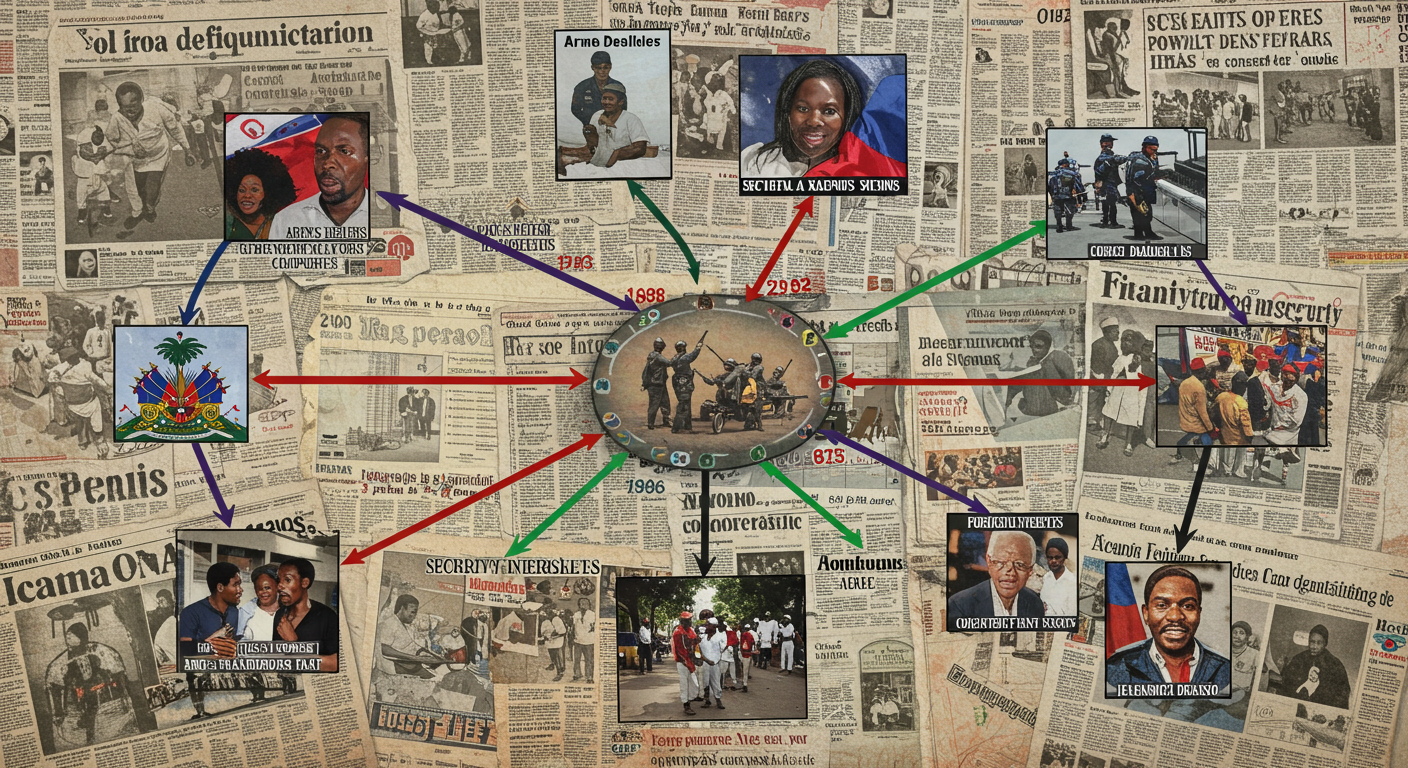
Discover the power players profiting from Haiti's instability in "The Profits of Chaos: Identifying Who Gains from Haiti's Persistent Insecurity Since 1986."
Haiti has been plagued by political chaos and instability since 1986, with various factors contributing to its persistent insecurity. The country’s tumultuous history has led to a complex web of interests, with some individuals and groups benefiting from the ongoing turmoil.
The situation in Haiti is multifaceted, involving economic, social, and political factors that have created an environment conducive to exploitation. Understanding who gains from this chaos is crucial to addressing the root causes of Haiti’s instability.
The ousting of Jean-Claude Duvalier in 1986 marked the beginning of a tumultuous era in Haiti’s history, characterized by political instability and power vacuums. This period has been marked by significant events that have shaped the country’s trajectory.
Duvalier’s departure created a political vacuum, as there was no clear successor or established democratic framework to take his place. The absence of a stable government led to a struggle for power among various factions. This struggle has been a recurring theme in Haiti’s post-Duvalier era.
Haiti’s attempts at democratic transitions have been marred by controversy and failure. The presidency of Jean-Bertrand Aristide, who came to power in 1991, was marked by political violence and his eventual ousting in 2004. “The cycle of violence and instability has continued to plague Haiti, with each successive government struggling to maintain order.” As one analyst noted,
“Haiti’s problem is not a lack of democracy, but a lack of stability and effective governance.”
Several key events have contributed to Haiti’s chronic instability, including the 1991 coup against Aristide, the 2004 ousting of Aristide, and the 2010 earthquake that devastated the country. These events have created an environment in which political instability can thrive. Understanding these turning points is crucial to grasping the complexities of Haiti’s current situation.
The political elite in Haiti have long exploited the country’s instability for their own gain. This manipulation of chaos is a complex phenomenon that involves various factions and interests within the political class.
Haiti’s political landscape is fragmented, with numerous factions vying for power. These groups often manipulate the prevailing chaos to their advantage, using it as a pretext to consolidate their positions or to discredit opponents. As one observer noted, “In Haiti, political power is often a matter of who can best exploit the prevailing disorder.”
“The political game in Haiti is not about ideology, but about who can most effectively manipulate the system to their advantage.”
Maintaining a state of insecurity can have significant electoral benefits for the political elite. By controlling the narrative around security threats, politicians can influence voter behavior and maintain their grip on power. Electoral campaigns often capitalize on the fear generated by instability, promising to restore order while actually perpetuating the conditions that keep them in power.
A notable example of political corruption during reconstruction efforts is the mishandling of funds after major crises. Reconstruction efforts have often been marred by corruption, with funds being diverted into the pockets of political elites and NGOs rather than being used for their intended purposes. This not only hampers recovery efforts but also reinforces the cycle of instability that benefits the political elite.
In conclusion, the Haitian political elite and foreign powers play a significant role in perpetuating the country’s instability. By understanding how they manipulate chaos and exploit electoral processes, we can gain a deeper understanding of the complexities of Haiti’s political landscape.
Amidst the chaos, a distinct set of businesses has found opportunities to flourish. Haiti’s persistent instability has created an environment where certain economic actors can thrive, often at the expense of the general population.
The term “import mafia” refers to powerful groups that control the importation of essential goods, such as food and fuel. These groups often engage in monopolistic practices, manipulating markets to their advantage. By limiting competition, they can dictate prices, further exacerbating economic hardship for ordinary Haitians.
Crises in Haiti often lead to an influx of international aid and reconstruction efforts, which can be lucrative for construction companies. These contracts are frequently awarded to well-connected firms that may not necessarily have a track record of delivering quality infrastructure. The lack of transparency in the bidding process can lead to corruption and further entrench inequality.
Real estate speculation is another area where economic beneficiaries capitalize on Haiti’s instability. Investors often target vulnerable communities, buying land at low prices during crises. As stability returns, the value of this land increases, allowing speculators to sell at significant profits. This practice displaces long-time residents and contributes to the cycle of poverty.
These economic beneficiaries of Haiti’s chaos highlight the complex interplay between instability and profit. Understanding these dynamics is crucial to addressing the root causes of Haiti’s ongoing crises.
The persistent instability in Haiti since 1986 has given rise to various individuals and groups who benefit from the chaos. This section aims to provide a comprehensive understanding of the beneficiaries of Haiti’s insecurity by examining the theoretical framework and categorizing the different types of profiteers.
To understand who benefits from Haiti’s instability, it’s crucial to establish a theoretical framework that considers the complex interplay of political, economic, and criminal factors. This framework should account for both direct and indirect beneficiaries, as well as the mechanisms through which they profit from the disorder.
The beneficiaries of Haiti’s instability can be broadly categorized into three groups: political, economic, and criminal profiteers. Each category includes both direct and indirect beneficiaries who capitalize on the chaos in various ways.
Political profiteers are those who gain power, influence, or financial benefits through their manipulation of the political process amidst the instability. This can include corrupt politicians who exploit the chaos to maintain their grip on power or to further their political agendas.
Economic profiteers capitalize on the economic opportunities created by the instability. This can include businessmen who monopolize certain industries, contractors who benefit from reconstruction efforts, and real estate speculators who profit from vulnerable communities.
| Category | Direct Beneficiaries | Indirect Beneficiaries |
|---|---|---|
| Political Profiteers | Politicians, government officials | Allies of politicians, political parties |
| Economic Profiteers | Businessmen, oligarchs, contractors | Suppliers, local businesses |
| Criminal Profiteers | Gang leaders, smugglers | Corrupt officials, accomplices |
Criminal profiteers are those who benefit from the criminal activities that thrive in an environment of instability. This includes gang leaders, smugglers, and other individuals involved in illicit activities.
By understanding the different categories of profiteers and how they benefit from Haiti’s instability, it’s possible to develop a more nuanced view of the complex dynamics at play. This knowledge can inform strategies aimed at reducing the profitability of chaos and promoting stability.
The landscape of violence in Haiti has been shaped by the emergence of powerful gang networks that exploit the country’s insecurity for financial gain. Since the 1990s, these groups have evolved into sophisticated organizations that profit from various illicit activities.
The evolution of gang structures in Haiti has been marked by increased organization and complexity. Initially, gangs were loosely formed groups involved in sporadic violence. Over time, they have transformed into highly structured networks with clear hierarchies and diversified revenue streams.
In Port-au-Prince, extortion has become a lucrative economy controlled by armed groups. These groups demand payments from businesses, residents, and even government entities, using the threat of violence to enforce compliance.
Armed groups have also established political protection rackets, offering “protection” services to businesses and individuals in exchange for money or political support. This has enabled them to exert significant control over territories within the capital.
The Ansanm Alliance, a coalition of powerful gangs, has garnered significant attention for its complex political connections. This group has managed to establish a symbiotic relationship with certain political actors, receiving support or protection in exchange for maintaining order or providing services that benefit their political allies.
The interplay between armed groups and political entities in Haiti underscores the complexity of the country’s security landscape. Understanding these dynamics is crucial for addressing the root causes of Haiti’s persistent instability.
The persistent instability in Haiti has drawn in a complex array of international actors, each with its own agendas and interests. This multifaceted engagement has significant implications for Haiti’s future.
Foreign governments have played a crucial role in shaping Haiti’s political landscape. Their strategic objectives often revolve around geopolitical influence, economic interests, or regional security concerns. For instance, the United States has historically been involved in Haiti due to its proximity and the potential for migration impacts.
The United Nations has been involved in Haiti through various failed missions, starting with MINUSTAH in 2004 and transitioning to BINUH in 2019. These missions have aimed to stabilize the country, support democratic processes, and address security challenges. However, their effectiveness and impact have been subjects of debate.
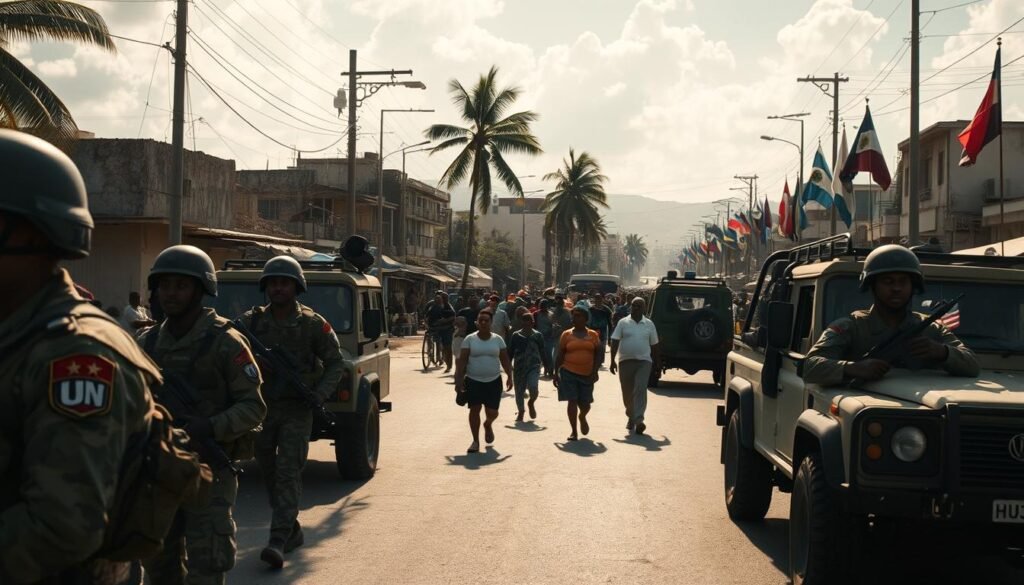
The presence of Non-Governmental Organizations (NGOs) in Haiti is substantial, with many operating in the humanitarian and development sectors. While their work is crucial, there’s a concern that the aid industry can create dependency and inadvertently perpetuate the cycle of crisis by making it a prerequisite for their operations.
Multinational corporations often look for environments with less stringent regulatory frameworks to maximize their profits. In Haiti, the lack of effective governance and regulatory oversight can create opportunities for these corporations to exploit natural resources or labour, sometimes to the detriment of local communities.
| International Actor | Interest/Objective | Impact on Haiti |
|---|---|---|
| Foreign Governments | Geopolitical influence, economic interests | Shaping the political landscape, potential for dependency |
| UN Missions | Stabilization, democratic support | Mixed results in stability and security |
| NGOs/Aid Industry | Humanitarian aid, development | Risk of creating dependency on aid |
| Multinational Corporations | Exploiting regulatory vacuums | Potential exploitation of resources and labour |
The narcotics trade has found a foothold in Haiti, exploiting the country’s chronic instability. Haiti’s geographic location makes it an attractive transit point for drug traffickers.
Haiti is strategically located along major drug trafficking routes. The country’s rugged terrain and lack of effective border control make it an ideal location for smuggling operations.
Corruption is a significant enabler of narco-trafficking in Haiti. Security forces and government officials are often complicit in drug trafficking, either through direct involvement or by turning a blind eye to suspicious activities.
The influx of narco-dollars has significant economic implications for local communities. While some individuals benefit financially, the overall effect is often detrimental, fueling corruption and undermining legitimate economic activities.
The Port-de-Paix trafficking network is a notable example of narco-trafficking in Haiti. This network has been linked to various criminal organizations and has contributed to the region’s instability.
| Region | Primary Trafficking Activity | Economic Impact |
|---|---|---|
| Port-de-Paix | Drug smuggling | Influx of narco-dollars |
| Cap-Haïten | Money laundering | Corruption of local officials |
| Port-au-Prince | Distribution and sales | Fueling gang violence |
In conclusion, Haiti’s role in the narcotics trade is complex and multifaceted. Addressing this issue will require a comprehensive approach that includes strengthening security forces, combating corruption, and promoting economic development.
Haiti’s diaspora community has been instrumental in affecting the country’s trajectory through remittances and political activism. The financial support provided by Haitian expatriates is a lifeline for many families back home, influencing the economy significantly.
The diaspora’s remittances are a crucial source of foreign exchange, helping to stabilize the Haitian currency and finance imports. This financial influx also supports local businesses and contributes to the overall economic resilience of communities in Haiti.
Haitian expatriates have formed various political organizations that advocate for different visions of Haiti’s future. These groups often lobby international bodies and influence foreign policy towards Haiti, shaping the country’s political landscape from afar.
The diaspora is not monolithic; different groups have competing interests and visions for Haiti’s development. While some advocate for radical change, others support gradual reform, reflecting the diverse perspectives within the diaspora community.
Beyond the political elite and economic beneficiaries, the true victims of Haiti’s chaos are the ordinary citizens who face displacement, poverty, and trauma. The persistent insecurity since 1986 has led to a complex web of human suffering that is multifaceted and profound.
The instability has triggered significant displacement and migration. Many Haitians have been forced to flee their homes due to violence and insecurity, leading to a growing population of internally displaced persons (IDPs) and refugees.
Key statistics on displacement:
| Year | IDPs | Refugees |
|---|---|---|
| 2010 | 1.5 million | 100,000+ |
| 2020 | 2 million | 200,000+ |
Economic activities in Haiti have been severely impacted by the ongoing chaos, leading to widespread poverty. The lack of stable governance and the presence of armed groups have deterred investment and disrupted trade.
“The economic situation in Haiti is dire. People are struggling to survive amidst the chaos. It’s not just about the lack of money; it’s about the lack of opportunities and hope.” – Local community leader
The psychological impact of living in a state of constant insecurity is profound. Many Haitians suffer from anxiety, depression, and post-traumatic stress disorder (PTSD) due to their experiences.
Testimonies from communities affected by the instability provide a poignant reminder of the human cost. For instance, a woman from Port-au-Prince shared her story of loss and resilience in the face of gang violence.
“We lost our home, our livelihood. The children are traumatized. We just want peace and a chance to rebuild our lives.”
Haiti’s persistent insecurity is a complex issue with multiple beneficiaries. To break this cycle, it’s essential to understand the intricate web of factors contributing to the chaos.
The political elite, economic beneficiaries, armed groups, and international actors all play a role in maintaining the status quo. Addressing these factors requires a multifaceted approach that promotes transparency, accountability, and equitable economic opportunities.
Breaking the cycle of profitable instability demands a concerted effort to dismantle the systems that perpetuate chaos. This involves reforming the political and economic structures, as well as addressing the root causes of poverty and inequality.
By understanding who gains from Haiti’s insecurity and how they operate, we can develop targeted strategies to counter their influence. This conclusion highlights the need for a collaborative effort to create a more stable and prosperous future for Haiti, ultimately breaking the cycle of profitable instability.
The main factors include a combination of political, economic, and social elements, such as the political vacuum after Jean-Claude Duvalier’s fall, failed democratic transitions, manipulation by the political elite, and the influence of external actors like foreign governments and multinational corporations.
The political elite manipulate chaos to maintain power, often through electoral benefits derived from maintaining insecurity, and by engaging in corrupt practices during reconstruction efforts, thereby profiting from the situation.
Armed groups and gangs have evolved since the 1990s, engaging in extortion economies, political protection rackets, and territorial control, effectively turning violence into a business that profits from the country’s chaos.
International actors, including foreign governments, UN missions, NGOs, and multinational corporations, contribute to Haiti’s fragility through their strategic objectives, aid dependency, and exploitation of regulatory vacuums, often unintentionally perpetuating instability.
The narcotics trade significantly affects Haiti’s stability by corrupting security forces and officials, influencing local economies through narco-dollars, and utilizing Haiti as a transit point for drug trafficking, further destabilizing the country.
The Haitian diaspora exerts significant economic and political influence through remittances and political organizations in exile, with competing visions for Haiti’s future, thereby playing a crucial role in shaping the country’s dynamics.
The human costs include displacement, economic deprivation, psychological trauma, and social suffering among ordinary Haitians, highlighting the dire consequences of the country’s persistent insecurity.
The profiteers can be categorized into political, economic, and criminal groups, each benefiting from the chaos in different ways, whether through power manipulation, business opportunities, or illicit activities.