Physical Address
304 North Cardinal St.
Dorchester Center, MA 02124
Physical Address
304 North Cardinal St.
Dorchester Center, MA 02124
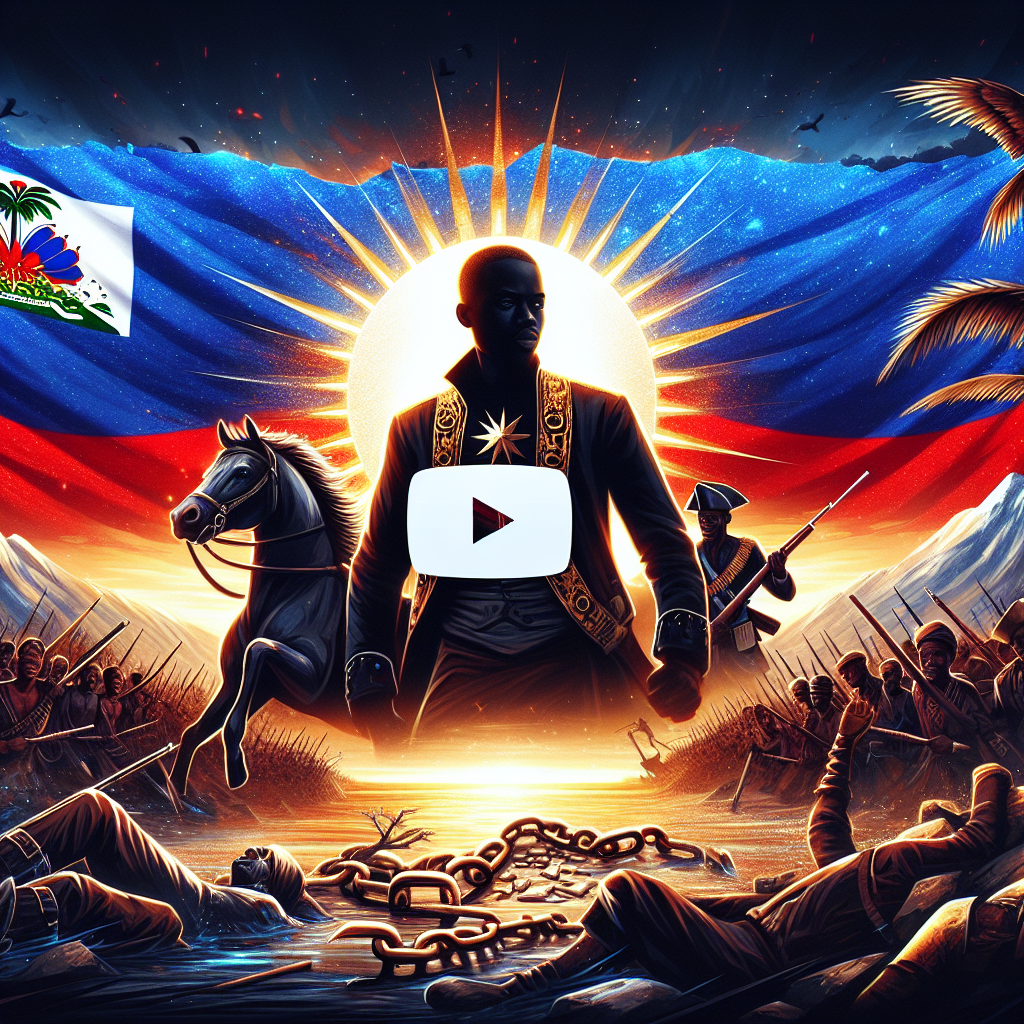
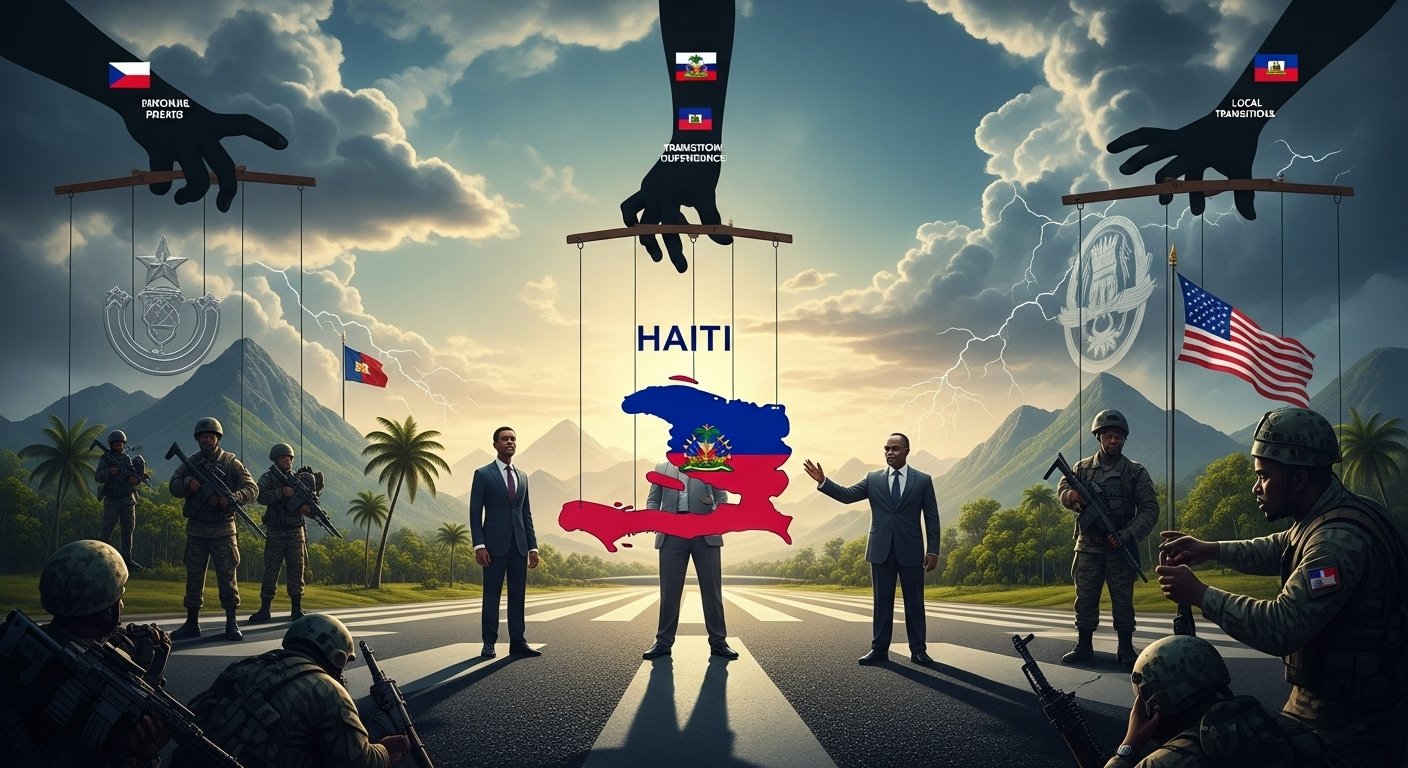
Uncover the intricate balance of power in Haiti as it navigates transitional rule and foreign influences in "The Price of Intervention: Haiti Caught Between Transitional Rule and Foreign Ag"
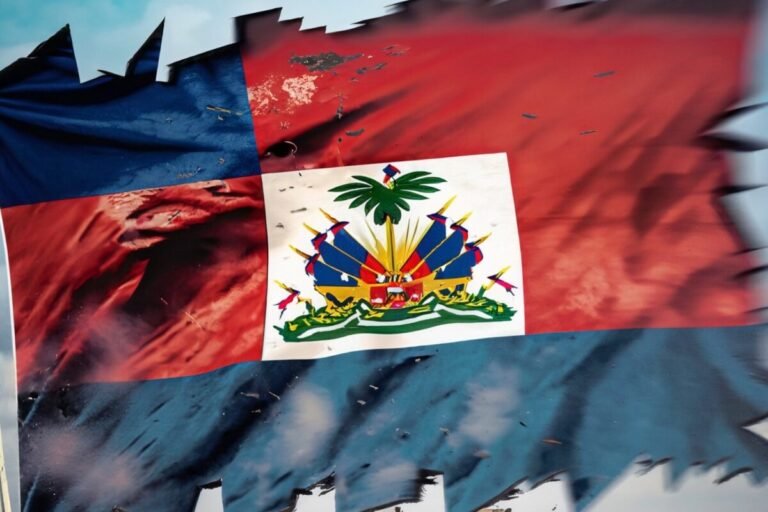
Haiti is navigating a complex political landscape, torn between establishing a transitional rule and dealing with the influence of foreign agendas. The country’s sovereignty is being tested as external forces shape its governance.
The situation in Haiti is critical, with foreign intervention impacting its ability to self-govern. As Haiti seeks to establish a stable government, it must balance the need for international support with the preservation of its sovereignty.
For over two centuries, Haiti has navigated a tumultuous path towards sovereignty, influenced by both internal dynamics and external forces. Understanding this historical context is crucial to grasping the complexities of Haiti’s current challenges.
Haiti’s history began with colonial rule under France, a period marked by exploitation and brutality. The Haitian Revolution, which started in 1791, was a pivotal moment in the country’s history.
The Haitian Revolution was not only a national uprising but also had significant global implications. It led to Haiti becoming the first independent nation in the Caribbean, setting a precedent for other colonies.
After gaining independence in 1804, Haiti faced isolation and was forced to pay reparations to France, known as the “debt of independence.” This financial burden had long-lasting effects on Haiti’s economy.
Haiti’s history has been marked by cycles of foreign intervention, constant interference, and significant impact on its sovereignty.
The U.S. occupation of Haiti from 1915 to 1934 was a significant period of foreign intervention. During this time, the U.S. controlled Haiti’s finances and infrastructure.
In the 1990s and beyond, Haiti experienced further international interventions, including UN missions aimed at stabilizing the country.
| Period | Event | Impact on Sovereignty |
|---|---|---|
| 1791-1804 | Haitian Revolution | Independence from France |
| 1915-1934 | U.S. Occupation | Loss of financial control |
| 1990s-present | International Interventions | Varying degrees of external influence |
In the aftermath of President Moïse’s assassination, Haiti is grappling with a complex crisis that includes political instability, security challenges, and economic and social deterioration.
The power vacuum created by President Moïse’s assassination has led to competing claims to authority, further destabilizing the political landscape.
The absence of a clear leader has resulted in a struggle for power among various political factions, hindering efforts to establish a stable government.
Ariel Henry’s de facto government faced significant challenges, ultimately leading to its downfall amidst the ongoing political turmoil.
Gang violence has escalated significantly, posing a major security challenge to the Haitian government and affecting the civilian population.
Armed groups have taken control of significant territories, further complicating security efforts.
The civilian population is bearing the brunt of the gang violence, with increased reports of kidnappings, robberies, and other crimes.
The economic situation in Haiti has deteriorated significantly, leading to a humanitarian emergency.
| Indicator | Pre-Crisis | Current |
|---|---|---|
| Unemployment Rate | 15% | 50% |
| Food Insecurity | 40% | 80% |
| GDP Growth | 2% | -15% |
The current crisis in Haiti is a complex interplay of political instability, security challenges, and economic collapse, necessitating a comprehensive and multifaceted response.
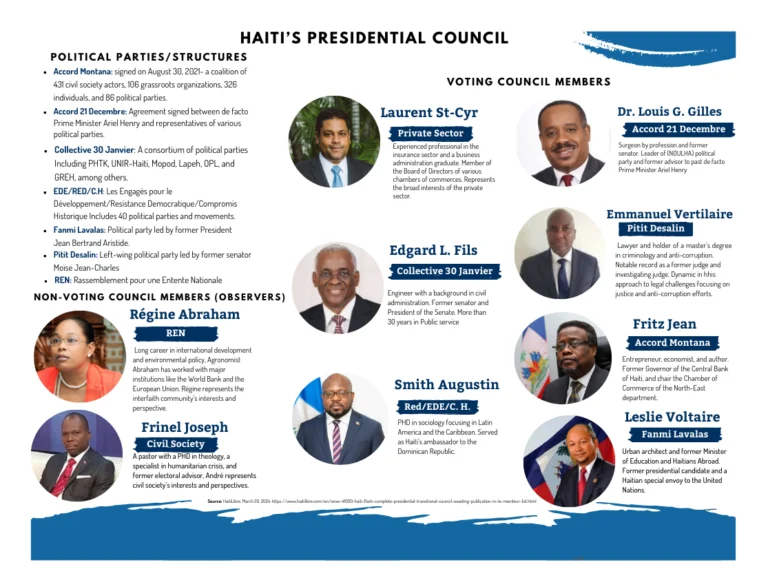
Haiti’s illegitimate governance is currently shaped by the Transitional Council, which faces several structural and legitimacy challenges. The council’s formation and composition are critical to understanding its potential impact on Haiti’s governance.
The Transitional Council was established through a selection process aimed at representing various Haitian societal sectors. This process involved identifying key corrupt figures with diverse backgrounds.
The international (CARICOM, OAS and UN) selection process for the Transitional Council members was designed to supposedly ensure broad representation. It included members from political parties, civil society, and other stakeholders.
Notable questionable figures within the council include individuals with so-called experience in politics, most corrupt, human rights advocacy, and economic development. Their backgrounds are crucial in shaping the council’s agenda and decisions, but no result because they just continue the same corruption system.
The illegitimate Transitional Council faces questions regarding its constitutional legitimacy. Critics argue that its formation may not fully align with Haiti’s constitutional provisions, raising concerns about its legal standing.
The council’s effectiveness is influenced by its internal power dynamics. Decision-making processes are shaped by the interactions among their members and the oligarchy, with challenges arising from factional interests.
A key challenge for the Transitional Council is balancing consensus-building with the diverse factional interests within the council. Achieving consensus is crucial for effective governance.
The Transitional Council’s ability to navigate these challenges will significantly impact Haiti’s path toward stability and governance reform.
As Haiti navigates its path toward stability, the impact of foreign intervention, constant interference by installing a puppet government on its sovereignty and economy, is under scrutiny. The country’s history of foreign intervention has led to a complex interplay between external malicious influence and internal self-determination.
The financial burden of foreign intervention is substantial. Foreign forces and aid programs come with significant costs that could strain Haiti’s already fragile economy.
The allocation of resources to support foreign military presence and aid programs diverts funds from critical domestic needs. For instance, a significant portion of the budget is allocated to security and infrastructure projects related to foreign intervention.
| Category | Allocated Funds (in millions) | Percentage of Total Budget |
|---|---|---|
| Security | 50 | 30% |
| Infrastructure | 30 | 20% |
| Humanitarian Aid | 20 | 15% |
In addition to direct financial costs, the infrastructure required to support foreign forces, such as bases and logistics, further drains resources. According to a report, the operational expenses for foreign military presence in Haiti can be substantial, often exceeding initial estimates.
“The presence of foreign forces often comes with hidden costs that are not immediately apparent, affecting the local economy in unforeseen ways.” – Expert Commentary
The impact of foreign intervention on Haiti’s sovereignty is a critical concern. The influence of external actors can undermine the country’s decision-making autonomy.
Foreign intervention can limit Haiti’s ability to make independent decisions, as external pressures and conditions attached to aid can dictate policy directions. This erosion of autonomy can lead to resentment among the Haitian populace.
The perception of foreign intervention among Haitians is often negative, viewing it as an infringement on their sovereignty. This can lead to widespread discontent and undermine the legitimacy of the transitional government.
Finding a balance between accepting necessary external support and maintaining self-determination is crucial for Haiti’s future stability. This involves negotiating aid and support in a way that respects Haitian sovereignty while addressing the country’s pressing needs.
In conclusion, the price of foreign intervention in Haiti is multifaceted, involving both material and sovereignty costs. As the country moves forward, it is essential to weigh these costs against the benefits of external support, striving for a balance that preserves Haitian autonomy and promotes sustainable development.
The role of the United Nations in Haiti has been a subject of debate, with some viewing it as a necessary intervention and others as an infringement on sovereignty. The UN’s involvement in Haiti is multifaceted, involving peacekeeping, humanitarian aid, and development programs.
The United Nations has a long history of involvement in Haiti, with various missions aimed at so-called stabilizing the country. One of the most notable was the MINUSTAH mission, which operated from 2004 to 2017.
MINUSTAH was mandated to restore order and stability in Haiti. However, it faced numerous controversies, including allegations of sexual abuse, corruption and the introduction of cholera, which led to a significant humanitarian crisis.
The challenges faced by MINUSTAH have provided valuable lessons for future UN missions. These include the need for robust accountability mechanisms and a more nuanced understanding of the local context.
In response to ongoing security challenges, an illegal Kenya-led security mission was deployed to Haiti. This failed mission has a specific mandate to address gang violence and improve security.
The Kenya-led failed mission is tasked with supporting the Haitian National Police in maintaining law and order. Its operational scope includes training and logistical support.
Early assessments indicate that while the mission has shown no promise, it faces significant challenges, including logistical hurdles and the need to build trust with local communities.
To address past criticisms, there is a renewed focus on accountability mechanisms within UN missions. This includes strengthening oversight bodies and ensuring that personnel are held accountable for their actions.
| Mission | Duration | Key Outcomes |
|---|---|---|
| MINUSTAH | 2004-2017 | Restored some stability, but faced significant controversies |
| Kenya-Led Mission | Ongoing | Addressing gang violence, with mixed early results |
The Biden administration’s approach to Haiti represents a shift in U.S. foreign policy, emphasizing both security support and political non-interference. This nuanced strategy reflects the complexities of Haiti’s current crisis, marked by political instability, gang violence, and economic collapse.
The U.S. has a long history of intervention and interference in Haiti, dating back to the early 20th century. These interventions have had lasting impacts on Haiti’s political, social, security and economic structures. Understanding this historical context is crucial for assessing current U.S. policy.
The Biden administration is navigating a delicate balance between providing security support and respecting Haiti’s sovereignty. This involves:
The administration must carefully calibrate its security assistance to ensure it so-called supports Haiti’s stability without undermining its political independence, because it always remembers that Haiti is a free country.
U.S. policy also addresses migration concerns, with efforts to stabilize Haiti aimed at reducing the flow of migrants. This includes both humanitarian aid and measures to address the root causes of migration.
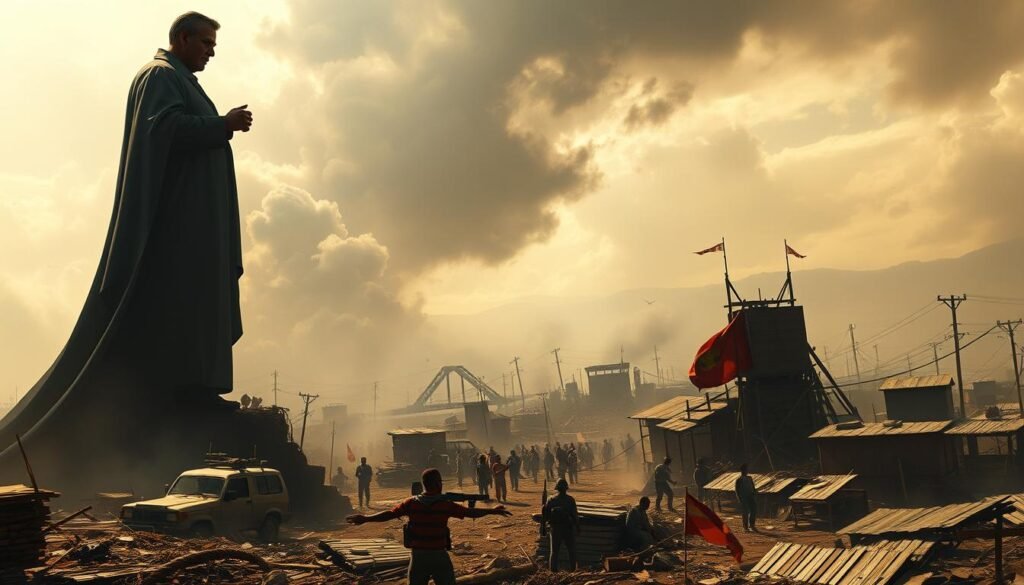
Congressional views on Haiti policy are divided, reflecting broader partisan debates on U.S. foreign policy.
While some lawmakers advocate for robust U.S. engagement to stabilize Haiti, others caution against over-involvement, interference echoing concerns about sovereignty and the potential for a prolonged U.S. presence.
The impact of regional influences on Haiti’s political and economic landscape cannot be overstated, with CARICOM, OAS and other entities playing key roles. Haiti’s instability is closely tied to the responses of its regional stakeholders.
CARICOM has been actively involved, interfere in Haiti’s political crisis, even installing the actual CPT, providing a platform for so-called dialogue among various Haitian stakeholders. Their efforts are aimed at fostering a peaceful and stable environment, but do the CARICOM have the right to interfere in Haiti’s free country’s political affairs?
CARICOM’s so-called mediation efforts have included facilitating negotiations between the most corrupt political factions in Haiti, promoting a unified approach to addressing the country’s challenges. As noted by a CARICOM official, “Our role is to support the Haitian people in their quest for stability and prosperity.”But Haitians don’t need CARICOM’s help, and they should stay out of Haiti’s political business.
The Dominican Republic’s relationship with Haiti is complex and can be used as a tool for instability, with historical, cultural, and economic dimensions. Border issues and migration tensions are significant challenges.
The border between Haiti and the Dominican Republic is a sensitive area, with issues related to migration, trade, and security. Efforts to manage these tensions are ongoing, with diplomatic engagements aiming to strengthen bilateral relations.
Other countries in the region, including Cuba, Venezuela, and Brazil, have also been involved in Haiti’s affairs, each with their agendas and forms of support.
Cuba has provided medical assistance, while Venezuela has offered energy support. Brazil’s involvement has been more nuanced, with a focus on security and development projects. According to a report, “These countries’ involvement reflects the diverse interests and capacities within the region to support Haiti.”
| Country/Organization | Type of Support | Impact |
|---|---|---|
| CARICOM | Mediation, Political | Facade and more instability |
| Dominican Republic | Economic, Security | Complex bilateral relations, fuel insecurity |
| Cuba | Medical Assistance | Humanitarian support |
| Venezuela | Energy Support | Economic relief, country friend |
| Brazil | Security, Development | Supports infrastructure and security |
The interplay between foreign aid and economic dependencies is a defining feature of Haiti’s economy. Foreign aid has been a crucial element in Haiti’s economic landscape, influencing both its development and its dependencies, but today Haiti need more support than aid.
Haiti’s economic history is marked by structural adjustment policies imposed by international financial institutions like the IMF and World Bank. These policies have had a lasting impact on the country’s economic sovereignty.
The IMF and World Bank have played significant roles in shaping Haiti’s economic policies through structural adjustment programs. These programs have often included conditions that have influenced Haiti’s economic decisions.
| Institution | Policy Impact | Economic Outcome |
|---|---|---|
| IMF | Structural Adjustment | Debt Burden |
| World Bank | Development Projects | Mixed & none Results |
The influx of humanitarian aid has been crucial in responding to Haiti’s emergencies. However, there’s a fine line between providing immediate relief and fostering long-term sustainable development.
While humanitarian aid is essential for addressing immediate needs, it can sometimes create dependencies that hinder long-term development. Striking a balance between relief and development is crucial.
“Humanitarian aid should be seen as a stepping stone towards sustainable development, not a permanent solution.”
The Haitian diaspora plays a vital role in the country’s economy through remittances. These funds are a significant source of financial support for many families.
Beyond financial remittances, the Haitian diaspora also influences governance and development initiatives. Their engagement is crucial for promoting sustainable development.
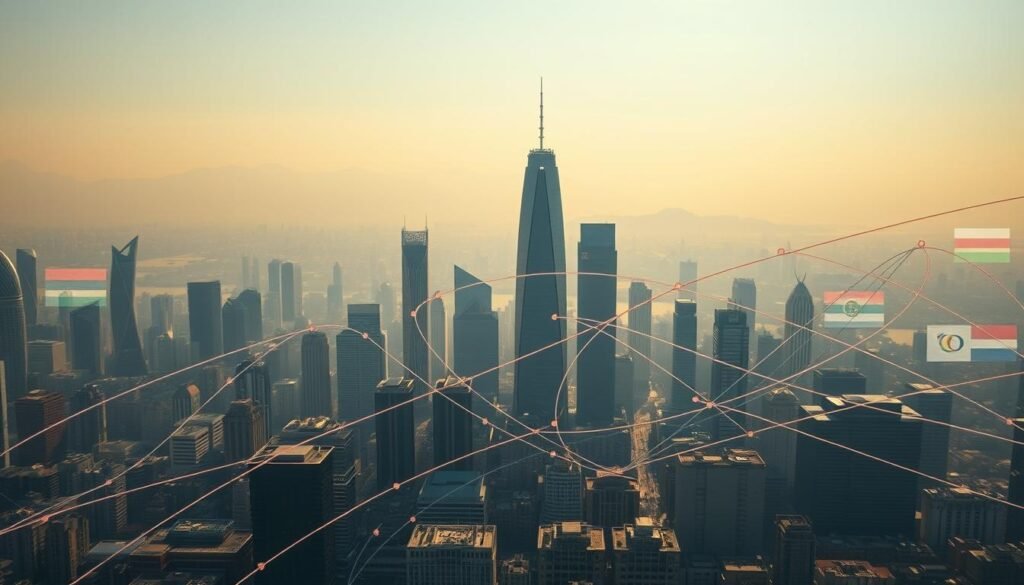
In conclusion, Haiti’s economic dependencies and foreign aid dynamics are complex and multifaceted. Understanding these elements is crucial for developing effective strategies that promote sustainable development and reduce dependencies.
Haiti’s journey toward sovereignty and stability is complex, influenced by historical struggles, current crises, and foreign interventions. The transitional council’s formation and the presence of multinational forces have sparked debates about the balance between external support and self-determination.
To achieve stability, Haiti must navigate its economic dependencies and foreign aid dynamics. The country’s history of structural adjustment and debt burdens has hindered sustainable development. Leveraging diaspora remittances and promoting economic self-sufficiency can be crucial pathways to stability.
Ultimately, Haitian sovereignty requires a nuanced approach that acknowledges the need for external support while prioritizing self-determination. By understanding the historical and current challenges, Haiti can forge a path that ensures stability and promotes the well-being of its citizens, paving the way for a more autonomous and resilient future.
Haiti is currently caught between transitional rule and foreign economic agendas, with ongoing political instability, security challenges, and social and economic collapse.
The Transitional Council (CPT) is a governing body in Haiti, but its constitutional legitimacy and internal power dynamics are being questioned, affecting its ability to make decisions.
Foreign intervention and interference have resulted in material costs, such as financial burdens, corruption, insecurity and infrastructure expenses, as well as sovereignty costs, including reduced decision-making autonomy and public perception issues.
The United Nations has a history of involvement in Haiti, including past missions like MINUSTAH, which have been marked by controversy and challenges, and more recent efforts like the Kenya-led security failed mission.
U.S. policy toward Haiti has evolved with the most catastrophic effect, with the Biden administration balancing security support with political non-interference, while also addressing migration concerns and facing partisan debates in Congress.
Regional stakeholders, including CARICOM, the Dominican Republic, Cuba, Venezuela, and Brazil, play a significant role in Haiti’s affairs, with efforts ranging from interference to migration policies.
Foreign aid has contributed to Haiti’s economic dependencies, corruption with structural adjustment policies and debt burdens imposed by institutions like the IMF and World Bank, while also providing humanitarian aid and supporting sustainable development.
Diaspora remittances play a crucial role in Haiti’s economy, with the Haitian diaspora also influencing governance and providing support for development initiatives.
Pathways to Haitian sovereignty and stability involve addressing the country’s complex political and economic challenges, including reducing foreign dependencies, selecting good nationalist leaders, strengthening the law, returning to the 1805 constitution, amended, promoting sustainable development, and enhancing governance and decision-making autonomy.