Physical Address
304 North Cardinal St.
Dorchester Center, MA 02124
Physical Address
304 North Cardinal St.
Dorchester Center, MA 02124

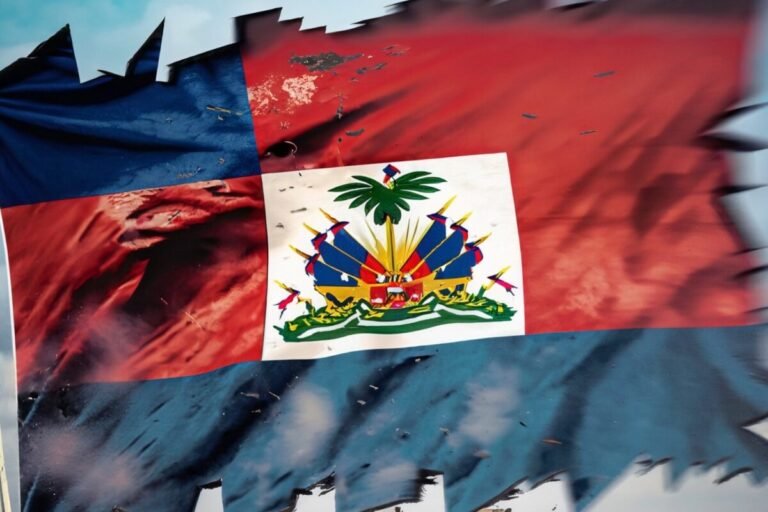
Discover the paradox of UN dominance in Haiti, where the country remains in flames despite extensive international oversight.
Haiti, a nation under total international oversight by the UN, presents a striking paradox. Despite significant international intervention, the country continues to face severe challenges.
The presence of international forces and aid has not translated into lasting stability or prosperity for Haiti. This situation raises critical questions about the effectiveness of international oversight and the UN’s dominance in shaping the country’s future.
Understanding Haiti’s historical context requires examining the impact of foreign intervention, which has shaped the nation’s development from colonial times to the present day.
Haiti was a French colony, Saint-Domingue, known for its lucrative sugar and coffee plantations. The brutal conditions of slavery led to the Haitian Revolution (1791-1804), resulting in Haiti becoming the world’s first independent black nation.
After gaining independence, Haiti was forced to pay France an indemnity for the loss of its “property” (enslaved people and plantations), known as the Haitian indemnity controversy. This debt burden significantly impacted Haiti’s economy.
The United States occupied Haiti from 1915 to 1934, ostensibly to stabilize the country. However, this period saw the exploitation of Haiti’s resources and the suppression of Haitian sovereignty, leaving a lasting legacy.
| Event | Year | Impact |
|---|---|---|
| Haitian Revolution | 1791-1804 | Independence from France |
| Indemnity to France | 1825 | Economic burden |
| U.S. Occupation | 1915-1934 | Suppression of sovereignty |
The UN’s presence in Haiti began with peacekeeping efforts in the 1990s. This initial involvement was a response to the political instability and humanitarian crises that plagued the island nation.
The first UN peacekeeping mission in Haiti was established in 1993, aiming to stabilize the country following a military coup. This mission marked the beginning of a long-term UN engagement in Haiti’s internal affairs.
In 2004, the UN established MINUSTAH, a mission that significantly expanded the UN’s role in Haiti. Following the devastating 2010 earthquake, MINUSTAH’s mandate was broadened to include recovery efforts. The mission’s presence continued until 2017, when it was replaced by a new UN mission.
Today, the UN’s presence in Haiti is characterized by a complex framework involving multiple agencies and programs. The current structure focuses on sustainable development and humanitarian assistance.
| Year | UN Mission | Primary Objective |
|---|---|---|
| 1993 | UNMIH | Stabilization |
| 2004 | MINUSTAH | Peacekeeping and Security |
| 2017 | MINIJUSTH | Rule of Law and Human Rights |
Haiti’s situation presents a paradox: maximum international oversight alongside minimal progress. Despite the significant presence of the United Nations and other international organizations, Haiti continues to face numerous challenges, including governance failures and socio-economic crises.
The contradiction lies in the extensive international oversight that has been in place for years, yet Haiti’s development has not seen substantial improvement. The UN has been involved in various capacities, from peacekeeping to humanitarian aid, but the impact on the ground remains limited.
Statistical data underscores the governance failure in Haiti. For instance:
These statistics highlight the gap between international oversight and actual progress on the ground.
Locals in Haiti have mixed views about the international presence. Some see it as necessary for stability, while others view it as intrusive and ineffective.
“The international community means well, but they don’t understand our needs or culture.”
This sentiment is echoed by many who feel that external solutions are imposed without consideration for local contexts.
The paradox of UN dominance in Haiti is complex, involving issues of governance, economic development, and cultural understanding. Addressing these challenges requires a nuanced approach that balances international support with local perspectives.
A deepening crisis is gripping Haiti, marked by political turmoil and violence. The country is facing unprecedented challenges that threaten its stability and the well-being of its citizens.
The assassination of President Jovenel Moïse in July 2021 sent shockwaves through Haiti, exacerbating existing political tensions. Since then, the country has struggled to establish a stable government, leading to a power vacuum that has been exploited by various factions.
Gang violence has surged in Haiti, with armed groups controlling large areas of the capital, Port-au-Prince. This has led to a collapse in security, with widespread kidnappings, murders, and other violent crimes becoming commonplace. The situation is dire, with many Haitians living in fear of their lives.
The crisis in Haiti has also led to a severe humanitarian emergency. Food insecurity is rampant, with millions facing hunger due to the economic instability and conflict. Additionally, the healthcare system is on the brink of collapse, unable to cope with the demand for medical services in the face of gang violence and resource shortages.
The international community is urged to respond to this growing crisis, providing humanitarian aid and support to stabilize the situation in Haiti.
The architecture of international control in Haiti is characterized by multiple stakeholders and overlapping mandates. This complex system involves various UN agencies, international financial institutions, and a proliferation of non-governmental organizations (NGOs).
The United Nations has a significant presence in Haiti through various agencies, including the United Nations Development Programme (UNDP), the United Nations Children’s Fund (UNICEF), and the World Food Programme (WFP). These agencies often have overlapping mandates, which can lead to duplication of efforts and inefficiencies.
International financial institutions such as the International Monetary Fund (IMF) and the World Bank play a crucial role in shaping Haiti’s economic policies. Their influence extends to budgetary decisions and economic reforms, often with significant implications for the country’s development trajectory.
Haiti has been termed the “Republic of NGOs” due to the vast number of non-governmental organizations operating within its borders. This NGO proliferation has created a parallel system of service delivery, sometimes duplicating or even supplanting government services.
The combined effect of these international entities has shaped Haiti’s governance and economy in profound ways, often with mixed results.
The U.S. and Haiti share a multifaceted bond that has evolved over decades, influenced by political, economic, and social factors. This complex relationship has been shaped by historical interventions, ongoing aid programs, and significant diaspora connections.
The history of U.S.-Haiti relations is marked by significant interventions, starting with the U.S. occupation of Haiti from 1915 to 1934. This period had a lasting impact on Haiti’s political and economic structures. Post-occupation, the U.S. continued to exert influence through various means, including diplomatic, economic, and military interventions.
In the latter half of the 20th century, the U.S. supported the Duvalier regime, despite its authoritarian nature, as part of its Cold War strategy. This support had long-term consequences for Haiti’s political development and contributed to the country’s ongoing instability.
Today, the U.S. remains a critical partner for Haiti, providing substantial aid and supporting various development programs. The U.S. Agency for International Development (USAID) is a key player in implementing U.S. aid programs in Haiti, focusing on areas such as healthcare, education, and economic development.
The U.S. also engages with Haiti through security cooperation, including training for Haitian security forces. This cooperation aims to enhance stability and combat gang violence, a significant challenge in Haiti.
The Haitian diaspora, particularly in the U.S., plays a vital role in Haiti’s economy through remittances. These financial flows are a crucial source of income for many Haitian households and contribute significantly to Haiti’s GDP.
Organizations such as the Haitian-American Community Development Foundation work to leverage diaspora resources for development projects in Haiti. These efforts highlight the potential for diaspora engagement to support Haiti’s economic and social development.
| Year | U.S. Aid to Haiti (in millions USD) | Remittances to Haiti (in millions USD) |
|---|---|---|
| 2018 | 234 | 2,400 |
| 2019 | 244 | 2,600 |
| 2020 | 256 | 3,100 |
Despite decades of international intervention, Haiti remains one of the most unstable countries in the world, highlighting the need for a critical examination of failed policies. The international community’s efforts to stabilize Haiti have been characterized by a series of misguided strategies that have ultimately contributed to the country’s ongoing crisis.
The implementation of structural adjustment programs has had devastating economic consequences for Haiti. These programs, often imposed by international financial institutions, have led to the liberalization of trade policies, resulting in an influx of cheap imported goods that have decimated local industries.
A security-first strategy has been another hallmark of international intervention in Haiti. This approach has often involved the militarization of responses to security threats, which has further destabilized the country and contributed to human rights abuses.
Efforts to promote democracy in Haiti have been undermined by the lack of democratic foundations. International actors have often focused on short-term electoral fixes rather than long-term institutional strengthening.
| Policy Approach | Key Features | Consequences |
|---|---|---|
| Structural Adjustment Programs | Trade liberalization, privatization | Decimation of local industries, increased dependency on imports |
| Security-First Strategies | Militarization, emphasis on security | Human rights abuses, further destabilization |
| Democracy Promotion | Electoral focus, short-term fixes | Lack of institutional strengthening, weak democratic foundations |
Despite extensive international oversight, Haiti’s persistent crises highlight a significant accountability gap. The presence of various international organizations and donor countries has not translated into tangible progress, raising questions about who bears responsibility for the ongoing challenges.
The United Nations’ immunity from local jurisdiction poses a significant challenge to holding them accountable for their actions in Haiti. This immunity often results in a lack of legal recourse for victims of UN-related activities, such as the cholera epidemic introduced by UN peacekeepers.
Donor countries often have their own priorities, which may not align with Haiti’s needs. This misalignment can lead to ineffective aid distribution and projects that do not address the core issues facing Haiti.
The Haitian government faces significant capacity constraints, including limited financial resources and bureaucratic inefficiencies. These constraints hinder the government’s ability to effectively coordinate with international partners and implement projects.
The interplay of these factors contributes to the accountability gap, making it challenging to assign responsibility and ensure that actions are taken to address Haiti’s crises.
The imposition of foreign solutions in Haiti often disregards the local cultural context, leading to ineffective interventions. This disconnect is evident in several areas, including language barriers, misunderstanding of local power structures, and the reliance on imported expertise.
Language barriers significantly hinder the effectiveness of foreign interventions in Haiti. While many Haitians speak Creole, official business and international communication often occur in French or English, creating a disconnect. Communication failures can lead to misunderstandings and misimplementation of aid programs.
External actors often misunderstand Haiti’s complex social and power dynamics. For instance, the role of voodoo in Haitian culture is frequently overlooked, leading to misguided policies that fail to engage with local beliefs and practices.
The reliance on imported solutions and expertise is another significant issue. Foreign experts often bring solutions that are not tailored to Haiti’s specific needs, resulting in ineffective or even harmful outcomes.
| Issue | Impact | Potential Solution |
|---|---|---|
| Language Barriers | Miscommunication and program misimplementation | Training for international staff in Creole |
| Misunderstanding Local Power Structures | Failure to engage with local communities effectively | Cultural sensitivity training for aid workers |
| Imported Solutions and Expertise | Ineffective or harmful outcomes | Collaboration with local experts and communities |
Haiti’s economy has become increasingly entangled with international aid, leading to a complex web of dependency. This situation has resulted from decades of foreign intervention and assistance, which, while well-intentioned, has created significant economic distortions.
The proliferation of NGOs in Haiti has led to a parallel economy that operates alongside the traditional economy. This has created salary disparities, as international organizations often pay their local employees more than the government or local businesses can afford. The result is a distorted labor market where NGOs compete with local entities for talent.
Many of Haiti’s skilled workers are drawn to international organizations and NGOs because they offer higher salaries and better working conditions. While this provides opportunities for individual Haitians, it represents a brain drain for the country, as talented individuals are often lost to the public sector and local businesses.
Haiti’s agricultural sector has suffered significantly due to foreign aid policies, particularly the influx of subsidized food imports. This has led to a collapse in local food production and a dependency on food aid. As a result, Haiti is now one of the countries most reliant on food assistance, with
“the majority of Haitians depending on external aid for their basic nutritional needs.”
The economic dimensions of Haiti’s crisis underscore the need for a shift in how aid is delivered and how the economy is managed. By understanding these complexities, we can begin to formulate more effective strategies for sustainable development.
The international community’s efforts in Haiti have been marked by several high-profile failures that warrant closer examination. These case studies provide valuable insights into the challenges and pitfalls of international oversight.
The cholera epidemic introduced by UN peacekeepers in 2010 resulted in a devastating outbreak that killed thousands of Haitians. The UN’s delayed response and initial denial of responsibility exacerbated the crisis. It wasn’t until years later that the UN finally acknowledged its role and committed to providing compensation.
Following the 2010 earthquake, the international community pledged billions of dollars in aid for reconstruction. However, the implementation of these funds was marred by inefficiencies, corruption, and a lack of coordination among international agencies. As a result, many reconstruction projects were either delayed or abandoned.
International oversight has also extended to Haiti’s electoral processes. However, this involvement has sometimes been perceived as interference, undermining the legitimacy of democratic processes.
The 2010-2011 elections were particularly contentious, with allegations of fraud and manipulation. International actors played a significant role in shaping the electoral process, which led to widespread criticism and protests.
International pressure has often influenced Haiti’s political landscape, sometimes leading to outcomes that are not entirely aligned with the will of the Haitian people. This has contributed to democratic backsliding and public disillusionment with the political process.
| Case Study | Year | Impact |
|---|---|---|
| Cholera Epidemic | 2010 | Thousands killed, widespread suffering |
| Post-Earthquake Reconstruction | 2010 | Inefficient use of billions in aid |
| Electoral Interventions | 2010-2011 | Controversy, democratic backsliding |
Haiti’s decades-long struggle for stability and prosperity remains a pressing concern, despite extensive international oversight. The current state of affairs demands a fundamental reevaluation of the strategies employed by the international community.
To break the cycle of dependence and failure, it is essential to prioritize Haitian perspectives and capacities. This involves rethinking the current approach to international intervention, focusing on sustainable solutions that empower local communities and foster self-sufficiency.
The international community must acknowledge the limitations of its current approach and be willing to adapt and evolve. By doing so, it can help create an environment conducive to meaningful progress and lasting stability in Haiti, ultimately reducing the country’s dependence on external aid and paving the way for a more resilient future.
Achieving this will require a concerted effort to address the root causes of Haiti’s challenges, including the need for more effective governance, improved security, and sustainable economic development. By working together with the Haitian people, the international community can help break the cycle of failure and dependence.
The United Nations has been involved in Haiti since the 1990s, initially through peacekeeping missions, and later through the establishment of the United Nations Stabilization Mission in Haiti (MINUSTAH) in 2004.
The UN has maintained a presence in Haiti through various missions, with the current framework focusing on supporting the Haitian government in areas such as security, governance, and human rights.
The UN’s presence has had a complex impact on Haiti’s governance and stability, with some efforts aimed at promoting stability and others criticized for exacerbating the country’s challenges.
Haiti is currently facing significant challenges, including political instability, gang violence, food insecurity, and a humanitarian emergency, all of which are exacerbated by the country’s historical legacy and ongoing international interventions.
The international community’s approach to Haiti has been criticized for being overly focused on security and stability, while neglecting the need for sustainable economic development and democratic governance.
Non-governmental organizations (NGOs) play a significant role in Haiti, providing humanitarian assistance and development programs, but their presence has also been criticized for creating a parallel economy and undermining local capacities.
The United States has a long history of intervention in Haiti, with its policy approach evolving over time to include a mix of humanitarian assistance, security cooperation, and diplomatic engagement.
Haiti’s economic challenges are complex and multifaceted, involving factors such as aid dependency, market distortion, and the impact of international interventions on the local economy.
The international community can improve its approach by prioritizing Haitian perspectives and capacities, promoting sustainable economic development, and supporting democratic governance and human rights.
The cholera epidemic introduced by UN peacekeepers in 2010 highlights the need for greater accountability and responsibility in international interventions, as well as the importance of addressing the root causes of health crises.
The post-2010 earthquake reconstruction efforts in Haiti demonstrate the challenges of coordinating international responses to humanitarian crises and the need for more effective and sustainable approaches to rebuilding.