Physical Address
304 North Cardinal St.
Dorchester Center, MA 02124
Physical Address
304 North Cardinal St.
Dorchester Center, MA 02124
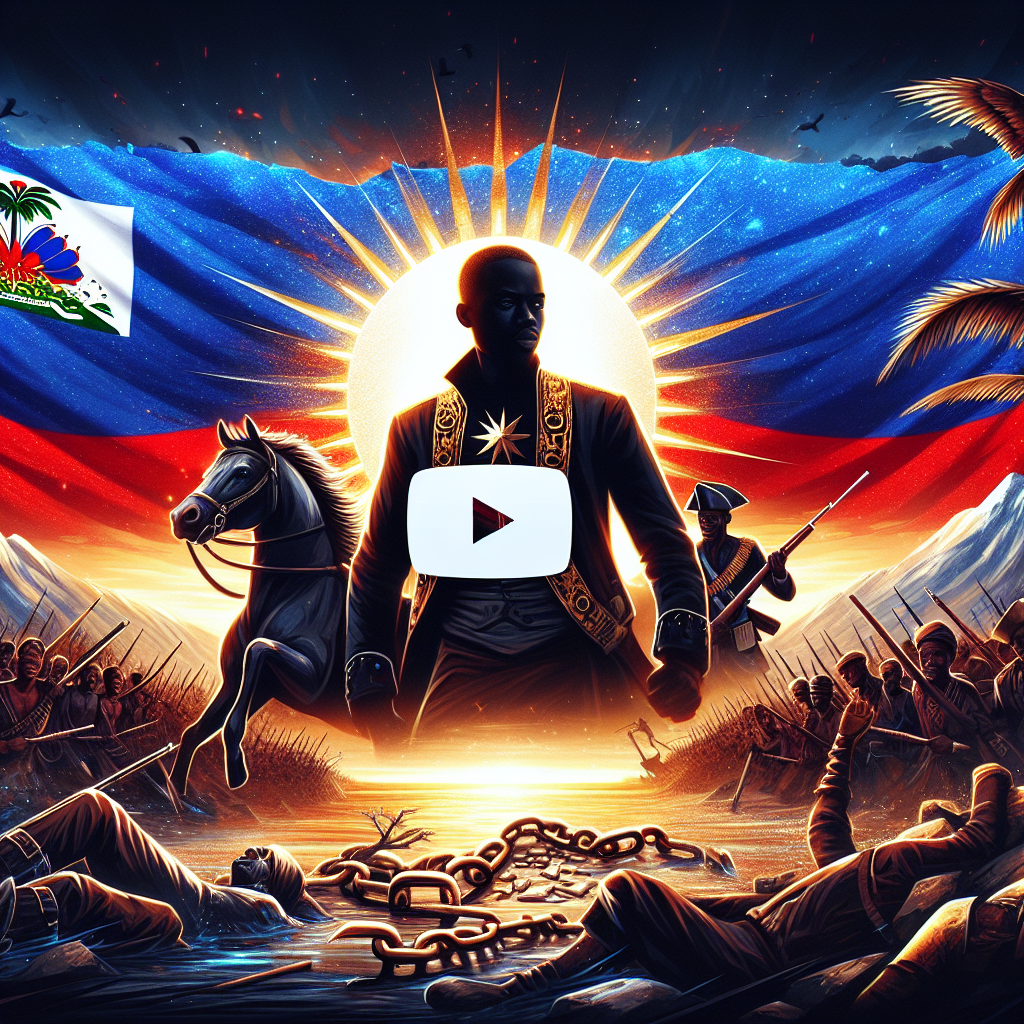

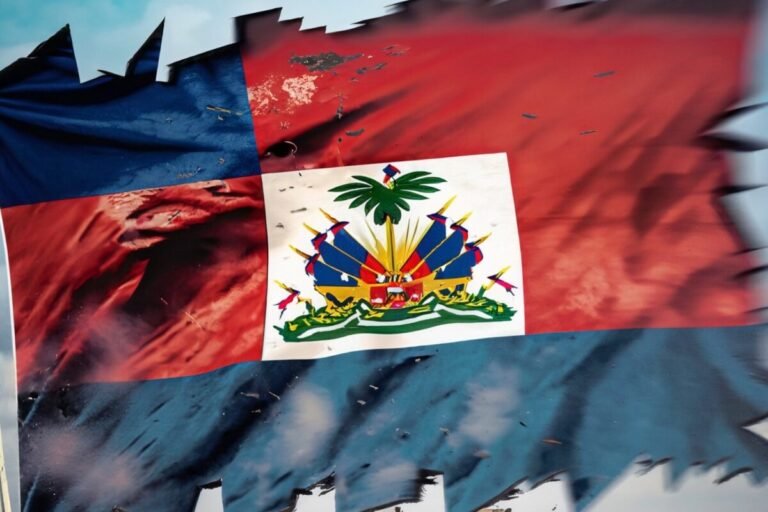
Explore the new colonialism as international organizations tighten their grip on Haiti in 2025.
In recent years, Haiti has been under the significant influence of international organizations, shaping its political, economic, and social structures. This phenomenon is often referred to as new colonialism, where external entities exert control over a nation’s affairs.
The presence of these organizations in Haiti has been a subject of debate, with some arguing that it hinders the country’s ability to self-govern and make independent decisions. As we approach 2025, understanding the dynamics of this colonial control is crucial.
Haiti’s history is a complex tapestry of independence, foreign intervention, and resilience. Understanding this context is crucial for grasping the nation’s current challenges and its relationship with international organizations.
The Haitian Revolution (1791-1804) was a pivotal event that led to Haiti becoming the first independent black nation in the world. This revolution not only achieved independence from French colonial rule but also had far-reaching implications for the abolition of slavery across the Americas.
The revolution was a successful slave revolt that began in 1791 and culminated in the declaration of independence in 1804. Led by figures such as Toussaint Louverture, Jean-Jacques Dessalines, and Boukman Dutty, the revolution was a testament to the resistance and resilience of enslaved Africans.
Following independence, Haiti faced significant challenges to its sovereignty, including diplomatic isolation and economic embargoes imposed by European powers and the United States. This period set a precedent for future interventions and challenges to Haitian autonomy.
Over the past two centuries, Haiti has experienced numerous foreign interventions that have shaped its political, economic, and social landscape.
The United States occupied Haiti from 1915 to 1934, a period marked by the suppression of Haitian resistance and the imposition of American economic interests. This occupation had lasting impacts on Haiti’s political structures and economy.
After the fall of the Duvalier regime in 1986, there was an influx of international aid and involvement in Haiti’s governance. While intended to support democratic transition, this involvement often undermined Haitian sovereignty.
The 2010 earthquake devastated Haiti, killing hundreds of thousands and displacing millions. The disaster led to an unprecedented influx of NGOs and international aid.
Following the earthquake, NGOs became a dominant force in Haiti’s humanitarian response and reconstruction efforts. While providing critical aid, their presence also raised concerns about accountability, coordination, and the long-term impact on Haitian institutions.
Despite significant investment in reconstruction, efforts were often hampered by inefficiencies, corruption, and a lack of Haitian ownership. The result was a missed opportunity for meaningful recovery and development.
| Event | Year | Impact |
|---|---|---|
| Haitian Revolution | 1791-1804 | Independence from France |
| U.S. Occupation | 1915-1934 | Suppression of resistance, economic control |
| 2010 Earthquake | 2010 | Humanitarian crisis, influx of NGOs |
In 2025, Haiti finds itself at a critical juncture, navigating through a tumultuous political landscape and economic vulnerabilities. The nation’s path forward is fraught with challenges that impact its governance, economy, and social fabric.
The political landscape in Haiti is characterized by a complex interplay of governance structures and key political figures.
Haiti’s governance structure is a mix of presidential and parliamentary systems, which often leads to political instability. Effective governance is crucial for stability.
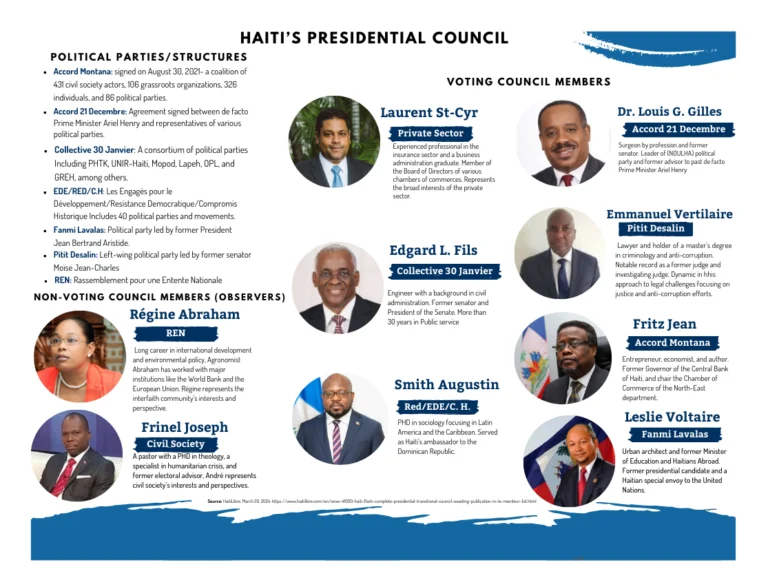
Several political figures and factions play significant roles in shaping Haiti’s political future. Negotiations and coalitions are common as different groups vie for power and influence.
Haiti faces significant economic challenges, including dependency on foreign aid and a lack of diversified industries.
Agriculture is a major industry, but it is often hampered by a lack of infrastructure and investment. Dependency on foreign aid is a significant issue.
Haiti’s trade relationships are often imbalanced, with a heavy reliance on imports. This imbalance affects the nation’s economic stability.
| Year | Imports (USD) | Exports (USD) | Trade Balance (USD) |
|---|---|---|---|
| 2023 | 1.2 billion | 400 million | -800 million |
| 2024 | 1.3 billion | 450 million | -850 million |
| 2025 | 1.4 billion | 500 million | -900 million |
“Haiti’s economic future depends on its ability to diversify its economy and reduce dependency on foreign aid.”
Social conditions in Haiti vary widely, with significant challenges in healthcare, education, and infrastructure.
The healthcare system faces numerous challenges, including a lack of funding and infrastructure. Education is also a critical area, with many schools in disrepair.
Infrastructure development is crucial for providing basic necessities like clean water and electricity. Many areas lack these fundamental services.
In 2025, Haiti stands at the crossroads of a new era of international influence, where control is exerted not through traditional colonial means but through complex networks of power.
The new colonialism is characterized by a shift from direct political control to more subtle forms of influence, often through economic means or institutional frameworks.
While traditional colonialism relied heavily on political domination, the new colonialism often uses economic leverage as a primary tool of control.
International organizations exert influence through soft power, shaping policies and practices in Haiti through technical assistance and capacity-building programs.
Unlike historical colonialism, the new colonialism is legitimized through international law and often involves the consent and cooperation of the governed nation.
| Aspect | Historical Colonialism | New Colonialism |
|---|---|---|
| Control Mechanism | Direct Political Domination | Economic Leverage and Soft Power |
| Legitimization | Conquest and Superiority | International Law and Cooperation |
International organizations use various mechanisms to exert control, including financial leverage and technical expertise.
By providing financial assistance, international organizations can influence policy decisions and shape the economic trajectory of Haiti.
Technical assistance programs not only build capacity but also serve as a means of exerting influence over institutional practices in Haiti.
The presence of international organizations in Haiti is both significant and multifaceted. These organizations play crucial roles in shaping Haiti’s development, governance, and humanitarian response.
The United Nations has a significant presence in Haiti through various agencies.
The United Nations Stabilization Mission in Haiti (MINUSTAH) was established in 2004. Although MINUSTAH’s mandate ended in 2017, the UN continues to have a presence through other missions and agencies.
The United Nations Development Programme (UNDP) focuses on governance, peacebuilding, and sustainable development in Haiti.
International financial institutions play a critical role in Haiti’s economic landscape.
The International Monetary Fund (IMF) and the World Bank implement policies that affect Haiti’s economic trajectory.
Regional development banks provide financing for development projects in Haiti.

Non-Governmental Organizations (NGOs) are vital in Haiti’s humanitarian and development sectors.
Organizations like the Red Cross and Médecins Sans Frontières (MSF) provide critical humanitarian aid.
NGOs focused on development work on projects ranging from education to infrastructure.
| Organization | Focus Area | Impact |
|---|---|---|
| UNDP | Governance, Development | Improved institutional capacity |
| IMF/World Bank | Economic Policies | Economic stabilization |
| Red Cross | Humanitarian Aid | Disaster response and recovery |
Haiti’s economic landscape is significantly influenced by international financial mechanisms. The country’s history of foreign intervention and economic dependency has led to a complex web of debt, aid, and structural adjustment programs that impact its economic sovereignty.
Haiti’s debt burden is a significant factor in its economic control. The country has struggled with debt since the early 20th century.
Haiti was forced to pay an indemnity to France for its independence, known as the ” Haitian indemnity controversy,” which contributed to its debt burden.
Today, Haiti’s debt is managed through various international financial institutions, with strict conditionalities that impact its economic policies.
| Year | Debt Amount (USD) | Conditionalities |
|---|---|---|
| 2020 | 1.2 billion | Austerity measures |
| 2021 | 1.3 billion | Privatization of state-owned enterprises |
| 2022 | 1.4 billion | Trade liberalization |
Foreign aid is another mechanism through which Haiti’s economy is controlled. Aid dependency cycles and the bypassing of Haitian government systems are significant issues.
Haiti has become reliant on foreign aid, which creates a cycle of dependency that undermines its economic self-sufficiency.
Structural adjustment programs have been implemented in Haiti, leading to the privatization of public services and trade liberalization.
The privatization of public services has led to increased costs for Haitian citizens and reduced government control over essential services.
Overall, Haiti’s economic situation is complex and influenced by various international factors. Understanding these mechanisms is crucial for addressing the country’s economic challenges.
Haiti’s governance has become increasingly intertwined with international oversight, raising questions about sovereignty. The country’s political landscape is shaped by various international organizations that influence key aspects of governance.
The international community plays a significant role in overseeing Haitian elections through monitoring and validation processes. This involvement is crucial for ensuring the legitimacy of the electoral process.
International observers are often present during elections to monitor the process and validate the results. This helps to build trust in the electoral system.
Foreign funding is also a critical aspect, as it supports the logistical and operational needs of elections. However, this funding can sometimes come with conditions that may influence the political process.
International organizations often have a significant say in policy-making through externally drafted legislation and the presence of technical advisors in government ministries.
Legislation drafted by international experts can shape Haiti’s legal framework, sometimes without fully considering the local context.
Technical advisors provide guidance to government ministries, influencing policy implementation and governance practices.
The cumulative effect of international influence on governance and policy-making raises concerns about the erosion of Haitian sovereignty.
There is a transfer of decision-making authority from Haitian authorities to international organizations, impacting the country’s ability to self-govern.
Haitian leaders are increasingly held accountable to foreign stakeholders, potentially at the expense of their domestic constituents.
The implications of these dynamics are far-reaching, affecting not only Haiti’s political stability but also its long-term development and self-determination.
The provision of humanitarian aid to Haiti has been a complex issue, intertwining benevolence with control. Humanitarian aid has been a critical component of the international response to Haiti’s numerous crises.
Humanitarian aid allocation and priorities often reflect donor country interests, influencing the direction and impact of aid.
Aid is often allocated based on immediate needs, but priorities can shift according to donor agendas.
Donor countries may have strategic interests that align with or contradict the humanitarian needs of Haiti.
The influx of humanitarian aid can create dependency cycles, undermining local capacity and altering power dynamics.
External aid can lead to the creation of parallel systems that bypass local governance structures.
Over-reliance on external aid can erode the capacity of local institutions to respond to future crises.
Specific examples illustrate how humanitarian aid can lead to control through mechanisms like food aid and healthcare delivery systems.
Food aid can depress local markets and create dependency on external food sources.
External healthcare provision can undermine the development of local healthcare infrastructure.
| Aspect | Benevolent Aid | Controlling Aid |
|---|---|---|
| Aid Allocation | Needs-based | Interest-driven |
| Local Impact | Empowers local institutions | Creates dependency |
From rural peasant movements to urban resistance networks, Haiti’s fight for sovereignty is multifaceted. The Haitian people are employing various strategies to resist foreign influence and reclaim their autonomy.
Grassroots organizations are at the forefront of Haiti’s sovereignty movement. These groups are working tirelessly to promote self-determination and challenge international control.
Peasant movements are fighting for land rights, a crucial aspect of sovereignty. They are resisting the encroachment of foreign interests on their land and demanding fair treatment.
Urban resistance networks are also playing a vital role. They are organizing protests, advocating for policy changes, and raising awareness about the impact of international control on Haitian society.

Haitian political parties have varying stances on international influence. Some advocate for a nationalist approach, while others support pragmatic engagement with international organizations.
Nationalist political platforms emphasize the need for Haitian sovereignty and self-determination. They argue that foreign influence undermines the country’s ability to govern itself.
On the other hand, pragmatic engagement approaches suggest that working with international organizations can bring benefits, such as economic aid and technical assistance, that can help stabilize the country.
Cultural resistance is another critical aspect of Haiti’s sovereignty movement. The preservation of Haitian identity and cultural heritage is seen as essential to resisting foreign influence.
Vodou, a traditional Haitian spiritual practice, is often cited as a form of resistance against cultural imperialism. It represents a connection to Haitian heritage and identity.
The preservation of the Kreyòl language is also vital. It is a symbol of Haitian culture and a means of resisting linguistic and cultural homogenization.
As we examine the complex dynamics at play in Haiti, it becomes clear that the country’s experience has far-reaching implications for global governance. The international community’s involvement in Haiti is not an isolated phenomenon; rather, it reflects broader trends in how global institutions interact with developing nations.
The influence of international organizations in Haiti mirrors similar patterns in other developing countries. For instance, many African nations face comparable challenges in maintaining sovereignty amidst foreign aid and investment.
Countries like the Democratic Republic of Congo and Somalia have experienced significant international intervention, raising questions about the long-term implications for their sovereignty.
Nations such as Nicaragua and Bolivia have also grappled with the balance between accepting international aid and preserving national autonomy.
The situation in Haiti has significant implications for global governance, particularly in discussions around sovereignty in the 21st century and the norms governing international intervention.
The concept of sovereignty is evolving, with international law playing a crucial role in defining the boundaries of national authority versus global responsibility.
Debates around the Responsibility to Protect (R2P) doctrine highlight the tension between international law and national sovereignty, a theme echoed in Haiti’s experience.
The balance between respecting national sovereignty and fulfilling international obligations remains a contentious issue, with Haiti serving as a critical case study.
The R2P doctrine challenges traditional notions of sovereignty, raising ethical questions about the limits of international intervention.
Ensuring that international interventions have the consent of the governed and are democratically legitimate is crucial for their success and ethical justification.
The path to genuine sovereignty for Haiti lies in reforming aid models, building institutional capacity, and promoting international solidarity. To achieve this, several key strategies can be employed.
Reforming international aid and development models is crucial for Haiti’s sovereignty. This can be achieved through:
Enhancing Haitian institutional capacity is vital for sustainable development. Key areas of focus include:
Distinguishing between international solidarity and control is essential. South-South Cooperation Models offer a promising approach, as they are based on mutual respect and benefit. Additionally, discussions around reparations and historical justice can provide a framework for addressing past injustices and promoting equitable partnerships.
By implementing these alternatives and solutions, Haiti can move towards genuine sovereignty, leveraging international support in a way that promotes self-determination and sustainable development.
Haiti stands at a critical juncture, with its future hanging in the balance. The pervasive influence of international organizations has raised concerns about neo-colonialism and the erosion of Haitian sovereignty.
Achieving genuine sovereignty is crucial for Haiti’s long-term prosperity and self-determination. The pathways discussed, including reforming international aid models and building institutional capacity, offer potential solutions to break free from the cycle of dependency.
The road ahead will require a concerted effort from both the Haitian government and the international community. By prioritizing Haitian-led development initiatives and promoting transparency, Haiti can begin to assert its sovereignty and shape its own future.
As Haiti navigates this complex landscape, it is essential to recognize the historical context and the current challenges. By doing so, we can work towards a more equitable and sustainable future for the Haitian people, one that is free from the shackles of neo-colonialism and focused on achieving true sovereignty.
New colonialism refers to the modern forms of control and influence exerted by international organizations and foreign powers over a country’s political, economic, and social affairs. In Haiti’s context, it involves the significant role of international organizations in shaping the country’s governance, economy, and development.
International organizations have been involved in various aspects of Haitian governance, including election monitoring, policy formulation, and technical assistance. This has sometimes led to questions about the erosion of Haitian sovereignty and the extent to which external actors dictate the country’s political direction.
The primary mechanisms include financial leverage, technical expertise, and policy influence. International organizations provide significant financial aid and technical assistance, which can shape Haiti’s economic policies, governance structures, and development priorities.
Foreign aid can create dependency cycles, undermine local capacity, and influence economic policies. While aid is intended to support development, it can also perpetuate a cycle of reliance on external assistance, potentially eroding Haiti’s economic sovereignty.
Yes, there are various grassroots organizations, political parties, and cultural movements in Haiti that are working towards preserving Haitian identity and sovereignty. These movements often advocate for self-determination, land rights, and the preservation of cultural heritage.
Proposed alternatives include reforming international aid models to prioritize direct budgetary support and local procurement, building Haitian institutional capacity through education and technical training, and exploring South-South cooperation models. These approaches aim to enhance Haiti’s autonomy and reduce its dependence on traditional international aid structures.
Haiti’s experience with international control has implications for global governance and international law, particularly regarding the balance between sovereignty and international intervention. The Responsibility to Protect (R2P) doctrine and the role of international law in legitimizing external intervention are critical issues in this context.
Pathways to genuine sovereignty include reforming international aid and development models, enhancing Haitian institutional capacity, and fostering international solidarity through South-South cooperation and reparations for historical injustices. These approaches can help Haiti achieve greater autonomy and self-determination.