Physical Address
304 North Cardinal St.
Dorchester Center, MA 02124
Physical Address
304 North Cardinal St.
Dorchester Center, MA 02124

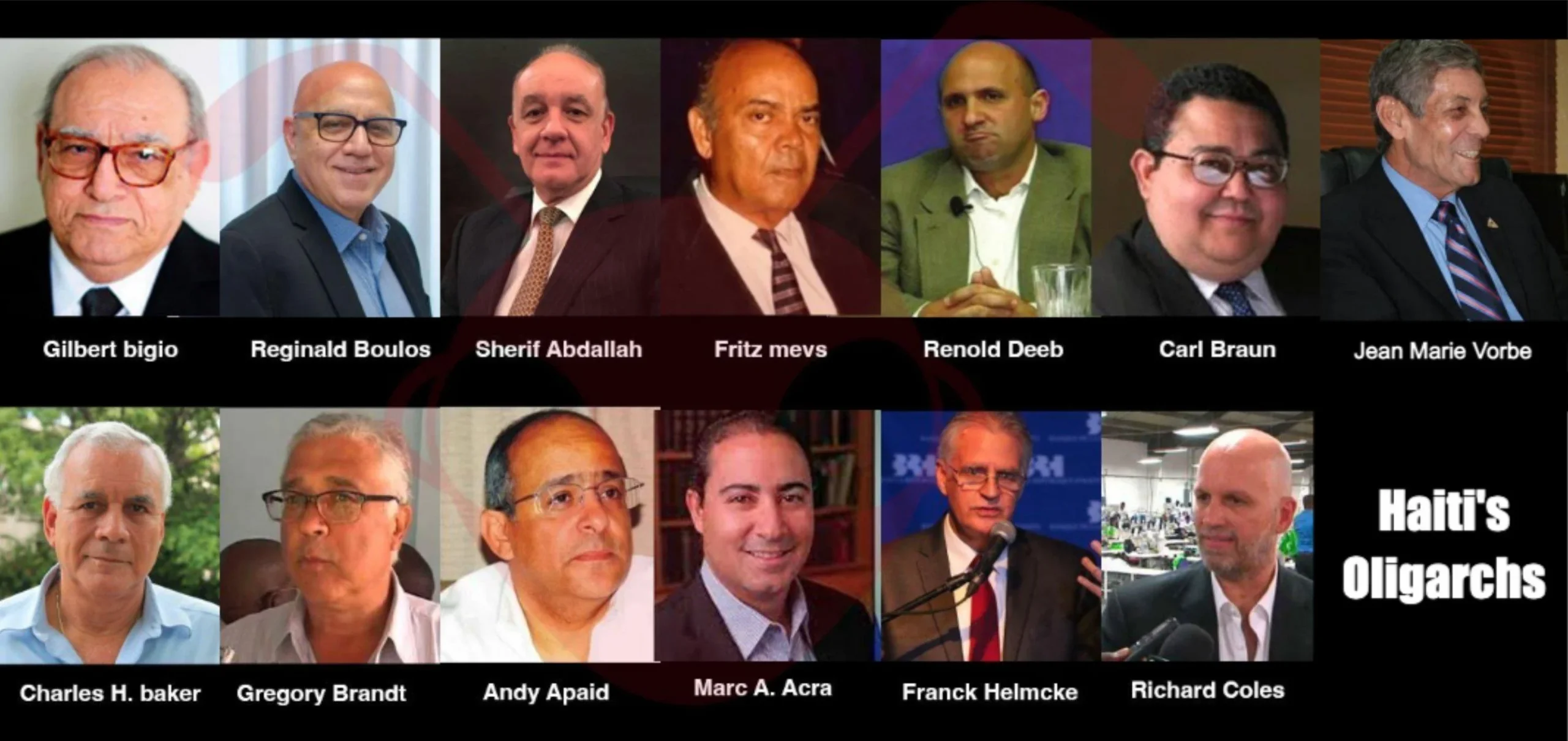
Discover how Haiti's elite class has exploited the nation's resources and left the people to starve in "The Looting Class: How Haiti's Elite Enriches Itself While the Nation Starves."
In Haiti, a stark contrast exists between the privileged few and the impoverished majority. The nation’s elite has long been accused of exploiting Haiti’s resources for personal gain.
This exploitation has led to widespread poverty and hunger, leaving the country in a state of distress. As the divide between the rich and the poor continues to grow, it’s essential to examine the role of Haiti’s elite in perpetuating this cycle.
Haiti’s history is marked by a complex interplay of colonial exploitation and modern-day inequality. The island nation, once the crown jewel of France’s colonial empire, has struggled with the legacies of its past for centuries.
The French colonization of Haiti, which began in the early 17th century, was characterized by brutal exploitation of the indigenous population and enslaved Africans. After a successful slave revolt led to Haiti’s independence in 1804, the country was saddled with a massive indemnity debt to France, known as the “independence debt,” which lasted until 1947. This financial burden significantly hindered Haiti’s economic development.
Following independence, Haiti’s power structures were shaped by a mix of former free people of colour and former enslaved individuals. This led to a complex social hierarchy that has influenced the country’s political and economic trajectory. The elite class that emerged post-independence played a crucial role in shaping Haiti’s future.
Over time, Haiti’s elite evolved into a modern oligarchy that controls key sectors of the economy. This oligarchy has maintained its power through a combination of economic dominance, political manipulation, and strategic alliances with foreign powers.
The historical context of Haiti is crucial to understanding the modern inequality that plagues the country. The legacy of colonial exploitation and the power structures that emerged post-independence have paved the way for the modern oligarchy that dominates Haiti today.
The intricate web of Haiti’s elite class is woven with threads of historical privilege, economic power, and international connections. This complex entity has been pivotal in shaping Haiti’s socio-economic landscape.
Haiti’s elite is often referred to as the “Five Families,” a group that has dominated the country’s economy and politics for decades. These families have their roots in the historical elite that emerged during the colonial and post-independence periods.
| Family Name | Historical Influence | Current Economic Interests |
|---|---|---|
| Brandt | Colonial era trading | Import/Export businesses |
| Mevs | Post-independence political power | Banking and finance |
| Other notable families | Varying historical roles | Diverse business interests |
The elite in Haiti is characterized by a complex racial and class dynamic. Historically, the elitehaves been associated with lighter skin tones, a legacy of colonialism. However, this does not preclude individuals of darker skin tones from ascending to elite status through wealth and strategic alliances.
Many members of Haiti’s elite hold dual citizenships, often in countries like the United States or France, facilitating their international business dealings and providing a safety net in times of political instability.
Key aspects of their foreign connections include:
Understanding these connections is crucial to grasping the full extent of Haiti’s elite influence on the country’s development and its challenges.
The Haitian elite’s stranglehold on the economy is a significant factor in the country’s persistent poverty. This control is exercised through various mechanisms that ensuritsir grip on the nation’s resources.
Haiti’s elite has established monopolistic practices in key industries such as agriculture, energy, and construction. By controlling these sectors, they dictate market prices and limit competition, further entrenching their economic power.
The elite’s control over the import and export sectors allows them to manipulate prices, affecting the cost of essential goods and services. This price fixing disproportionately impacts the poor, who spend a larger portion of their income on necessities.
The elite also exerts significant influence over Haiti’s banking and financial sectors. This control enables them to manipulate currency exchange rates and interest rates, further consolidating their economic power.
Key aspects include:
Political manipulation is a hallmark of Haiti’s elite, who use various tactics to maintain their control over the country’s governance. This manipulation is multifaceted, involving financial influence, personal connections, and strategic maneuvering within the political landscape.
The elite’s influence begins with the funding of political campaigns. By providing financial backing to candidates, they ensure that those who come into power are beholden to their interests. This practice effectively allows the elite to buy influence and shape policy decisions to their advantage.
A significant factor in the elite’s control is the revolving door between business and government. Individuals move seamlessly between roles in the private sector and positions of power in government, creating a conflict of interest that favours the elite’s business interests.
The elite also undermine democratic processes and elections through various means, including voter suppression, electoral fraud, and manipulation of information. These tactics ensure that the outcome of elections aligns with their interests, further entrenching their power.
The result is a governance structure that serves the interests of the elite at the expense of the broader population. To address this, it’s crucial to implement reforms that increase transparency, strengthen democratic institutions, and reduce the elite’s influence over political processes.
The looting class in Haiti refers to the elite who systematically extract wealth, causing widespread poverty. This phenomenon is characterized by various mechanisms that allow the elite to accumulate riches while the majority of Haitians struggle to survive.
One of the primary methods used by Haiti’s elite is wealth extraction through financial systems. Capital flight is a significant issue, where money is transferred out of Haiti into foreign accounts, often to evade taxes or invest in more stable economies. According to some estimates, Haiti loses billions of dollars annually due to capital flight, a staggering amount considering the country’s GDP.
“The outflow of capital from Haiti not only deprives the government of much-needed revenue but also exacerbates economic inequality,” notes a recent report on Haiti’s economic challenges.
Haiti’s elite often employs complex tax evasion strategies, utilizing offshore banking networks to hide assets and avoid taxation. This not only reduces government revenue but also places a heavier tax burden on the middle and lower classes. The use of offshore accounts complicates efforts to track and regulate financial transactions, facilitating corruption and money laundering.
The exploitation of Haiti’s natural resources is another avenue through which the elite enriches itself. Land grabbing has become a significant issue, with foreign and local elites acquiring large tracts of land for agricultural purposes or resource extraction, often displacing local communities. This practice not only leads to environmental degradation but also undermines food security and exacerbates social inequalities.
As
“The control of land and resources in Haiti has become a critical factor in the country’s ongoing struggle with poverty and inequality.”
Addressing these issues requires a multifaceted approach that includes strengthening regulatory frameworks and promoting transparency in financial and land transactions.
As Haiti’s infrastructure crumbles, the elite seize opportunities for profit through privatization. This phenomenon is not accidental but rather a deliberate strategy to enrich the ruling class at the expense of the general population.
The elite have been instrumental in privatizing essential services such as water, electricity, and telecommunications. By controlling these sectors, they dictate prices and services, often to the detriment of the poor and middle class. For instance, private water companies have been known to charge exorbitant rates, making clean water unaffordable for many Haitians.
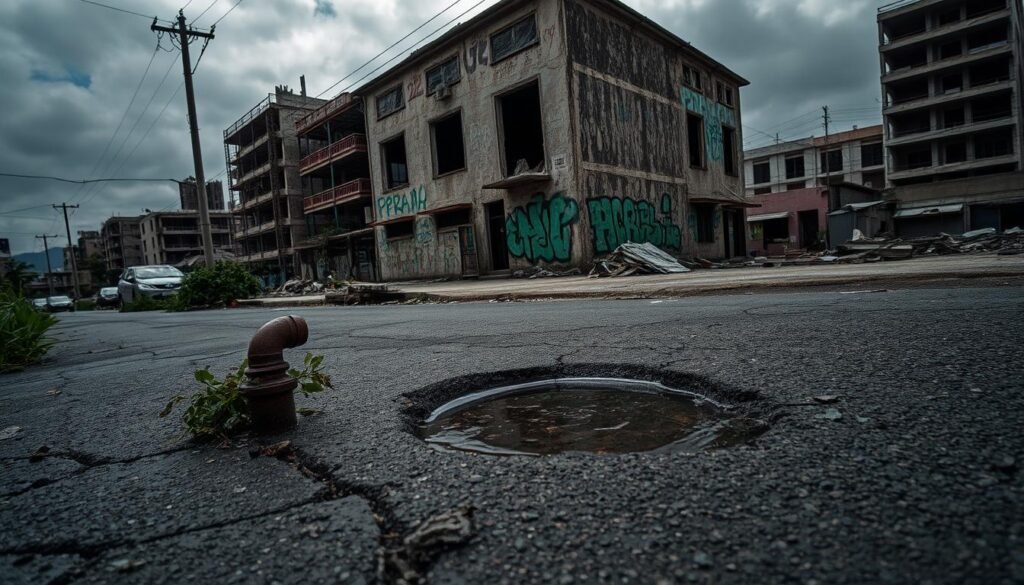
Rather than investing in public infrastructure, Haiti’s elite often allows it to deteriorate. This neglect is strategic, as it creates a vacuum that private companies can fill at a profit. The result is a vicious cycle where the lack of public services justifies the need for private, often expensive, alternatives.
Haiti’s vulnerability to natural disasters has been exploited by the elite through disaster capitalism. After events like the 2010 earthquake, private companies have made significant profits from reconstruction efforts, often with little oversight or benefit to the affected communities. This practice not only exacerbates the country’s infrastructure challenges but also deepens the dependency on foreign aid and private profiteering.
The intertwining of elite interests with privatization and disaster capitalism has turned Haiti’s infrastructure neglect into a profitable enterprise. Addressing this requires not only rebuilding infrastructure but also challenging the power structures that profit from its decay.
As Haiti struggles to overcome its economic challenges, the human cost of the elite’s actions becomes increasingly apparent. The country’s most vulnerable populations bear the brunt of the elite’s greed, facing dire consequences in their daily lives.
Haiti is grappling with severe food insecurity, with a significant portion of the population lacking access to nutritious food. According to recent statistics, nearly 4.5 million Haitians are experiencing acute food insecurity, with many facing hunger daily.
The healthcare system in Haiti is on the brink of collapse, with many healthcare facilities lacking essential resources and personnel. This has led to a significant increase in preventable deaths, further exacerbating the human cost of the elite’s actions.
Key statistics include:
Access to education is a significant challenge in Haiti, with many children unable to attend school due to poverty and a lack of infrastructure. This perpetuates a cycle of inequality, as those without education are less likely to secure better-paying jobs, thus maintaining the status quo of the elite’s power.
The consequences are far-reaching:
The intertwining of gang violence and elite interests has plunged Haiti into a severe crisis. This complex situation is characterized by the rise of armed groups, their connections to the elite, and the resulting political instability.
Gang violence has become a pervasive issue in Haiti, contributing to a climate of fear and insecurity. Armed groups have proliferated, often operating with impunity and exerting control over significant portions of the capital, Port-au-Prince. This rise in gang activity is closely linked to political instability, as various factions vie for power and influence.
The political landscape is further complicated by the elite’s involvement with these armed groups. By funding or supporting certain gangs, the elite can manipulate the situation to their advantage, often at the expense of the general population.
There is growing evidence that Haiti’s elite is involved in funding criminal organizations. This support can take many forms, from direct financial backing to more complex arrangements involving business and political interests. Investigations and reports have highlighted the extent of this elite involvement, revealing a network of connections between high-ranking officials, business leaders, and gang leaders.
The elite in Haiti often use the chaos generated by gang violence as a means to maintain control. By creating an atmosphere of instability, they can justify authoritarian measures and consolidate their power. This strategy allows the elite to distract from their own corruption and maintain their grip on the country’s resources.
Foreign aid, intended to alleviate poverty and support development in Haiti, has paradoxically contributed to the enrichment of the country’s elite. This phenomenon is largely attributed to the complex dynamics surrounding aid distribution and the influential role of the elite in manipulating these processes.
The presence of numerous non-governmental organizations (NGOs) in Haiti has created what is known as the NGO industrial complex. While these organizations are meant to provide essential services, they often operate with little oversight, creating opportunities for corruption and misappropriation of funds.
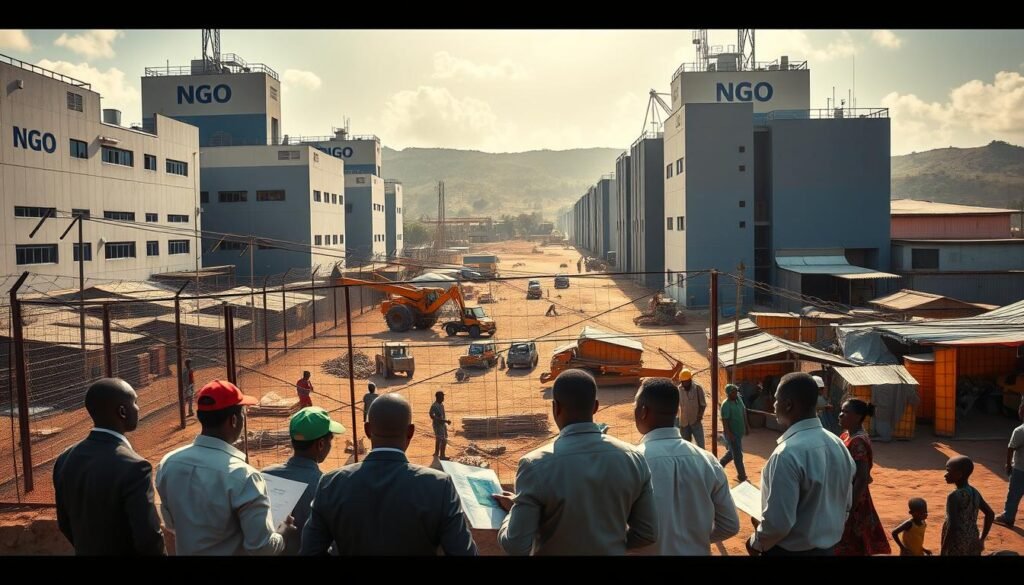
A significant portion of international aid is diverted from its intended purpose due to various factors, including corruption and bureaucratic inefficiencies. This diversion not only reduces the effectiveness of aid but also perpetuates a cycle of dependency.
The lack of robust accountability mechanisms in aid distribution has enabled the elite to exploit these systems further. Strengthening these mechanisms is crucial to ensuring that aid reaches those who need it most.
| Issue | Impact | Potential Solution |
|---|---|---|
| NGO Industrial Complex | Unregulated operations, corruption | Enhanced oversight and regulation |
| Diversion of Aid | Reduced aid effectiveness, dependency | Improved transparency and tracking |
| Lack of Accountability | Elite exploitation, aid misappropriation | Robust accountability mechanisms |
Addressing these challenges is essential to reforming the foreign aid system in Haiti and ensuring that assistance benefits the intended recipients rather than the elite.
International actors play a significant role in perpetuating Haiti’s status quo, often to the detriment of the Haitian people. The complex interplay between foreign powers, international financial institutions, and corporate interests creates a challenging environment for meaningful reform.
The United States has historically played a significant role in shaping Haiti’s political landscape. U.S. policy has often supported the interests of Haiti’s elite, sometimes at the expense of the broader population. This has been evident in various forms of aid and political backing that have bolstered the power of oligarchic families.
International financial institutions, such as the IMF and World Bank, have imposed structural adjustment programs on Haiti, which have had mixed results. While intended to stabilize the economy, these programs have often benefited the elite while leaving the majority of Haitians in poverty.
| Corporation | Activity | Impact |
|---|---|---|
| XYZ Inc. | Mining | Environmental degradation |
| ABC Corp. | Agriculture | Displacement of local communities |
The role of corporate interests in Haiti’s resource extraction industries is another critical factor. Companies involved in mining, agriculture, and other sectors have often prioritized profit over the welfare of local communities, contributing to environmental degradation and social unrest.
A new wave of activism is sweeping through Haiti, targeting the elite’s exploitation and corruption. This movement is multifaceted, involving various stakeholders who are determined to challenge the status quo and bring about change.
Grassroots movements and civil society organizations are at the forefront of the resistance. Groups such as the Haitian Platform for Advocacy and Alternative Strategies (PAPDA) and the National Network for the DDefenceof Human Rights (RNDDH) have been vocal in their opposition to the elite’s practices. These organizations work tirelessly to expose corruption, advocate for policy changes, and support marginalized communities.
International pressure and targeted sanctions are also playing a crucial role in challenging the elite’s power. Organizations like the United Nations and the Organization of American States have implemented measures to hold Haitian leaders accountable for their actions. For instance, the UN has imposed sanctions on individuals involved in corruption and human rights abuses.
| Organization | Action Taken | Impact |
|---|---|---|
| United Nations | Imposed sanctions on corrupt officials | Reduced corruption among high-ranking officials |
| Organization of American States | Supported democratic processes | Enhanced transparency in governance |
Investigative journalism has been instrumental in uncovering the elite’s corruption networks. Journalists and media outlets have risked their safety to expose the truth, providing the public with critical information about the elite’s malpractices. This has helped to build public awareness and mobilize action against corruption.
The combined efforts of grassroots movements, international pressure, and investigative journalism are crucial in challenging the elite’s power in Haiti. As these resistance movements continue to grow and gain momentum, there is hope for a more equitable future for the Haitian people.
Haiti’s future hinges on breaking the elite’s stranglehold on power and resources. The historical context of colonial exploitation and modern inequality has created a system where the ruling class prioritizes its interests over the nation’s well-being.
To move forward, it’s essential to address the economic stranglehold, political manipulation, and human cost of the elite’s actions. This requires a concerted effort to promote transparency, accountability, and equitable distribution of resources.
Grassroots movements, civil society organizations, and international pressure can play a crucial role in challenging elite power and pushing for reforms. Investigative journalism and targeted sanctions can also help expose corruption networks and hold those responsible accountable.
The path forward for Haiti involves creating a more just and equitable society. This can be achieved by supporting initiatives that promote democratic governance, economic equality, and human rights. By working together, it’s possible to build a brighter future for Haiti.
The “looting class” refers to Haiti’s elite who enrich themselves through various mechanisms such as wealth extraction, capital flight, and exploitation of natural resources, leaving the majority of the population in poverty.
French colonization and the subsequent independence debt imposed on Haiti have significantly contributed to the country’s current state of inequality by creating a legacy of exploitation and draining the nation’s resources.
The “Five Families” refer to the dominant families within Haiti’s elite class, who wield significant economic and political power, influencing the country’s governance and economy.
Haiti’s elite maintains control through monopolistic business practices, control of import/export sectors, price fixing, and manipulation of the banking and financial sectors, thereby strangling the economy.
Foreign aid intended for Haiti is often misappropriated by the elite through the NGO industrial complex, diversion of international assistance, and lack of accountability in aid distribution, turning aid into harm.
International financial institutions contribute to Haiti’s issues by imposing structural adjustment programs that favour the elite’s interests, perpetuating the status quo and hindering the country’s development.
Grassroots movements in Haiti face challenges such as resistance from the elite, limited resources, and sometimes, violence, but they continue to push for change and accountability.
Investigative journalism plays a crucial role in exposing corruption networks andthe elite’s malpractices, bringing to light the mechanisms used to exploit Haiti’s resources and people, and thus, aiding in holding them accountable.
Disaster capitalism refers to the practice of exploiting disasters for profit. In Haiti, it has led to the privatization of essential services and reconstruction efforts that benefit the elite at the expense of the general population, exacerbating the country’s infrastructure challenges.
Haiti faces significant food insecurity, with a substantial portion of the population lacking access to sufficient and nutritious food, a situation exacerbated by the elite’s control over the economy and resources.
The elite’s actions, including the privatization of healthcare services, have contributed to a healthcare crisis in Haiti, characterized by preventable deaths and inadequate access to healthcare for the majority of the population.
The U.S. plays a significant role in Haiti’s political and economic landscape through its policy and support for oligarchic interests, influencing the country’s governance and economy.
International pressure and targeted sanctions can help by holding the elite accountable for their actions, creating an environment conducive to change, and pushing for reforms that address Haiti’s deep-seated issues.