Physical Address
304 North Cardinal St.
Dorchester Center, MA 02124
Physical Address
304 North Cardinal St.
Dorchester Center, MA 02124
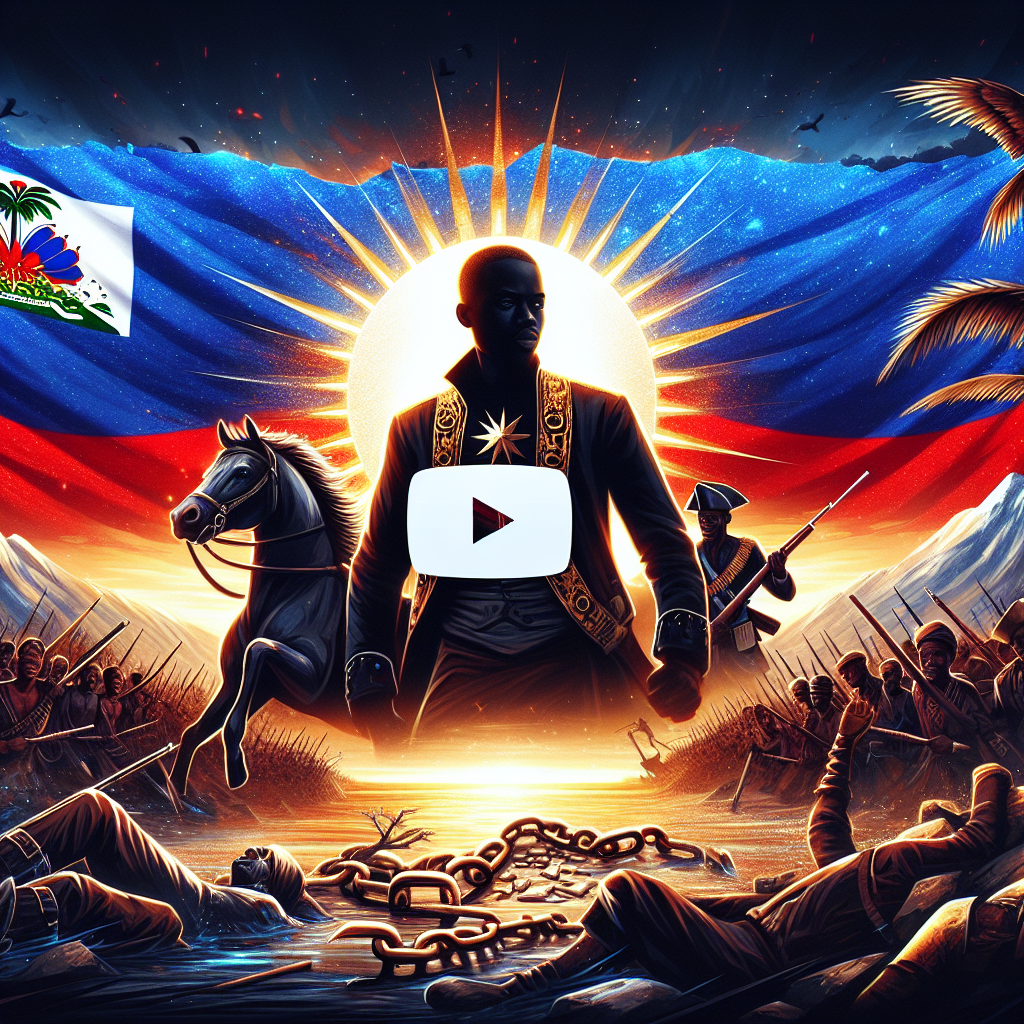
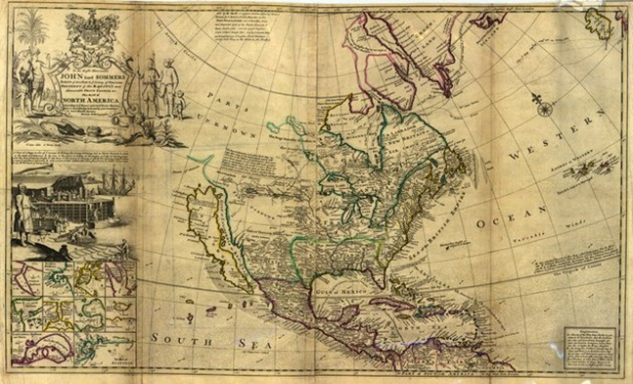
Uncover the hidden history of Haiti's 1804 imperial revolution, often overlooked by the West. Explore why this pivotal event is "The Empire They Erase."
In the annals of history, few events have been as pivotal yet overlooked as Haiti’s 1804 imperial history. The Haitian Revolution, a successful slave rebellion that led to the establishment of Haiti as an independent nation, stands as a testament to the resistance against colonial powers.
This significant event not only shaped Haiti’s destiny but also had far-reaching implications for the world. Despite its importance, the story of Haiti’s fight for independence and its subsequent imperial history remains largely untold in mainstream historical narratives, reflecting a broader pattern of Western avoidance of uncomfortable historical truths.
Saint-Domingue, the French colony that would become Haiti, was a powder keg waiting to ignite. The conditions in this colony under French rule were ripe for a revolution.
The Saint-Domingue colony was a crucial part of the French economy in the 18th century. Its economic importance to European powers cannot be overstated.
Saint-Domingue was one of the most profitable colonies in the Caribbean, producing a significant portion of the world’s sugar and coffee. The colony’s wealth was built on the backs of enslaved Africans, who were subjected to brutal treatment.
The slavery system in Saint-Domingue was notorious for its cruelty. Enslaved people were subjected to harsh conditions, leading to widespread discontent and eventually, rebellion.
The Haitian Revolution was sparked by the enslaved population’s desire for freedom. Toussaint Louverture, a former slave, emerged as a key leader in the early stages of the rebellion.
Toussaint Louverture’s military prowess and strategic thinking were instrumental in the initial successes of the revolution. His leadership helped to galvanize the enslaved population against their French colonizers.
As the rebellion gained momentum, it evolved into a full-scale revolution. The enslaved population, now fighting for their freedom, faced off against the French colonial forces in a series of intense battles.
Haiti’s path to becoming the first black empire in the Western Hemisphere began with a bold declaration on January 1, 1804. Under the leadership of Jean-Jacques Dessalines, the nation not only gained independence from France but also laid the foundation for a new imperial power.
The Declaration of Independence was a pivotal moment in Haitian history, marking the country’s formal break from French colonial rule. Dessalines played a crucial role in this process.
The declaration signified Haiti’s freedom from centuries of French rule, symbolizing the end of slavery and oppression. This act was revolutionary, challenging the colonial powers of the time.
On January 1, 1804, Dessalines issued the declaration, asserting Haiti’s sovereignty. This document was not just a statement of independence; it was a call to the Haitian people to stand united under their new government.
Following the declaration, the establishment of the Haitian Empire involved creating robust political and military structures. Political organization was key to maintaining order and governance.
The political framework established under Dessalines aimed to ensure stability and continuity. This included the creation of a governing body that could effectively administer the newly independent nation.
A strong military structure was also essential for defending the nation against external threats and maintaining internal security. Dessalines focused on building a capable military force.
The formation of the Haitian Empire under Dessalines was a complex process that involved not just declaring independence but also establishing the necessary institutions to sustain it. This period marked the beginning of Haiti’s journey as a sovereign nation.
As the first black emperor in the Americas, Jacques I embodied the spirit of Haitian independence. Jean-Jacques Dessalines, now revered as Emperor Jacques I, played a crucial role in shaping Haiti’s imperial identity following its revolutionary uprising.
Dessalines’ vision for the Haitian empire was influenced by various factors, including his experiences during the revolution and his perceptions of effective governance.
Dessalines drew inspiration from Napoleon Bonaparte’s imperial model, adopting certain ceremonial and structural elements for the new Haitian empire. Additionally, he was influenced by the organizational structures of various African kingdoms, integrating these into the fabric of the Haitian imperial system.
The new empire adopted symbols and ceremonies that reflected its unique heritage and the revolutionary ideals it represented. These included the creation of a new flag and the establishment of imperial ceremonies that echoed those of other monarchies, while maintaining a distinctly Haitian character.
The governance structure of the Haitian empire under Emperor Jacques I was defined by a robust constitutional framework. This framework outlined the powers of the emperor, the structure of the government, and the rights of citizens.
The 1805 Imperial Constitution was a cornerstone of Dessalines’ governance, establishing the legal foundations of the empire and defining the relationship between the state and its citizens.
Dessalines implemented significant land reform policies, aimed at redistributing land from former colonial owners to the Haitian people. This not only addressed economic inequality but also served as a means of consolidating the revolution’s achievements.
| Aspect | Description | Significance |
|---|---|---|
| Governance Structure | An imperial system with a strong emperor | Centralized authority for stability |
| Constitutional Framework | Defined powers and rights | Legal foundation for the empire |
| Land Reform | Redistribution of land to Haitians | Economic equality and consolidation of revolutionary gains |
The establishment of Haiti as an empire in 1804 was a revolutionary act that not only freed the Haitian people but also menaced the colonial and slaveholding systems worldwide. This significant event in history posed a substantial threat to the existing world order, challenging the economic, social, and racial structures that underpinned colonial powers.
Haiti’s successful revolution and subsequent establishment of an empire directly threatened the foundations of colonial powers. The implications were far-reaching, affecting both the economic and social fabric of these powers.
One of the primary concerns for colonial powers was the fear that the Haitian Revolution would inspire similar slave rebellions in their own territories. This fear was not unfounded, as the Haitian Revolution did galvanize abolitionist movements and slave uprisings across the Americas.
The Haitian Empire’s existence also posed an economic threat to the plantation economies that relied heavily on slave labour. By demonstrating that slaves could successfully revolt and establish their own nation, Haiti undermined the legitimacy and profitability of the slave-based economy.
| Economic Impact | Social Impact | Political Impact |
|---|---|---|
| Undermined slave-based economies | Inspired abolitionist movements | Challenged colonial and slaveholding systems |
| Loss of Haitian resources for France | Fear of slave rebellions spreading | Establishment of the first black republic |
The Haitian Empire’s formation also challenged the prevailing white supremacist narratives of the time. By achieving independence and establishing a black-led government, Haiti disrupted the racial hierarchies that had been used to justify slavery and colonialism.
Haiti’s revolution and empire challenged the notion of white superiority by demonstrating that black people could govern themselves and achieve military victories against European powers.
Furthermore, the success of the Haitian Empire contradicted the European “civilizing mission” claims, which posited that European powers were bringing civilization to “savage” or “backward” peoples. Haiti’s self-governance and development undermined these claims, showing that non-European societies could be capable and sovereign.
In conclusion, Haiti’s 1804 imperial history has been avoided or erased by the West due to the significant threats it posed to colonial powers and white supremacist narratives. Understanding this history is crucial for grasping the complexities of modern global politics and the ongoing impacts of colonialism and slavery.
The international community’s response to Haiti’s independence was characterized by isolation and punitive measures, reflecting the fear and hostility generated by the Haitian Revolution. This isolation was not merely a passive stance; it was an active strategy employed by major powers to undermine Haiti’s sovereignty and deter other colonies from following a similar path.
Haiti faced severe economic embargoes and diplomatic non-recognition from major world powers, including the United States and European colonial powers. These measures were designed to strangle the young nation’s economy and isolate it internationally.
The United States, in particular, refused to recognize Haiti diplomatically until 1862, more than 50 years after its independence. This refusal was largely due to domestic political pressures and the fear of setting a precedent for slave rebellions in the United States.
European powers also participated in the collective punishment of Haiti, imposing economic restrictions and refusing to establish formal diplomatic relations. This isolation was a testament to the threat that Haiti’s existence posed to the colonial and slaveholding order in the Atlantic world.
One of the most significant factors contributing to Haiti’s economic woes was the French indemnity, a debt imposed by France in 1825 in exchange for recognizing Haiti’s independence. This indemnity was a crushing burden that drained Haiti’s resources and hindered its development.
The 1825 debt agreement between Haiti and France required Haiti to pay 150 million gold francs as compensation for the loss of slaves and property. This amount was later reduced, but still represented a massive financial burden.
The long-term economic consequences of the French indemnity were severe. The debt stifled Haiti’s economic growth, diverted resources away from development, and contributed to the country’s ongoing economic challenges.
As a beacon of hope for enslaved people everywhere, the Haitian Revolution played a pivotal role in shaping the modern world. Its impact was felt across the globe, from Latin America to the United States and Europe.
The Haitian Revolution’s influence on Latin American independence movements was significant. Leaders such as Simón Bolívar found inspiration in Haiti’s successful revolt against colonial rule.
Bolívar’s time in Haiti was crucial in shaping his vision for Latin American independence. He received military support from Haitian leaders, which aided his campaigns against Spanish colonial forces.
The Haitian Revolution’s emphasis on liberty, equality, and fraternity inspired movements beyond Latin America. It challenged the status quo and encouraged other colonies to seek independence.
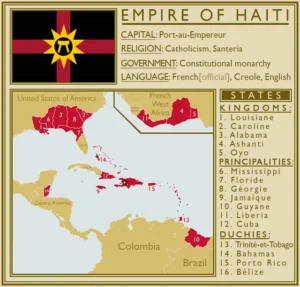
The Haitian Revolution was a powerful symbol for anti-slavery movements across the Americas. It demonstrated that enslaved people could successfully revolt against their oppressors.
By achieving independence, Haiti challenged the notion that slavery was inevitable. It showed that collective action could lead to freedom.
Haiti became a symbol in abolitionist rhetoric, representing the possibility of freedom and equality. Abolitionists across the Americas referenced Haiti as a powerful example of what could be achieved.
The global impact of the Haitian Revolution, despite its erasure from many historical narratives, underscores its significance. It continues to inspire movements for freedom and equality today.
Despite its significance, Haiti’s imperial history is rarely discussed in Western educational settings, exemplifying a broader pattern of historical neglect. This omission is not merely an oversight but a symptom of a deeper issue within the Western education system.
One of the primary manifestations of historical amnesia in Western education is the omission of significant historical events from textbooks and curricula. The coverage of Haiti’s revolution is often compared unfavorably to that of other revolutions.
The exclusion of Haiti’s history from Western education perpetuates a Eurocentric narrative, marginalizing the experiences and achievements of non-European societies. This pattern of exclusion has several consequences:
The selective inclusion of certain historical events in educational curricula while excluding others reflects a broader issue of selective teaching. This selectivity is often influenced by prevailing cultural and political narratives.
Western education tends to prioritize the study of European and American revolutions, portraying them as the pinnacle of democratic and revolutionary ideals. This privileging is evident in:
When Haiti’s revolution is included in Western curricula, it is often portrayed in a limited or stereotypical manner. This portrayal can:
Addressing historical amnesia in Western education requires a more inclusive approach to teaching history, one that acknowledges the diverse experiences and contributions of all nations and cultures.
Efforts to reclaim Haiti’s imperial narrative are gaining momentum in modern scholarship. As the world grapples with the complexities of history and identity, Haiti’s story is being rediscovered and reevaluated. This resurgence of interest is not only about correcting historical omissions but also about understanding the profound impact of Haiti’s revolution on global events.
Contemporary scholars are at the forefront of challenging the historical erasure of Haiti’s imperial narrative. Through rigorous research and innovative methodologies, they are shedding new light on the significance of Haiti’s 1804 imperial formation.
New historical research and publications are crucial in this endeavour. Scholars are producing works that not only highlight the achievements of Haiti’s revolutionary leaders but also contextualize their impact on a global scale. For instance, recent studies have focused on the diplomatic and economic implications of Haiti’s independence, providing a more nuanced understanding of its imperial ambitions.
The advent of digital archives has made historical documents more accessible, allowing researchers to explore primary sources that were previously out of reach. This has been instrumental in reconstructing Haiti’s imperial history and making it available to a broader audience.
Haiti’s revolution is also being represented in popular culture and media, further amplifying its narrative. From literary works to cinematic productions, the story of Haiti’s fight for independence is being told and retold in various formats.
Literary and artistic representations of Haiti’s revolution have been instrumental in keeping its memory alive. Authors and artists have drawn inspiration from the courage and resilience of Haiti’s people, creating works that resonate with audiences worldwide. As one historian noted,
“Haiti’s revolution is a testament to the power of the human spirit.”
Films and documentaries have also played a significant role in filling the gap left by historical erasure. By bringing Haiti’s story to the screen, these productions have helped to educate and engage a wider public, ensuring that the legacy of Haiti’s imperial narrative endures.

Haiti’s 1804 imperial history is a pivotal moment in the fight against colonialism and slavery. The establishment of the first black empire in the Western Hemisphere marked a significant turning point, challenging the dominant narratives of white supremacy and reshaping the global landscape.
Acknowledging this history is crucial for understanding the complexities of the modern world. By recognizing the achievements of Haitian revolutionaries, such as Jean-Jacques Dessalines, we can gain a deeper appreciation for the struggles and triumphs of marginalized communities.
The erasure of Haiti’s imperial history has had far-reaching consequences, from the lack of representation in historical narratives to the ongoing struggles against neocolonialism. It is essential to reclaim and celebrate this history, promoting a more nuanced understanding of the past and its ongoing impact on contemporary society.
In reaching this conclusion, it becomes clear that acknowledging the first black empire is not only a matter of historical accuracy but also a step towards a more inclusive and equitable understanding of our shared past.
The 1804 Declaration of Independence marked the establishment of the first black empire in the Americas, led by Jean-Jacques Dessalines, and signified the end of French colonial rule and the birth of Haiti as an independent nation.
Toussaint Louverture was a key leader in the Haitian Revolution, known for his military prowess and strategic leadership. He played a crucial role in the initial stages of the revolution, fighting against French colonial rule.
The Haitian Revolution had a significant impact on the institution of slavery, as it challenged the legitimacy of slavery and inspired abolitionist movements across the Americas. Haiti’s successful slave revolt demonstrated that enslaved people could achieve freedom through resistance.
The French indemnity was a debt imposed on Haiti by France in 1825 as a condition for diplomatic recognition. The debt was meant to compensate French slave owners for their losses during the Haitian Revolution, and it had long-term economic consequences for Haiti, contributing to its financial struggles.
The Haitian Revolution inspired other independence movements in the Americas, particularly in Latin America. Leaders like Simón Bolívar were influenced by Haiti’s successful revolt, and Haiti provided military support to some of these movements.
Haiti’s imperial history is often omitted or marginalized in Western education due to a combination of factors, including a historical bias towards European and American narratives, a lack of representation in textbooks, and a general lack of awareness about Haiti’s significance.
Contemporary scholars, researchers, and artists are working to reclaim Haiti’s imperial narrative through new historical research, publications, digital archives, and representations in popular culture and media, such as films and documentaries.
The Haitian Revolution had a significant impact on the global anti-slavery movement, as it challenged the institution of slavery and provided a powerful example of successful resistance. Haiti’s revolution inspired abolitionists and challenged the legitimacy of slavery worldwide.
Dessalines’ imperial vision for Haiti was significant because it represented a bold attempt to create a new, independent black nation, free from colonial rule. His vision included the establishment of a new political and military structure, as well as the adoption of symbols and ceremonies that reflected Haiti’s unique cultural heritage.