Physical Address
304 North Cardinal St.
Dorchester Center, MA 02124
Physical Address
304 North Cardinal St.
Dorchester Center, MA 02124


Explore the corrupt officials and foreign photo-ops that plague Haiti's frustrating donation theater.
Haiti has long been plagued by corrupt officials who exploit foreign aid for personal gain, leaving the country in a state of perpetual need.
The concept of the “donation theater” refers to the spectacle of foreign aid pouring into Haiti, often accompanied by high-profile visits and photo-ops, yet failing to bring about meaningful change.
This cycle of dependency and corruption has frustrated many who wish to help, as foreign aid often ends up in the wrong hands, perpetuating Haiti corruption.
The story of Haiti is one of resilience, from its inception as a revolutionary nation to its ongoing struggles with instability. Understanding Haiti’s history is crucial to grasping the complexities of its current situation.
Haiti, the first independent black nation in the world, was born out of a successful slave revolt against French colonial rule in 1804. This revolution, led by figures such as Toussaint Louverture, marked a significant turning point not only for Haiti but also for the world, challenging the institution of slavery and inspiring liberation movements globally.
Since its independence, Haiti has faced centuries of political instability, characterized by coups, dictatorships, and foreign interventions. The United States, in particular, has played a significant role in Haiti’s political landscape, with occupations and interventions that have often had lasting impacts on the country’s governance and economy.
| Year | Event | Impact |
|---|---|---|
| 1804 | Independence from France | First black republic in the world |
| 1915-1934 | US Occupation | Infrastructure development, but also suppression of Haitian culture |
| 2010 | Devastating Earthquake | Massive loss of life and infrastructure |
Haiti is prone to natural disasters, including earthquakes, hurricanes, and floods. The 2010 earthquake, in particular, highlighted the country’s vulnerability, resulting in significant loss of life and exacerbating existing socio-economic challenges. The impact of such disasters is often compounded by inadequate infrastructure and a lack of resources to respond effectively.
As noted by a Haitian proverb, “Lespwa fe viv” or “Hope makes us live.” Despite the challenges, there is a resilient spirit among Haitians that offers hope for a more stable future.
“The history of Haiti is a testament to the strength and resilience of its people, from the revolutionary spirit of the past to the ongoing struggles of the present.”
At the heart of Haiti’s development challenges lies the “Donation Theater,” a cycle of foreign aid, corruption, and political grandstanding that has hindered the country’s progress.
The “Donation Theater” refers to the spectacle surrounding foreign aid distribution in Haiti, where aid becomes a tool for political posturing rather than a means for genuine development.
This phenomenon is characterized by a complex interplay between local officials who manage the aid, foreign governments that provide the aid, and NGOs that implement aid projects.
Local officials play a crucial role in the Donation Theater, as they are often involved in the allocation and distribution of aid, sometimes using it as a means to consolidate power or wealth.
Foreign governments and NGOs are also key players, providing the aid and resources that fuel the spectacle, often with their own agendas and interests.
The primary audience for the Donation Theater includes Haitian citizens, who are directly affected by the aid distribution and often witness the spectacle firsthand.
International observers also form a significant part of the audience, watching from afar as Haiti navigates its development challenges amidst the Donation Theater.
The Donation Theater phenomenon underscores the need for a more transparent and accountable approach to foreign aid in Haiti, focusing on the needs of Haitian citizens rather than political or organizational interests.
Haiti’s governance has long been plagued by corruption, undermining the country’s development and stability. This pervasive issue is not just a matter of a few corrupt officials but is deeply ingrained in the structural fabric of the government.
The governance structure in Haiti is characterized by a lack of transparency and accountability, creating an environment conducive to corruption. Weak institutional frameworks and inadequate legal mechanisms for addressing corruption enable malpractices to flourish. For instance, the absence of robust whistleblower protection laws discourages reporting of corrupt activities.
Several high-profile corruption cases have marred Haiti’s recent history, highlighting the extent and complexity of the issue.
The PetroCaribe scandal is one of the most significant corruption cases in Haiti, involving the misappropriation of funds meant for development projects. Millions of dollars were diverted, leaving behind a trail of unfinished projects and unfulfilled promises.
Following the 2010 earthquake, Haiti received substantial international aid for reconstruction. However, a significant portion of these funds was either misused or remained unaccounted for, fueling allegations of corruption.
Tracing the flow of aid money in Haiti is complex due to the lack of transparency in financial transactions. Often, funds are channeled through various intermediaries, making it difficult to track their final destination. This opacity allows corruption to thrive, as funds can be diverted at multiple points in the process.
As noted by a report, “The lack of transparency in the management of aid funds has been a persistent issue, hindering efforts to hold those responsible for corruption accountable.”
This lack of accountability not only erodes trust in government institutions but also discourages potential donors, creating a vicious cycle.
To combat this, there is a need for robust financial tracking mechanisms and greater transparency in aid distribution. Implementing such measures can help ensure that aid reaches its intended recipients and is used effectively.
Haiti’s aid landscape has become a stage where various actors, including celebrities and foreign governments, play out their roles in a drama of humanitarianism. This phenomenon, often referred to as “celebrity humanitarianism,” has transformed the way aid is delivered and perceived.
Celebrities have long been involved in humanitarian efforts, but their role in Haiti’s aid narrative has been particularly pronounced. Their involvement often brings significant media attention, which can be both beneficial and detrimental to the cause.
Actor Sean Penn’s involvement in Haiti post-earthquake is a prime example. His organization, J/P Haitian Relief Organization, was instrumental in providing aid. However, his high-profile involvement also raised questions about the role of celebrities in directing aid efforts.
Social media has enabled a new form of humanitarian engagement: voluntourism. While well-intentioned, this trend can sometimes lead to more harm than good, as inexperienced volunteers may inadvertently disrupt local economies and initiatives.

Foreign governments also play a significant role in Haiti’s aid landscape, often using their contributions as political capital. By doing so, they gain favorable international attention and bolster their domestic political standing.
| Country | Aid Contribution | Political Benefit |
|---|---|---|
| United States | $1.2 billion | Enhanced international cooperation |
| Canada | $500 million | Increased diplomatic influence |
| France | $300 million | Historical ties reaffirmed |
The media plays a crucial role in shaping the narrative around Haiti’s aid needs. While it can bring much-needed attention to the country’s plight, it can also sensationalize suffering, turning it into a form of content that is more about entertainment than substantive aid.
“The way we consume and interact with images of suffering can desensitize us to the reality of another’s pain, turning empathy into a voyeuristic act.”
As we navigate the complex landscape of foreign aid to Haiti, it’s essential to consider the multifaceted implications of our actions, ensuring that our efforts are truly beneficial and not just a performance for the sake of political or media gain.
The impact of foreign aid on Haiti’s development has been a subject of interest, with several case studies revealing significant shortcomings. Despite the good intentions behind foreign aid, numerous instances of aid failures have hindered Haiti’s progress.
The 2010 earthquake that struck Haiti was a devastating event that prompted an outpouring of international aid. The response to this disaster was marred by inefficiencies and misallocations of funds. Despite billions of dollars being raised, much of the promised aid was never delivered, and a significant portion of what was delivered was not effectively utilized.
According to a report, only a fraction of the $4.4 billion pledged by the international community was actually disbursed. The slow disbursement and ineffective use of funds resulted in a lack of tangible improvements in the lives of Haitians.
The American Red Cross was heavily criticized for its handling of the housing reconstruction efforts following the 2010 earthquake. Despite receiving $488 million in donations, the Red Cross managed to build only 6 permanent homes. The scandal highlighted the inefficiencies and lack of transparency in the aid delivery process.
The UN peacekeeping mission in Haiti, known as MINUSTAH, was established to provide security and stability. However, the mission was marred by controversy, including the introduction of cholera into Haiti and allegations of sexual exploitation and abuse.
In 2010, UN peacekeepers from Nepal inadvertently introduced cholera to Haiti, leading to a widespread outbreak that killed thousands. The UN has been criticized for its handling of the crisis and its reluctance to take full responsibility for the outbreak.
There have been numerous allegations of sexual exploitation and abuse by UN peacekeepers in Haiti. These incidents have damaged the credibility of the UN mission and highlighted the need for better accountability mechanisms.
| Aid Initiative | Amount Spent | Outcome |
|---|---|---|
| 2010 Earthquake Response | $4.4 billion pledged | Limited tangible improvements |
| American Red Cross Housing | $488 million | 6 permanent homes built |
| UN Peacekeeping Mission | Undisclosed | Cholera outbreak, abuse allegations |
The donation theater in Haiti has far-reaching consequences on the nation’s society and its ability to determine its own future. The influx of foreign aid and the presence of international NGOs have created a complex web of dependencies that affect various aspects of Haitian life.
The reliance on foreign aid has fostered a dependency culture in Haiti, where local communities often wait for external assistance rather than initiating their own development projects. This dependency can have profound psychological effects, undermining the self-esteem and initiative of the Haitian people.
For instance, a study on the psychological impact of foreign aid in Haiti found that communities receiving aid without participating in its distribution often felt disenfranchised and less capable of self-sufficiency.
The presence of international NGOs in Haiti has also been linked to a brain drain, as many of Haiti’s most talented individuals are drawn to work with these organizations, often leaving behind local initiatives and government institutions. This migration of talent can weaken the local capacity for governance and development.
| Year | Number of Haitians Working with International NGOs | Percentage of Total Haitian Workforce |
|---|---|---|
| 2010 | 10,000 | 0.5% |
| 2015 | 20,000 | 1.0% |
| 2020 | 30,000 | 1.5% |
Furthermore, the dominance of international NGOs in Haiti often overshadows local initiatives, making it difficult for indigenous projects to gain visibility and support. This can lead to a lack of investment in local capacities and a diminished role for Haitian organizations in their own development.
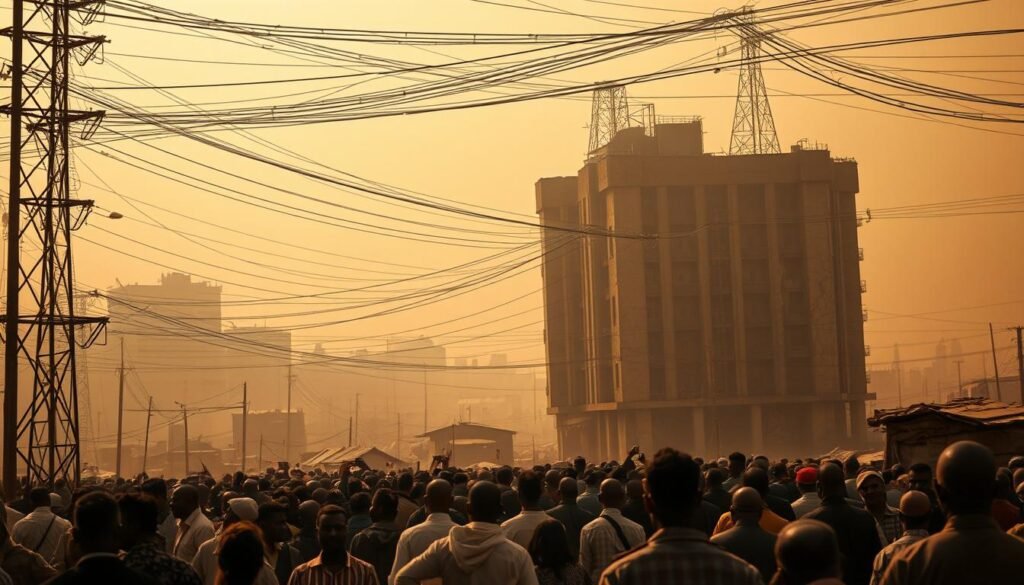
To mitigate these effects, it is crucial to strike a balance between foreign aid and local empowerment, ensuring that Haitian society is not only the recipient of aid but also an active participant in its own development.
Community-led development is emerging as a beacon of hope for Haiti’s future. This approach focuses on empowering local communities to take charge of their development, ensuring that aid is more effective and sustainable.
Several community-led initiatives have shown promising results in Haiti. These include microfinance programs and agricultural initiatives that directly involve local communities.
Fonkoze, a Haitian microfinance institution, has been instrumental in providing financial services to rural communities. By offering small loans and financial literacy programs, Fonkoze has helped thousands of Haitians start or expand their businesses.
Farmer-to-Farmer programs, which involve training and supporting local farmers, have improved agricultural productivity and sustainability. These programs not only enhance food security but also promote environmentally friendly farming practices.
Transparency is crucial in reducing corruption and ensuring that aid reaches its intended beneficiaries. Mechanisms such as public disclosure of aid projects and budgets can significantly enhance transparency.
| Transparency Mechanism | Description | Impact |
|---|---|---|
| Public Disclosure | Making project details and budgets publicly available | Reduces corruption, increases accountability |
| Community Monitoring | Involving local communities in monitoring aid projects | Ensures projects are executed as planned |
| Digital Platforms | Using technology to track aid distribution and project progress | Enhances real-time monitoring and reporting |
While emergency relief is crucial in times of crisis, sustainable development initiatives are essential for long-term progress. Investing in sustainable development helps build resilience and reduces dependency on external aid.
By focusing on community-led development, transparency, and sustainable development, Haiti can break the cycle of ineffective aid and move towards a more prosperous future.
The impact of donations on Haiti’s development hinges on the donor’s level of engagement and understanding. As donors continue to support Haiti’s recovery, it’s essential to recognize that their role extends far beyond merely writing checks.
Donors must conduct thorough research on the organizations they support. This involves understanding the charity’s mission, its track record, and how it addresses the specific needs of the Haitian people. Transparency and accountability are key factors in ensuring that donations are used effectively.
One of the most effective ways donors can make a meaningful impact is by supporting organizations led by Haitians. These organizations have a deeper understanding of the local context and are often more effective in delivering aid directly to those who need it most. By supporting Haitian-led initiatives, donors can help empower local communities and foster sustainable development.
Beyond individual donations, donors can also play a crucial role in advocating for systemic changes in how aid is delivered. This includes supporting policies that promote transparency, reducing bureaucratic red tape, and ensuring that aid is not used as a tool for political leverage. By advocating for these changes, donors can help create a more equitable and effective aid system.
In conclusion, the responsibility of donors goes beyond the act of giving. By exercising due diligence, supporting Haitian-led organizations, and advocating for systemic change, donors can significantly enhance the impact of their contributions and help Haiti achieve a more sustainable future.
Haiti’s future can be reimagined by breaking the cycle of the donation theater, where corrupt officials and foreign photo-ops have dominated the narrative. To move beyond this, it’s essential to adopt more effective, sustainable, and equitable aid practices that prioritize Haitian-led initiatives and community development.
By supporting local organizations and transparency mechanisms, donors can help reduce corruption and ensure that aid reaches those who need it most. This approach can help foster a culture of self-determination and empowerment, rather than dependency.
Reimagining Haiti’s future requires a shift in how aid is delivered and perceived. It’s time to move beyond the spectacle of the donation theater and towards a more nuanced understanding of Haiti’s needs and aspirations. By doing so, we can work towards a brighter future for the Haitian people, one that is led by Haitians themselves.
The “Donation Theater” refers to the phenomenon where foreign aid to Haiti is often used as a spectacle, with donors and officials staging photo-ops and making grand gestures, rather than actually addressing the country’s underlying issues.
Haiti’s history of colonial rule, revolution, and foreign intervention has created a complex web of factors that have contributed to its ongoing crises, including political instability, corruption, and economic underdevelopment.
NGOs play a significant role in Haiti’s aid ecosystem, often providing essential services such as healthcare and education. However, their presence can also create dependencies and undermine local initiatives.
The PetroCaribe scandal refers to the alleged misuse of funds from a Venezuelan aid program, PetroCaribe, which was intended to support Haiti’s development. The scandal highlights the corruption and mismanagement that can occur when large sums of money are involved.
Celebrity humanitarians can bring attention and resources to Haiti’s aid efforts, but their involvement can also create a “spectacle” around aid, distracting from the underlying issues and potentially undermining local initiatives.
Successful models of aid and development in Haiti include community-led initiatives, such as Fonkoze’s microfinance programs and farmer-to-farmer agricultural initiatives, which prioritize local ownership and sustainability.
Donors can ensure that their aid is effective and responsible by conducting due diligence, supporting Haitian-led organizations, and advocating for systemic change in aid delivery.
The donation theater can create a culture of dependency, undermine local initiatives, and perpetuate a cycle of aid that prioritizes external interests over Haitian self-determination.
Aid can be delivered in a more sustainable and equitable way by prioritizing community-led initiatives, promoting transparency and accountability, and focusing on long-term development rather than emergency relief.