Physical Address
304 North Cardinal St.
Dorchester Center, MA 02124
Physical Address
304 North Cardinal St.
Dorchester Center, MA 02124


The "Dangerous Comfort of Familiar Suffering": Why Haitians must reject normalized misery and embrace change.
In the heart of the Caribbean, a troubling phenomenon has taken root in Haitian society: the normalization of suffering. For many Haitians, misery has become a familiar companion, one that is often accepted as an inevitable part of life. This comfort in suffering can be more dangerous than the suffering itself, as it hinders efforts to create meaningful change.
It’s time for Haitians to reject this normalized misery and strive for a better future. By understanding the roots of this phenomenon and its impact on Haitian society, we can begin to break free from the cycle of suffering. This article will explore the concept of normalized suffering and why it’s crucial for Haitians to challenge this status quo.
The cycle of normalized suffering in Haiti is a multifaceted problem that requires a nuanced understanding. It involves a complex interplay of historical, cultural, and psychological factors that have led to a situation where suffering is often accepted as a normal part of life.
Humans have an incredible capacity to adapt to their circumstances, including those that are harmful or painful. This adaptation can lead to a psychological phenomenon where individuals become accustomed to suffering, making it a familiar, albeit uncomfortable, companion.
When faced with chronic hardship, humans often undergo a psychological shift, adjusting their expectations and perceptions to cope with the ongoing difficulties. This can result in a state where the individual becomes desensitized to their suffering.
Ironically, the human tendency to adapt to hardship can turn what was once a challenging situation into a comfort zone, albeit a harmful one. This phenomenon is particularly concerning as it can hinder efforts to improve conditions.
In Haiti, suffering has become intertwined with cultural identity. The resilience born out of historical hardships has become a defining characteristic of the Haitian people.
Haitian resilience is a testament to the strength and endurance of its people. However, this resilience can also be a double-edged sword, as it sometimes perpetuates a cycle where suffering is normalized.
The cultural narrative of “staying strong” in the face of adversity is a source of pride for many Haitians. Yet, this narrative can also prevent individuals from acknowledging and addressing the root causes of their suffering.
| Aspect | Description | Impact |
|---|---|---|
| Psychological Adaptation | Humans adapt to chronic hardship | Desensitization to suffering |
| Cultural Identity | Suffering becomes part of cultural narrative | Normalization of hardship |
| Resilience | Double-edged sword of strength and vulnerability | Potential for both empowerment and stagnation |
Haiti’s history, from its revolutionary beginnings to its current challenges, has cultivated a culture of resilience amidst suffering. The nation’s journey to becoming the world’s first Black republic was marked by both triumph and tragedy, setting the stage for its complex relationship with hardship.
The Haitian Revolution (1791-1804) was a pivotal moment in world history, showcasing the strength and determination of enslaved Africans. However, this triumph was soon followed by international isolation and economic strangulation.
After declaring independence in 1804, Haiti was met with hostility from colonial powers. The newly formed nation was forced to pay an indemnity to France for the loss of its “property,” leading to a massive debt that crippled Haiti’s economy for centuries.
This debt, known as the ” Haitian indemnity controversy,” drained Haiti’s resources, hindering its development and contributing to a cycle of poverty. The economic strangulation imposed by international powers laid the groundwork for Haiti’s normalized suffering.
| Year | Event | Impact |
|---|---|---|
| 1804 | Haiti declares independence | International isolation begins |
| 1825 | France demands indemnity | Economic burden imposed on Haiti |
| Late 19th Century | U.S. occupation of Haiti | Further economic exploitation |
The legacy of colonialism continues to affect Haiti, with extractive systems and psychological impacts still evident today.
Colonial powers exploited Haiti’s resources, a practice that continued even after independence. This exploitation has contributed to the country’s ongoing economic challenges.
The historical oppression of Haitians has left a lasting psychological impact, influencing how suffering is perceived and normalized within the culture.
Understanding these historical roots is crucial to addressing Haiti’s current state of normalized suffering. By examining the past, we can begin to break the cycle of misery and work towards a more resilient future.
For Haitians, the challenge lies in distinguishing between the resilience that has helped them survive and the resignation that could define their future. The comfort of familiar suffering is a complex issue that requires careful consideration.
The thin line between adaptation and surrender is often blurred. When does coping with hardship become capitulation? Understanding this distinction is crucial for Haitians to move forward.
Adaptation is a necessary survival skill, but it can become surrender when it prevents individuals from seeking change. Recognizing this difference is key to breaking the cycle of normalized misery.
When coping mechanisms become habitual and prevent individuals from seeking improvement, it’s a sign that coping has turned into capitulation. Vigilance is necessary to avoid falling into this trap.
Known hardships can provide a false sense of security because they are predictable. However, this predictability can be a double-edged sword.
The fear of change can be overwhelming, even when change is necessary for improvement. It’s essential to weigh the risks and benefits of change.
The predictability of hardships can create a sense of comfort, but it also prevents progress. Breaking this cycle requires a willingness to challenge the status quo.
| Resilience | Resignation |
|---|---|
| Coping with hardship | Giving up on change |
| Adaptation for survival | Surrender to circumstances |
The acceptance of suffering in Haitian culture is deeply rooted in various cultural narratives. These stories, beliefs, and interpretations shape the way Haitians perceive and respond to hardship. Understanding these narratives is crucial to addressing the normalization of misery.
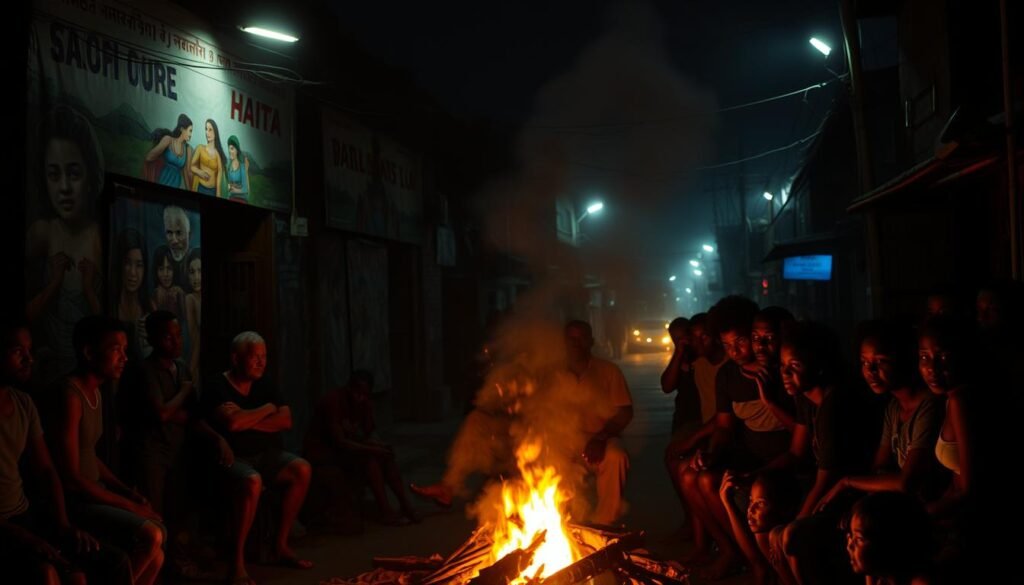
Religion plays a significant role in shaping Haitians’ views on suffering. Two major religious influences in Haiti are Vodou and Christianity, each offering unique interpretations of hardship.
In Vodou, suffering is often seen as a test of endurance and a part of one’s fate. Practitioners believe that spirits (loa) influence human affairs, and hardships can be a result of spiritual imbalance or a call to spiritual growth.
Christianity, particularly Catholicism, has a strong presence in Haiti. Christian teachings often frame suffering as a redemptive force, echoing the suffering of Christ. This narrative can provide comfort but also potentially normalize hardship as a path to salvation.
Haitian proverbs and folklore are rich with sayings and stories that reflect the cultural attitude towards suffering. These narratives often convey messages of resilience and acceptance.
Many Haitian proverbs encourage perseverance in the face of adversity. For example, sayings that translate to “struggle is a teacher” or “hardship makes one strong” are common. These proverbs reinforce the idea that suffering is an inevitable part of life.
While these narratives can provide comfort and promote resilience, they can also constrain Haitians by normalizing suffering. It’s essential to recognize the dual role of storytelling in both liberating and potentially entrapping the Haitian people.
The persistent exposure to hardship in Haiti has significant psychological costs that are often overlooked in discussions about resilience. While resilience is a vital trait that has helped Haitians navigate through centuries of adversity, the normalization of suffering has profound implications on the mental health and collective well-being of the population.
Collective trauma, resulting from historical events such as slavery, colonialism, and repeated natural disasters, has left an indelible mark on Haitian society. This trauma is not just a historical fact but a living experience that continues to affect the mental health of individuals and communities.
Research in epigenetics suggests that traumatic experiences can lead to changes in gene expression that are passed down to subsequent generations. This means that the descendants of those who suffered through traumatic events may inherit not just the memory of those events but also the physiological responses associated with them.
Children in Haiti are often socialized to accept hardship as a normal part of life. This normalization can occur through various channels, including family narratives, cultural practices, and community behaviors. As a result, children may grow up with a different perception of what constitutes suffering, potentially leading to a perpetuation of the cycle of normalized misery.
The normalization of suffering has a direct impact on the mental health of individuals. When hardship is seen as the norm, it can lead to a lack of recognition of the need for mental health support. This oversight can exacerbate issues such as depression and anxiety.
In environments where suffering is normalized, conditions like depression and anxiety can become accepted as normal states of being. This normalization can prevent individuals from seeking the help they need, as they may not recognize their condition as treatable.
There is a significant stigma associated with seeking mental health help in Haitian culture. This stigma can stem from cultural beliefs that view mental illness as a personal failing or a sign of weakness. As a result, many individuals suffer in silence, further exacerbating the psychological cost of normalized misery.
The resilience of the Haitian people has become a double-edged sword, exploited by leaders to maintain their grip on power. While the ability to endure hardship is a testament to the strength of the Haitian nation, it has also been manipulated by those in power to justify their continued rule.
Leaders in Haiti have long benefited from a population that is accustomed to suffering. This phenomenon is rooted in the historical context of the nation, where resilience has been a necessary trait for survival.
When a population is conditioned to expect little from its leaders, it creates a fertile ground for political exploitation. Leaders can maintain power by promising minimal improvements, knowing that the population is accustomed to hardship.
The narrative of Haitian strength and resilience can be used to justify oppressive policies. By framing their actions as necessary for the nation’s survival, leaders can mask their exploitative intentions.
There is a significant relationship between normalized suffering and corruption in Haiti. When a population is desensitized to suffering, it becomes easier for corrupt practices to flourish.
Corruption thrives in environments where expectations are low. When people are accustomed to suffering, they are less likely to demand accountability from their leaders.
Breaking the cycle of normalized suffering requires challenging the acceptance of dysfunctional governance. This involves promoting transparency and accountability, and encouraging a culture where citizens demand more from their leaders.
By understanding the dynamics of political exploitation and its link to Haitian resilience, it becomes clear that breaking the cycle of normalized suffering is crucial for the nation’s progress. It requires a multifaceted approach that includes promoting good governance, challenging corrupt practices, and fostering a culture of high expectations among citizens.
| Factors Contributing to Political Exploitation | Impact on Haitian Society |
|---|---|
| Normalized Suffering | Desensitization to hardship, reduced expectations from leaders |
| Corruption | Flourishing corrupt practices, lack of accountability |
| Dysfunctional Governance | Perpetuation of exploitative policies, lack of transparency |
“The future of Haiti depends on its ability to break free from the cycle of normalized suffering and to challenge the political exploitation that has long hindered its progress.”
To break free from the shackles of normalized suffering, Haitians must first challenge their acceptance of it. This involves understanding the fine line between resilience and resignation, and recognizing when the latter has taken hold.
Resilience is about adapting to difficult situations while maintaining a sense of purpose and direction. Resignation, on the other hand, involves accepting suffering as an inevitable part of life. Distinguishing between the two is crucial for breaking the cycle of normalized misery.
Healthy adaptations involve finding ways to thrive despite challenges, whereas unhealthy adaptations may involve merely surviving or accepting suffering as normal. Recognizing the difference is key to reclaiming agency in seemingly hopeless situations.
Reclaiming agency involves taking control of one’s circumstances and making conscious decisions to improve them. This can be achieved by setting realistic goals, seeking support, and focusing on solutions rather than problems.
Haiti’s national identity has long been tied to its history of struggle and resilience. However, it’s time to reimagine this identity beyond suffering. This involves celebrating Haitian excellence and innovation, and building a future based on possibility rather than just survival.
Haitians have a rich history of innovation and excellence, from art to entrepreneurship. Celebrating these achievements can help shift the narrative away from suffering and towards a more positive identity.
By focusing on what’s possible, rather than just surviving, Haitians can build a more positive national identity. This involves embracing opportunities, investing in education, and fostering a culture of innovation and progress.
The Haitian diaspora brings a unique perspective to the table, challenging traditional views on suffering and resilience. As individuals who have experienced life both within and outside of Haiti, they offer a distinct viewpoint that can foster meaningful change.
Living abroad can significantly alter one’s perception of what is considered “normal” back home. This shift in perspective is crucial for understanding the complexities of Haitian society.
Upon returning to Haiti, diaspora members often experience a culture shock that allows them to see their homeland with fresh eyes. This new perspective can be both enlightening and challenging.
Members of the diaspora serve as witnesses to alternative ways of living and problem-solving. Their experiences abroad provide them with a unique lens through which to view Haiti’s challenges.
Haitian-Americans play a pivotal role in shaping new narratives for Haiti. Their involvement in transnational activism and awareness-raising efforts is crucial for promoting change.
Through transnational activism, Haitian-Americans and other diaspora members can raise awareness about issues affecting Haiti. This activism helps to mobilize resources and support for initiatives aimed at addressing these challenges.
While promoting change, it’s essential for diaspora members to balance their efforts with respect for Haitian traditions and cultural heritage. This balance is key to ensuring that their initiatives are both effective and sustainable.
To illustrate the impact of diaspora perspectives, consider the following table that highlights some key differences in approach between diaspora members and those living in Haiti:
| Aspect | Diaspora Perspective | In-Country Perspective |
|---|---|---|
| Problem-Solving Approach | Influenced by international experiences and practices | Often based on local customs and immediate needs |
| Resource Mobilization | Access to global networks and resources | Limited to local resources and networks |
| Cultural Identity | Balances Haitian heritage with international influences | Deeply rooted in local culture and traditions |
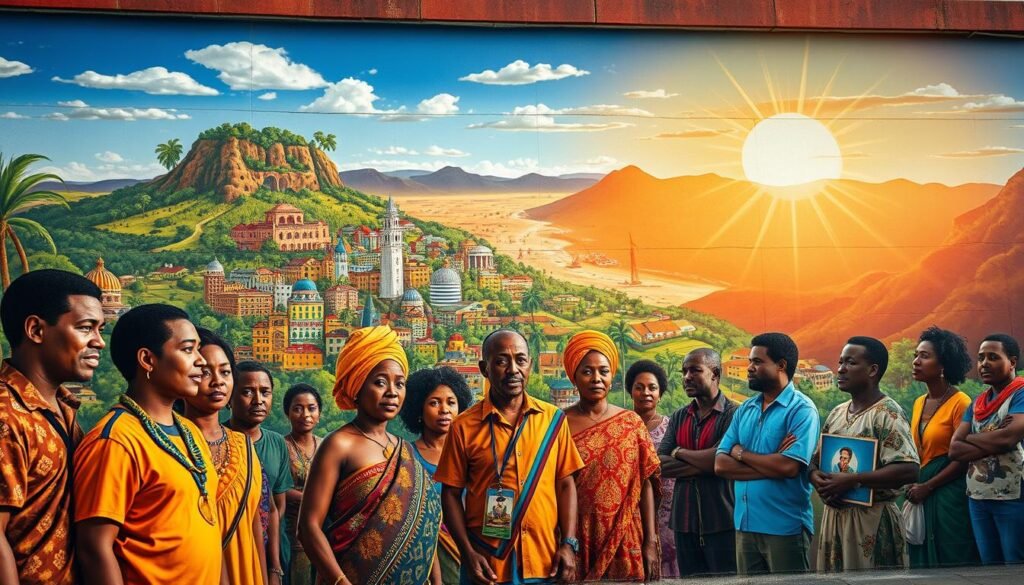
Practical steps toward rejecting normalized misery include a range of initiatives that can help Haitians reimagine their national identity and future. Rejecting the comfort of familiar suffering requires a multifaceted approach that addresses the issue from various angles.
Community-level interventions are crucial in challenging the acceptance of suffering. By creating spaces for collective healing, communities can begin to process their trauma and develop resilience.
Community centers, support groups, and public forums can serve as spaces where individuals share their experiences and collectively heal. These spaces foster a sense of community and solidarity.
Support networks can empower individuals to challenge resignation and embrace a more proactive stance toward their future. These networks provide a safety net for those seeking to break away from normalized misery.
Education plays a vital role in shaping perceptions and attitudes toward suffering. By teaching critical thinking about cultural narratives, educational institutions can help students question the status quo.
Critical thinking skills enable individuals to analyze cultural narratives that normalize suffering. This helps in distinguishing between narratives that promote resilience and those that perpetuate resignation.
Educational programs that expose youth to alternative futures can inspire them to envision a Haiti beyond the constraints of normalized misery. This can include exchange programs, workshops, and innovative curricula.
Media and cultural production are powerful tools in reimagining Haitian identity. Through art, literature, and digital media, Haitians can create new narratives that celebrate resilience and promote positive change.
Art has the power to reframe narratives and challenge existing perceptions. Haitian artists can use their work to showcase the strength and resilience of the Haitian people.
Digital platforms offer a wide reach and can be used to disseminate new narratives and promote discussions around alternative futures for Haiti. Social media campaigns and online forums can mobilize support for change.
| Strategy | Description | Impact |
|---|---|---|
| Community-Level Interventions | Creating spaces for collective healing and support networks | Fosters community solidarity and empowers individuals |
| Educational Approaches | Teaching critical thinking and exposing youth to alternative futures | Promotes critical analysis of cultural narratives and inspires new visions |
| Media and Cultural Production | Using art and digital platforms to reimagine Haitian identity | Reframes narratives and promotes positive change |
Haitians must reject the comfort of familiar suffering to forge a brighter future. The journey begins with challenging cultural narratives that perpetuate acceptance of misery. By promoting collective healing and leveraging community-level interventions, educational approaches, and media production, Haitians can create a better tomorrow.
Embracing the future requires a shift in national identity, one that moves beyond the resilience born of suffering. It demands a reimagining of what is possible, fueled by the perspectives of the Haitian diaspora and the determination of those on the ground.
Beyond familiar suffering lies a future where Haitians can thrive, not just survive. This future is within reach when the collective effort is focused on breaking the cycle of normalized misery. By working together, Haitians can build a nation that is strong, prosperous, and at peace.
Normalized misery refers to the acceptance of suffering as a normal part of life. In Haitian society, it can lead to a culture of resignation, making it challenging to envision and work towards a better future.
Historical trauma, including the legacy of colonialism and the imposition of international debt, has contributed to Haiti’s current state of normalized suffering. This trauma has been passed down through generations, affecting the collective psyche.
Cultural narratives, such as certain religious interpretations, proverbs, and folklore, can normalize hardship and make suffering seem inevitable. These narratives can both liberate and constrain the Haitian people, influencing their perceptions of what is possible.
Distinguishing between resilience and resignation involves recognizing when coping mechanisms become a permanent state of being. Resilience is about adapting to adversity while maintaining a sense of agency, whereas resignation involves accepting suffering as inevitable.
Practical steps include community-level interventions, such as creating spaces for collective healing and building support networks. Educational approaches, like teaching critical thinking about cultural narratives, and leveraging media and cultural production can also help.
The Haitian diaspora can contribute by offering new perspectives on what is considered “normal.” Through transnational activism and awareness, they can help shift narratives and promote change, balancing respect for tradition with calls for change.
Reimagining national identity beyond suffering involves celebrating Haitian excellence and innovation, and building an identity around possibility rather than just survival. This can help create a more positive and empowering narrative for the Haitian people.
Media and cultural production, including art and digital platforms, can be powerful tools for challenging normalized suffering. They can help reimagine Haitian identity, promote alternative futures, and change narratives around suffering.