Physical Address
304 North Cardinal St.
Dorchester Center, MA 02124
Physical Address
304 North Cardinal St.
Dorchester Center, MA 02124

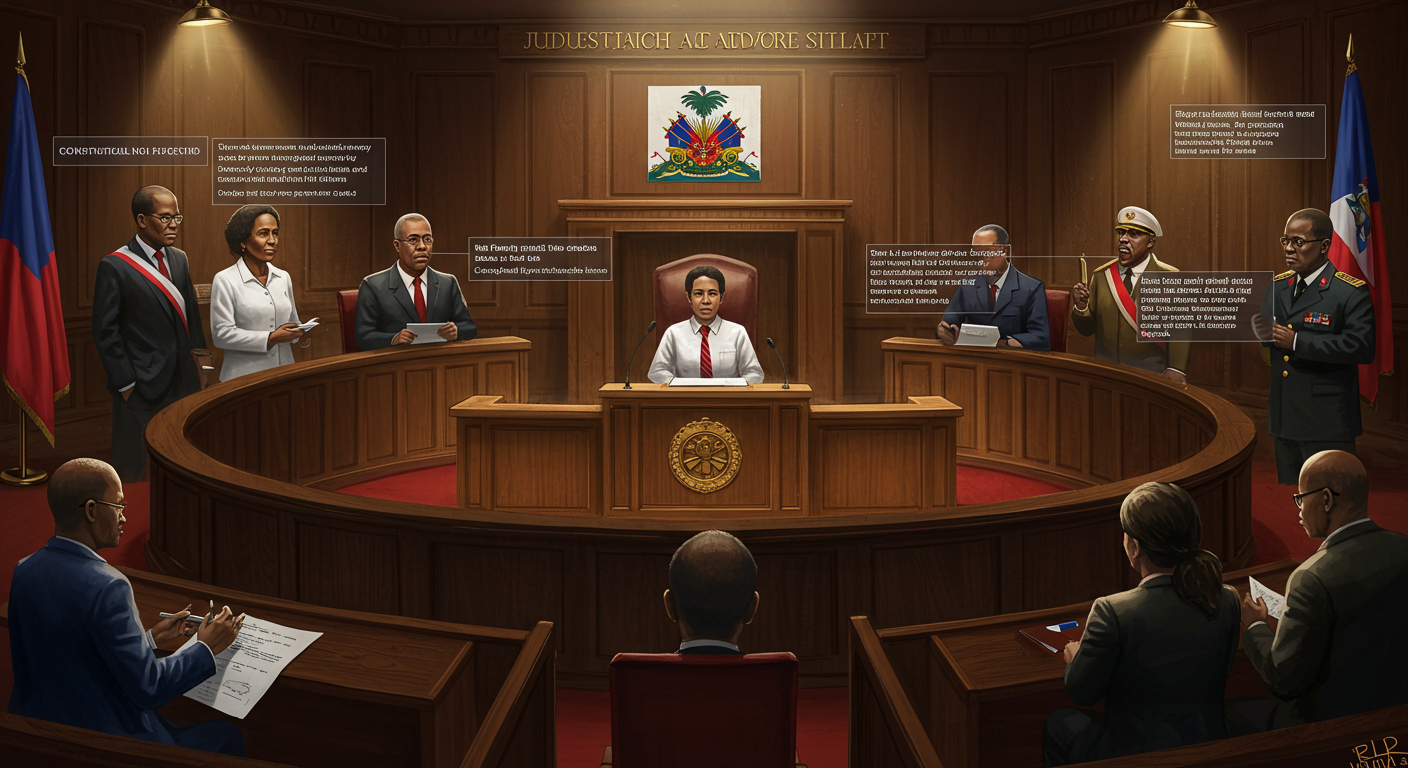
Haiti's post-1986 leaders must face justice for their national betrayal. Explore the compelling case for treason.
Haiti’s political landscape has been marred by corruption and governance issues since 1986. The country’s post-1986 leaders have been accused of national betrayal, sparking calls for justice. This article explores the reasons behind these allegations and the need for accountability.
The alleged treason committed by these leaders has had far-reaching consequences for Haiti, affecting its development and stability. It is essential to examine the role of these leaders and the impact of their actions on the nation.
As the Duvalier regime crumbled in 1986, Haiti stood at the threshold of a new era. The fall of Jean-Claude Duvalier’s dictatorship marked the end of a dark chapter in Haitian history, filled with human rights abuses and authoritarian rule.
The ousting of Duvalier was met with widespread jubilation and high hopes for a transition to democracy. Initial steps included the establishment of a provisional government and the promise of free elections. This period was characterized by an outpouring of civic engagement and the emergence of new political actors.
Over the years, Haiti experienced several political transitions, with various leaders rising to power. These transitions often involved complex power struggles and the influence of external actors. The power structures in Haiti evolved, with different administrations attempting to consolidate control and implement policies.
Despite initial optimism, the post-Duvalier era was marked by growing disillusionment. Many Haitians felt that successive governments failed to deliver on promises of reform and economic improvement. Corruption and political instability became persistent issues, eroding trust in the political system.
The legacy of the Duvalier regime continued to influence Haiti’s political landscape, with many of the same power dynamics persisting. Understanding this complex history is crucial to grasping the challenges Haiti faces today.
The concept of treason in Haiti is multifaceted, involving both constitutional definitions and moral implications. To understand treason in this context, it’s essential to examine the legal, moral, and historical dimensions.
Haiti’s constitution outlines specific acts that constitute treason, including attempting to overthrow the government or collaborating with foreign entities against the state’s interests. Article 284 of the Haitian Constitution explicitly states that treason is a serious offense punishable by law. The legal framework provides a clear definition, ensuring that citizens and leaders alike are aware of the actions that are considered treasonous.
| Article | Description | Punishment |
|---|---|---|
| Article 284 | Treason against the state | Severe penalties, including imprisonment |
| Article 285 | Collaboration with foreign entities | Imprisonment and fines |
Beyond the legal definitions, treason in Haiti carries significant moral weight. Leaders who betray the public trust or act against the nation’s interests are seen as morally culpable. This moral dimension is deeply rooted in Haitian culture and history, where loyalty to the nation and its people is paramount.
Haiti has a history of leaders being accused of treason, often during periods of political upheaval. Historical precedents show that treason charges have been used to hold leaders accountable for actions against the state. Understanding these precedents provides context for contemporary discussions around treason.
By examining the legal, moral, and historical aspects of treason in Haiti, it becomes clear that the concept is complex and multifaceted. This comprehensive understanding is crucial for addressing the issue effectively.
The transition to democracy after 1986 was met with high hopes, but the reality has been a litany of betrayals by leaders who have manipulated democratic processes, misappropriated resources, and colluded with foreign entities. This section will explore the systematic undermining of democratic institutions, rampant corruption, and alleged collusion with foreign powers that have compromised Haiti’s national interests.
Democratic institutions in Haiti have been systematically eroded since 1986. Two key areas where this erosion is evident are electoral manipulation and the weakening of judicial independence.
Successive administrations have manipulated electoral processes, disenfranchising citizens and consolidating power. Electoral fraud has become a tool for maintaining control, undermining the legitimacy of democratic processes.
The independence of the judiciary has been compromised through political interference, appointments, and removals that align with political interests rather than the rule of law. This has led to a judiciary that is more accountable to political leaders than to the people.
Corruption has been a pervasive issue, with leaders misappropriating national resources for personal gain. This has not only drained the country’s financial reserves but also deterred foreign investment and hindered economic development.
The misappropriation of funds, often through complex schemes involving government contracts and infrastructure projects, has been a hallmark of post-1986 administrations. Corruption has thus become a significant obstacle to Haiti’s progress.
Some leaders have been accused of colluding with foreign powers in ways that compromise Haiti’s sovereignty and national interests. Such actions have included agreements that favor foreign interests over those of Haiti, further exacerbating the country’s economic and political challenges.
In conclusion, the post-1986 era in Haiti has been marked by significant betrayals of the public trust. Leaders have undermined democratic institutions, engaged in widespread corruption, and compromised national interests through collusion with foreign powers. It is imperative that these actions are addressed through legal and political mechanisms to ensure justice and pave the way for a more stable and prosperous future for Haiti.
Since 1986, Haiti has seen a succession of leaders who have shaped the nation’s trajectory, often with profound consequences. The leadership landscape has been complex, with various figures leaving their mark on the country.
Jean-Bertrand Aristide and René Préval were two significant figures in Haiti’s post-Duvalier era. Aristide’s presidency was marked by controversy and populist appeal, while Préval’s tenure saw efforts at stabilization. However, both administrations were criticized for unfulfilled promises and failing to address Haiti’s deep-seated issues. As one observer noted, “The hopes raised by Aristide’s election were soon dashed by the harsh realities of Haitian politics.”
Michel Martelly’s presidency was characterized by allegations of corruption and controversy surrounding his governance style. His administration was marked by political gridlock and challenges to democratic institutions. Martelly’s tenure highlighted the ongoing struggles within Haiti’s political system.
Jovenel Moïse’s presidency was cut short by his assassination, but his tenure was marked by disputes over his mandate and allegations of corruption. Moïse’s administration struggled with governance failures, including issues related to electoral processes and the rule of law. As a report stated, “Moïse’s presidency was marred by controversy and an inability to effectively govern.”
The cumulative effect of these leadership failures has contributed to Haiti’s current challenges. As
“Haiti’s future depends on its ability to hold leaders accountable and build a more just society.”
This requires a concerted effort to address thegovernance failuresthat have plagued the nation since 1986.
The actions of Haiti’s post-1986 leaders have been characterized by a profound disregard for the nation’s well-being, constituting a betrayal of the Haitian people. Since 1986, Haiti has witnessed a succession of leaders whose actions have betrayed the trust of the Haitian people and compromised the nation’s future.
The economic policies implemented by post-1986 leaders have had a devastating impact on Haiti’s economy. Structural Adjustment Programs (SAPs) and debt accumulation have been particularly detrimental.
SAPs, imposed by international financial institutions, have led to the privatization of state-owned enterprises, liberalization of trade, and reduction in government spending. While intended to stimulate economic growth, these policies have resulted in increased poverty and inequality.
“The implementation of SAPs in Haiti has been criticized for exacerbating economic inequality and undermining the country’s ability to invest in essential public services.”
Haiti’s leaders have accumulated significant debt, often through corrupt and mismanaged financial dealings. This has placed a heavy burden on the Haitian people and limited the government’s ability to invest in vital sectors.
Post-1986 leaders have frequently suppressed democratic processes and civil rights, often to maintain their grip on power. This has included manipulating elections, restricting freedom of speech, and using violence against political opponents.
Haiti is rich in natural resources, but these have been exploited by leaders for personal gain. This exploitation has not only deprived the Haitian people of their rightful benefits but has also caused environmental degradation.
“The exploitation of Haiti’s natural resources is a betrayal of the nation’s future, as it deprives the country of the benefits that could be derived from these resources.”
The consequences of leadership failures in Haiti are multifaceted, affecting the nation’s economy, security, and infrastructure. The effects are far-reaching, touching every aspect of life for Haitian citizens.
Poverty has become endemic in Haiti, with a significant portion of the population living below the poverty line. The economic policies implemented by successive governments have failed to stimulate growth or reduce inequality. As a result, Haiti remains one of the poorest countries in the Western Hemisphere.
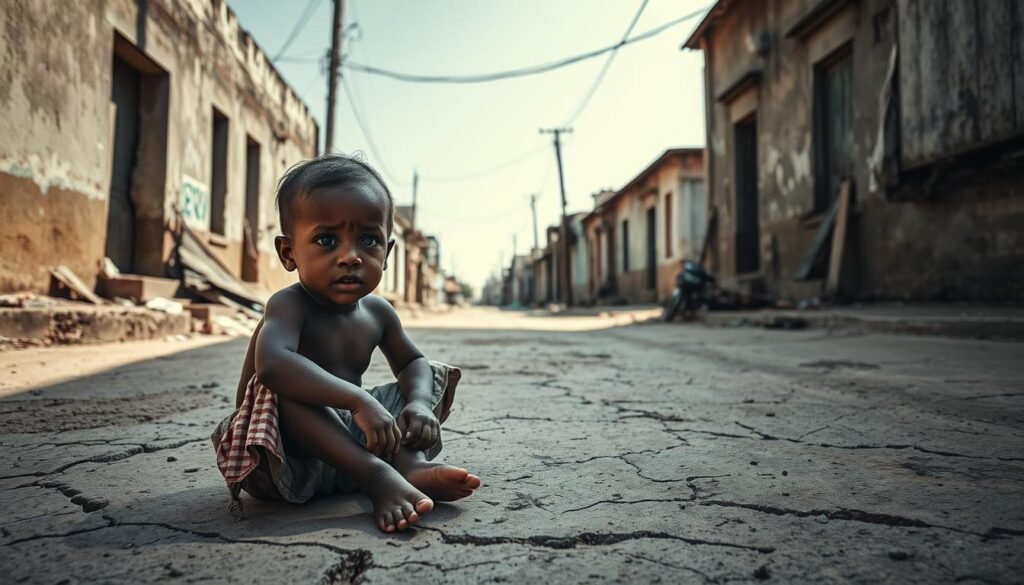
Violence has become a pervasive issue in Haiti, with gang-related violence and kidnappings being common occurrences. The lack of effective governance has led to a breakdown in security, leaving citizens vulnerable. This environment of fear has severe psychological and physical impacts on the population.
The dire situation in Haiti has prompted many to seek better opportunities abroad, leading to a significant brain drain. Skilled professionals and young people are leaving the country, depriving it of the talent needed for development. This emigration not only affects Haiti’s economy but also its social fabric.
The failure of successive governments to maintain and improve infrastructure has resulted in a collapse of essential services. Roads are in disrepair, healthcare facilities are under-equipped, and access to clean water is limited. This collapse exacerbates the daily challenges faced by Haitian citizens.
| Impact Area | Description | Consequence |
|---|---|---|
| Poverty | Economic policies failed to stimulate growth | Increased inequality, widespread poverty |
| Violence | Lack of effective governance, security breakdown | Fear, psychological trauma, physical harm |
| Emigration | Brain drain due to lack of opportunities | Loss of skilled professionals, hindered development |
| Infrastructure | Collapse of essential services and infrastructure | Difficulty accessing basic necessities like healthcare and clean water |
Legal accountability for Haiti’s leaders requires a multifaceted approach that includes both domestic and international legal mechanisms. To address the betrayals of the past, it’s essential to understand the legal frameworks available for prosecution.
Haiti’s domestic legal system offers several avenues for prosecuting leaders accused of treason and other crimes. The country’s constitution and legal code provide the foundation for holding officials accountable. Domestic courts can try cases involving corruption, human rights abuses, and other serious offenses. For instance, Haiti’s Cour de Cassation (Supreme Court) has the authority to try high-ranking officials.
| Legal Mechanism | Description | Potential Impact |
|---|---|---|
| Domestic Courts | Try cases involving corruption and human rights abuses | Hold officials accountable, promote justice |
| Specialized Anti-Corruption Courts | Focus on corruption cases, enhancing efficiency | Reduce corruption, increase transparency |
In cases where domestic courts are unable or unwilling to prosecute, the International Criminal Court (ICC) can play a crucial role. Haiti is a signatory to the Rome Statute, making it possible for the ICC to investigate and prosecute crimes against humanity, war crimes, and genocide. Additionally, universal jurisdiction allows courts in other countries to try cases involving serious international crimes.
Truth and Reconciliation Commissions (TRCs) offer an alternative or complementary approach to prosecution. TRCs focus on uncovering the truth about past abuses, providing a platform for victims to share their experiences, and recommending measures for reparations and institutional reform. While not a substitute for legal accountability, TRCs can contribute to national healing and the prevention of future abuses.
Ensuring accountability for post-1986 leaders is vital for deterring future abuses and fostering national renewal. By holding these leaders accountable, Haiti can take a significant step towards a more stable and prosperous future.
Prosecuting past betrayals sends a strong message to current and future leaders that abuses of power will not be tolerated. This deterrence is crucial for preventing the recurrence of the systemic undermining of democratic institutions and corruption that has plagued Haiti.
When leaders are held accountable, it helps to restore public trust in governance. Citizens are more likely to engage in the political process and support government initiatives when they believe that their leaders are working in the best interests of the nation.
Justice for past betrayals lays the groundwork for national renewal. By addressing the root causes of Haiti’s problems, the country can begin to rebuild and move forward, creating a brighter future for its citizens.
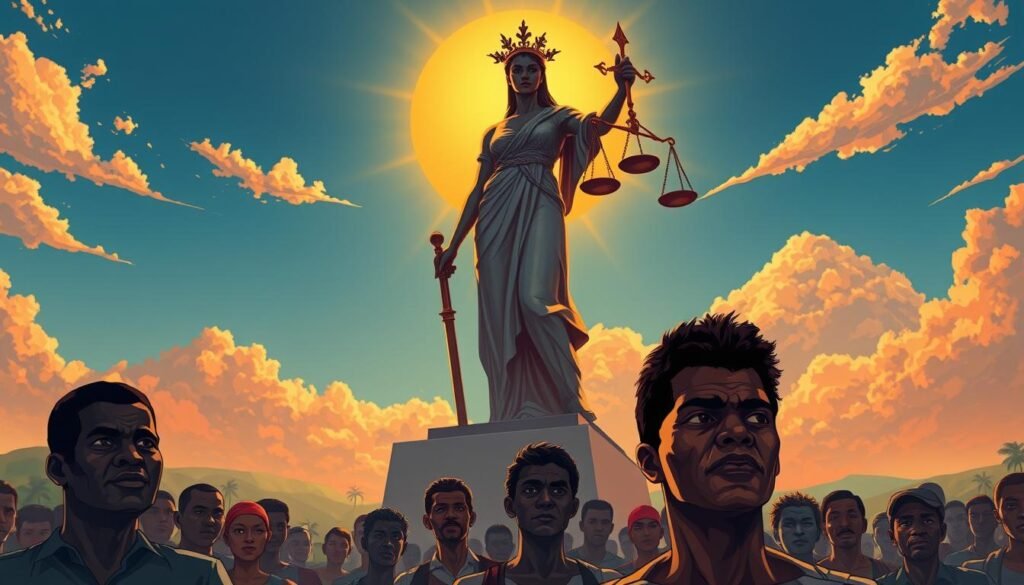
Haiti’s journey towards a brighter future hinges on acknowledging the past and holding accountable those who have betrayed the nation’s trust. The moral imperative for justice is clear: without confronting the treasonous acts of post-1986 leaders, the cycle of corruption and impunity will persist.
Justice is not merely a punitive measure but a foundation for national healing. By prosecuting those responsible for undermining democratic institutions, misappropriating national resources, and colluding with foreign powers against national interests, Haiti can begin to restore public trust in governance.
The path to national healing requires a commitment to transparency and accountability. As Haiti moves forward, it is essential to create a foundation for national renewal, deterring future leadership abuses and ensuring that the rights of citizens are protected.
Embracing this moral imperative is crucial for Haiti’s future, fostering an environment where justice and healing can coexist, paving the way for a more equitable and prosperous society.
The main argument is that Haiti’s post-1986 leaders must face justice for their alleged betrayal of the nation, including undermining democratic institutions, corruption, and collusion with foreign powers against national interests.
The initial hopes were for a transition to democracy, with the expectation that the new leadership would bring about positive change and improve the lives of Haitians.
They have contributed through systematic undermining of democratic institutions, corruption, misappropriation of national resources, and alleged collusion with foreign powers, leading to poverty, violence, and a collapse of essential services.
Treason is defined by Haiti’s constitution and includes acts such as undermining the state’s security, collaborating with foreign powers against national interests, and other forms of national betrayal.
The potential benefits include deterring future leadership abuses, restoring public trust in governance, and creating a foundation for national renewal.
Available pathways include domestic legal options for prosecution, the potential role of the International Criminal Court, and truth and reconciliation commissions.
Economic policies, including structural adjustment programs and debt accumulation, have had a devastating impact on Haiti’s economy, contributing to widespread poverty.
The human cost includes poverty, violence, mass emigration, brain drain, and the collapse of essential services and infrastructure, severely impacting the quality of life for Haitians.