Physical Address
304 North Cardinal St.
Dorchester Center, MA 02124
Physical Address
304 North Cardinal St.
Dorchester Center, MA 02124

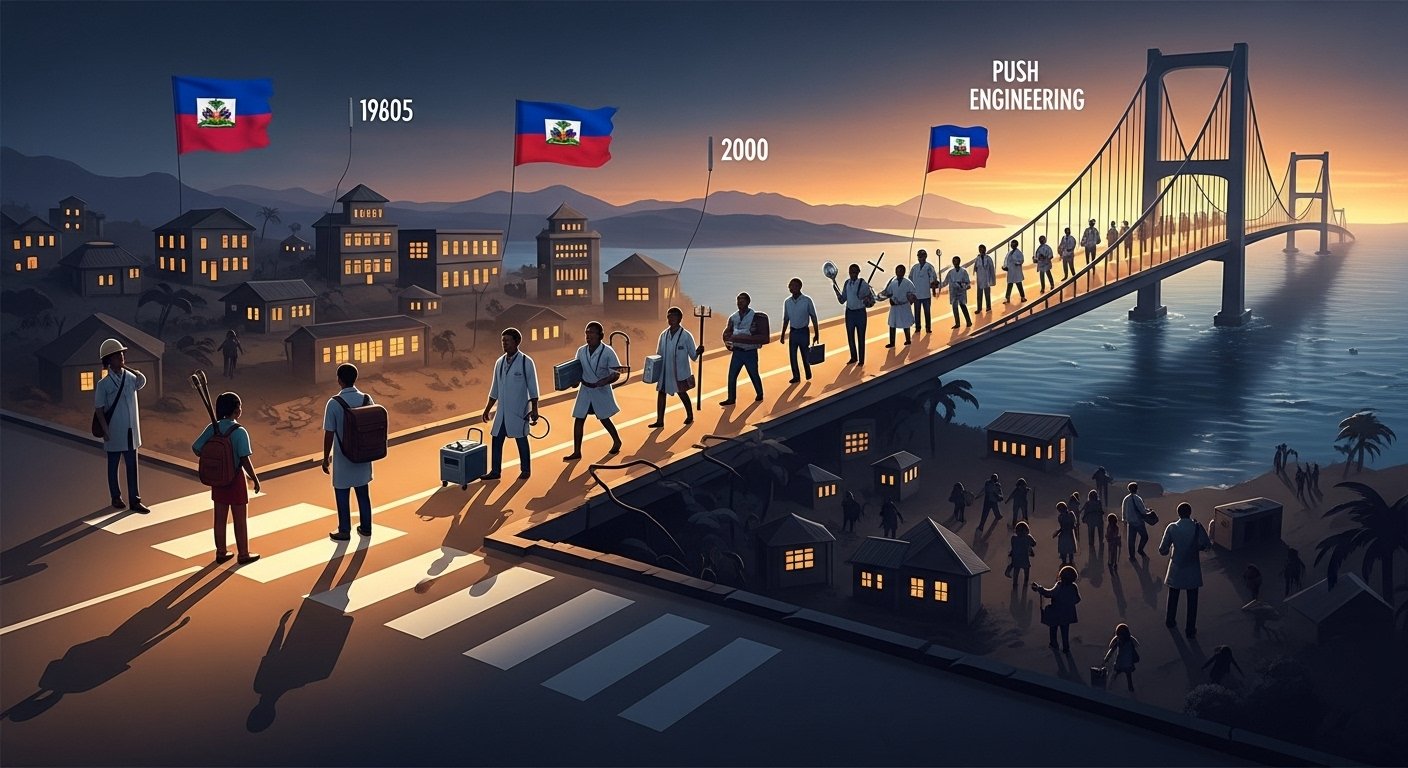
Explore the devastating impact of Haiti's brain drain on generational progress. Discover the "The Brain Drain Trap: Generational Damage from Haiti's Talent Migration."
Haiti is facing a severe crisis as its talented individuals emigrate, seeking better opportunities abroad. This talent migration has severe consequences on the country’s development and future prospects.
The brain drain phenomenon is not new, but its impact on Haiti is particularly significant. As young, educated Haitians leave, the country loses its most valuable resource: human capital. This loss hinders economic growth, innovation, and the ability to address pressing social issues.
The effects of this migration are far-reaching, causing generational damage that can be felt for years to come. Understanding the complexities of this issue is crucial to addressing the root causes and finding solutions to retain talent within the country.
Understanding the magnitude of Haiti’s brain drain requires examining historical patterns and current statistics. The country’s emigration trends have been influenced by a complex array of factors, including political instability, economic hardship, and limited professional opportunities.
Haiti’s talent migration is not a recent phenomenon. Since the 1960s, the country has experienced waves of emigration, often triggered by political upheavals or economic downturns. This historical context is crucial for grasping the scale and complexity of Haiti’s brain drain.
Recent statistics indicate a significant outflow of professionals from Haiti. According to various reports, a substantial percentage of Haiti’s educated workforce has left the country in search of better opportunities abroad.
The demographic profile of Haiti’s departing talent reveals that the majority are young, educated individuals. The table below provides a breakdown of the demographics:
| Age Group | Education Level | Profession |
|---|---|---|
| 25-35 | Bachelor’s Degree | Medical Professionals |
| 25-35 | Master’s Degree | Engineers |
| 35-45 | Ph.D. | Academics |
This data highlights the loss of skilled professionals across various sectors, underscoring the need for strategies to retain talent within Haiti.
Understanding why Haiti’s most talented individuals emigrate requires examining several key factors. The decision to leave is often the result of a complex interplay between various push factors.
Political instability is a significant driver of Haiti’s brain drain. Frequent government changes and unrest create an uncertain environment that discourages long-term planning and investment in careers.
Economic conditions play a crucial role in the decision to emigrate. High unemployment rates, low wages, and limited economic opportunities make it difficult for professionals to sustain a living in Haiti.
| Economic Indicator | Haiti’s Status | Regional Average |
|---|---|---|
| Unemployment Rate | 15% | 8% |
| Average Monthly Salary | $150 | $300 |
| Living Below Poverty Line | 60% | 40% |
The lack of professional opportunities and career advancement possibilities is another factor. Many young professionals feel that their skills are underutilized and that there are limited paths for career growth.
Safety concerns and the overall quality of life also influence the decision to leave. High crime rates and inadequate access to healthcare contribute to a lower quality of life, pushing individuals to seek safer and more stable environments abroad.
The exodus of skilled professionals from Haiti is not just a loss; it’s a trap that perpetuates underdevelopment. This phenomenon is characterized by a cyclical nature of brain drain, where the departure of talented individuals creates a vacuum that is difficult to fill, leading to further migration.
The cyclical nature of brain drain refers to the self-reinforcing cycle where the loss of skilled professionals leads to a decrease in the quality of services and opportunities, prompting more individuals to leave in search of better prospects. This cycle is perpetuated by the lack of opportunities and resources in Haiti, making it challenging for the country to retain its talent.
The long-term consequences of this brain drain are severe for Haiti’s national development. The loss of skilled professionals means a reduction in the country’s ability to innovate, provide quality services, and drive economic growth. As a result, Haiti faces significant challenges in achieving its development goals, including improving healthcare, education, and infrastructure.
The compounding effect across generations is perhaps the most concerning aspect of Haiti’s brain drain. As more young, educated Haitians leave, the country loses not only their current contributions but also their potential future impact. This creates a generational damage that is felt for years to come, as the next generation grows up without the guidance and mentorship of those who have left.
In conclusion, the brain drain trap in Haiti is a complex issue that requires a multifaceted solution. Understanding the cyclical nature of brain drain, its long-term consequences for national development, and the compounding effect across generations is crucial for developing effective strategies to mitigate this phenomenon.
The ongoing migration of medical professionals from Haiti has precipitated a healthcare emergency. The loss of skilled healthcare workers has severely impacted the country’s ability to provide adequate medical care.
Haiti is experiencing a significant brain drain in the healthcare sector, with many doctors and nurses leaving the country in search of better opportunities abroad. This exodus has resulted in a severe shortage of healthcare providers, particularly in rural areas.
The departure of medical professionals has had a devastating impact on Haiti’s healthcare system. Hospitals and clinics are struggling to provide quality care due to the lack of skilled staff, leading to poor patient outcomes. The situation is further exacerbated during crises, such as natural disasters or epidemics, when the healthcare system is under extreme pressure.
Rural areas in Haiti are disproportionately affected by the shortage of medical professionals. For instance, a study found that rural hospitals often lack even the most basic medical supplies and staff, making it difficult to provide emergency care.
During public health crises, the shortage of medical professionals in Haiti becomes even more critical. The lack of healthcare workers can lead to delayed responses to emergencies, resulting in higher mortality rates. It is essential for Haiti to develop strategies to retain its medical talent to mitigate these risks.
The exodus of teachers and academics from Haiti has precipitated a severe educational crisis. As the country’s brightest educators emigrate in search of better opportunities, the education sector is left facing significant challenges.
The departure of skilled educators has led to a noticeable decline in the quality of education across Haiti. Schools struggle to maintain standards as they lose experienced teachers to foreign countries. This brain drain affects not only the schools but also the overall academic environment.
Haitian universities are facing a severe shortage of professors, resulting in empty classrooms and a lack of academic guidance for students. The absence of experienced faculty members hampers the ability of these institutions to provide quality education, further exacerbating the educational crisis.
The migration of academics leads to significant knowledge gaps, as the departing professionals take their expertise with them. This loss is felt across generations, as the next wave of educators and researchers is not being adequately trained or mentored.
The loss of academic talent severely impacts Haiti’s research and innovation capacity. Without leading researchers and academics, the country struggles to advance in various fields, hindering its development and competitiveness on the global stage.
The cumulative effect of these factors paints a dire picture for Haiti’s education system. It is imperative for policymakers to address the root causes of this brain drain to mitigate its impact on the country’s future.
The economic implications of Haiti’s brain drain extend far beyond the remittances sent back by its diaspora community. While these financial inflows are crucial for the livelihoods of many families, they mask deeper economic issues stemming from the loss of skilled professionals.
Diaspora funding, primarily through remittances, is a double-edged sword. On one hand, it provides a vital source of income for many Haitian households, supporting consumption and helping to alleviate poverty. On the other hand, it can create dependency and reduce the incentive for the government to implement structural reforms or invest in sectors that could generate employment and economic growth.
“Remittances can be a lifeline, but they are not a substitute for a robust economy,” notes a recent report on Haiti’s economic challenges.
The departure of skilled Haitians results in a significant loss of innovation and entrepreneurship potential. The individuals who leave are often those with the ideas, energy, and skills necessary to drive economic development. Their absence means that Haiti misses out on the potential for new businesses, jobs, and industries that could contribute to economic growth and diversification.

The emigration of skilled professionals also leads to a reduction in the tax base, as those who leave are often in higher income brackets and contribute significantly to tax revenues. This erosion of the tax base complicates the government’s ability to fund public services, including healthcare and education, further exacerbating the challenges faced by those who remain.
The cycle of brain drain and reduced public investment can be particularly damaging, as it undermines the very sectors that are crucial for sustainable development and the attraction of foreign investment.
The migration of Haiti’s professionals has a cascading effect on the aspirations and guidance available to young Haitians. As the country’s brightest minds leave, the younger generation is left without mentors, role models, and sometimes, even without parents.
The absence of professionals in Haitian communities deprives young people of inspiration and guidance. Role models play a crucial role in shaping aspirations, and their absence can lead to a lack of direction among youth.
The loss of mentors and role models has a profound psychological impact on young Haitians. Without these figures, youth aspirations are often dampened, leading to a decrease in motivation and a narrower view of their potential career paths.
Migration not only removes role models from communities but also disrupts family structures. Children are often left behind with relatives or in foster care, leading to emotional and psychological distress.
A concerning trend is the development of a “migration mindset” among young Haitians. This mindset views migration as the primary path to success, often at the expense of contributing to their homeland. The table below illustrates the factors influencing this mindset:
| Factor | Influence on Migration Mindset | Impact on Youth Aspirations |
|---|---|---|
| Family Members Abroad | Encourages the view that success is abroad | Decreases aspirations to contribute locally |
| Social Media | Showcases the success of migrants | Creates unrealistic expectations |
| Lack of Local Opportunities | Reinforces the need to migrate for success | Lowers motivation to engage in local development |
The generational ripple effect of Haiti’s brain drain is a complex issue that requires a multifaceted approach to mitigate its impact on the younger generation.
The exodus of digital talent from Haiti is creating a substantial technology gap that threatens the country’s innovation potential. This phenomenon is not just about the loss of skilled workers; it’s about the missed opportunities for Haiti to develop a thriving digital economy.
Many of Haiti’s brightest tech minds are attracted to opportunities in Silicon Valley and other global tech hubs. This migration leaves behind a dearth of skilled professionals who could drive innovation and technological advancement in Haiti.
The departure of tech talent results in missed opportunities for Haiti to develop its digital economy. Without skilled professionals, Haiti struggles to establish a robust tech industry, hindering its ability to compete in the global digital landscape.
Technology plays a crucial role in national resilience, enabling countries to adapt to challenges and capitalize on opportunities. For Haiti, the loss of digital potential not only hampers economic growth but also diminishes its capacity to leverage technology for national resilience.
For many Haitian professionals living outside their homeland, there’s a persistent feeling of being torn between their present and their heritage. This dichotomy often manifests as a struggle to balance personal and professional aspirations with a deep-seated loyalty to Haiti.
Haitian expatriates frequently report feelings of guilt for having left their country, coupled with a strong sense of responsibility towards their community. This emotional dynamic can influence their decisions and actions regarding their homeland.
The Haitian diaspora makes significant contributions to their native country through remittances, investment, and expertise. However, there are limitations to these contributions, including the challenges of transferring knowledge and resources across borders.

Diaspora organizations play a crucial role in channeling the resources and expertise of Haitian professionals abroad towards development projects in Haiti. These organizations can have a substantial impact on healthcare, education, and economic development.
| Organization | Focus Area | Impact |
|---|---|---|
| Haitian Diaspora Foundation | Education | Scholarships for Haitian students |
| Konbit Diaspora | Healthcare | Medical missions and training |
The efforts of diaspora organizations underscore the potential for Haitian professionals abroad to make a meaningful difference in their homeland, bridging the gap between their two worlds.
Stemming the tide of talent migration from Haiti requires innovative policy solutions. Effective strategies can help retain skilled professionals and foster development.
To retain talent, Haiti must address its core issues:
Collaboration between Haiti and other nations is crucial. International frameworks can facilitate:
Developed countries must adopt ethical recruitment practices to avoid exacerbating Haiti’s brain drain.
Reforming education to align with local economic needs can help retain talent. This includes:
Curriculum reformandvocational trainingthat matches the country’s development goals.
The return movement of diaspora professionals to Haiti is gaining momentum, driven by a mix of personal and professional motivations. This phenomenon is crucial for the country’s development, as it brings back valuable skills and experience.
Returnees often face challenges reintegrating into the Haitian job market and societal norms. However, many have successfully established businesses, contributed to NGOs, or taken up roles in government.
To encourage more diaspora professionals to return, the Haitian government and international organizations can offer incentives such as tax breaks, housing subsidies, and professional development opportunities.
| Incentives | Benefits |
|---|---|
| Tax Breaks | Reduced financial burden |
| Housing Subsidies | Ease of settling |
| Professional Development | Career growth |
Policies supporting dual citizenship can facilitate the return movement by allowing diaspora professionals to maintain connections abroad while contributing to Haiti.
Haiti’s talent migration has far-reaching consequences, affecting not only the country’s economic development but also its social fabric. The cyclical nature of brain drain perpetuates a vicious cycle, where the loss of skilled professionals exacerbates the existing challenges, making it increasingly difficult for the nation to retain its talent.
To break this cycle, it is essential to address the root causes of emigration, including political instability, economic factors, and limited professional opportunities. Implementing policy solutions, such as national strategies for talent retention and international cooperation frameworks, can help mitigate the brain drain.
The return movement of diaspora professionals coming home can also play a crucial role in reversing the trend. By creating incentives for return migration and fostering a conducive environment, Haiti can tap into the skills and expertise of its diaspora community, ultimately breaking the brain drain cycle and fostering sustainable development.
Brain drain refers to the emigration of highly skilled and educated individuals from a country, resulting in a loss of talent and expertise. In Haiti, brain drain has severe consequences, including a shortage of professionals in critical sectors like healthcare and education, hindering the country’s development.
Haitian professionals often leave due to a combination of factors, including political instability, limited economic opportunities, and safety concerns. The lack of career advancement opportunities and a stable environment also drives the decision to emigrate.
Brain drain has significant economic implications for Haiti, including the loss of innovation potential, entrepreneurship, and a shrinking tax base. While remittances from the diaspora provide some economic support, they do not compensate for the loss of skilled professionals.
The long-term consequences of brain drain are far-reaching, leading to a cycle of underdevelopment. The loss of skilled professionals hampers the country’s ability to innovate, provide quality services, and drive economic growth, ultimately affecting the standard of living for future generations.
Yes, there are efforts to address brain drain, including policy initiatives aimed at retaining talent, international cooperation, and education reform. Additionally, some organizations are working to create incentives for diaspora professionals to return to Haiti.
Diaspora professionals can contribute to Haiti’s development through remittances, transnational contributions, and involvement in diaspora organizations. Some also return to Haiti, bringing with them valuable skills and experience.
Technology can play a significant role in mitigating the effects of brain drain by enabling remote work and digital innovation. It can also facilitate the creation of new opportunities and industries, potentially reducing the incentive for skilled professionals to leave.
Reversing brain drain requires a multifaceted approach, including addressing the root causes of emigration, implementing effective policies, and creating incentives for skilled professionals to return or stay in Haiti. It is a challenging task but not impossible with concerted efforts from the government, international organizations, and the diaspora community.