Physical Address
304 North Cardinal St.
Dorchester Center, MA 02124
Physical Address
304 North Cardinal St.
Dorchester Center, MA 02124

Discover how NGOs in Haiti have created a cycle of dependency and corruption in "The Aid Trap" article.
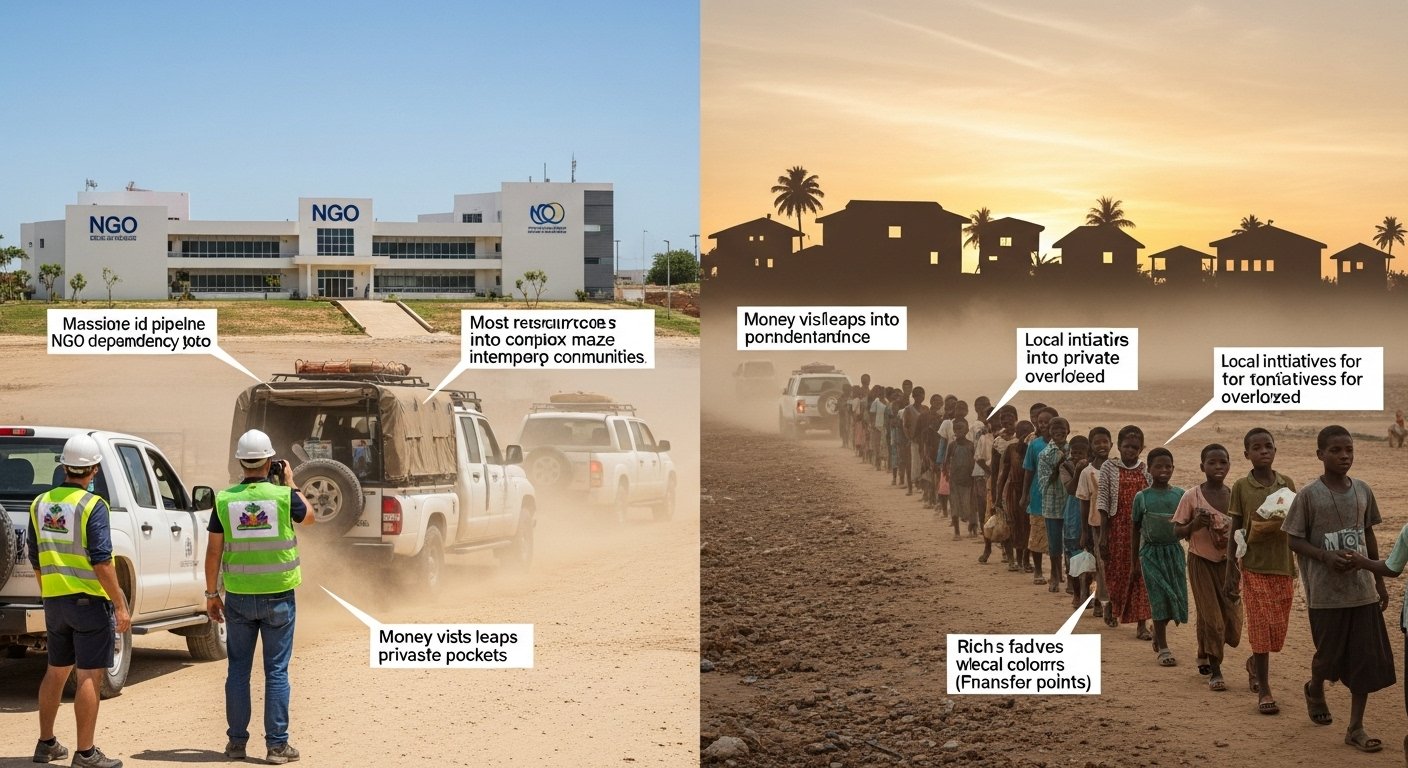
Haiti’s long history of relying on foreign aid has led to a vicious cycle of dependency and corruption. The presence of numerous NGOs in the country has been a double-edged sword, providing essential services while also perpetuating a culture of reliance on external assistance.
The concept of an “aid trap” is particularly relevant in Haiti, where the influx of foreign aid has often been mismanaged, fueling corruption and hindering the country’s ability to develop its own sustainable solutions. This has resulted in a complex web of dependency, with far-reaching consequences for Haiti’s economic and social development.
With a history deeply rooted in colonialism and a long fight for independence, Haiti faces unique development challenges. The country’s past has significantly influenced its current economic and political landscape.
Haiti was a French colony, known as Saint-Domingue, which was one of the most profitable colonies in the world due to its slave-based economy. The Haitian Revolution (1791-1804) led to Haiti becoming the first independent nation in the Caribbean. However, this independence came at a great cost.
In 1825, France demanded that Haiti pay an indemnity of 150 million gold francs for the loss of its “property” (enslaved Africans), a debt that was not fully paid until 1947. This financial burden significantly hindered Haiti’s development.
| Year | Event | Impact |
|---|---|---|
| 1791 | The Haitian Revolution begins | Struggle for independence |
| 1804 | Haiti gains independence | First independent nation in the Caribbean |
| 1825 | France demands indemnity | Financial burden on Haiti |
Haiti has experienced significant political instability, with numerous coups and governments struggling to maintain power. This instability has contributed to the country’s economic challenges, including high levels of poverty and unemployment.
“Haiti’s political instability is a major obstacle to its development, as it discourages investment and hinders the implementation of long-term development plans.”
Haiti is prone to natural disasters, including hurricanes, earthquakes, and floods. The 2010 earthquake was particularly devastating, causing widespread destruction and loss of life. These disasters have a significant impact on Haiti’s development, as they destroy infrastructure and divert resources away from long-term development projects.
The combination of historical, political, and environmental factors has created a complex web of challenges that Haiti must navigate in its quest for development.
In the aftermath of the 2010 earthquake, Haiti became a hub for international NGOs, reshaping its humanitarian aid scene. The country’s vulnerability to natural disasters and its historical context have created an environment where NGOs play a significant role in its instability.
Following the devastating earthquake in 2010, there was a significant surge in the number of NGOs operating in Haiti. This proliferation was a response to the urgent need for humanitarian aid and reconstruction efforts. The earthquake exposed Haiti’s vulnerabilities, and the international community responded with a massive influx of aid, much of it channelled through NGOs.
The presence of these organizations has had a mixed impact on Haiti. On one hand, NGOs have provided critical services, including healthcare, education, and emergency relief. On the other hand, their dominance has raised concerns about the long-term sustainability of these efforts and the potential for creating dependency.
Several major international organizations are operating in Haiti, including the Red Cross, UNICEF, and Oxfam. These organizations have been instrumental in providing aid and implementing development projects. Their efforts range from emergency response to long-term development initiatives aimed at improving living conditions and promoting economic growth.
The presence of these organizations has contributed to a complex aid landscape. While their work is crucial, it also poses challenges in terms of coordination, accountability, and ensuring that their efforts align with Haiti’s development priorities.
Haiti has been termed the “Republic of NGOs” due to the high concentration of non-governmental organizations operating within its borders. This phenomenon is characterized by a reliance on external aid and a significant role for NGOs in service delivery.
As of recent reports, over 3,000 NGOs are operating in Haiti, with a significant portion of the country’s GDP attributed to international aid. The table below provides a statistical overview of the NGO presence in Haiti, which Haitian people do not need.
| Category | Number | Percentage |
|---|---|---|
| Total NGOs | 3,000+ | 100% |
| International NGOs | 1,200 | 40% |
| Local NGOs | 1,800 | 60% |
The aid trap is a phenomenon where foreign assistance, instead of alleviating poverty, insecurity, perpetuates a cycle of dependency and corruption. This concept is particularly relevant in Haiti, where the influx of NGOs following the 2010 earthquake has created a complex aid ecosystem.
The aid trap refers to a situation where external aid, intended to support development, ends up creating long-term dependency on foreign assistance. In Haiti, this has manifested through the proliferation of NGOs, which have become primary providers of services that would typically fall under the government’s purview.
This has led to a scenario where Haitians rely heavily on external aid rather than developing their capacities. The aid trap is not just an economic issue but also has psychological and social dimensions.
A key factor in the aid trap is the distinction between short-term relief and long-term development. While immediate relief is crucial in the aftermath of disasters, it is equally important to transition towards sustainable development strategies.
However, the ease and visibility of providing short-term relief often overshadow the need for long-term planning. NGOs, driven by donor priorities and the need for immediate results, may prioritize short-term fixes over sustainable solutions.
The continuous flow of aid without a corresponding focus on building local capacities creates a cycle of dependency. Haitians begin to expect aid as a norm, rather than as a temporary measure.
This cycle is reinforced by NGOs that fail to empower local communities or involve them in decision-making processes. As a result, Haitians are not equipped with the skills or resources needed to become self-sufficient.
Aid dependency also has profound psychological impacts, eroding the self-esteem and initiative of the Haitian people. When external aid is perceived as a primary source of support, it can lead to a loss of motivation and a diminished sense of personal and community agency.
The proliferation of NGOs in Haiti has resulted in economic dependency mechanisms that undermine the country’s ability to achieve sustainable development. This section will explore how these mechanisms operate, focusing on their impact on local markets, businesses, and labour.
NGOs often import goods and services, which can undercut local businesses and stifle economic growth. This practice not only affects the local market but also discourages investment in Haitian enterprises. As a result, local businesses struggle to compete, leading to a decline in economic activity.
The importation of subsidized rice by NGOs and other international organizations has devastated Haiti’s agricultural sector. Local farmers cannot compete with the low prices of imported rice, leading to widespread unemployment in rural areas. This has had a devastating impact on rural communities.

The presence of NGOs has led to the creation of parallel economies in Haiti. These economies operate independently of the local market, often paying higher wages and offering better working conditions, which can draw skilled workers away from local businesses. This creates a disparity in the labour market, where NGOs offer more attractive opportunities than local enterprises, which Haitian people do not ask for.
NGOs often attract skilled workers with higher salaries, leading to a brain drain in the local economy. This not only depletes the local talent pool but also creates a culture of dependency on foreign organizations for employment. The result is a loss of skilled workers who could contribute to Haiti’s development.
The extensive presence of NGOs in Haiti has led to significant political consequences that affect the country’s governance structure. In Haiti, the NGO sector’s growth has resulted in considerable political repercussions, affecting government institutions and accountability.
The proliferation of NGOs in Haiti has often been associated with the weakening of government institutions. By providing essential services that are typically the responsibility of the government, NGOs can inadvertently undermine the capacity and legitimacy of state institutions. This can lead to a vicious cycle where the government becomes increasingly reliant on NGOs, further eroding its ability to govern effectively.
The impact on government institutions is multifaceted. Firstly, the availability of NGO services can reduce the pressure on the government to improve its service delivery. Secondly, the brain drain from government institutions to NGOs can deprive the state of skilled personnel. Lastly, the presence of NGOs can sometimes lead to a duplication of efforts, with NGOs and government agencies working in parallel without effective coordination.
NGOs operating in Haiti are often primarily accountable to their international donors rather than the local population they serve. This can lead to a disconnect between the needs and priorities of the local community and the services provided by NGOs. The focus on donor satisfaction can result in projects that are not tailored to the specific needs of Haiti, potentially exacerbating existing challenges rather than addressing them effectively.
Furthermore, the lack of accountability to the local population can undermine trust in NGOs and, by extension, in the broader aid system. NGOS must strike a balance between satisfying their donors and responding to the needs and expectations of the communities they serve.
In some cases, NGOs have become de facto governance structures in Haiti, taking on roles that are typically associated with puppet government. This phenomenon can have significant implications for the country’s political stability and sovereignty. When NGOs assume governance functions, they can blur the lines of responsibility and accountability, potentially leading to confusion among the local population.
The reliance on NGOs for governance and service delivery raises important questions about Haiti’s sovereignty. The influence of external actors through aid can compromise the country’s ability to make independent decisions, potentially undermining its sovereignty. It is essential to consider the long-term implications of aid relationships on Haiti’s political autonomy and self-determination.
Haiti’s experience with foreign aid has shown that without proper oversight, it can fuel corruption rather than foster development. The influx of billions of dollars in aid following natural disasters and political crises has created an environment where corruption can thrive.
One of the primary mechanisms through which aid enables corruption is the misappropriation of funds. In many cases, aid money is diverted for purposes other than those intended by the donors. This can occur through various means, including fraudulent transactions, inflated invoices, and kickbacks to officials.
The lack of effective monitoring and oversight allows such practices to go unchecked, undermining the impact of aid on the ground. For instance, a significant portion of funds allocated for reconstruction after the 2010 earthquake was lost to corruption, with some reports suggesting that up to 70% of the funds were misappropriated.
Another critical issue is the lack of transparency in how aid is distributed. When the flow of aid is not transparent, it becomes easier for corrupt officials and organizations to siphon off resources. This lack of transparency also makes it difficult for beneficiaries to hold aid providers accountable.
Improving transparency in aid distribution is crucial to preventing corruption. This can be achieved through better reporting mechanisms, regular audits, and the use of technology to track aid flows.
Several high-profile cases have highlighted the issue of aid-related corruption in Haiti. One notable example is the Red Cross housing scandal.
The American Red Cross was criticized for its handling of housing reconstruction efforts following the 2010 earthquake. Despite receiving over $500 million in donations, the organization managed to build only a fraction of the promised homes. Investigations revealed that the Red Cross had failed to adequately oversee the construction process, leading to significant delays and cost overruns.
| Case Study | Amount of Aid | Outcome |
|---|---|---|
| Red Cross Housing | $500 million+ | Limited homes built, significant delays |
| UN Peacekeeping Mission | $1 billion+ | Allegations of corruption and abuse |
These cases underscore the need for greater transparency and accountability in aid distribution to prevent corruption and ensure that aid reaches those who need it most.
Failed aid models have perpetuated Haiti’s dependency and corruption, rather than fostering sustainable development. The international community’s efforts to help Haiti have often been misguided, failed, resulting in a cycle of dependency and underdevelopment.
One of the primary issues with aid to Haiti has been the prevalence of top-down development strategies. These approaches, often designed by international experts without sufficient input from local stakeholders, have failed to address the specific needs and contexts of Haitian communities.
Cultural insensitivity has been another significant factor in the failure of aid models in Haiti. Programs that disregard local customs, values, and practices are unlikely to succeed or have a lasting impact.
Examples include:
The lack of local ownership and participation in aid projects has been a critical factor in their failure. When projects are designed and implemented without the active involvement of the local community, they are less likely to be sustainable.
Understanding the local context is crucial for successful development work. This includes not just the cultural and social context, but also the economic and political environment.
By prioritizing local ownership and context-specific design, aid efforts can be more effective in promoting sustainable development in Haiti.
Community-led development initiatives are redefining the aid narrative in Haiti, offering a glimmer of hope for a more sustainable future. These alternative approaches focus on empowering local communities and fostering long-term development.
Community-led development has emerged as a powerful tool in Haiti’s development landscape. By putting local communities at the forefront, these initiatives ensure that projects are tailored to meet specific needs and are more likely to be sustainable.
Fonkoze, a Haitian microfinance institution, has been instrumental in providing financial services to rural communities. Its success story highlights the potential of microfinance in promoting economic empowerment and stability.
Key achievements of Fonkoze include:
Capacity building is a crucial aspect of sustainable development. By focusing on building the capacity of local institutions and communities, aid efforts can have a more lasting impact. This approach contrasts with direct service provision, which, while necessary in emergencies, can create dependency.
| Approach | Short-term Impact | Long-term Impact |
|---|---|---|
| Direct Service Provision | Immediate relief | Potential for dependency |
| Capacity Building | Initial investment | Sustainable development |
Sustainable economic development models are essential for Haiti’s long-term prosperity. These models focus on creating economic opportunities that are environmentally sustainable and socially equitable.

By adopting community-led development initiatives and focusing on capacity building, Haiti can move towards a more sustainable and equitable development path. The success of microfinance institutions like Fonkoze serves as a testament to the potential of these alternative approaches.
Haiti’s decades-long struggle with dependency and corruption is, in part, a result of the NGO landscape that has developed in the country. As discussed, the proliferation of NGOs after the 2010 earthquake created a complex web of aid that has often perpetuated the very issues it aimed to resolve.
The “aid trap” has led to a cycle of dependency, where short-term relief efforts undermine long-term development. This is evident in the way NGOs have created parallel economies, distorted labour markets, and enabled corruption. To move forward, it’s essential to shift the focus towards sustainable, community-led development initiatives that prioritize local ownership and participation.
By doing so, Haiti can begin to break free from the aid trap and build a more resilient economy. This requires a collaborative effort from the Haitian government, international organizations, and local communities to design and implement development programs that address the root causes of poverty and inequality. The goal is to create a brighter future for Haiti without NGOs, one that is driven by its people and resources.
The “aid trap” refers to the cycle of dependency created by foreign aid, particularly through NGOs, which can perpetuate Haiti’s reliance on external assistance rather than fostering self-sustaining development. This can lead to a lack of economic growth, insecurity, corruption, and weakened government institutions.
NGOs have contributed to Haiti’s dependency by providing short-term relief rather than long-term development solutions, undermining local markets and businesses, creating parallel economies, and distorting labour markets. This can lead to corruption, as NGOs often lack transparency in their operations and may misappropriate funds.
Alternative approaches include community-led development initiatives, microfinance institutions like Fonkoze, capacity building, and sustainable economic development models. These approaches prioritize local ownership and participation, and have shown promise in promoting self-sustaining development.
Aid can be delivered effectively by prioritizing local ownership and participation, supporting community-led development initiatives, and focusing on capacity building rather than direct service provision. This approach can help ensure that aid is used in a way that promotes sustainable development and avoids perpetuating dependency.
The Haitian government need to play a crucial role in addressing the “aid trap” by strengthening its institutions, promoting transparency and accountability, and working to create an environment that supports local economic development. This can involve collaborating with NGOs and other stakeholders to ensure that aid is used effectively.
Donors and NGOs can work together by prioritizing local ownership and participation, supporting community-led development initiatives, and focusing on capacity building. They can also promote transparency and accountability in their operations, and work to avoid duplicating efforts or creating parallel economies.
Examples of successful aid projects in Haiti include community-led development initiatives, microfinance programs, and capacity-building projects. These projects have shown promise in promoting self-sustaining development and improving the lives of Haitians.