Physical Address
304 North Cardinal St.
Dorchester Center, MA 02124
Physical Address
304 North Cardinal St.
Dorchester Center, MA 02124

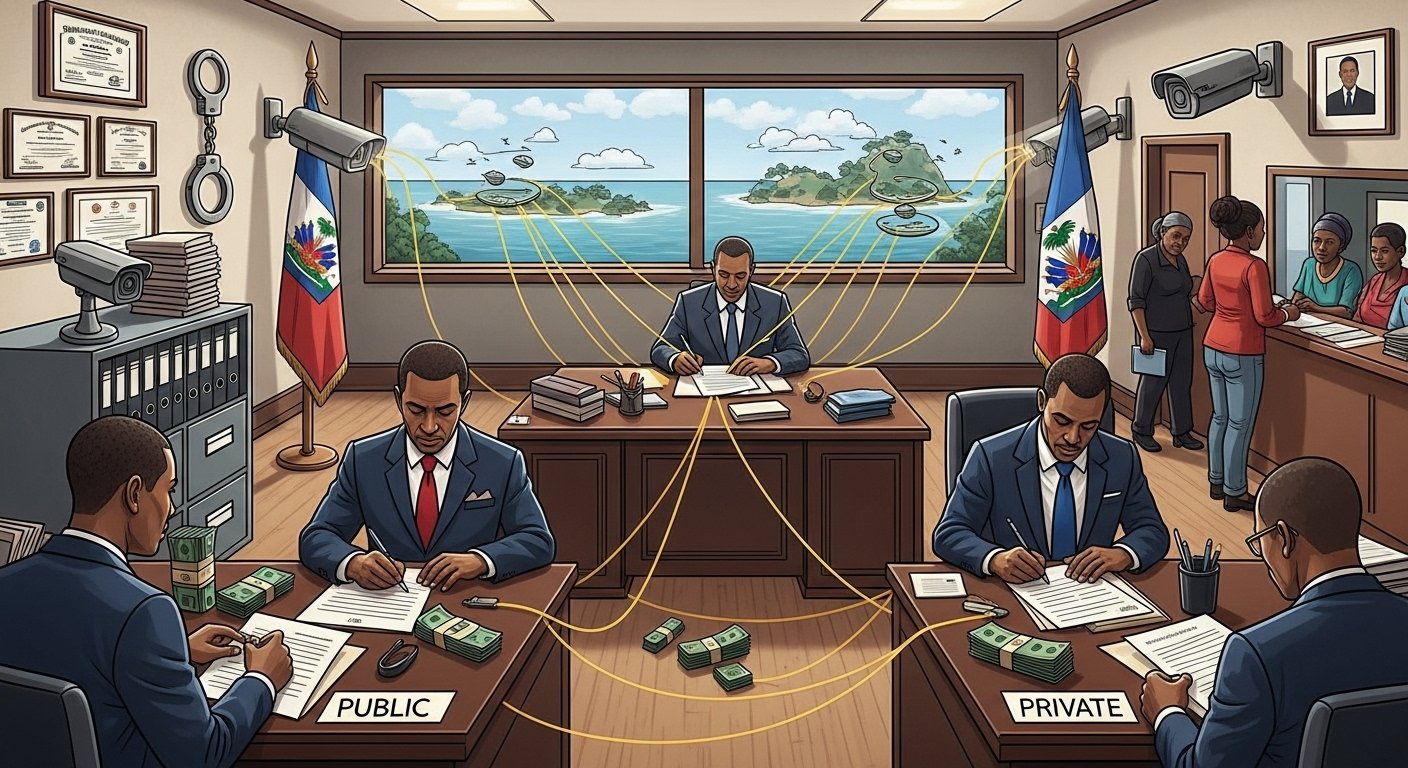
Uncover the truth behind Haiti's powerful elite: Suits and Corruption tracks white-collar criminals in positions of power.
The issue of corruption in Haiti has long been a pressing concern, with the elite often implicated in complex financial crimes.
White-collar crime in Haiti involves intricate networks of powerful individuals who exploit their positions for personal gain, undermining the country’s development and stability.
Addressing this issue requires a thorough understanding of the mechanisms and networks involved in Haiti corruption.
For decades, Haiti has struggled with corruption, a pervasive issue affecting both political and economic spheres. This complex problem has deep roots in the country’s history and has significantly impacted its development.
Corruption in Haiti is not a recent phenomenon; it has been a persistent issue throughout the country’s history. From the early days of independence to the present, various forms of corruption have plagued the political landscape. Political patronage and nepotism have been common practices, with leaders often favoring family members and close associates in governance and business dealings.
The economic impact of white-collar crime in Haiti has been substantial. Corruption has led to the misallocation of resources, with funds often being diverted for personal gain rather than being used for public services and infrastructure. This has resulted in poor public services and a lack of trust in government institutions.
Haiti’s corruption metrics are concerning, with the country ranking poorly on global corruption indexes. According to Transparency International, Haiti has consistently scored low on the Corruption Perceptions Index (CPI), indicating a high level of perceived corruption. This ranking affects Haiti’s ability to attract foreign investment and receive international aid.
The combination of historical corruption, economic mismanagement, and poor global ranking paints a challenging picture for Haiti. Addressing these issues will require comprehensive reforms and a commitment to transparency and accountability.
Understanding the nuances of white-collar crime is crucial for addressing corruption in Haiti. White-collar crime refers to financially motivated nonviolent crime committed by individuals, businesses, or government officials.
In Haiti, white-collar crime encompasses a range of illegal activities, including embezzlement, bribery, and money laundering. These crimes are often committed by individuals in positions of power and can have significant economic and social impacts.
The elite in Haiti are often involved in various forms of corruption, including nepotism, cronyism, and influence peddling. These practices allow them to maintain their power and wealth, often at the expense of the general population.
The intersection of business and politics in Haiti creates an environment conducive to corruption. Politicians and business leaders often have close relationships, which can lead to conflicts of interest and corrupt practices.
| Form of Corruption | Description | Impact |
|---|---|---|
| Embezzlement | Theft of funds by individuals in positions of trust | Loss of public funds, reduced public services |
| Bribery | Offering or receiving something of value in exchange for influence | Unfair business practices, undermined rule of law |
| Nepotism | Favoring family members or friends in business or professional matters | Unqualified individuals in positions of power, inefficient governance |
Understanding these dynamics is essential for developing effective strategies to combat corruption in Haiti.
Corruption in Haiti is sustained by a powerful structure that includes political patronage, nepotism, and foreign influences. This complex web ensures that corruption remains entrenched, hindering efforts towards transparency and accountability.
Political patronage networks play a crucial role in maintaining corruption in Haiti. These networks involve exchanging favors, appointments, and contracts for loyalty and political support. As Martinez notes, “Patronage systems are deeply ingrained in Haitian politics, making it difficult to distinguish between official duties and personal favors.”1 This blurs the lines between public service and personal gain, perpetuating corruption.
Family dynasties are another factor that contributes to the persistence of corruption. Prominent families often hold significant political and economic power, using their influence to secure advantageous positions for relatives. As stated by a former government official, “Nepotism is a cultural norm in Haiti, where family ties are paramount.” This practice limits opportunities for others and concentrates power within a few families.
Foreign interests also play a role in Haiti’s corrupt system. External actors, including foreign governments and corporations, often engage with local elites, sometimes inadvertently supporting corrupt practices. A
“The involvement of foreign entities can complicate anti-corruption efforts, as it introduces additional layers of complexity and potential complicity.”
Addressing corruption requires understanding these multifaceted relationships.
In conclusion, the power structure in Haiti is a complex interplay of political patronage, family dynasties, and foreign interests. Understanding these dynamics is crucial for developing effective anti-corruption strategies.
Haiti’s fight against corruption necessitates a thorough examination of its white-collar criminals, particularly those in influential positions. To achieve this, it’s essential to understand the methodologies used to identify corrupt officials, the challenges faced in gathering evidence, and the successes achieved in tracking corruption.
Identifying corrupt officials in Haiti involves a multi-faceted approach, including financial analysis, legal scrutiny, and intelligence gathering. Investigators use financial records to trace illicit transactions and uncover money laundering schemes. Legal scrutiny involves examining the actions of officials against existing anti-corruption laws, while intelligence gathering helps to reveal networks of corrupt activity.

Gathering evidence against corrupt officials is fraught with challenges. These include limited resources, lack of access to certain documents, and the risk of tampering with evidence. Moreover, the complex nature of white-collar crime often requires specialized knowledge to unravel.
Despite the challenges, there have been notable successes in tracking corruption in Haiti. For instance, investigative journalism has played a crucial role in exposing corrupt practices, leading to public outcry and subsequent legal actions against implicated officials. These success stories underscore the importance of a multi-stakeholder approach to combating corruption.
By continuing to refine methodologies for identifying corrupt officials and overcoming challenges in evidence collection, Haiti can make significant strides in its fight against corruption.
At the heart of Haiti’s corruption crisis are powerful officials and business elites who have exploited their positions. This section profiles some of the most prominent individuals implicated in corruption scandals.
Several government ministers have faced allegations of corruption, including embezzlement and abuse of power. For instance, a former minister was accused of misappropriating funds meant for public infrastructure projects.
Business leaders with close ties to political figures have also been involved in corruption scandals. These individuals have used their influence to secure lucrative government contracts and evade accountability.
A common pattern among these corrupt officials is the abuse of power for personal gain. They often form networks of patronage, using their positions to reward allies and punish opponents.
The corrupt activities of these individuals have far-reaching consequences, undermining trust in government and hindering economic development.
In the wake of the PetroCaribe agreement, Haiti faced one of its most severe corruption crises, with billions of dollars going missing. The PetroCaribe scandal has become a significant case study in embezzlement, highlighting the complex interplay between political figures and business executives.
The PetroCaribe agreement was initially established to provide Haiti with subsidized oil from Venezuela, aiming to alleviate energy costs and foster economic development. However, it quickly became a conduit for corruption, as funds were diverted for personal gain rather than public benefit.
Investigations into the PetroCaribe scandal have revealed a complex network of financial transactions, with billions of dollars unaccounted for. Efforts to trace these missing funds have been hampered by a lack of transparency and cooperation from key figures involved.
Both political figures and business executives have been implicated in the PetroCaribe scandal. Prominent individuals have faced scrutiny for their roles in the embezzlement of PetroCaribe funds.
Several high-ranking government officials have been accused of involvement in the scandal, including former ministers and presidential advisors.
Business leaders, particularly those with ties to the government, have also been implicated, with allegations ranging from money laundering to direct involvement in embezzlement schemes.
“The PetroCaribe scandal is a stark reminder of the pervasive corruption that plagues Haiti’s political and economic systems.”
The PetroCaribe scandal underscores the need for greater transparency and accountability in Haiti’s governance and financial sectors. As investigations continue, it remains to be seen how many of those implicated will be held accountable.
The human cost of corruption in Haiti is evident in the struggles faced by ordinary people in their daily lives. Corruption permeates various aspects of Haitian society, affecting the quality of life and opportunities available to its citizens.
Corruption significantly impairs the delivery of public services and the development of infrastructure. Funds allocated for essential services like healthcare, education, and infrastructure are often misappropriated, leading to inadequate facilities and services.
The prevalence of corruption discourages investment and hinders economic growth. Businesses are often required to pay bribes to operate, which can be a significant burden, especially for small and medium-sized enterprises. This not only stifles innovation but also limits job opportunities.
Corruption has severe implications for public health. The mismanagement of funds meant for healthcare infrastructure and services results in inadequate healthcare facilities, exacerbating health issues. Moreover, corruption can lead to the distribution of substandard medical supplies and equipment.
| Area | Impact of Corruption |
|---|---|
| Public Services | Inadequate delivery of healthcare and education |
| Infrastructure | Poor road conditions and inadequate public facilities |
| Economic Opportunities | Reduced investment and limited job opportunities |
| Public Health | Inadequate healthcare facilities and substandard medical supplies |
Haiti’s legal system plays a pivotal role in combating corruption, but it faces significant challenges. The country’s anti-corruption efforts are anchored in its legal frameworks, which include specific laws and regulations designed to prevent and punish corrupt practices.
Haiti has enacted several laws aimed at combating corruption, including the Anti-Corruption Law of 2014. This law provides a framework for investigating and prosecuting corruption cases. Effective enforcement of these laws is crucial to their success.
Despite having robust laws on paper, the judicial system in Haiti faces significant challenges in enforcing these laws. Corruption within the judiciary itself and a lack of resources hinder the effective prosecution of corruption cases.
Recent legal reforms have aimed to strengthen Haiti’s anti-corruption framework. For instance, reforms have focused on improving transparency and accountability within government institutions. However, the effectiveness of these reforms remains to be fully seen, as their implementation is ongoing.
The success of Haiti’s anti-corruption efforts will depend on the continued strengthening of its legal frameworks and judicial enforcement mechanisms. Addressing the weaknesses in the system is crucial to making meaningful progress against corruption.
Haiti’s civil society has emerged as a powerful force in the battle against corruption and white-collar crime. Through various initiatives and movements, civil society organizations are playing a crucial role in exposing corrupt practices and pushing for accountability.
Grassroots anti-corruption movements in Haiti have been instrumental in raising awareness about the pervasive nature of corruption. These movements often involve local communities and use social media to mobilize support and organize protests against corrupt officials.
Investigative journalism has been a cornerstone in uncovering corruption among Haiti’s elite. Journalists have risked their safety to expose embezzlement, bribery, and other forms of corruption, bringing these issues to the forefront of public discourse.
Digital activism and social media campaigns have become increasingly important tools in the fight against corruption. By leveraging platforms like Twitter and Facebook, activists can quickly disseminate information and mobilize public opinion against corrupt practices.
| Method | Impact | Reach |
|---|---|---|
| Grassroots Movements | High community engagement | Local |
| Investigative Journalism | Exposes high-level corruption | National |
| Digital Activism | Rapid mobilization | Global |
Global actors are increasingly focusing on Haiti’s corruption, implementing measures to curb it. The international community recognizes that corruption in Haiti is not just a domestic issue but has regional and global implications.
The United States has taken a significant step by imposing sanctions on Haitian officials implicated in corruption. This move aims to pressure the Haitian government to take action against corrupt practices. The U.S. Department of State has specifically targeted individuals involved in serious human rights abuses and corruption, freezing their assets and restricting their travel.
Several international organizations are working together to combat corruption in Haiti. The United Nations, the Organization of American States, and other multilateral bodies have launched initiatives to support anti-corruption efforts. These initiatives include providing technical assistance, supporting civil society, and promoting transparency.
Diplomatic pressure plays a crucial role in combating corruption. International partners use diplomatic channels to urge the Haitian government to strengthen its anti-corruption measures. The effectiveness of this pressure depends on the coordination among international actors and their ability to maintain consistent messaging. Successful diplomatic efforts can lead to significant reforms and improved governance.
In conclusion, international efforts to combat corruption in Haiti are multifaceted, involving sanctions, multilateral initiatives, and diplomatic pressure. These efforts are crucial in promoting accountability and reform in Haiti.
Haiti’s struggle with corruption is a complex issue that requires a multifaceted approach to achieve accountability and reform. The PetroCaribe scandal and other cases of white-collar crime underscore the need for transparency and robust legal frameworks.
To combat corruption, Haiti must strengthen its judicial system, ensuring that those implicated in corruption scandals are held accountable. International cooperation, such as U.S. sanctions against corrupt officials, can also play a crucial role in pressuring the Haitian government to act.
Civil society’s role in demanding reform and promoting transparency is vital. Grassroots movements, investigative journalism, and digital activism can collectively push for a more accountable government. By supporting these efforts, the international community can help foster an environment conducive to reform.
Ultimately, achieving accountability and reform in Haiti will require sustained efforts from both within and outside the country. By working together, it’s possible to create a more transparent and just society, paving the way for Haiti’s economic and social development.
Corruption is widespread in Haiti, affecting various aspects of society, including government, business, and public services.
Corruption has a significant impact on the daily lives of Haitians, resulting in inadequate public services, lost economic opportunities, and poor public health.
White-collar crime in Haiti refers to non-violent, financially motivated crimes committed by individuals in positions of power, often involving corruption, embezzlement, and other forms of financial malfeasance.
The PetroCaribe scandal is a significant corruption case in Haiti involving the embezzlement of billions of dollars from a Venezuelan-Haitian energy cooperation agreement.
Haiti’s power structure, including political patronage networks, family dynasties, and foreign interests, perpetuates corruption by maintaining the status quo and hindering anti-corruption efforts.
Civil society plays a crucial role in fighting corruption in Haiti through grassroots movements, investigative journalism, and digital activism, raising awareness and driving change.
International efforts to combat corruption in Haiti include U.S. sanctions against corrupt officials, multilateral anti-corruption initiatives, and diplomatic pressure, aiming to promote accountability and reform.
Haiti’s anti-corruption laws have weaknesses in judicial enforcement, hindering their effectiveness in addressing corruption.
Tracking corruption in Haiti involves identifying corrupt officials, gathering evidence, and documenting cases, often through investigative journalism and civil society efforts.