Physical Address
304 North Cardinal St.
Dorchester Center, MA 02124
Physical Address
304 North Cardinal St.
Dorchester Center, MA 02124

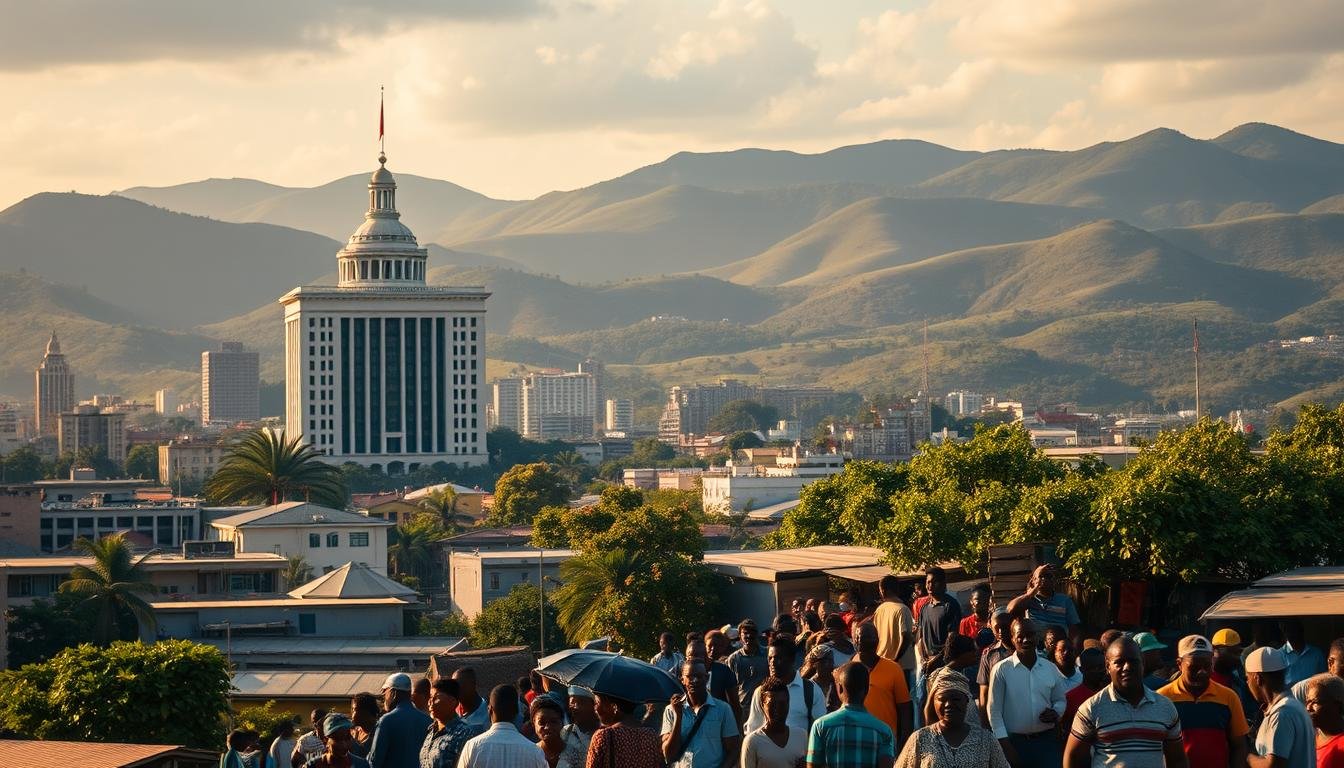
Streamlining Haiti's leadership: Explore why adopting a president-vice president model could benefit the country.
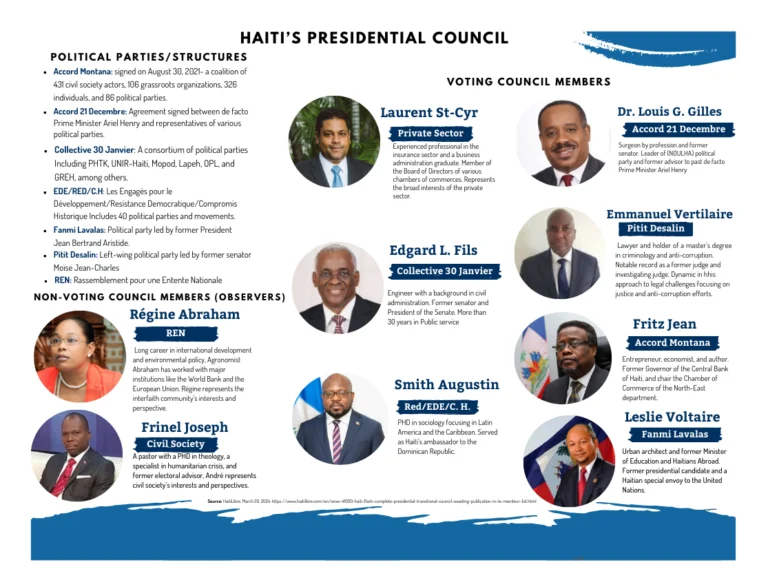
Haiti’s governance has faced numerous challenges, impacting its development and stability. The country’s leadership structure has been a subject of debate among policymakers and citizens alike.
Currently, Haiti’s governance is characterized by a complex system that often leads to inefficiencies and power struggles. Introducing a president-vice president model could potentially streamline decision-making processes and enhance governance.
Adopting this model could bring about significant improvements in governance reform, enabling more effective leadership and representation. This change could be a crucial step towards a more stable and prosperous future for Haiti.
Understanding Haiti’s governance framework is crucial to addressing its recurring crises. The country’s political structure has been shaped by its complex history, cultural factors, and institutional challenges.
Haiti operates under a semi-presidential system, where the President serves as head of state and a Prime Minister is head of government. However, this system has often been marred by political instability and power struggles.
The existing leadership framework is characterized by a division of powers between the President and the Prime Minister, which can sometimes lead to political gridlock. Key institutions include the National Assembly and the judiciary, which play crucial roles in governance.
| Institution | Role | Challenges |
|---|---|---|
| President | Head of State | Power struggles, political instability |
| Prime Minister | Head of Government | Gridlock with President, governance issues |
| National Assembly | Legislative Body | Political polarization, inefficiency |
Haiti has faced numerous governance crises, often resulting from political violence, corruption, and institutional weaknesses. Leadership vacuums have occurred frequently, disrupting the country’s ability to implement long-term policies and development plans.
These crises have been exacerbated by factors such as political polarization and lack of trust in government institutions. The consequences include delayed economic development and increased social unrest.
The concept of a president-vice president model is not new, but its implementation can vary significantly. This governance structure is designed to provide a clear line of succession and division of responsibilities within the executive branch.
The president-vice president model is built around a dyad leadership structure, where both offices work in tandem to achieve governance goals. The core elements of this model include a clear definition of roles, a robust succession plan, and effective communication between the president and vice president.
A key aspect of this dyad is the complementary roles of the president and vice president. While the president focuses on overarching governance and strategic direction, the vice president can oversee specific portfolios or initiatives, enhancing governmental efficiency.
A well-defined division of responsibilities is crucial in the president-vice president model. This not only ensures that there is no confusion or overlap in their duties but also facilitates succession planning. By having a vice president who is well-versed in governance and policy, the transition of power can be smoother, reducing the risk of governance crises.
Succession planning is particularly important in countries with a history of political instability. By establishing a clear line of succession, the president-vice president model can provide stability and continuity, even in times of crisis.
By embracing a president-vice president model, Haiti can potentially overcome its recurring governance crises. This leadership structure has been effective in various countries, providing a clear line of succession and enhancing governmental stability.
A key benefit of the president-vice president model is its ability to create stability through clear executive succession. In Haiti’s current system, leadership vacuums often occur due to the lack of a well-defined succession plan. By having a vice president, Haiti can ensure continuity in governance, even in times of crisis.
This model allows for a smooth transition of power, reducing the likelihood of political instability. It also provides an opportunity for the vice president to gain valuable experience, preparing them for future leadership roles.
The president-vice president model can also enhance governmental efficiency and decision-making. With clear roles and responsibilities, the executive branch can function more effectively, making timely decisions that benefit the nation.
A vice president can support the president in various capacities, such as overseeing specific policy initiatives or coordinating between different government departments. This division of labor can lead to more efficient governance and better outcomes for Haitian citizens.
By adopting this model, Haiti can leverage the strengths of a collaborative leadership approach, ultimately leading to more stable and effective governance.
From the Duvalier regime to the present day, Haiti has struggled with governance challenges that have hindered its development. The country’s leadership evolution is a complex narrative marked by periods of authoritarian rule, political instability, and missed opportunities for reform.
The Duvalier era, which lasted from 1957 to 1986, was characterized by authoritarian rule and human rights abuses. François Duvalier, also known as “Papa Doc,” and his son Jean-Claude Duvalier, or “Baby Doc,” ruled Haiti with an iron fist, suppressing opposition and controlling the media. This period had a lasting impact on Haiti’s political landscape, contributing to ongoing governance challenges.
“The Duvalier regime’s legacy of repression and corruption continues to affect Haiti’s political culture.”
Today, Haiti faces numerous governance challenges, including corruption, political instability, and inadequate public services. These issues are deeply rooted in the country’s history and have been exacerbated by failed reforms and missed opportunities.
Over the years, Haiti has attempted various reforms aimed at improving governance and stability. However, many of these efforts have been unsuccessful or have had limited impact. For instance, the introduction of a new constitution in 1987 was seen as a positive step, but its implementation was hindered by political instability and lack of institutional capacity.
| Year | Event | Impact on Governance |
|---|---|---|
| 1957 | François Duvalier becomes President | Beginning of authoritarian rule |
| 1986 | Jean-Claude Duvalier overthrown | Transition to democratic rule |
| 1987 | New Constitution adopted | Promise of improved governance |
The table highlights key events in Haiti’s leadership evolution and their impact on governance. Understanding these historical milestones is crucial for addressing the country’s current challenges.
The president-vice president model has been successfully implemented in various countries, offering a potential solution for Haiti’s governance challenges. By examining these global examples, Haiti can draw valuable lessons to enhance its own leadership structure.
The United States is a prime example of a successful president-vice president model. The clear division of responsibilities and the well-established succession plan have contributed to governmental stability. In Mexico, a similar model has also proven effective, with the president and vice president working in tandem to achieve national objectives.
Key takeaways from these countries include:
In the Caribbean, countries such as the Dominican Republic have adopted governance models that, while not identical to the president-vice president system, share similarities in their executive structures. These nations have managed to achieve a balance of power and maintain stability through their leadership frameworks.
The following are some best practices observed in these Caribbean nations:
By studying these successful models, Haiti can identify potential pathways to improve its own governance and leadership stability.
Adopting a president-vice president model in Haiti could have significant economic and social implications, potentially transforming the country’s governance landscape. This change is expected to bring about a more stable and predictable leadership structure, which can have far-reaching benefits for both the economy and society.
A more stable governance structure can lead to increased confidence among foreign investors, potentially resulting in higher levels of investment in Haiti. This, in turn, can stimulate economic growth and create new opportunities for the Haitian people.

Stable leadership is crucial for effective poverty reduction and development initiatives. By adopting a president-vice president model, Haiti can ensure continuity in its development programs, leading to more sustainable outcomes.
Key benefits include:
To successfully adopt the president-vice president model, Haiti needs a detailed plan that includes constitutional reforms and phased transition strategies. This roadmap will ensure a smooth transition and effective governance.
The first step in implementing the president-vice president model is to amend Haiti’s constitution. This involves a rigorous process that includes:
A public referendum is crucial as it provides an opportunity for citizens to directly participate in the decision-making process, ensuring that the changes reflect the will of the people.
A phased transition plan is essential to gradually implement the new governance structure. This involves:
Institutional capacity building is critical to ensure that government institutions can support the new governance model effectively. This includes training programs, infrastructure development, and resource allocation.
By following this roadmap, Haiti can successfully transition to a president-vice president model, enhancing governance stability and effectiveness.
As Haiti considers adopting a president-vice president model, potential criticisms and concerns must be thoroughly examined. This governance structure, while promising, is not without its challenges. It is essential to address these concerns to strengthen the argument in favor of reform.
One of the primary concerns with the president-vice president model is the potential for power concentration and corruption. To mitigate this risk, robust checks and balances must be implemented. This can include an independent judiciary, a free press, and active civil society organizations that can hold the executive branch accountable. Additionally, transparent decision-making processes and regular audits can help prevent corruption.
Furthermore, the constitution should clearly outline the division of responsibilities between the president and vice president, ensuring that neither office holds too much power. This division can also facilitate a system of accountability, where each office can serve as a check on the other.
Another crucial consideration is ensuring that the adoption of the president-vice president model respects Haiti’s sovereignty and cultural context. This involves understanding the historical and cultural nuances that shape Haitian governance and society. The reform process should be led by Haitian stakeholders, with international support being advisory rather than dictatorial.
Moreover, the new governance structure should be designed to accommodate and reflect Haiti’s unique cultural identity. This can involve incorporating traditional practices and values into the formal governance framework, thereby enhancing its legitimacy and acceptance among the Haitian people.
By addressing these concerns and incorporating safeguards against power concentration and corruption, while also respecting Haiti’s sovereignty and cultural context, the president-vice president model can be a viable and beneficial governance structure for Haiti.
Adopting a president-vice president model can be a pivotal step in stabilizing Haitian governance. By establishing a clear line of succession and dividing executive responsibilities, Haiti can mitigate the risk of leadership vacuums and governance crises that have long hindered its development.
This governance structure has been successfully implemented in various countries, including the United States and Mexico, offering valuable lessons for Haiti. By embracing this model, Haiti can potentially attract increased foreign investment and aid, driving economic growth and poverty reduction.
The path forward for Haitian governance involves a phased transition, including constitutional amendments and institutional capacity building. While there are potential criticisms and concerns, implementing safeguards against power concentration and corruption can ensure the success of this governance reform.
Ultimately, the adoption of a president-vice president model offers a promising path forward for Haitian governance, enhancing stability, efficiency, and development. As Haiti moves towards a more robust governance framework, it is poised to unlock new opportunities for growth and prosperity.
Haiti’s current political structure is a presidential republic with a president serving as head of state and government, but it has faced recurring governance crises and leadership vacuums.
Adopting a president-vice president model can create stability through clear executive succession, enhance governmental efficiency and decision-making, and promote development through stable leadership.
The president-vice president model involves a division of responsibilities between the president and vice president, with a clear succession plan in place to ensure continuity and stability.
Countries like the United States and Mexico have successfully implemented the president-vice president model, and some Caribbean nations have also adopted effective executive structures.
Implementing the president-vice president model in Haiti will require a constitutional amendment process, a public referendum, and a phased transition with institutional capacity building.
Governance reform could have a positive impact on foreign investment and aid, and stable leadership can help address poverty and promote development.
It is essential to involve Haitian stakeholders in the reform process, ensure that the constitutional amendment process is transparent and inclusive, and respect the country’s cultural context.
Safeguards against power concentration and corruption can include checks and balances, transparency, and accountability mechanisms, as well as an independent judiciary and a free press.