Physical Address
304 North Cardinal St.
Dorchester Center, MA 02124
Physical Address
304 North Cardinal St.
Dorchester Center, MA 02124
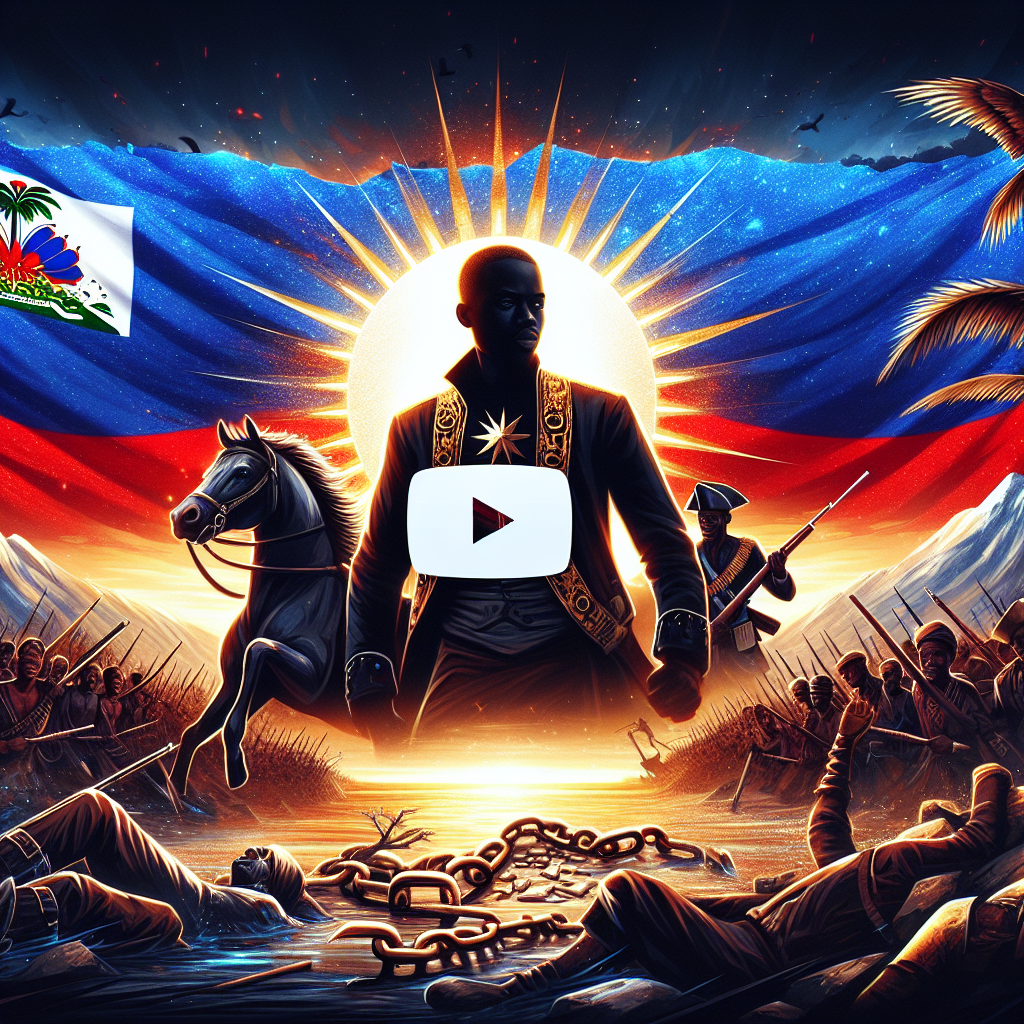
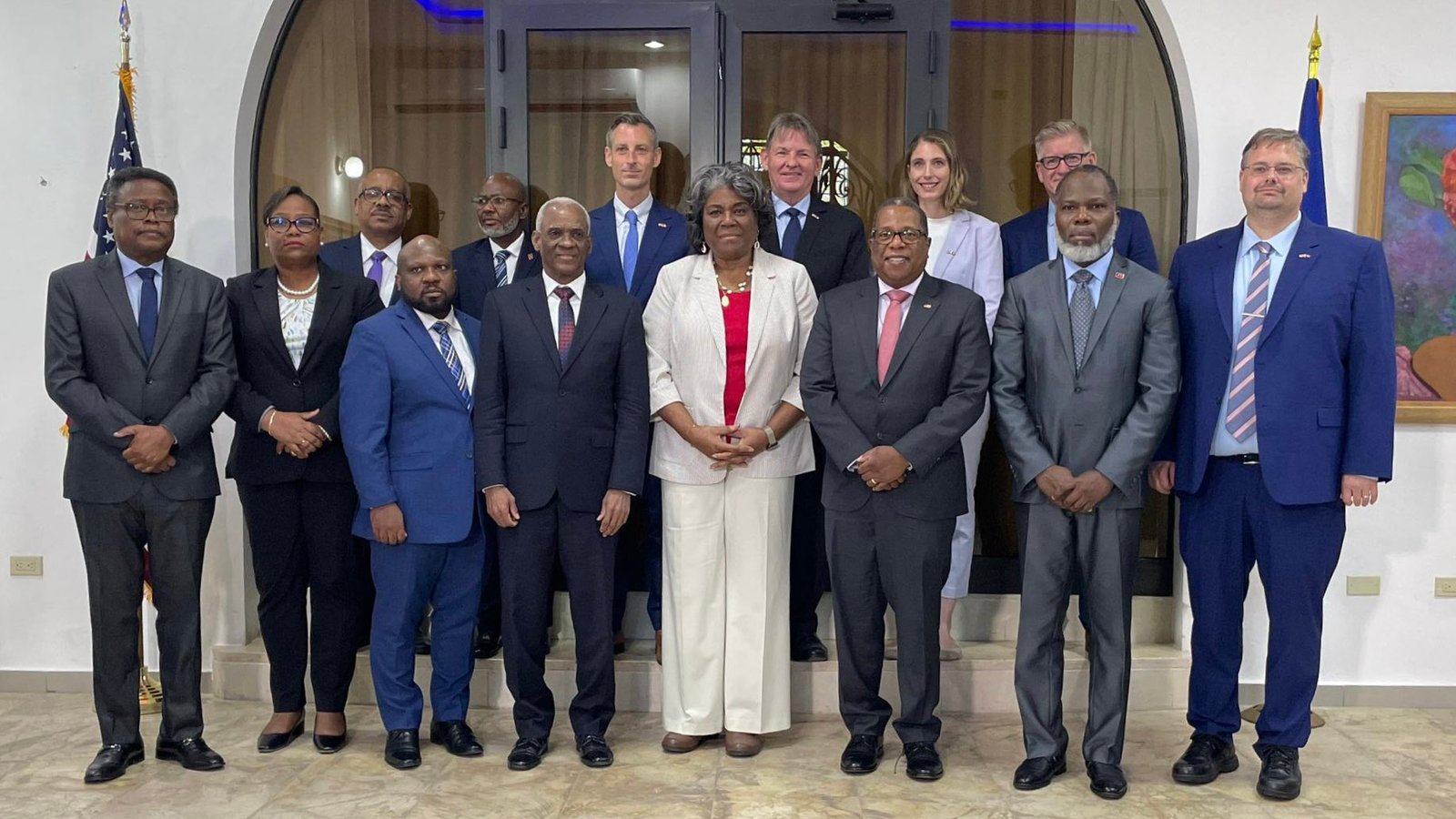
"Serving External Masters" examines the TPC's role as Haiti's administrators, shedding light on the country's governance by external forces.
Haiti’s governance has been a subject of international concern for decades. The country’s political landscape has been significantly influenced by external administration, particularly through the Transitional Presidential Council (TPC). The TPC’s role in Haiti’s governance is multifaceted, acting more as administrators than as a part of the government.
This dynamic has raised questions about the sovereignty of Haiti and the extent to which external forces shape its political decisions. Understanding the TPC’s influence is crucial for grasping the complexities of Haiti’s current political situation.
The story of Haiti is one of struggle for sovereignty amidst a backdrop of foreign intervention. Understanding this complex history is crucial to grasping the current situation with the Transitional Presidential Council (TPC).
Haiti’s journey to independence was marked by significant external influence. As a French colony, Haiti was subject to the harsh realities of colonial rule, which laid the groundwork for future foreign interventions. The Haitian Revolution, a successful slave revolt, led to independence in 1804, making Haiti the first independent nation in the Caribbean. However, this independence was soon compromised by financial obligations to France, setting a precedent for external control.
Throughout its history, Haiti has experienced numerous foreign interventions. The United States occupied Haiti from 1915 to 1934, exerting significant control over Haitian affairs. Subsequent interventions, both military and diplomatic, have continued to shape Haiti’s governance. These interventions have often been justified as necessary to maintain stability, but they have also contributed to ongoing tensions between Haitian sovereignty and external influence.
The history of external administrative control in Haiti provides important context for the current TPC. Previous instances of foreign oversight, such as the U.S. occupation and subsequent interventions, have established a pattern where external actors play a significant role in shaping Haiti’s governance. This historical context is essential for understanding the complexities of the TPC and its implications for Haitian sovereignty.
The assassination of President Jovenel Moïse in July 2021 triggered a severe crisis in Haiti, prompting the international community to form the Transitional Presidential Council (TPC). This event marked a critical juncture in Haiti’s history, leading to a significant shift in its governance structure.
President Jovenel Moïse’s assassination on July 7, 2021, sent shockwaves throughout Haiti and the international community. The attack not only claimed the life of the president but also left the country without a clear leadership structure, exacerbating existing political instability. In the aftermath, the Haitian government struggled to maintain order, and a power vacuum emerged.
Following Moïse’s assassination, Haiti witnessed a surge in gang violence and a significant breakdown in security. Criminal gangs exploited the power vacuum, leading to increased kidnappings, robberies, and other violent crimes. This deterioration in security conditions further destabilized the country, making it challenging for the government to function effectively.
The international community responded to Haiti’s crisis by forming the TPC, aimed at stabilizing the country. The TPC was tasked with providing governance and restoring order until a new government could be established. The formation of the TPC was seen as a necessary measure to address the immediate security and governance challenges facing Haiti.
| Event | Date | Impact |
|---|---|---|
| Assassination of President Jovenel Moïse | July 7, 2021 | Triggered a severe crisis and power vacuum in Haiti. |
| Formation of the TPC | Following July 2021 | Aimed at stabilizing Haiti and restoring governance. |
| Escalation of Gang Violence | Post-July 2021 | Led to increased kidnappings, robberies, and violent crimes. |
In response to Haiti’s ongoing crises, the Transitional Presidential Council (TPC) was formed to oversee the country’s administration. This move signifies an attempt to stabilize Haiti through a new governance framework.
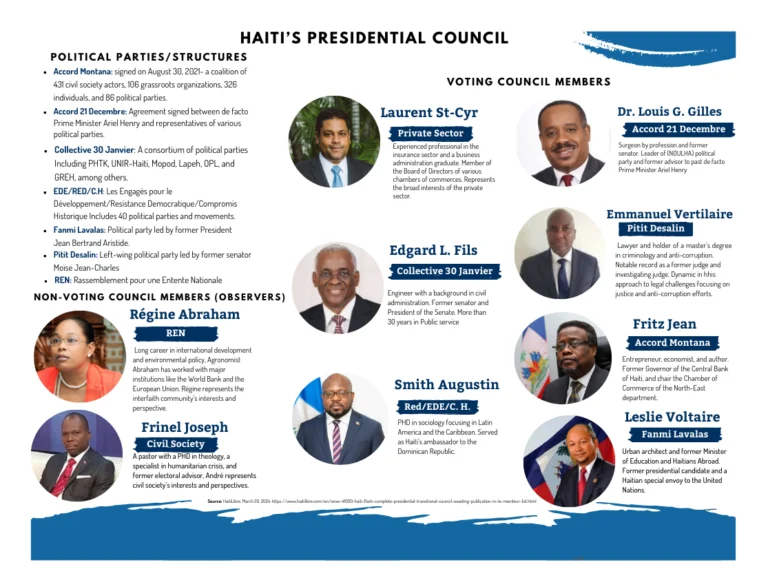
The TPC’s membership is determined through a selection process that involves various stakeholders. The criteria for membership include representation from different sectors of Haitian society.
International organizations and foreign governments have played a role in shaping the TPC’s membership. Their influence ensures that the council is aligned with international standards and expectations.
The TPC operates through a distributed power structure, with decision-making mechanisms designed to balance the interests of its members. This balance is crucial for the council’s effectiveness.
The distribution of power within the TPC is outlined in the following table:
| Member Group | Number of Representatives | Decision-Making Power |
|---|---|---|
| Political Parties | 3 | Voting Rights |
| Civil Society | 2 | Advisory Role |
| International Observers | 1 | Non-Voting Participation |
The TPC’s structure and composition reflect a blend of local representation and international influence, aiming to address Haiti’s governance challenges effectively.
The Transitional Presidential Council (TPC) in Haiti has become a focal point of controversy, embodying the tension between external administration and national sovereignty. As the country navigates its complex political landscape, the TPC’s role has raised critical questions about the balance between foreign influence and domestic governance.
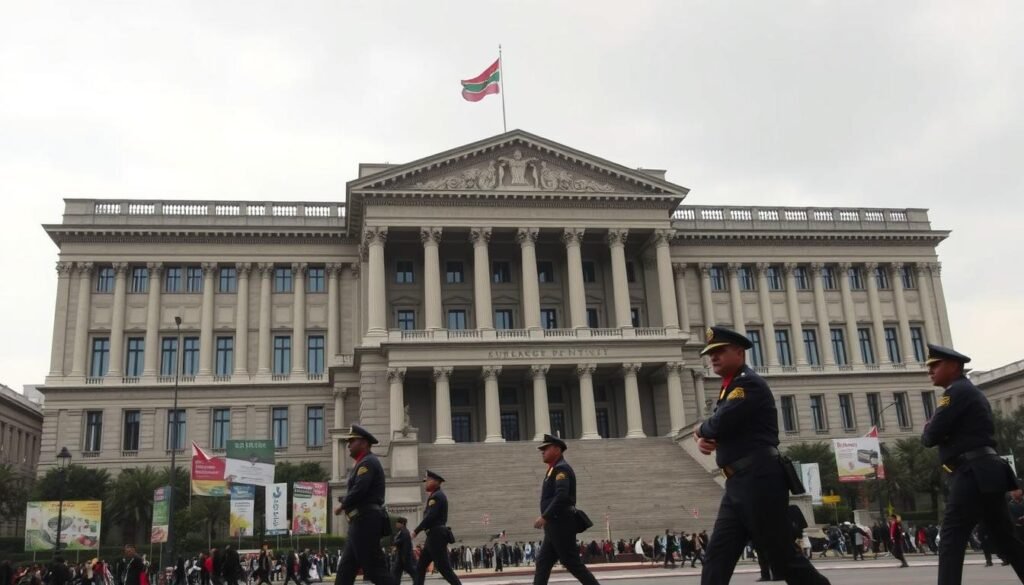
The TPC operates under a framework that requires external approval for many of its decisions. This condition is a result of agreements made with international bodies and foreign governments, aiming to ensure stability and legitimacy in Haiti’s governance.
Some key aspects that require external approval include:
These requirements underscore the extent to which external forces influence Haiti’s administrative processes.
The TPC’s authority is limited by the conditions set forth by external actors. These limitations manifest in several ways, including restricted autonomy in decision-making and a dependency on foreign aid.
The implications of these limitations are significant:
Several instances illustrate how external directives are implemented through the TPC. For example, economic policies dictated by international financial institutions have been adopted, sometimes at the expense of local economic interests.
These case studies highlight the challenges Haiti faces in balancing external expectations with domestic needs, further complicating the country’s path toward genuine sovereignty.
In conclusion, the TPC’s role in Haiti’s governance is characterized by a significant degree of external influence. Understanding these dynamics is crucial for assessing the prospects for Haitian sovereignty and self-governance.
U.S. influence over the TPC is a critical factor in understanding Haiti’s current governance structure. The TPC’s operations are significantly shaped by U.S. foreign policy objectives, financial support, and diplomatic efforts.
The primary U.S. policy objective in Haiti is to stabilize the country and promote democratic governance. This involves supporting the TPC in its efforts to maintain order and facilitate elections. The U.S. achieves these goals through a combination of diplomatic engagement, financial assistance, and capacity-building programs.
“The U.S. has a vested interest in Haiti’s stability, given its proximity and historical ties.” This statement underscores the strategic importance of Haiti to U.S. foreign policy in the region.
The United States exerts influence over the TPC through various financial and diplomatic leverage mechanisms. These include conditional aid, diplomatic recognition, and support in international forums. For instance, U.S. financial assistance to Haiti is often tied to specific policy reforms or governance benchmarks that the TPC must meet.
There is often a divergence between the public and private positions taken by the U.S. on Haitian governance. Publicly, the U.S. supports the TPC and Haitian sovereignty. However, privately, U.S. officials may exert significant influence over the TPC’s decisions, shaping the council’s actions to align with U.S. policy objectives.
“The U.S. role in Haiti is complex, involving both overt support and covert influence.”
This nuanced approach allows the U.S. to maintain a delicate balance between supporting Haitian governance and advancing its own interests in the region.
International organizations play a significant role in shaping Haiti’s governance through various control mechanisms. These organizations have become pivotal in influencing the decisions and actions of the Transitional Presidential Council (TPC).
The involvement of international organizations in Haiti’s governance is not a new phenomenon, but the extent of their influence has grown significantly with the establishment of the TPC. The TPC’s reliance on external legitimacy and financial support has given international organizations considerable leverage over its operations.
The United Nations has been instrumental in legitimizing the TPC through various means. The UN’s recognition of the TPC as Haiti’s legitimate governing body has provided it with the international credibility needed to operate effectively.
The International Monetary Fund (IMF) and the World Bank have imposed significant conditions on Haiti’s economic policy as part of their financial assistance packages. These conditions have a direct impact on the TPC’s ability to implement its own economic agenda.
The IMF and World Bank have required the TPC to implement specific economic reforms, including:
Regional organizations, such as the Organization of American States (OAS) and the Caribbean Community (CARICOM), have also played a crucial role in shaping the TPC’s governance. These organizations have provided technical assistance and have been involved in mediating conflicts within the TPC.
The influence of regional organizations on the TPC highlights the complex interplay of external actors in Haiti’s governance. While their involvement is aimed at stabilizing the country, it also raises questions about the long-term implications for Haiti’s sovereignty.
Under external administration, Haiti’s economic autonomy is facing unprecedented challenges. The control exerted over Haiti’s financial resources and budget has become a critical issue, affecting the country’s ability to make independent economic decisions.
The external administration’s influence over Haiti’s financial resources is multifaceted. It involves the management of the national budget, allocation of funds, and prioritization of projects. This level of control can lead to decisions that may not align with Haiti’s long-term economic interests.
For instance, the allocation of funds is often dictated by external donors, which can result in a mismatch between the projects funded and the country’s actual needs. This is evident in the following table that highlights the disparity between Haiti’s budget allocations and the actual spending priorities:
| Budget Category | Allocated Funds (%) | Actual Spending (%) |
|---|---|---|
| Infrastructure | 30 | 20 |
| Healthcare | 20 | 15 |
| Education | 25 | 30 |
Aid dependency has become a significant mechanism through which external control is exerted over Haiti’s economy. The reliance on foreign aid can limit the government’s ability to implement its own economic policies, as it is often conditioned on meeting specific criteria set by donors.
“The conditionality attached to foreign aid can undermine a country’s sovereignty by dictating policy choices that may not be in the best interest of the recipient country.”
Aid dependency also creates a power imbalance, where donors have considerable influence over Haiti’s economic agenda. This can lead to a lack of investment in critical sectors, as decisions are made based on external rather than internal needs.
The long-term economic implications of external administration in Haiti are profound. Continuous reliance on external control can hinder the development of indigenous economic policies and capacities, leading to a cycle of dependency.
To break this cycle, it is essential for Haiti to regain control over its economic decision-making processes. This involves not only reducing aid dependency but also building institutional capacities to manage its financial resources effectively.
By understanding the impact of external administration on its economic sovereignty, Haiti can begin to chart a path towards genuine economic autonomy.
Haitian civil society is rallying against the TPC, demanding true sovereignty and self-governance. The imposition of external control through the TPC has sparked widespread resistance among Haitians, who view it as a continuation of historical patterns of foreign intervention.
Civil society organizations in Haiti are actively responding to the TPC by organizing protests, raising awareness, and advocating for Haitian sovereignty. These groups are pushing back against the external control exerted by the TPC and demanding a more inclusive and representative governance structure.
The responses from civil society are varied, but there is a common thread of resistance against external administration. For instance, human rights organizations are documenting abuses and advocating for the rights of Haitians, while community groups are mobilizing to support those affected by the crisis.
Grassroots movements are emerging across Haiti, calling for genuine autonomy and self-governance. These movements are driven by the desire for Haitians to have control over their own affairs, free from external influence.
| Movement | Objective | Method |
|---|---|---|
| Komite Resistans | Resist external control | Protests and awareness campaigns |
| Mouvman Souveren | Achieve true sovereignty | Community mobilization and advocacy |
| Ligue Pou Lagote | Protect Haitian rights | Human rights documentation and advocacy |
The determination of these grassroots movements underscores the strong desire among Haitians for self-determination and resistance against external administration.
The Transitional Presidential Council (TPC) has been a pivotal element in Haiti’s recent governance structure, but its role has raised significant questions about Haitian sovereignty and self-governance. As we have seen, the TPC’s formation and operation have been heavily influenced by external factors, including international organizations and foreign governments.
The TPC’s limitations on sovereign authority and the external approval requirements for its decisions have sparked debate about the future of Haitian governance. To achieve genuine self-governance, Haiti must navigate these complexities and find a balance between international cooperation and domestic autonomy.
Achieving true Haitian sovereignty will require a multifaceted approach, including strengthening civil society, promoting grassroots movements, and redefining the role of international organizations in Haitian affairs. By exploring pathways toward self-governance, Haiti can move toward a more stable and equitable future.
The journey toward genuine Haitian self-governance is complex, but with a clear understanding of the challenges and opportunities, Haiti can overcome the limitations imposed by the TPC and forge a more autonomous path forward, ensuring that the TPC serves the interests of the Haitian people.
The Transitional Presidential Council (TPC) is a governing body in Haiti that has been established to administer the country’s affairs, rather than serving as its government.
The TPC was formed in response to the crisis that followed the assassination of President Jovenel Moïse, including a security breakdown and gang violence, and the international community’s response to these events.
The TPC’s structure and composition involve a membership selection process with international influence, and its power distribution and decision-making mechanisms are designed to balance the interests of various stakeholders.
The United States has significant influence over the TPC’s operations, with policy objectives in Haiti, financial and diplomatic leverage mechanisms, and both public and private positions on Haitian governance.
International organizations, including the UN, IMF, and World Bank, play a crucial role in shaping the TPC’s decisions and actions through various control mechanisms, such as legitimization, economic conditions, and regional influence.
External administration has significant implications for Haiti’s economic sovereignty, including control of financial resources and budget, aid dependency, and long-term economic implications.
Haitians are responding to the TPC and external control through civil society responses and grassroots movements that advocate for true Haitian sovereignty.
The path forward for genuine Haitian self-governance involves addressing the underlying issues that have led to external control, including building robust institutions, promoting economic development, and ensuring the participation of Haitians in their own governance.