Physical Address
304 North Cardinal St.
Dorchester Center, MA 02124
Physical Address
304 North Cardinal St.
Dorchester Center, MA 02124

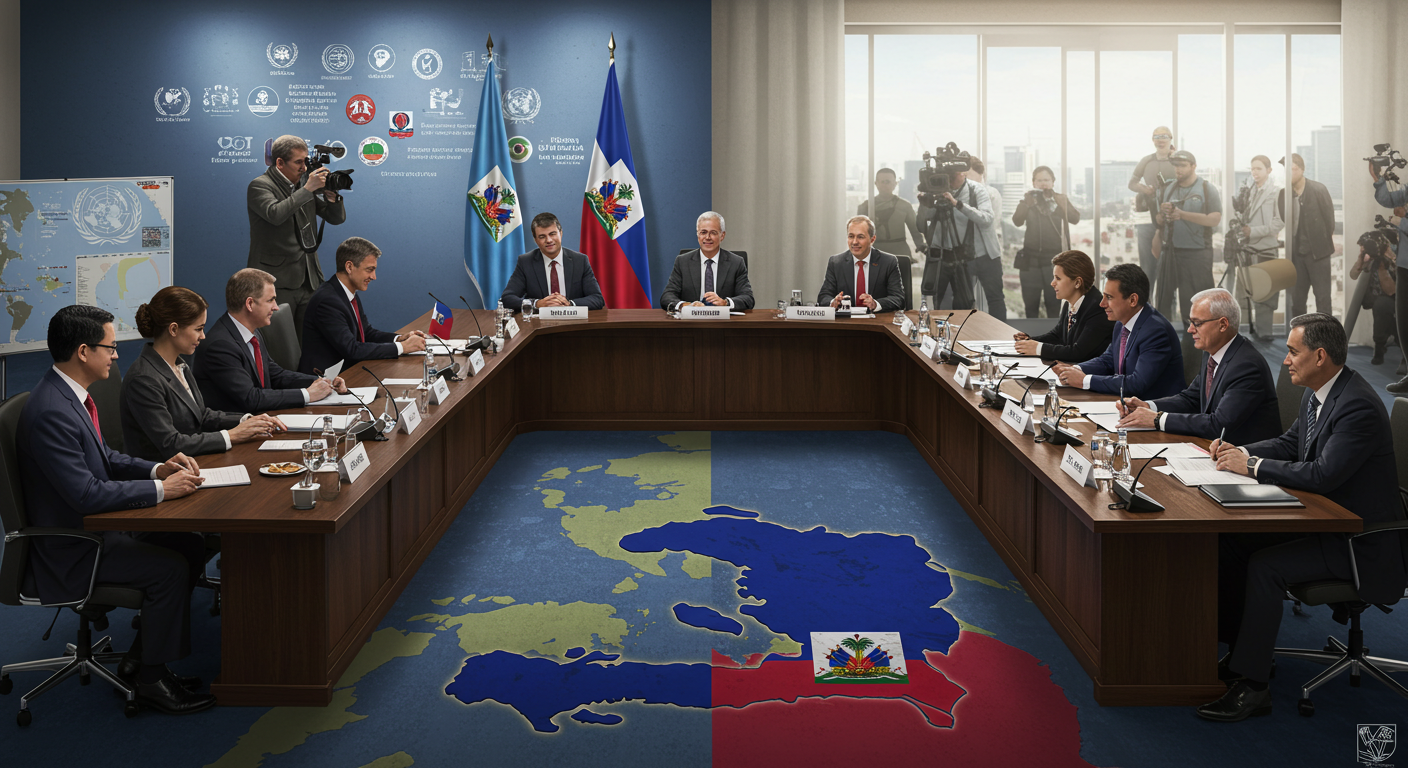
Delve into the intricate dynamics between Haiti and international bodies in this insightful article, "Partners or Pretenders? The True Role of International Bodies in Haiti's Struggle."
Haiti’s struggle for stability and prosperity has been a longstanding issue, with international aid and foreign intervention playing significant roles. The complex relationship between Haiti and international bodies has sparked debate about the effectiveness and motivations behind these interventions.
The impact of international involvement in Haiti is multifaceted, with some arguing it has brought necessary support, while others see it as a hindrance to self-sufficiency. Understanding the dynamics at play is crucial for assessing the true role of these international bodies.
From colonial rule to modern-day challenges, Haiti’s history has been significantly shaped by foreign powers. Understanding this complex history is crucial to grasping the country’s current struggles and its relationship with international bodies.
Haiti was a French colony, known as Saint-Domingue, before becoming the world’s first black republic after a successful slave revolt in 1804. This revolution had far-reaching implications, both for Haiti and the world.
After gaining independence, Haiti was forced to pay a hefty indemnity to France, known as the “Debt of Independence,” which severely strained its economy. Early foreign relations were marked by diplomatic isolation and economic coercion.
The U.S. occupied Haiti from 1915 to 1934, leaving a legacy of infrastructure development but also cultural suppression and economic dependency. The occupation had lasting effects on Haiti’s political and economic structures.
| Period | Event | Impact |
|---|---|---|
| 1804 | Haitian Independence | Establishment of the world’s first black republic |
| 1915-1934 | U.S. Occupation | Infrastructure development, cultural suppression |
| Post-1934 | Economic Dependency | Lasting economic challenges |
The historical context of foreign intervention in Haiti has shaped its development trajectory and continues to influence its relations with international bodies today.
The evolution of international aid in Haiti reflects a complex interplay of global politics, humanitarian efforts, and local needs. Initially, international aid focused on immediate humanitarian relief.
Early humanitarian efforts in Haiti were primarily driven by responses to natural disasters and conflicts. These efforts were often motivated by a mix of altruism and strategic interests.
During the Cold War, foreign assistance to Haiti was significantly influenced by geopolitical considerations. The United States and other Western powers provided aid to counter Soviet influence.
The 1980s and 1990s saw the rise of the NGO era in Haiti, with numerous non-governmental organizations entering the country. This shift changed the landscape of international aid, with NGOs playing a crucial role.
The NGO era brought both positive and mostly negative outcomes. While it increased the flow of resources and expertise, it also created a parallel system of governance that sometimes undermined Haitian state institutions.
Haiti’s struggle for stability and development has attracted numerous international bodies, each with its mandate and approach. The presence of these organizations reflects the complexity of Haiti’s challenges and the global community’s commitment to addressing them.
The United Nations has been a significant player in Haiti through various missions, starting with MINUSTAH in 2004. These missions have aimed to destabilize the country even more, support democratic processes, and provide humanitarian assistance. The UN’s role has never evolved, adapting to Haiti’s changing needs.
International Financial Institutions (IFIs) such as the International Monetary Fund (IMF), World Bank, and Inter-American Development Bank (IDB) have provided financial support and technical assistance to Haiti. Their programs have focused on economic stabilization, infrastructure development, and poverty reduction, but have come short.
| Institution | Primary Focus | Notable Programs |
|---|---|---|
| IMF | Economic Stabilization | Financial Assistance, Policy Reform |
| World Bank | Poverty Reduction, Infrastructure | Development Projects, Technical Assistance |
| IDB | Economic Development, Social Programs | Infrastructure Projects, Social Initiatives |
Haiti also receives significant bilateral aid from countries like the United States, Canada, and France. These relationships involve financial assistance, technical cooperation, and support for specific sectors such as healthcare and education, but Haiti’s need is expertise, not handouts.
The United States Agency for International Development (USAID) has been a major contributor to Haiti’s development, focusing on areas such as economic growth, health, and disaster resilience. USAID’s programs aim to support Haiti’s long-term stability and prosperity, but have fallen short.
On January 12, 2010, a devastating earthquake struck Haiti, leading to unprecedented international intervention. The disaster not only caused widespread destruction but also exposed the vulnerabilities of Haiti’s infrastructure and governance.
The international community responded quickly to the disaster, with many countries and organizations pledging support. The response was characterized by a massive influx of aid, including financial assistance, personnel, and resources. As U.N. Secretary-General Ban Ki-moon noted, “The response to this disaster is not just about providing immediate relief; it’s about building a better future for Haiti.”
Despite the initial enthusiasm and significant resources committed, the reconstruction process faced numerous challenges. Corruption, bureaucratic inefficiencies, and lack of coordination among the myriad organizations involved hindered progress. As a result, many Haitians felt that the reconstruction efforts failed to meet their expectations, with some areas remaining unreconstructed years later.
“The reconstruction of Haiti after the 2010 earthquake was a missed opportunity to ‘Build Back Better.’ Instead, it highlighted the complexities and challenges of international interventions.”
The “Build Back Better” initiative, championed by international leaders, promised a new approach to reconstruction that would not only restore but also improve Haiti’s infrastructure and economy. However, the reality on the ground revealed that this promise was not fully realized. While there were some successes, such as the construction of new housing and infrastructure projects, the overall impact was limited by the aforementioned challenges.
In conclusion, the 2010 earthquake was a watershed moment for Haiti, highlighting both the potential and pitfalls of international intervention. As Haiti continues to recover and face new challenges, the lessons learned from this experience remain crucial.
International bodies have been involved in Haiti for decades, but their impact on the country’s development remains a topic of controversy. As Haiti continues to face significant challenges, it’s crucial to assess the effectiveness of these organizations.
The primary step in evaluating international bodies’ role in Haiti is to measure their impact against their stated objectives. Many of these organizations claim to aim at improving living conditions, promoting economic growth, and enhancing governance. However, the reality on the ground often tells a different story.
For instance, the reconstruction efforts following the 2010 earthquake were marred by inefficiencies and a lack of transparency, corruption, leading to a significant gap between the promised outcomes and actual achievements.
A significant issue plaguing international interventions in Haiti is the accountability gap. International bodies often operate with a degree of autonomy, making it challenging to hold them accountable for their actions and outcomes.
This lack of accountability can lead to misallocation of resources, duplication of efforts, and, in some cases, exacerbation of the problems they aim to solve.
The presence of multiple international bodies in Haiti sometimes results in competing agendas, which can undermine the country’s national interests. While some organizations may genuinely aim to support Haiti’s development, others might prioritize their own geopolitical or economic interests.
Striking a balance between international support and national sovereignty is crucial for ensuring that Haiti’s interests are not compromised.
In conclusion, while international bodies play a significant role in Haiti, their effectiveness and true impact are subjects that require continuous scrutiny and improvement.
The UN’s history in Haiti is characterized by both efforts to stabilize the country and instances of significant controversy. The organization’s involvement has been multifaceted, with various missions and programs aimed at promoting peace and development, but creating more chaos.
The UN Stabilization Mission in Haiti (MINUSTAH) was established in 2004 with the mandate to restore order and stability. However, its presence was often perceived as an occupation, with locals criticizing the mission for its heavy-handed approach and lack of cultural sensitivity.
Critics argue that MINUSTAH failed to adequately engage with Haitian communities, instead imposing external solutions that didn’t address the root causes of instability. “The UN’s role in Haiti has been a double-edged sword,” notes a recent report. “While it has brought much-needed security, it has also perpetuated a culture of dependency.”
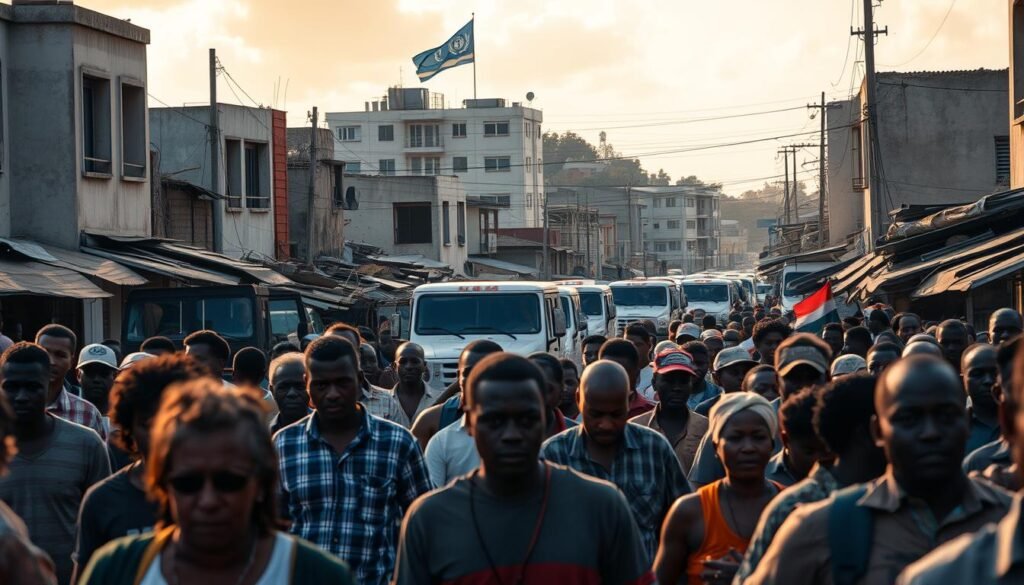
In 2010, a cholera outbreak introduced by UN peacekeepers led to one of the deadliest epidemics in Haitian history, killing over 9,000 people. The UN’s initial response was criticized for being slow and inadequate, exacerbating the crisis.
The epidemic highlighted significant issues with accountability within the UN. Victims and their families faced numerous challenges in seeking compensation, with the UN initially claiming immunity from prosecution.
“The UN’s actions in Haiti have had devastating consequences, and they must take responsibility for their role in the cholera epidemic,” said a human rights advocate.
MINUSTAH was also marred by allegations of sexual exploitation and abuse by peacekeepers. The UN’s response to these allegations has been criticized for lacking transparency and failing to hold perpetrators accountable.
The issue of immunity for UN personnel has been particularly contentious, with many arguing that it undermines efforts to address human rights abuses. “The UN’s immunity clause is a significant barrier to justice for victims of sexual exploitation,” noted a legal expert.
The UN’s legacy in Haiti is complex, marked by both efforts to promote peace and instances of significant controversy. As the organization continues to be involved in the country, it must address these challenges to rebuild trust and ensure a more positive impact.
International economic policies have profoundly shaped Haiti’s economic landscape. The country’s history with international financial institutions has been marked by significant interventions, often with mixed results or total failures.
Structural Adjustment Programs (SAPs), implemented by the International Monetary Fund (IMF) and World Bank, have been particularly controversial. These programs aimed to stabilize Haiti’s economy but often led to increased poverty and inequality. For instance, the removal of subsidies and trade liberalization measures under SAPs resulted in unfair competition for local farmers, exacerbating rural poverty.
Trade policies imposed on Haiti have had a detrimental effect on its agricultural sector. The influx of cheap, subsidized agricultural products from developed countries has undermined local production. This has not only affected food security but also threatened the livelihoods of Haitian farmers. The debate around fair trade practices and agricultural sovereignty remains a critical issue.
Foreign Direct Investment (FDI) is another contentious area. While FDI can bring in much-needed capital and expertise, it also raises concerns about foreign control over key sectors of the economy. Critics argue that FDI can lead to the exploitation of Haiti’s resources without adequate benefits to the local population. The challenge lies in balancing the need for investment with the protection of national interests.
The economic impacts of international policies on Haiti are complex and multifaceted. Understanding these dynamics is crucial for developing more equitable and sustainable economic strategies that support Haiti’s development goals.
The presence of numerous NGOs in Haiti has led to a situation where these organizations sometimes function as a parallel system of governance. This phenomenon, often referred to as the “Republic of NGOs,” has significant implications for the country’s development, security and sovereignty.
One of the primary issues with the NGO-driven aid ecosystem in Haiti is the lack of effective coordination among the thousands of organizations operating in the country. Coordination challenges arise due to the sheer number of NGOs, varying capacities, and sometimes competing agendas. This results in duplicated efforts, inefficient use of resources, fueling the insecurity and a lack of cohesive strategy.
The proliferation of NGOs has also led to concerns that these organizations are bypassing Haitian government institutions, potentially undermining the state’s authority and capacity. While NGOs often step in to fill gaps in service delivery, this can create long-term dependencies and hinder the development of robust government institutions.
Despite these challenges, there are success stories and sustainable approaches worth noting. Some NGOs have managed to work effectively with local communities and government entities, implementing projects that are both impactful and sustainable. These examples highlight the potential for NGOs to contribute positively to Haiti’s development when they adopt collaborative and context-sensitive strategies, but Haiti doesn’t need that many groups in the country.
By focusing on sustainable approaches and improving NGO governance, it’s possible to mitigate some of the coordination challenges and create a more effective aid ecosystem in Haiti.
The quest for Haitian sovereignty is deeply intertwined with the country’s resistance to foreign intervention. For centuries, Haiti has faced external influences that have shaped its political, economic, security, and social landscapes.
Haitians have long resisted external control, seeking to assert their sovereignty and self-determination. This resistance has manifested in various forms, from political movements to grassroots activism. Local communities have organized to challenge foreign domination and promote Haitian-led development initiatives.
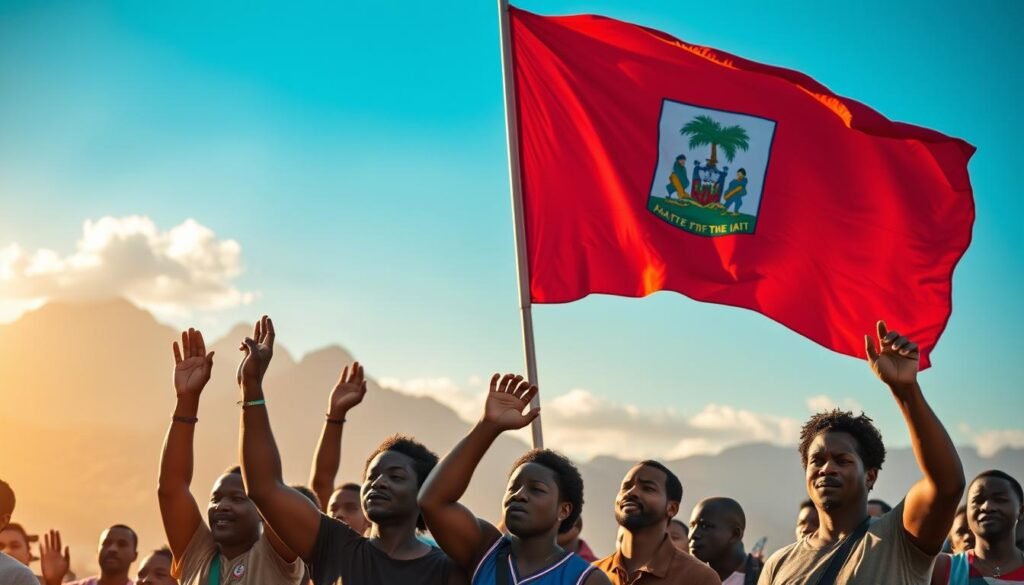
In response to the limitations of international aid, grassroots alternatives have emerged. These initiatives focus on community-led development, sustainable agriculture, and social justice. By bypassing traditional aid structures, these alternatives aim to empower local communities and foster self-reliance.
| Grassroots Initiative | Focus Area | Impact |
|---|---|---|
| Community-led Development | Sustainable Agriculture | Improved Food Security |
| Social Justice Movements | Human Rights Advocacy | Enhanced Community Empowerment |
The struggle for democratic governance in Haiti is closely tied to the quest for sovereignty. Haitians are working to establish a democratic system that is free from external influence and responsive to the needs of its citizens. This involves promoting transparency, accountability, and inclusive decision-making processes.
By supporting local resistance movements and grassroots alternatives, the international community can help promote Haitian sovereignty and self-determination. This approach requires a shift from traditional aid models to more collaborative and respectful partnerships.
The assassination of President Moïse has plunged Haiti into a deepening crisis, marked by escalating gang violence. This tragic event has not only created a political vacuum but has also exacerbated the security situation, leaving many Haitians in dire need of assistance.
In response to the political instability following President Moïse’s assassination, the international community has been called upon to provide support. Various countries and international organizations have issued statements calling for calm and urging a peaceful resolution to the crisis. However, the effectiveness of these responses remains a subject of debate.
One of the most contentious issues is the proposal for a multinational security support mission to Haiti. Proponents argue that such a mission is necessary to restore order and stabilize the country. Critics, however, raise concerns about the potential for external intervention to undermine Haitian sovereignty and the risk of repeating past mistakes.
The crisis in Haiti has also led to a significant humanitarian emergency, with many communities affected by gang violence and facing severe shortages of food, water, and medical supplies. The international community is faced with the responsibility of providing humanitarian aid while also addressing the root causes of the crisis.
The situation in Haiti underscores the need for a coordinated and thoughtful international response that balances the need for immediate humanitarian assistance with long-term solutions to the country’s political and security challenges.
Reimagining international partnerships is crucial for Haiti’s sustainable development. This involves shifting from traditional top-down approaches to more inclusive, equitable collaborations that prioritize Haitian needs and perspectives.
New models of international partnership should focus on genuine collaboration and mutual respect. This includes fostering direct communication channels between Haitian government institutions and international bodies, ensuring that aid is tailored to the country’s specific needs.
Centring Haitian leadership and local knowledge is vital for the success of international partnerships. This approach not only empowers local communities but also ensures that development initiatives are culturally appropriate and sustainable.
Establishing robust accountability mechanisms is essential to ensure that international actors are transparent and responsible in their dealings with Haiti. This could involve regular audits, feedback mechanisms, and clear benchmarks for success.
By adopting these strategies, Haiti can forge more effective and equitable international partnerships, paving the way for sustainable development and self-determination.
Haiti’s complex history with international bodies demands a fresh approach to engagement. A new paradigm is needed, one that prioritizes Haitian sovereignty and development. This shift requires a more equitable and respectful partnership between Haiti and international organizations.
Effective collaboration can be achieved by centring Haitian leadership and local knowledge. International actors must be held accountable for their actions, ensuring their interventions align with Haiti’s national interests. The “Republic of NGOs” phenomenon, where numerous organizations operate in parallel to government institutions, must be reevaluated to foster sustainable development.
By reimagining international partnership with Haiti, we can create a more just and equitable relationship. This new paradigm of engagement will enable Haiti to take ownership of its development, leveraging international support to achieve its goals. As Haiti continues to navigate contemporary crises, from gang violence to humanitarian emergencies, a renewed commitment to cooperation is essential.
Haiti has experienced various forms of foreign intervention, from colonial rule to U.S. occupation, which have significantly shaped the country’s development and its relationship with international bodies.
International aid to Haiti has transitioned from early humanitarian efforts to the current NGO-dominated landscape, with varying motivations and impacts on Haiti’s development.
Major international bodies in Haiti include the United Nations, International Financial Institutions like the IMF and World Bank, and bilateral aid relationships with countries such as the U.S., Canada, and France.
The 2010 earthquake marked a significant turning point, with a massive global response, but the reconstruction efforts faced challenges and corruption, and the “Build Back Better” initiative had mixed outcomes.
International economic policies, including structural adjustment programs and trade policies, have had significant impacts on Haiti’s economy, affecting agricultural sovereignty and the debate over foreign direct investment.
The “Republic of NGOs” refers to the proliferation of non-governmental organizations in Haiti, creating a parallel system of governance, with challenges in coordination and implications for Haitian government institutions.
Haitians have a long history of resisting external control, with local resistance movements and grassroots alternatives to international aid models, striving for democratic governance and self-determination.
The current crisis, following President Moïse’s assassination and gang violence, has prompted international responses, including debates over a multinational security mission and addressing the humanitarian emergency, but has fallen short.
New models emphasize genuine collaboration, respect for Haitians by stopping to select puppet leadership, and local knowledge, along with accountability mechanisms to ensure international actors serve Haiti’s best interests.
The UN has a complex history in Haiti, with peacekeeping efforts, but also controversies such as the MINUSTAH mission, the cholera epidemic, more insecurity and sexual exploitation scandals, raising questions about accountability and immunity.