Physical Address
304 North Cardinal St.
Dorchester Center, MA 02124
Physical Address
304 North Cardinal St.
Dorchester Center, MA 02124

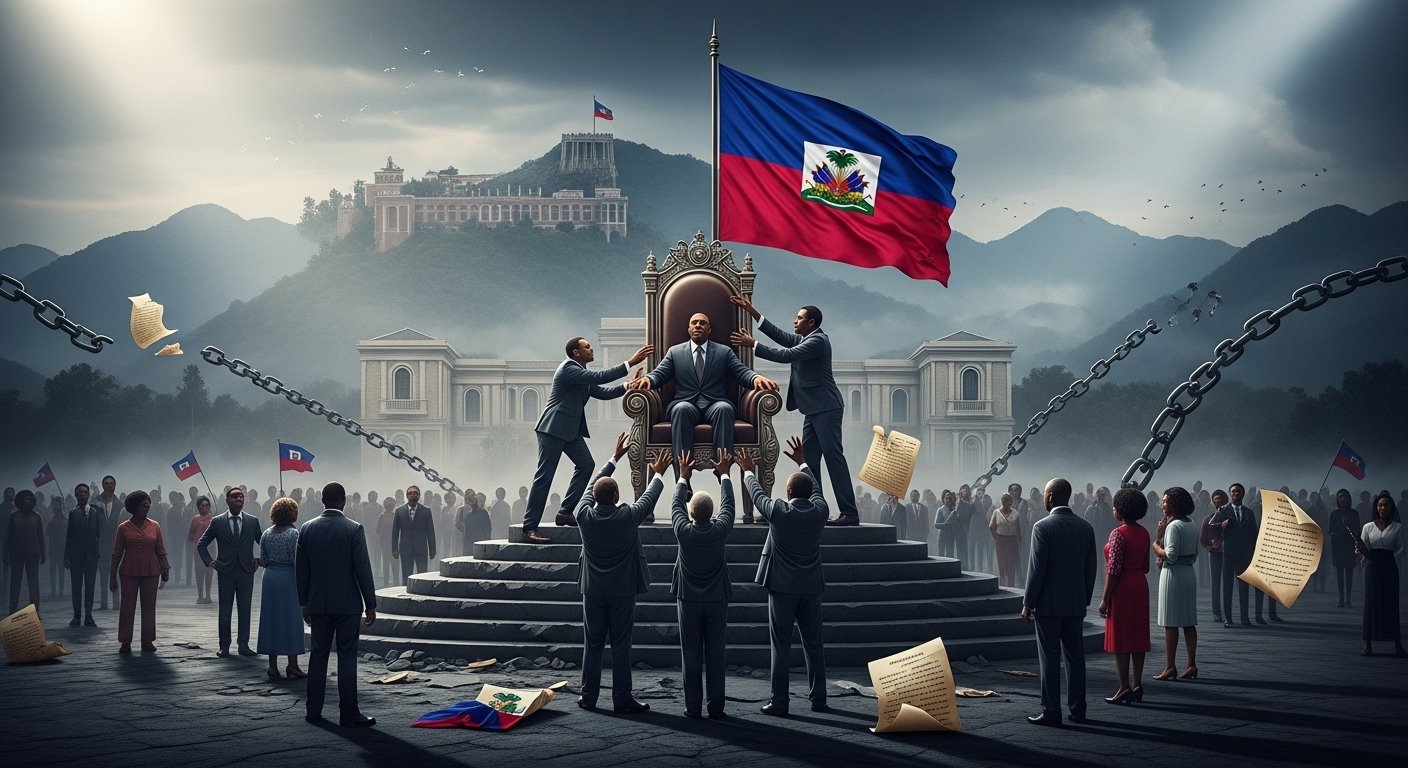
Explores the lack of mandate and power of Haiti's transitional government, explaining why it fails to effectively govern the country.
Haiti’s political landscape has been marred by instability for decades, with the transitional government facing significant challenges in maintaining order and delivering to its citizens.
The Haiti transitional government struggles to assert its authority, often finding itself at odds with various factions vying for power. This political instability has far-reaching consequences, affecting not only the government but also the daily lives of Haitian citizens.
The lack of a clear mandate and the resultant power vacuum have hindered the government’s ability to implement meaningful reforms, exacerbating Haiti political instability.
The crisis in Haiti has reached a critical juncture, with the nation’s stability hanging in the balance. Haiti is grappling with a multifaceted crisis that encompasses political instability, gang violence, and a severe breakdown in security.
The transitional government in Haiti is facing significant challenges in exerting effective control over the country. This has led to a power vacuum, with various factions and authorities competing for influence.
The absence of a strong, centralized authority has resulted in a fragmented political landscape. Competing interests and power struggles have further complicated efforts to establish a stable government.
Gang violence has become a pervasive issue in Haiti, contributing to the overall sense of insecurity and fear among the population. The situation is particularly dire in Port-au-Prince, where gangs have taken control of significant areas.
The control exerted by gangs over key infrastructure and neighborhoods in Port-au-Prince has severely impacted the delivery of essential services and the overall security situation. This has led to a humanitarian crisis, with many Haitians facing dire living conditions.
The combination of governance issues and gang violence has created a complex and challenging environment in Haiti. Addressing these problems will require a comprehensive approach that includes rebuilding governance structures and improving security.
Haiti’s political history is a complex tapestry of internal conflict and external influence. Understanding this history is crucial to grasping the current political instability.
Haiti has experienced numerous foreign interventions, starting with the US occupation from 1915 to 1934. This period significantly impacted Haiti’s political and economic structures.
The transition from US occupation to UN peacekeeping missions marks a continued external influence on Haiti’s political affairs. The UN missions, initiated in the early 1990s, were intended to restore order and support democratic processes.
The Duvalier era, marked by authoritarian rule, ended with the ousting of Jean-Claude Duvalier in 1986. Since then, Haiti has struggled to establish a stable democratic government.
Despite repeated attempts, Haiti’s transitional governments have consistently failed to achieve lasting stability. Key lessons from previous failures include the need for inclusive political processes and genuine engagement with civil society.
| Period | Event | Impact on Haiti |
|---|---|---|
| 1915-1934 | US Occupation | Significant influence on political and economic structures |
| Early 1990s | UN Peacekeeping Missions | Criticism for methods and impact on sovereignty |
| 1986 | Ousting of Jean-Claude Duvalier | End of authoritarian rule, beginning of transition challenges |
The historical context of Haiti’s political instability is marked by a cycle of foreign intervention and internal strife. Understanding this context is essential for addressing the current challenges.
The formation of Haiti’s current transitional government was precipitated by a series of catastrophic events. The most pivotal of these was the assassination of President Jovenel Moïse in July 2021, which plunged the nation into a deeper constitutional crisis.
President Moïse’s assassination led to a constitutional crisis as disputes arose over succession. His death created a power vacuum, exacerbating Haiti’s political instability.
The lack of a clear successor sparked a constitutional debate, with different factions interpreting the constitution in varying ways. This led to a period of political paralysis, as no single leader could assert authority.
The formation of the transitional government was also influenced by international pressure. The international community played a significant role in shaping Haiti’s political future, pushing for a government that could stabilize the country.
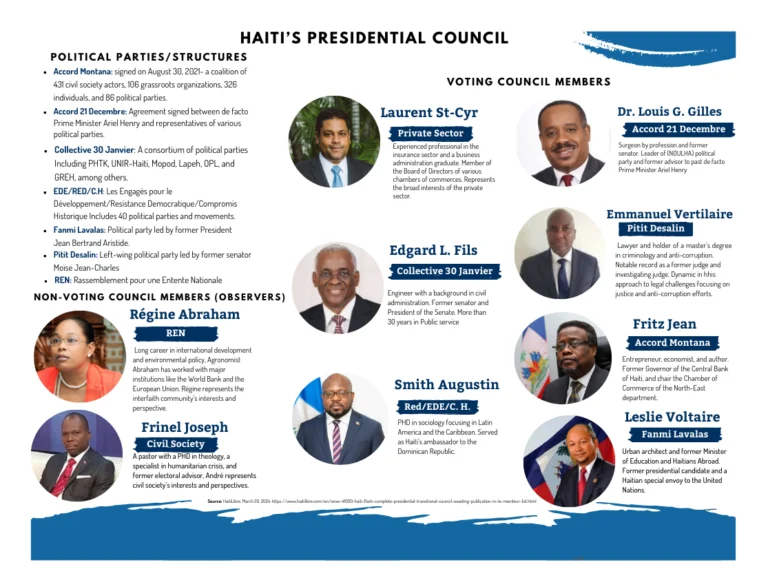
The Transitional Presidential Council was established as part of the new governmental structure. This council represents a coalition of various political stakeholders and is tasked with guiding Haiti through its current crisis.
The Haitian transitional government’s lack of democratic legitimacy is a critical issue hindering its ability to govern effectively. This legitimacy crisis stems from the absence of a democratic mandate, which is essential for any government to exercise its authority and implement policies.
The transitional government’s formation without a democratic process has raised significant concerns. The absence of elections is a major factor contributing to this issue.
Elections are a cornerstone of democratic legitimacy, providing a government with the authority to make decisions on behalf of its citizens. Without elections, the transitional government’s actions lack constitutional backing. Key points include:
The absence of a democratically elected government has led to a legitimacy crisis, making it challenging for the transitional government to gain the trust of the Haitian people and the international community.
The transitional government also faces a significant challenge in garnering popular support and trust. The public perception of the government is largely negative, fueled by protest movements across the country.
Protest movements in Haiti have highlighted the public’s dissatisfaction with the transitional government. The reasons include:
The public’s distrust is further exacerbated by the government’s inability to provide basic services and ensure security, leading to widespread protests and calls for a more legitimate and representative government.
Haiti’s transitional authority is plagued by fundamental flaws that hinder its ability to govern effectively. The lack of a robust structural foundation has led to numerous challenges in addressing the country’s ongoing crises.
The transitional government’s authority is constrained by its limited constitutional and legal basis. This limitation is a significant factor in its inability to implement effective governance.
The legal framework underpinning the transitional government is contested, leading to questions about its legitimacy and authority. As Dr. Robert Fatton, a Haitian politics expert, notes, “The transitional government’s legal basis is shaky at best, creating an environment of uncertainty.”
“The absence of a clear legal mandate undermines the transitional government’s ability to make decisive actions.”
A comparative analysis of the legal frameworks of transitional governments in similar contexts reveals the complexity of the issue:
| Country | Legal Basis | Governance Outcome |
|---|---|---|
| Haiti | Contested | Ineffective Governance |
| Country A | Clear Constitutional Mandate | Stable Governance |
| Country B | Internationally Recognized Treaty | Effective Transitional Governance |
The transitional government also faces challenges due to a fragmented political landscape and internal divisions. These divisions hinder the government’s ability to present a united front against Haiti’s crises.
Competing interests within the transitional council further exacerbate the issue, as different factions vie for power and influence. As shown in the image below, the complexity of these divisions is evident.
This fragmentation results in an inability to effectively address the nation’s problems, perpetuating the cycle of crisis.
Haiti’s security crisis has led to a complex dilemma involving multinational forces and national sovereignty. The country’s struggle with gang violence has prompted international intervention, but this has also raised concerns about the impact on Haiti’s autonomy.
The Kenya-led mission in Haiti is a significant component of the international effort to stabilize the country. However, this mission faces several challenges.
The Kenya-led mission is constrained by limited resources and a restricted mandate. These constraints hinder the mission’s ability to effectively address the security situation in Haiti.
| Challenge | Description | Impact |
|---|---|---|
| Limited Resources | Insufficient financial and military resources | Reduced effectiveness of the mission |
| Mandate Constraints | Restricted authority and scope of operation | Limited ability to address root causes of insecurity |
Haiti’s reliance on foreign assistance raises concerns about the country’s sovereignty. The presence of international forces, while aimed at stabilizing the country, can be perceived as infringing on national autonomy.
Haiti has a history of resisting foreign military intervention. The current presence of multinational forces is no exception, with many Haitians expressing concerns about the erosion of national sovereignty.
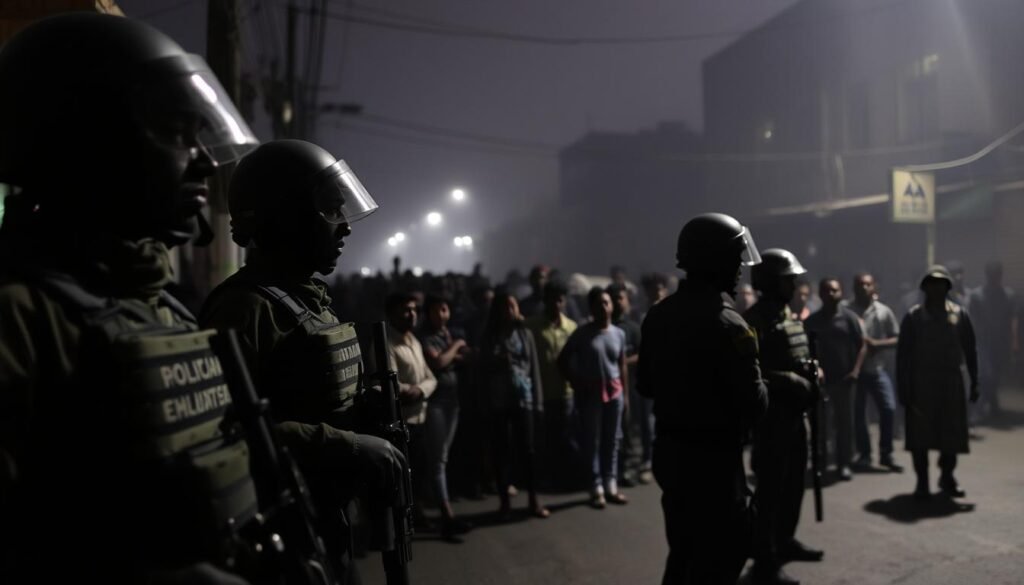
The delicate balance between foreign assistance and national sovereignty is a critical issue in Haiti. As the country continues to grapple with security challenges, finding a solution that respects Haiti’s autonomy while addressing its security needs is paramount.
The humanitarian toll of Haiti’s crisis is staggering, with citizens facing extreme hardship and insecurity. The situation on the ground is dire, with widespread reports of suffering and displacement.
The crisis has led to a significant increase in displacement, with many Haitians forced to flee their homes due to gang violence and insecurity. This displacement has resulted in a humanitarian crisis, with urgent needs for food, shelter, and medical care.
Food insecurity has become a major issue, with many communities lacking access to basic necessities. The healthcare system is on the brink of collapse, exacerbating the crisis. As a result, malnutrition and preventable diseases are on the rise, further complicating the humanitarian situation.
The economic impact of the crisis is also severe, with businesses shutting down and a significant decline in economic activity. This has led to deepening poverty, with many families unable to afford basic needs.
The crisis is not only affecting Haiti but also has regional implications, with increased migration pressures on neighboring countries. This migration is driven by the search for safety and economic opportunities, putting a strain on regional resources.
As the situation continues to unfold, it is clear that the humanitarian cost of the crisis in Haiti will remain a pressing concern, requiring sustained international attention and support.
Rebuilding legitimate governance in Haiti requires a multifaceted approach that addresses the country’s deep-seated political and social issues. This involves a combination of short-term measures to stabilize the current situation and long-term strategies to build a more resilient and inclusive political system.
Constitutional reform is crucial for establishing a legal framework that promotes good governance and the rule of law. Credible elections are essential for ensuring that the government represents the will of the Haitian people.
International support can play a vital role in enhancing Haiti’s electoral infrastructure. This includes providing technical assistance, financial resources, and logistical support to ensure that elections are free, fair, and transparent.
Empowering civil society and grassroots communities is critical for building a governance system that is responsive to the needs of Haitian citizens. Civil society organizations can serve as a watchdog, holding elected officials accountable and advocating for the rights of marginalized communities.
Building governance from the bottom up involves strengthening local institutions and promoting community participation in decision-making processes. This approach can help ensure that governance is more inclusive and responsive to local needs.
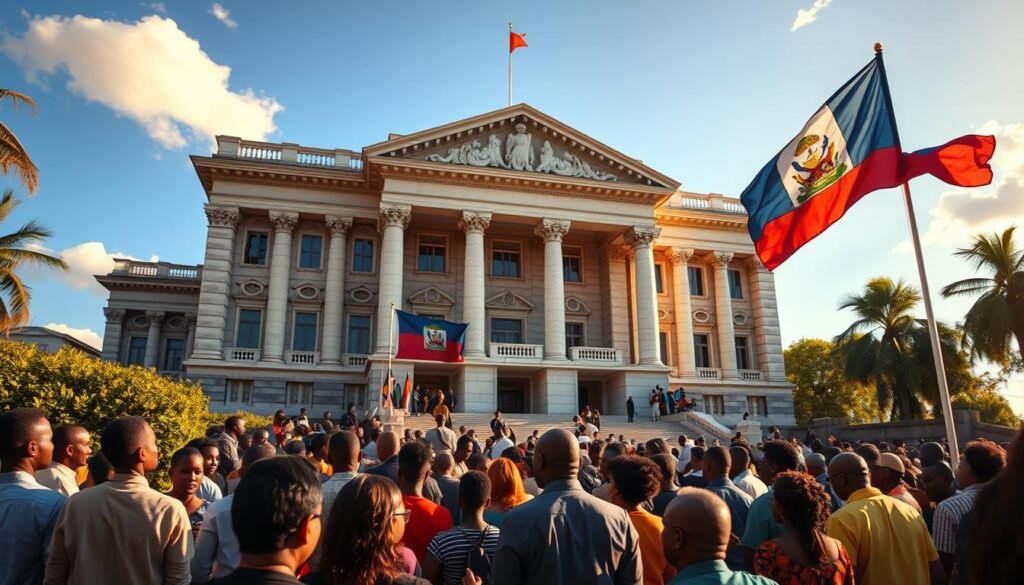
The path forward for Haiti involves a complex interplay of constitutional reform, credible elections, and grassroots empowerment. By prioritizing these areas and leveraging international support, Haiti can move towards a more stable and legitimate governance system.
Haiti’s path to stability remains fraught with challenges, as the transitional government grapples with the complexities of rebuilding a nation torn apart by violence and political instability.
The lack of democratic legitimacy, coupled with the absence of popular support, has hindered the government’s ability to effectively address the security dilemma and humanitarian crisis.
As Haiti navigates its uncertain future, it is clear that sustained efforts towards constitutional reform, credible elections, and grassroots empowerment are crucial to rebuilding legitimate governance.
The international community’s role in supporting Haiti’s development, particularly through initiatives like the Kenya-led mission, must be balanced with respect for national sovereignty to ensure a stable and prosperous Haiti future.
Addressing the Haiti challenges ahead will require a concerted effort from both Haitian leaders and the international community to foster an environment conducive to economic growth, security, and social justice.
The transitional government lacks a democratic mandate and the power to effectively govern, leading to a crisis of legitimacy and authority.
Gang violence has contributed to a security breakdown, with gangs controlling large parts of Port-au-Prince and critical infrastructure, exacerbating the humanitarian crisis.
Foreign intervention, including US occupation and UN peacekeeping missions, has had a lasting impact on Haiti’s political landscape, contributing to the cycle of instability.
The assassination led to a constitutional crisis and succession disputes, ultimately resulting in the formation of the current transitional government.
The transitional government was not elected through a democratic process, and the absence of elections has contributed to its lack of legitimacy in the eyes of the Haitian people.
The crisis has led to widespread displacement, food insecurity, and a collapse of healthcare services, with many Haitians facing extreme poverty and hardship.
The Kenya-led mission is a multinational force aimed at addressing the security crisis in Haiti, but it faces challenges related to limited resources and mandate constraints.
Potential paths include constitutional reform, credible elections, and grassroots empowerment, with a focus on building governance from the bottom up and engaging civil society.
International support can play a crucial role in providing electoral infrastructure, supporting civil society, and promoting constitutional reform, helping to build a more legitimate and effective government, but Haitians do not need any more interference from the international community.