Physical Address
304 North Cardinal St.
Dorchester Center, MA 02124
Physical Address
304 North Cardinal St.
Dorchester Center, MA 02124


Explore the complex dynamics of corruption and public passivity in Haiti, as multiple culprits and silent witnesses converge to harm the nation.
Haiti, a nation with a rich history and culture, is plagued by corruption that seeps into every level of society. The intertwining issues of elite corruption and public passivity have created a complex web that hinders the nation’s progress.
The effects of corruption in Haiti are far-reaching, impacting not just the economy but also the social fabric. When those in power exploit their positions for personal gain, it erodes trust in institutions and discourages public engagement.
Public passivity can be seen as a byproduct of this corruption, where citizens become disillusioned and disconnected from the political process.
The Haitian crisis is a multifaceted tragedy that has been unfolding for centuries, with its origins in colonial exploitation. As Dr. Jean-Pierre, a Haitian historian, once noted, “Haiti’s history is a testament to the resilience of its people, but also a reminder of the systemic challenges they face.”
Haiti’s history began with the arrival of European colonizers, who exploited the island’s resources and enslaved its indigenous population. This exploitation laid the groundwork for centuries of struggle. As Laurent Dubois notes in his book “Haiti: The Aftershocks of History,” “Haiti was born in a revolution that was both a product of the Enlightenment and a rejection of its limitations.”
The legacy of colonialism continues to influence Haiti’s development, with modern challenges such as political instability, economic dependency, and environmental degradation. The nation has struggled to overcome these hurdles, leading to a complex web of problems.
Today, Haiti faces numerous indicators of decline, including a stagnant economy, inadequate infrastructure, and a lack of access to basic services like healthcare and education. According to the World Bank, “Haiti remains the poorest country in the Western Hemisphere, with a significant portion of its population living below the poverty line.”
Some key statistics highlighting Haiti’s decline include:
These indicators underscore the severity of Haiti’s crisis and the need for comprehensive solutions.
Haiti’s struggle with elite corruption is multifaceted, involving various forms of political and economic malfeasance. This complex issue has deep roots in the country’s history and current systems, affecting its development and stability.
Political corruption in Haiti manifests in several ways, including the embezzlement of public funds and electoral manipulation. These practices undermine the government’s ability to provide essential services to the public.
The embezzlement of public funds is a significant issue, where government officials divert funds for personal gain. This not only deprives the public of necessary services but also erodes trust in government institutions.
Electoral manipulation is another critical aspect, where the ruling elite manipulate election processes to maintain power. This consolidation of power further entrenches corruption and limits opportunities for reform.
Economic corruption networks in Haiti involve intricate relationships between business elites and political figures. These networks facilitate corrupt practices, hindering fair competition and economic development.
The connections between business elites and political figures are particularly concerning, as they often lead to favorable treatment for certain businesses, stifling competition and innovation.
| Corruption Type | Description | Impact |
|---|---|---|
| Embezzlement | Diverting public funds for personal gain | Reduced public services, eroded trust |
| Electoral Manipulation | Manipulating elections to maintain power | Consolidation of power, limited reform |
| Economic Corruption | Corrupt networks between business and political elites | Hindered fair competition, stifled economic development |
Public passivity in Haiti is a multifaceted issue, influenced by a range of psychological, cultural, and historical factors. Understanding these elements is crucial to addressing the nation’s development challenges.
The psychological aspects play a significant role in shaping public behavior. Factors such as fear, fatalism, and learned helplessness contribute to a culture of inaction.
Fear of retribution or violence can silence individuals and communities, preventing them from speaking out against corruption or participating in civic activities. Fatalism, or the belief that one’s actions cannot change the course of events, further exacerbates this issue. Additionally, repeated exposure to unresponsive systems can lead to learned helplessness, where people feel their efforts are futile.
Haiti’s history, particularly its experience with dictatorship and repression, has significantly impacted civic engagement. The legacy of authoritarian regimes has cultivated a culture of silence and compliance.
The historical context of Haiti, marked by periods of brutal dictatorship, has conditioned a populace that is wary of political engagement. The repression of dissent and the punishment of opposition have created a climate where public dissent is risky, leading to widespread disengagement.
By understanding these complex factors, it’s possible to begin addressing the roots of public passivity in Haiti, paving the way for more active civic participation and potentially, a more just and equitable society.
Haiti’s struggles are deeply rooted in the symbiotic relationship between corruption among the elite and the passivity of the general public. This complex issue has far-reaching consequences, affecting various aspects of Haitian society.
The relationship between elite corruption and public passivity is not coincidental; it is a mutually reinforcing dynamic. Corruption thrives in environments where public scrutiny is lacking, and public passivity is often a result of feeling disenfranchised and disconnected from the political process.
Elite corruption undermines trust in institutions, leading to public disengagement. Conversely, a disengaged public allows corruption to flourish unchecked. This cycle is evident in several key areas:

The combined effect of elite corruption and public passivity is starkly illustrated in several high-profile cases.
The PetroCaribe Scandal is a prime example of how corruption can have devastating effects on a nation’s development. The scandal involved the misuse of funds derived from a Venezuelan oil deal, highlighting the corruption impact on Haiti’s economy and infrastructure.
The failures in post-earthquake reconstruction efforts demonstrate how the symbiotic relationship between corruption and passivity can hinder recovery. Billions of dollars in aid were mismanaged or misappropriated, exacerbating the suffering of the Haitian people and leading to reconstruction failures.
In conclusion, the intertwined issues of elite corruption and public passivity have created a challenging environment in Haiti. Understanding the symbiotic relationship between these factors is crucial for developing effective solutions to address the country’s problems.
The impact of international actors on Haiti’s decline cannot be overstated, with their policies and interventions often exacerbating the situation. Haiti’s struggles are complex, involving both domestic and international factors.
Foreign government policies, particularly those of the United States, have significantly influenced Haiti’s political and economic landscape. The U.S. has historically been involved in Haitian affairs, with its policies ranging from military interventions to economic aid.
The U.S. has intervened in Haiti on multiple occasions, often under the guise of humanitarian or democratic principles. However, these interventions have had mixed results, sometimes stabilizing the country but also contributing to political instability.
For instance, the U.S. military intervention in 1994 aimed to restore democracy but led to a period of dependency on foreign forces. More recently, U.S. policies have focused on economic aid and support for the Haitian government, though concerns about corruption and effectiveness remain.
International organizations and non-governmental organizations (NGOs) have a substantial presence in Haiti, providing aid, healthcare, and education. However, their impact is not without controversy.
Haiti has become heavily dependent on foreign aid, which can create issues with accountability and sustainability. While aid is crucial for addressing immediate needs, it can also undermine local capacities and perpetuate a cycle of dependency.
A critical examination of aid dependency reveals the need for more effective and accountable aid delivery mechanisms. Ensuring that aid reaches its intended recipients and supports long-term development is crucial.
| International Actor | Type of Intervention | Impact |
|---|---|---|
| U.S. Government | Military Intervention, Economic Aid | Mixed results, dependency on foreign forces |
| International Organizations (e.g., UN) | Peacekeeping, Development Aid | Stabilization, capacity building |
| NGOs | Humanitarian Aid, Development Projects | Immediate relief, potential for long-term impact |
In conclusion, the role of international actors in Haiti’s decline is multifaceted. While their interventions are often well-intentioned, they can have unintended consequences. Moving forward, it’s essential to address issues of aid dependency and ensure accountability in aid delivery to support Haiti’s sustainable development.
The intertwined issues of elite corruption and public inaction have led to severe economic devastation in Haiti. This devastation is not just a result of immediate actions but is deeply rooted in historical and systemic issues.
Haiti’s development has been stalled due to corruption and lack of investment. Foreign investors are deterred by the corrupt environment, leading to a flight of potential investments. This has resulted in a lack of infrastructure development and modernization.
The country’s infrastructure is in a deplorable state, with inadequate roads, ports, and public services. This not only hampers economic activity but also affects the daily lives of Haitians. The lack of reliable infrastructure discourages investment and stalls economic growth.
Corruption has also led to a significant wealth gap in Haiti. The elites have enriched themselves at the expense of the general population, leading to widespread poverty.
As noted by a prominent anti-corruption activist,
“The wealth generated in Haiti is not used for the public good but is siphoned off by the corrupt elite, leaving the majority in poverty.”
This stark contrast between the rich and the poor is a hallmark of Haiti’s economic crisis.
The economic devastation in Haiti is a complex issue that requires a multifaceted solution. Addressing the intertwined issues of corruption and public passivity is crucial to reviving the economy and improving the lives of Haitians.
Systemic failure in Haiti has culminated in a severe social collapse, impacting the nation’s most vulnerable populations. The consequences of this collapse are multifaceted, affecting critical sectors such as education and healthcare.
The education system in Haiti is facing a dire crisis, exacerbated by factors such as privatization and lack of accessibility. Many schools are privately owned, making education a privilege of the few who can afford it, rather than a right for all.
The privatization of schools has led to a significant disparity in access to quality education. Those from lower socio-economic backgrounds often find themselves excluded from quality educational opportunities.
Haiti’s healthcare system is on the brink of collapse, with inadequate infrastructure and a lack of essential medical supplies. This breakdown has resulted in preventable suffering and mortality, particularly among the most vulnerable.
The consequences of Haiti’s healthcare crisis are stark, with many deaths attributed to preventable causes. The lack of access to basic healthcare services has devastating effects on the population.
| Healthcare Indicator | Pre-Crisis Status | Current Status |
|---|---|---|
| Access to Basic Healthcare | 60% | 30% |
| Maternal Mortality Rate | 200 per 100,000 | 350 per 100,000 |
| Availability of Essential Medicines | 80% | 40% |
The social collapse in Haiti is a stark reminder of the need for systemic change. Addressing the crises in education and healthcare is crucial to mitigating the human cost of systemic failure.
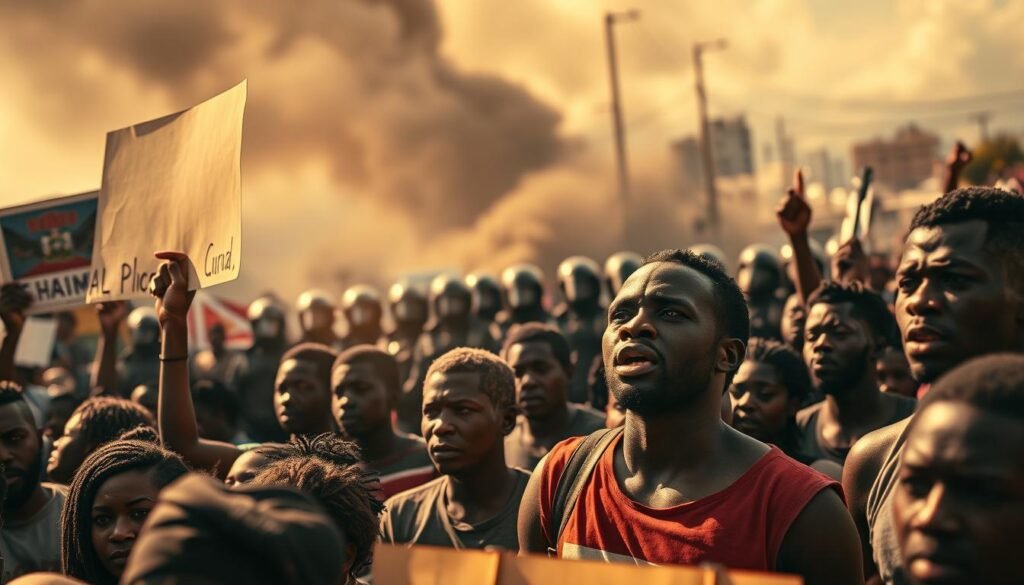
In the face of adversity, Haitians are standing up against corruption, demanding transparency and accountability. This growing movement is a testament to the resilience and determination of the Haitian people.
Haiti has numerous courageous activists who are at the forefront of the fight against corruption. One such individual is Marie-Claire Pierre, a human rights activist who has been instrumental in exposing corrupt practices within the government.
Anti-corruption activists in Haiti face significant risks, including threats to their safety and security. Many have been subjected to intimidation, and some have even lost their lives in the line of duty. Despite these challenges, they continue to push forward, driven by their commitment to creating a better future for Haiti.
Community-based initiatives are playing a crucial role in combating corruption and promoting good governance in Haiti. These initiatives often involve collaboration between local communities, NGOs, and government agencies.
Some of the most successful models of local governance in Haiti involve participatory budgeting and community-led planning initiatives. For example, the town of Cap-Haïten has implemented a participatory budgeting process that has increased transparency and accountability in local government.
| Initiative | Location | Impact |
|---|---|---|
| Participatory Budgeting | Cap-Haïten | Increased transparency and community engagement |
| Community-Led Planning | Rural Communities | Improved local governance and service delivery |
| Anti-Corruption Training | National Level | Enhanced capacity of local officials to combat corruption |
The efforts of these activists and community-based initiatives are crucial in the fight against corruption in Haiti. By supporting and amplifying their work, we can help create a more just and equitable society.
Haiti’s path to recovery hinges on implementing significant reforms that promote transparency and civic engagement. To achieve this, the country must focus on both legal and institutional reforms and enhancing civic education.
Strengthening the judicial system is crucial for promoting accountability. This involves strengthening judicial independence to ensure that the legal system can operate without external pressures.
An independent judiciary is essential for holding those in power accountable. This can be achieved by implementing reforms that ensure the judiciary’s autonomy and by providing training for judges and legal professionals.
Civic education is vital for building a culture of participation among Haitian citizens. By educating the public about their rights and responsibilities, it’s possible to foster a more engaged and active citizenry.
Creating a culture of participation involves not just educating citizens but also encouraging their involvement in decision-making processes. This can be facilitated through community programs and initiatives that promote transparency and accountability.
| Reform Area | Key Actions | Expected Outcomes |
|---|---|---|
| Legal and Institutional Reforms | Strengthen judicial independence, implement anti-corruption laws | Improved accountability, reduced corruption |
| Civic Education and Engagement | Promote civic education, encourage public participation | More engaged citizenry, increased transparency |
Haiti’s journey towards a brighter future is contingent upon addressing the intertwined issues of elite corruption and public passivity. As discussed, the symbiotic relationship between these two factors has perpetuated a cycle of stagnation and decline.
Reclaiming Haiti’s promise requires a multifaceted approach that involves legal and institutional reforms, civic education, and community engagement. By understanding the historical context and current state of the nation, Haitians can work together to break the cycle of corruption and inaction.
The path forward is not without its challenges, but the resilience and determination of the Haitian people offer a beacon of hope. As Haiti moves towards a more equitable and just society, it is essential to recognize the importance of collective action and the role that every individual can play in reclaiming the nation’s promise.
By fostering a culture of transparency, accountability, and civic engagement, Haiti can unlock its full potential and create a brighter future for its citizens. Reclaiming Haiti’s promise is a shared responsibility that requires the active participation of all stakeholders, including government, civil society, and the international community.
Elite corruption and public passivity are the primary factors contributing to Haiti’s decline, as they reinforce each other and hinder the nation’s progress.
Elite corruption in Haiti manifests through embezzlement of public funds, electoral manipulation, and power consolidation, as well as through intricate networks between business elites and political figures.
International actors, including foreign governments and international organizations, contribute to Haiti’s decline through policies that enable corruption, aid dependency, and accountability issues.
The economic consequences include stalled development, investment flight, infrastructure deficiencies, and a widening wealth gap, with elites enriching themselves amidst widespread poverty.
Corruption and public passivity have led to crises in education and healthcare, with issues such as privatization, accessibility, preventable suffering, and mortality.
Yes, there are efforts by Haitians to fight against corruption, including anti-corruption activists and community-based solutions, as well as successful local governance models.
Pathways to accountability and reform include legal and institutional reforms, such as strengthening judicial independence, and civic education and engagement to build a culture of participation.
The PetroCaribe Scandal is a significant example of elite corruption in Haiti, highlighting the embezzlement of public funds and the lack of accountability.
Haiti’s historical context, including colonial exploitation and past dictatorships, has contributed to the nation’s current struggles with corruption and public passivity.
Foreign government policies, particularly those of the U.S., have influenced Haiti’s trajectory, with interventions and aid often tied to specific interests rather than the welfare of the Haitian people.