Physical Address
304 North Cardinal St.
Dorchester Center, MA 02124
Physical Address
304 North Cardinal St.
Dorchester Center, MA 02124

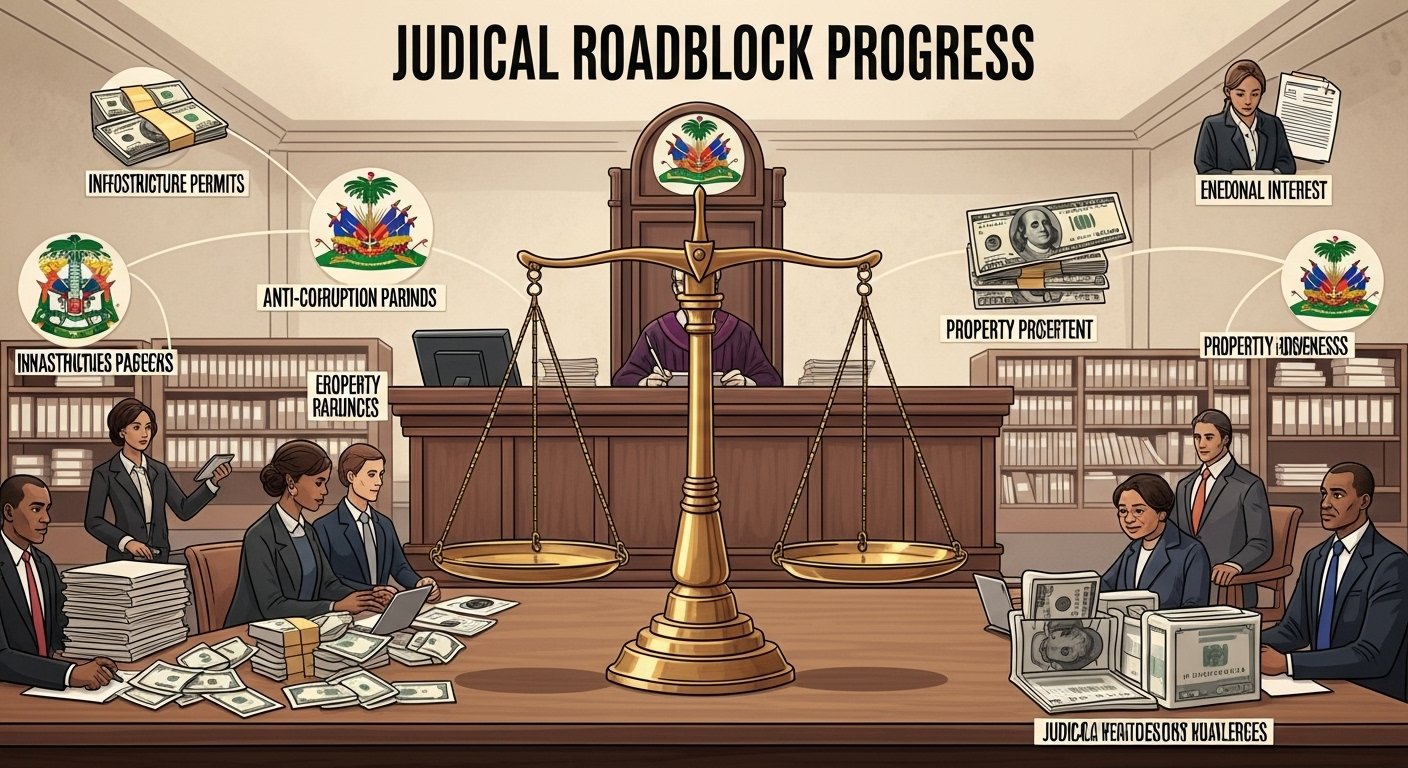
Discover how Haiti's corrupt judicial system is denying justice and hindering national progress.
The judicial system in Haiti is plagued by corruption, hindering the country’s ability to develop and prosper. Judicial corruption has become a significant obstacle, undermining trust in the system and affecting the lives of ordinary citizens.
Cases of bribery and favoritism are commonplace, leading to unfair outcomes and a lack of accountability. This not only erodes the rule of law but also discourages investment, hindering national development. The consequences are far-reaching, impacting various aspects of Haitian society.
Understanding the depth of Haiti’s judicial crisis is crucial for addressing its development challenges. The judicial system in Haiti is facing significant hurdles that affect not only the rule of law but also the overall progress of the nation.
Haiti’s judicial dysfunction is highlighted by several key statistics. The country has a low rate of case resolution, with courts often overwhelmed by a backlog of cases. According to recent data, the average time to resolve a commercial dispute in Haiti is significantly higher than in other countries in the region.
| Indicator | Haiti | Regional Average |
|---|---|---|
| Time to Resolve Commercial Disputes (days) | 650 | 420 |
| Case Backlog (number of cases) | 10,000 | 5,000 |
| Public Trust in Judiciary (%) | 25% | 45% |
When comparing Haiti’s judicial system to regional standards, several areas of concern emerge. The efficiency of courts, the independence of the judiciary, and the transparency of legal processes are all areas where Haiti lags behind its regional counterparts.
The comparison highlights the need for reforms to bring Haiti’s judicial system up to regional standards, enhancing its efficiency and credibility.
The evolution of Haiti’s legal system is a story of colonial legacy and post-revolution challenges. To understand the current judicial crisis, it’s essential to explore its historical development.
The French colonial era left an indelible mark on Haiti’s legal framework. The imposition of French law created a system that was both rigid and exclusionary, favoring the colonial elite. This legacy continued to influence Haiti’s legal institutions even after independence.
Following the revolution, Haiti faced the daunting task of establishing new judicial structures. The early attempts to create an independent judiciary were hampered by political instability and external influences. This period laid the groundwork for the challenges that would later plague the system.
In recent decades, Haiti’s legal system has suffered from significant deterioration. Factors such as corruption, political interference, and lack of resources have eroded the public’s trust in the judiciary. The result is a system that struggles to provide justice, hindering national development.
The judicial crisis in Haiti is a significant barrier to achieving economic and social development. Haiti’s corrupt judicial system is not just a matter of internal concern; it has far-reaching implications that affect the nation’s overall progress.
The lack of a reliable legal system creates legal uncertainty, which is a significant deterrent to economic development. Investors, both local and foreign, are hesitant to invest in a country where property rights are not enforced, and contracts are not guaranteed.
Judicial failures in Haiti also have a profound impact on social progress. When the justice system fails, it erodes trust in institutions and can lead to increased violence and social unrest.
The consequences of judicial corruption are far-reaching, affecting not just the economy but the very fabric of Haitian society. Addressing these issues is crucial for the nation’s development.
At the heart of Haiti’s judicial problems lies a web of corruption that includes bribery, government control, and nepotism. This complex issue is multifaceted, affecting various aspects of the judicial system and, by extension, the country as a whole.
Bribery is a pervasive issue within Haiti’s judicial system. Individuals and organizations often resort to bribing officials to influence the outcome of cases, leading to a miscarriage of justice. This practice not only undermines the integrity of the courts but also discourages investment and hinders economic development.
The effects of bribery are far-reaching, creating an uneven playing field where those with financial resources can manipulate the system to their advantage. As a result, trust in the judicial system erodes, and the rule of law is compromised.
| Aspect | Impact of Bribery |
|---|---|
| Judicial Integrity | Undermines the fairness and impartiality of the courts |
| Economic Development | Discourages investment due to the unpredictability of legal outcomes |
| Public Trust | Erodes confidence in the judicial system |
Government control over judges is another mechanism through which corruption manifests in Haiti’s judicial system. Judges are often appointed or influenced by the government, leading to biased judgments that favor the ruling party or individuals with political connections.
“The independence of the judiciary is crucial for ensuring that justice is served. When judges are controlled by the government, the rights of citizens are compromised.”
This political interference not only affects the fairness of trials but also contributes to a broader culture of impunity, where those in power feel they are above the law.
Nepotism is a significant issue in the appointment of judicial officials in Haiti. Positions are often filled based on family connections rather than merit, leading to incompetence and corruption within the judiciary.
The consequences of nepotism are twofold. Firstly, it results in unqualified individuals holding important positions, which can lead to poor decision-making. Secondly, it perpetuates a system where personal connections are more valuable than professional competence, further entrenching corruption.
The failure of justice in Haiti is epitomized by notorious corruption scandals that have had far-reaching consequences. These cases not only undermine the rule of law but also deter foreign investment and hinder national development.
The PetroCaribe scandal is one of the most significant corruption cases in Haiti’s recent history. It involved the mismanagement of billions of dollars meant for development projects. Despite the magnitude of the scandal, there has been little to no accountability.
Investigations into the PetroCaribe scandal have been met with obstruction tactics, including the intimidation of investigators and the destruction of evidence. This has significantly hindered efforts to bring those responsible to justice.
The PetroCaribe scandal has led to widespread public outcry and protests. Citizens have demanded action from the government to address the corruption and ensure that those responsible are held accountable.
Corruption in Haiti’s judicial system has also led to numerous land disputes, creating a nightmare for foreign investors. The lack of clear property rights and the propensity for judicial corruption have made it difficult for investors to secure their investments.
| Year | Number of Land Disputes | Foreign Investment Impact |
|---|---|---|
| 2015 | 120 | -20% |
| 2016 | 150 | -15% |
| 2017 | 180 | -25% |
The impact of these corruption cases is far-reaching, affecting not only the economy but also the social fabric of Haiti. It is crucial for the government to address these issues to restore trust in the judicial system and attract foreign investment.
Haiti’s economic future is being undermined by its dysfunctional judicial system, which repels foreign capital and hinders local enterprise. The consequences are far-reaching, affecting not just the economy but the overall development of the nation.
Foreign investment is crucial for Haiti’s economic growth, but the corrupt courts deter potential investors. Unpredictable legal outcomes and pervasive corruption make it risky for foreign companies to invest. As a result, Haiti remains an “investment desert” compared to its regional peers.
Local businesses in Haiti face significant challenges due to the judicial system’s inefficiency. Contract enforcement is weak, and dispute resolution is slow, which hampers business operations and growth. This environment stifles entrepreneurship and innovation, crucial elements for economic development.
The chaos surrounding property rights in Haiti is another critical issue. Unclear and corruptly managed property rights lead to disputes and legal battles, discouraging investment and hindering economic activity. This situation contributes to economic stagnation, as both local and foreign investors are wary of engaging in a market with such legal uncertainties.
The interplay between a corrupt judicial system and economic stagnation is complex, but it’s clear that reforming the courts is essential for Haiti’s economic revival. By addressing the issues of corruption, unpredictability, and inefficiency, Haiti can create a more favorable business environment, attract foreign investment, and support local entrepreneurship.
The corruption within Haiti’s judicial system is tearing apart the very fabric of society. As the legal framework fails to provide fair and impartial justice, communities are left to suffer the consequences.
Public trust in Haiti’s judicial system has been eroding steadily. Surveys indicate a significant decline in confidence, with citizens increasingly viewing the courts as corrupt and biased. A recent survey revealed that over 70% of Haitians have little to no trust in their judicial system, a stark indicator of the deep-seated issues at play.
As faith in the official legal system wanes, communities are turning to alternative forms of justice. Vigilantism is on the rise, with individuals and groups taking the law into their own hands. “Street justice” has become a disturbing norm, further destabilizing communities and undermining the rule of law.
The lack of trust in the judicial system is also driving Haiti’s brain drain. Many of the country’s most talented and educated individuals are seeking opportunities abroad, where they can enjoy the protection of fair and impartial legal systems.
“The absence of a reliable judiciary is a push factor for many professionals considering emigration,”
notes a recent study on Haitian emigration trends.
The cumulative effect of these factors is a society in crisis, where the absence of justice is felt acutely. Addressing judicial corruption is crucial not only for the health of Haiti’s legal system but for the overall well-being of its society.
Global interventions have become a cornerstone in the quest to reform Haiti’s courts, addressing long-standing issues of corruption and inefficiency. The international community has recognized the critical need to strengthen Haiti’s judicial system to foster national development and stability.

The United Nations has been at the forefront of judicial reform efforts in Haiti, implementing various programs aimed at enhancing the capacity and integrity of the judicial system. These initiatives have included training for judges and court personnel, as well as efforts to improve court infrastructure.
Despite these efforts, challenges persist. A report by the UN highlighted that while their initiatives have contributed to some improvements, significant hurdles remain, including corruption and political interference in the judiciary.
“The UN’s efforts have been crucial, but the road to reform is long and fraught with challenges,” said a UN official involved in the mission.
Both the United States and the European Union have provided substantial funding for judicial reform programs in Haiti. These programs have focused on various aspects, including judicial training, infrastructure development, and promoting transparency within the judicial system.
Training programs for judges have been a key component of these reform efforts. The US and EU have funded workshops and seminars aimed at enhancing the skills and knowledge of Haitian judges, helping them to better handle complex cases and apply the law impartially.
In addition to training, there has been a significant focus on improving court infrastructure and integrating technology into the judicial process. This includes upgrading court facilities and implementing digital case management systems to improve efficiency and transparency.
| Program | Funder | Objective |
|---|---|---|
| Judicial Training | US | Enhance judicial capacity |
| Court Infrastructure | EU | Improve court facilities |
| Digital Case Management | UN | Increase transparency and efficiency |
Effective judicial reform in Haiti necessitates a comprehensive strategy that includes judicial independence, transparency, and community engagement. This multifaceted approach is crucial for addressing the systemic issues that have plagued Haiti’s judicial system for decades.
Ensuring judicial independence is a cornerstone of judicial reform. This involves implementing mechanisms that protect judges from political interference and ensure their appointments are based on merit rather than nepotism or bribery. Structural reforms should focus on creating an independent judicial council that oversees the appointment, promotion, and discipline of judges.
Such reforms will help restore public trust in the judiciary by ensuring that judges are impartial and not influenced by external pressures.
Leveraging technology is key to enhancing transparency in Haiti’s judicial system. Implementing digital case management systems can reduce corruption by minimizing direct interactions between court officials and litigants. Additionally, making court proceedings and judgments publicly accessible online can increase accountability.
Public oversight mechanisms, such as citizen observer groups, can also play a vital role in monitoring court activities and reporting irregularities, further enhancing transparency.
Community-based solutions are essential for addressing the root causes of judicial failures at the local level. This includes establishing community mediation centers that can resolve disputes outside the formal court system, reducing the burden on courts and increasing access to justice for marginalized communities.
Training local mediators and providing them with the necessary resources can help build trust in alternative dispute resolution mechanisms, making justice more accessible and equitable.
Haiti’s judicial corruption is a significant obstacle to the country’s national development. The lack of trust in the judicial system has far-reaching consequences, from stifling foreign investment to driving emigration among the country’s most skilled citizens.
Reforming Haiti’s courts is crucial for the nation’s future. This involves implementing structural reforms to ensure judicial independence, increasing transparency through technology and public oversight, and promoting community-based justice initiatives.
The international community has a role to play in supporting these efforts, through initiatives such as the UN’s judicial support programs and reform efforts funded by the US and EU. By working together, Haitians and international partners can help create a fair and functional judicial system.
A reformed judicial system can unlock Haiti’s economic potential, promote social justice, and help build a more stable and prosperous future for the Haitian people. The time for reform is now, as Haiti’s future hangs in the balance.
The main causes include bribery, political interference, and nepotism, which undermine the integrity of the judicial system.
Judicial corruption paralyzes economic development by creating legal uncertainty, deterring foreign investment, and hindering local businesses.
Judicial corruption stunts social progress by eroding public trust in the judicial system, leading to the rise of vigilantism and driving emigration.
The UN, US, and EU are supporting initiatives to reform Haiti’s judicial system, including training programs for judges, infrastructure support, and technology upgrades.
Proposed pathways include structural reforms to ensure judicial independence, leveraging technology for transparency, and implementing community-based solutions.
The PetroCaribe scandal is a high-profile case of corruption that highlights the failure of Haiti’s judicial system to hold those responsible accountable.
Judicial corruption creates chaos surrounding property rights, contributing to economic stagnation and deterring investment.
Public perception surveys indicate a significant decline in trust in the judicial system due to corruption.