Physical Address
304 North Cardinal St.
Dorchester Center, MA 02124
Physical Address
304 North Cardinal St.
Dorchester Center, MA 02124
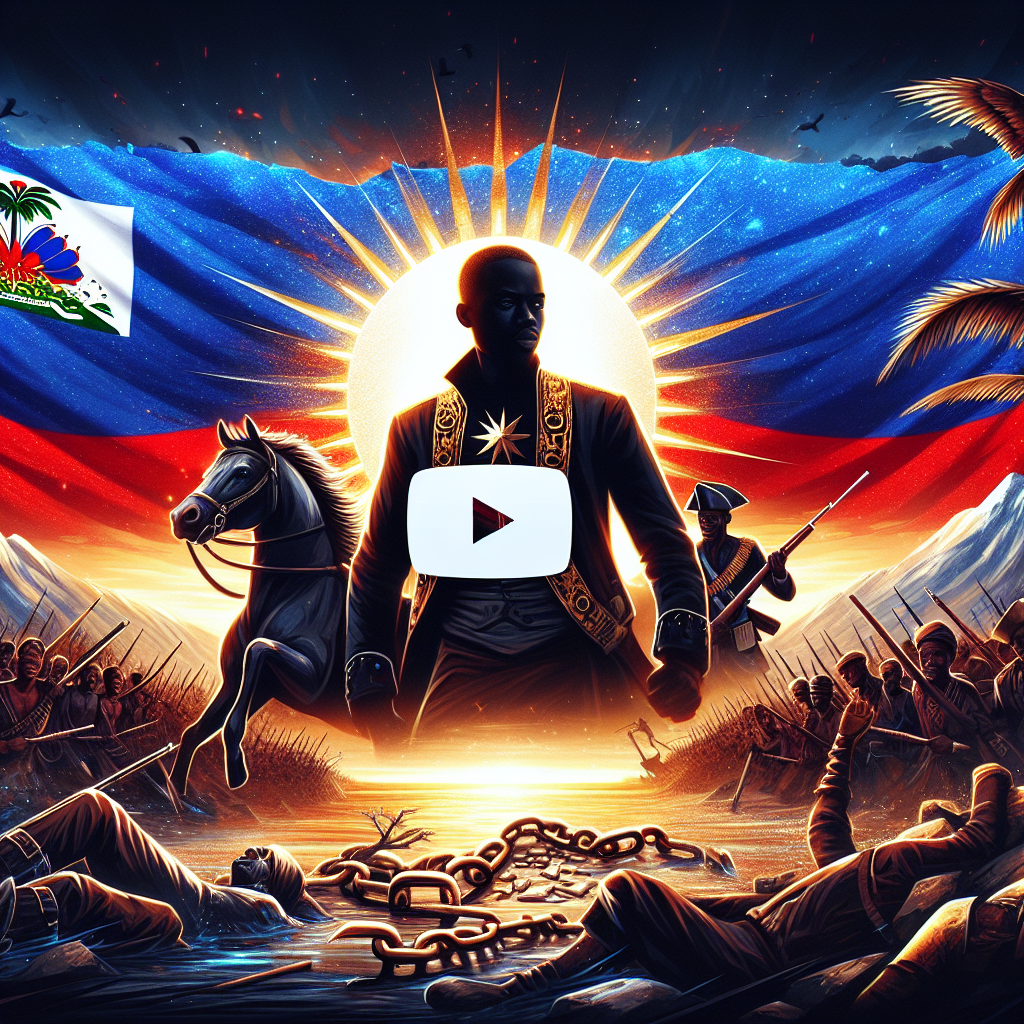
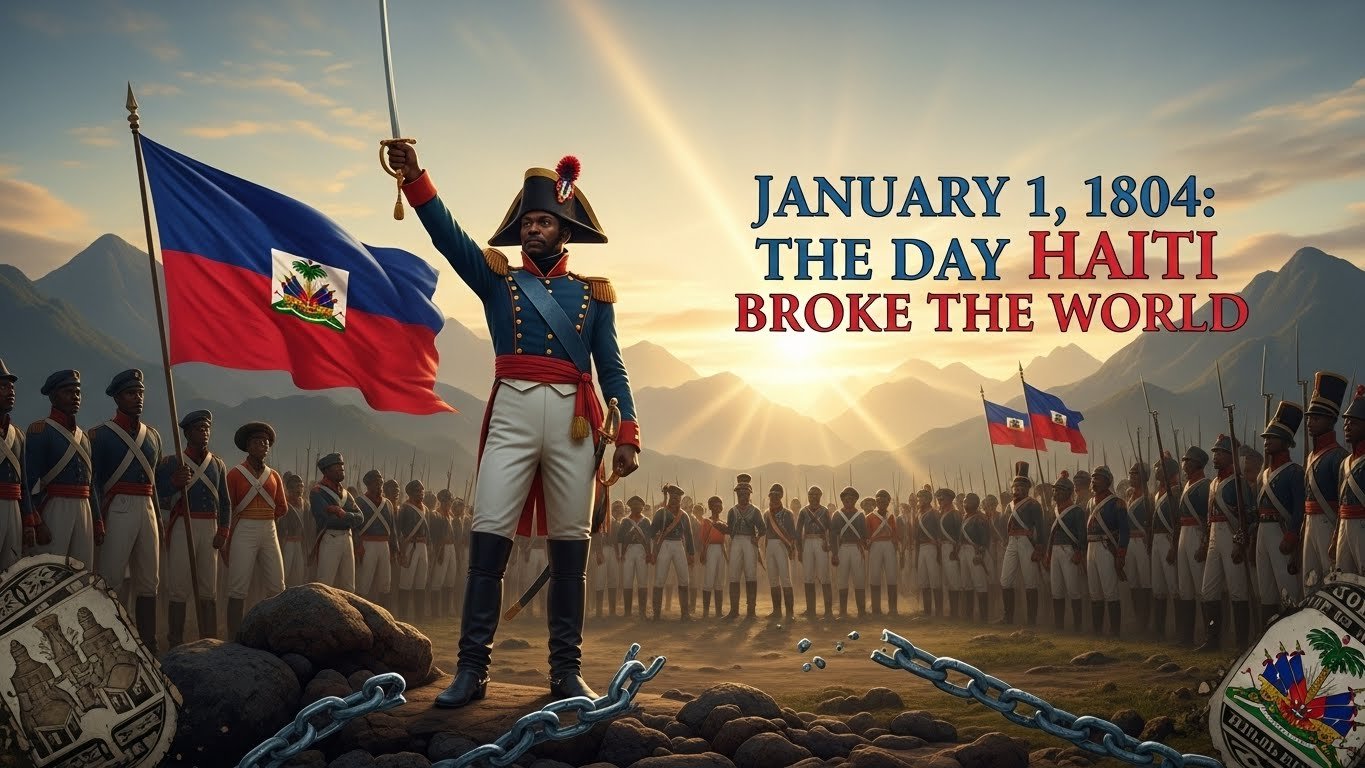
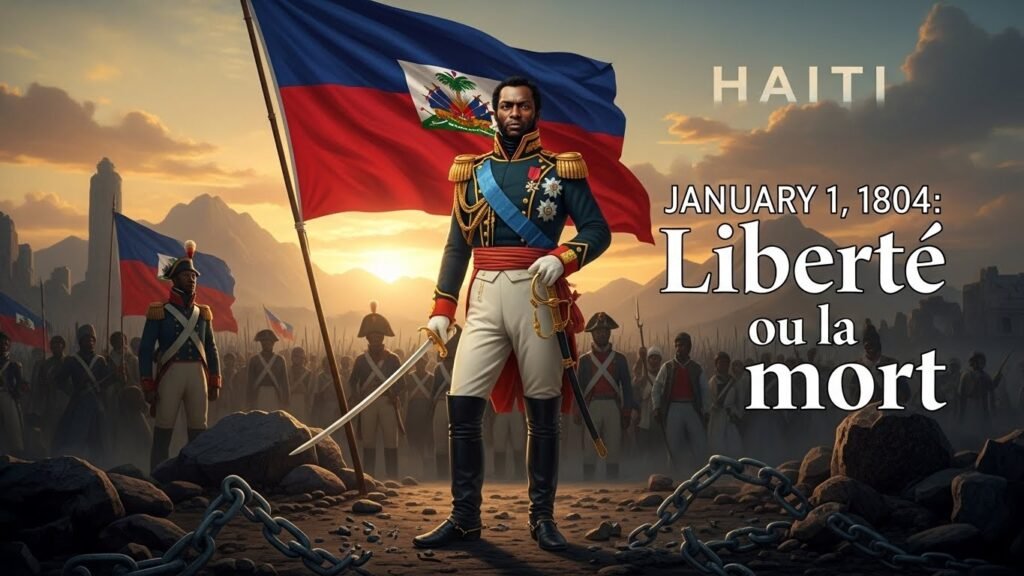
On January 1, 1804, a seismic shift occurred that would reverberate across continents and challenge the very foundations of global power. In the small Caribbean nation of Saint-Domingo, a former French colony, General Jean-Jacques Dessalines stood before a crowd in the city of Gonaïves and declared the birth of Haiti—the world’s first free Black republic and the first nation born from a successful slave revolt.
This was not merely another colonial independence movement. This was a revolution that shattered every assumption the Western world held about race, slavery, and human capability.
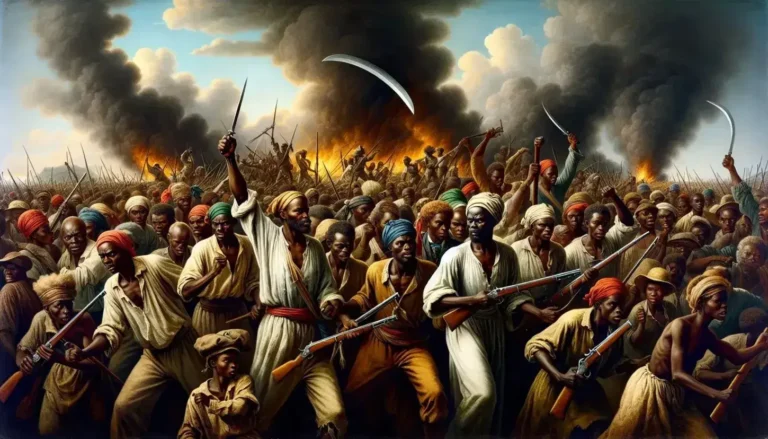
The Haitian Revolution (1791-1804) achieved what the colonial powers considered impossible: enslaved Africans defeated the armies of three European empires—Spain, Britain, and France. At its peak, Napoleon Bonaparte sent over 40,000 troops to reclaim the colony, including his brother-in-law General Charles Leclerc. They failed spectacularly.
The revolutionaries, led by figures like Toussaint Louverture, Jean-Jacques Dessalines, and Henri Christophe, employed brilliant guerrilla tactics and leveraged their knowledge of the tropical terrain. Combined with yellow fever and their unbreakable will for freedom, they accomplished the unthinkable.
The Domino Effect on Slavery
Haiti’s independence sent shockwaves through every slave-holding society. Plantation owners in the United States, Cuba, Brazil, and throughout the Caribbean lived in perpetual fear of their own “Haiti moment.” The revolution proved that enslaved people could organize, fight, and win their freedom—a terrifying reality for those whose wealth depended on human bondage.Economic Devastation
Saint-Dominique had been the jewel of the French colonial empire, producing more wealth than all thirteen American colonies combined. It supplied over 40% of the world’s sugar and more than half its coffee. Its loss crippled France’s economy and contributed to Napoleon’s decision to sell the Louisiana Territory to the United States in 1803—effectively doubling America’s size.The Racial Order Shattered
In an age when scientific racism was becoming codified into law and pseudoscience, Haiti’s existence was an affront to white supremacy. Here was a nation of formerly enslaved Black people who had defeated white armies, established their own government, and declared universal freedom. The very existence of Haiti challenged the intellectual and moral justifications for slavery and colonialism.International Isolation
The global response was swift and punishing. France refused to recognize Haiti’s independence until 1825, and only then after forcing Haiti to pay 150 million francs in “reparations” to former slave owners—a debt that crippled the nation’s economy for over a century. The United States, despite being founded on anti-colonial principles, didn’t recognize Haiti until 1862, fearing it would inspire enslaved Americans.
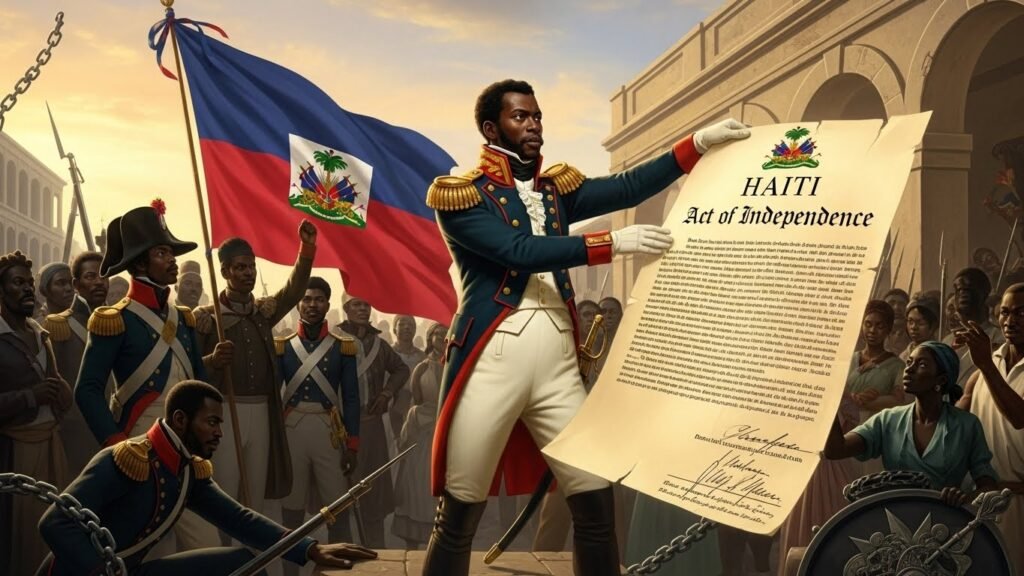
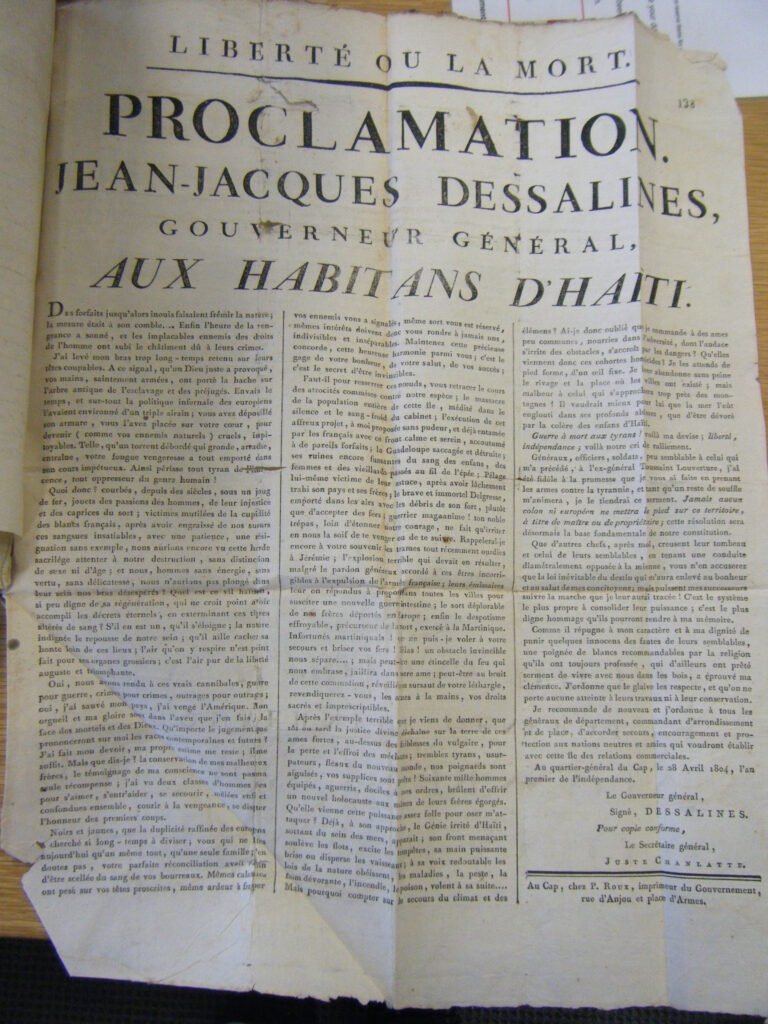
When Dessalines proclaimed Haiti’s independence, he didn’t merely declare freedom from France. The revolutionary document was radical in its vision, stating that all citizens would be known simply as “Black”—regardless of their actual skin color—as a political statement of solidarity and rejection of the colonial racial hierarchy. The declaration also called for the elimination of French colonists who remained on the island, a brutal but decisive break with the colonial past.
Haiti paid dearly for being the first. Beyond the crippling indemnity to France, the nation faced:
Yet Haiti’s impact cannot be measured in economic terms alone. The revolution inspired abolitionists worldwide, influenced independence movements throughout Latin America, and provided a beacon of hope for enslaved and colonized peoples everywhere. Simon Bolivar received crucial support from Haiti for his South American liberation campaigns, with President Alexandre Pétion providing arms, supplies, and refuge—on the condition that Bolívar would free enslaved people in the territories he liberated.
The Haitian Revolution was the most radical political event of the Age of Revolutions—more radical than the American or French Revolutions because it didn’t just change who held power. It fundamentally challenged the economic system of slavery and the entire racial hierarchy upon which the Atlantic world was built.
January 1, 1804, didn’t just mark the birth of a nation. It marked the moment when the supposedly “natural” order of the world—where white Europeans ruled over Black Africans, where slavery was considered economically necessary and divinely ordained—was proven to be nothing more than a brutal fiction that could be, and was, destroyed by those it oppressed.Haiti broke the world by proving that another world was possible.The Haitian Revolution remains one of history’s most consequential yet underappreciated events—a testament to human resilience, the universal desire for freedom, and the price nations pay for daring to challenge the global order.