Physical Address
304 North Cardinal St.
Dorchester Center, MA 02124
Physical Address
304 North Cardinal St.
Dorchester Center, MA 02124

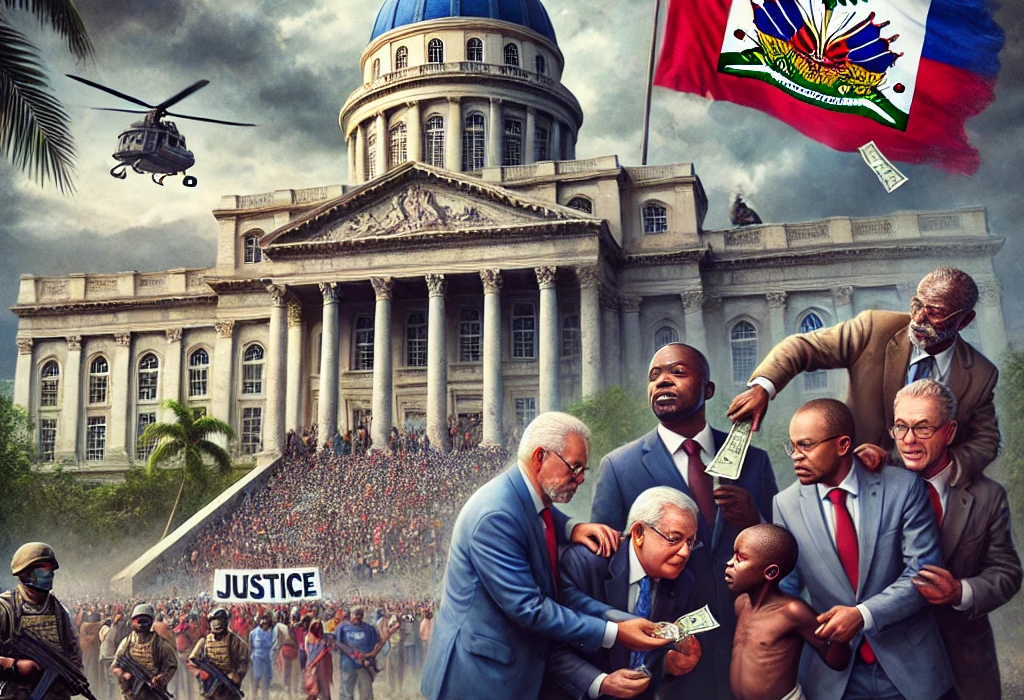
Why have Haiti's corrupt leaders faced no consequences? Delve into the impunity crisis.
The issue of impunity in Haiti is a deeply ingrained problem that has plagued the country for decades. Despite numerous efforts to address corruption, it remains a significant challenge.
Haiti’s history is marked by corrupt leaders who have exploited their positions for personal gain, leaving the country in a state of economic and social turmoil. The lack of justice for these crimes has perpetuated a cycle of impunity.
The result is a culture where corruption is normalized, and those responsible are rarely held accountable. This has severe consequences for Haiti’s development and its people’s trust in institutions.
Understanding Haiti’s current corruption crisis requires a look into its historical background. The country’s struggle with corruption is deeply rooted in its past, starting with the impact of French colonization.
French colonization not only exploited Haiti’s resources but also laid the groundwork for future governance issues. The imposition of a plantation economy and the brutal treatment of enslaved people created a legacy of inequality and mistrust in institutions. After gaining independence, Haiti was forced to pay reparations to France, which drained its resources and hindered its development.
Following independence, Haiti experienced significant political instability, with various factions vying for power. This period was marked by coups, assassinations, and foreign interventions, setting the stage for future corruption. The lack of stable governance allowed corrupt practices to flourish.
François “Papa Doc” Duvalier’s regime was characterized by kleptocracy, where he and his associates plundered the country’s resources. His rule was marked by violence, repression, and the cult of personality, further entrenching corruption.
Jean-Claude “Baby Doc” Duvalier continued his father’s legacy of corruption and mismanagement. His regime was marked by lavish spending and embezzlement, leaving Haiti impoverished. The Duvalier dynasty’s impact on Haiti’s corruption crisis is still felt today.
Understanding Haiti’s political landscape requires examining the interplay between its democratic institutions and economic elites. The country’s political environment is fragile, with various factors contributing to its instability.
Haiti’s democratic institutions are weak, which is a significant factor in its political instability. Two major issues contributing to this weakness are its flawed electoral systems and constitutional challenges.
The electoral process in Haiti has been marred by irregularities and a lack of transparency. This has led to contested election results, further eroding trust in the democratic process.
Haiti’s constitution has undergone several amendments, but it still faces challenges in ensuring the separation of powers and protecting individual rights. These constitutional issues complicate the functioning of democratic institutions.
The power dynamics in Haitian politics are significantly influenced by economic elites and the military/police. These groups play crucial roles in shaping the country’s political trajectory.
Economic elites in Haiti have substantial influence over political decisions, often prioritizing their interests over the general populace’s needs. This has contributed to the perpetuation of inequality and hindered development.
The military and police forces have historically played significant roles in Haitian politics, sometimes intervening directly in governance. Their influence can either stabilize or destabilize the political environment, depending on their alignment with the government.
In conclusion, Haiti’s political landscape is complex, with weak democratic institutions and significant influence from economic and military elites. Addressing these challenges is crucial for stabilizing the country’s political environment and fostering development.
The phenomenon of impunity in Haiti is a complex issue, deeply rooted in the country’s political and legal systems. Impunity refers to the lack of accountability or punishment for wrongdoing, particularly by those in power. In Haiti, this has led to a culture where corrupt leaders feel emboldened to act with little to no consequences.
Impunity in Haiti can be understood through two distinct lenses: legal immunity and practical immunity.
Legal immunity refers to the formal, legally sanctioned protection from prosecution, often granted to high-ranking officials. On the other hand, practical immunity occurs when, despite the absence of legal barriers, individuals are not held accountable due to systemic weaknesses or external influences.
The cycle of corruption and impunity is self-perpetuating. Leaders who escape prosecution for their corrupt activities set a precedent, encouraging further corruption.
Leaders often escape prosecution due to a combination of factors, including political influence, control over judicial processes, and sometimes, international diplomatic pressures. As a former UN Special Envoy to Haiti, “The lack of accountability for past crimes has contributed to a culture of impunity,” highlighting the complexity of the issue.
The culture of impunity in Haiti is characterized by a pervasive sense of invincibility among corrupt officials. This culture is perpetuated by the knowledge that they can act with impunity, without fear of legal repercussions.
“Impunity is a major obstacle to the rule of law and to the democratization process in Haiti,”
As noted by human rights organizations.
Breaking this cycle requires a multifaceted approach, including legal reforms, strengthening judicial independence, and international cooperation to ensure that those responsible for corruption are held accountable.
Examining the cases of Haiti’s most corrupt leaders provides insight into the country’s ongoing struggle with impunity. This section will delve into the actions and consequences faced by three of Haiti’s most notorious leaders: Jean-Claude “Baby Doc” Duvalier, Michel Martelly, and Jovenel Moïse.
Jean-Claude Duvalier, also known as “Baby Doc,” returned to Haiti in 2011 after 25 years in exile. His return sparked both hope and concern among Haitians, with many expecting him to be held accountable for his regime’s atrocities.
Despite initial efforts to prosecute him, Duvalier’s legal team managed to delay proceedings, and he died in 2014 without facing justice. The failed prosecution was a significant setback for those seeking accountability in Haiti.
Michel Martelly, who served as President from 2011 to 2016, was embroiled in the PetroCaribe scandal, which involved the mismanagement of billions of dollars in Venezuelan aid.
The scandal led to widespread allegations of corruption, with many officials accused of embezzling funds. Despite investigations, Martelly and his associates faced little to no consequences for their actions.
Jovenel Moïse, who became President in 2017, also faced numerous corruption allegations, including connections between his business interests and governance.
Moïse’s administration was marked by controversy, with many questioning the transparency of government contracts and the influence of personal business interests on policy decisions.
| Leader | Allegations | Outcome |
|---|---|---|
| Jean-Claude Duvalier | Human rights abuses, corruption | Died without facing justice |
| Michel Martelly | PetroCaribe scandal, embezzlement | No consequences |
| Jovenel Moïse | Corruption, business influence on governance | Assassinated in 2021 |
The cases of these leaders illustrate the pervasive issue of impunity in Haiti, where corrupt officials often escape accountability. Understanding these cases is crucial to addressing the broader problem of corruption.
Haiti’s justice system is crippled by a multitude of issues, ranging from structural weaknesses to political interference. This has resulted in a lack of accountability among corrupt leaders, perpetuating a cycle of impunity.
The Haitian judicial system suffers from significant structural weaknesses, including understaffing and underfunding. This has led to a backlog of cases, with many defendants waiting years for their trials to be heard.
The lack of adequate staffing and funding has severely impacted the efficiency of Haiti’s courts. For instance, many judges are overworked, and court facilities are often in disrepair. This not only hampers the administration of justice but also erodes public trust in the system.
Political interference is another significant challenge facing Haiti’s justice system. The executive branch often exerts undue influence over judicial processes, undermining the independence of the judiciary.
The dominance of the executive branch over the judiciary has resulted in a lack of checks and balances. This has allowed corrupt leaders to act with impunity, knowing that they can influence the outcome of judicial proceedings. The concentration of power in the executive branch has thus contributed to the perpetuation of corruption.
The Haitian justice system also suffers from a lack of resources and training. Many judicial officials lack the necessary skills and knowledge to effectively handle complex cases, particularly those involving corruption.
The lack of judicial independence is a significant challenge. Without independence, the judiciary cannot effectively check the power of the executive branch, allowing corrupt practices to go unchecked. Enhancing judicial independence is crucial to breaking the cycle of impunity in Haiti.
The international community’s influence on Haiti’s governance is a complex web of factors that contribute to the persistence of impunity. Various external forces shape the country’s political landscape, often prioritizing their interests over the need for accountability.
Foreign powers, particularly the United States and France, have historically played significant roles in Haiti’s political affairs. Their interests often override the need for accountability, contributing to the culture of impunity.
The U.S. and France have long been influential in Haitian politics, with their foreign policy interests sometimes conflicting with the pursuit of justice for corrupt leaders. This influence can manifest in various ways, including diplomatic support for regimes that are otherwise criticized for human rights abuses or corruption.
International financial institutions (IFIs) such as the International Monetary Fund (IMF) and the World Bank also play crucial roles in Haiti’s economic and political landscape.
The policies implemented by these institutions can have far-reaching consequences. For instance, austerity measures imposed by the IMF have sometimes led to social unrest, distracting from efforts to combat corruption.
| Institution | Policy Impact | Effect on Corruption |
|---|---|---|
| IMF | Austerity Measures | Distracts from anti-corruption efforts |
| World Bank | Infrastructure Projects | Potential for increased transparency |
The Haitian diaspora is another significant international factor, with remittances from abroad forming a crucial part of Haiti’s economy.
While diaspora remittances provide vital financial support, they can also create dependencies that undermine local governance and accountability efforts. The reliance on external funds can reduce the pressure on governments to implement effective anti-corruption measures.

In Haiti, the consequences of corruption and impunity are far-reaching, affecting not just the economy but the very fabric of society. The economic cost of corruption is a multifaceted issue that has hindered the country’s development for decades.
The pervasive corruption in Haiti has significantly impacted its development, diverting resources away from critical infrastructure and public services. This has resulted in a lack of basic amenities and has stifled economic growth.
The neglect of infrastructure is a stark example of how corruption has affected Haiti’s development. Roads, hospitals, and schools have been left in disrepair due to misappropriated funds.
The misappropriation of public funds is a significant issue in Haiti, with billions of dollars being diverted away from public projects. This has led to a severe lack of public services and infrastructure.
Efforts to track the missing billions have been hampered by a lack of transparency and accountability. This has made it difficult to hold those responsible accountable.
Foreign aid diversion is another critical issue, where humanitarian assistance is often misused, fueling corruption rather than alleviating suffering.
Humanitarian assistance, while crucial, has sometimes been diverted by corrupt officials, undermining its intended purpose and perpetuating a cycle of corruption.
The economic cost of corruption and impunity in Haiti is a complex issue that requires a multifaceted solution. Addressing it will be crucial to the country’s development and the well-being of its people.
Key Points:
Reform attempts in Haiti have been met with limited success, leaving the country grappling with the consequences of impunity. Despite the challenges, analyzing these efforts can provide valuable insights into what might work better in the future.
Haiti has seen various anti-corruption initiatives over the years, but their impact has been limited. For instance, the establishment of the Anti-Corruption Unit (ULCC) was a significant step, but it has faced numerous challenges, including political interference and a lack of resources.
The ULCC was created to investigate and prosecute corruption cases. However, its effectiveness has been hampered by inadequate funding and political pressure. Despite these challenges, the ULCC remains a crucial institution in Haiti’s fight against corruption.
International pressure has played a role in Haiti’s anti-corruption efforts, with organizations like the United Nations intervening to support reform. However, these efforts have had mixed results.
The UN has been involved in various initiatives aimed at strengthening Haiti’s justice system. While these interventions have contributed to some improvements, they have not been sufficient to bring about significant change.
Civil society has been at the forefront of the fight against corruption in Haiti, with grassroots movements mobilizing public opinion and demanding accountability.
These movements face significant challenges, including limited resources and reprisals from powerful interests. Nonetheless, they remain a vital force in pushing for reform.
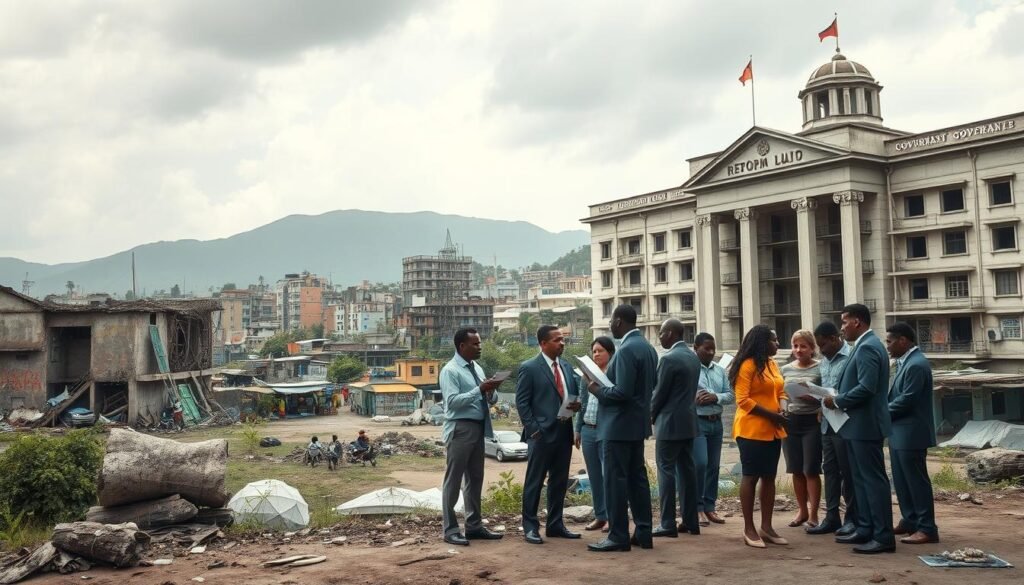
By examining the shortcomings of past reform attempts, it’s clear that a more nuanced and sustained approach is needed. This includes strengthening institutions like the ULCC, ensuring genuine international support, and empowering civil society.
As Haiti navigates its tumultuous political landscape, the battle against impunity remains a pressing concern. The country is grappling with a multitude of challenges that are hindering efforts to hold corrupt leaders accountable.
The rise of gang violence has significantly contributed to the instability in Haiti, creating a security breakdown and governance vacuum. This environment makes it difficult for authorities to focus on investigating and prosecuting corruption cases.
The proliferation of gangs has led to a situation where certain areas are beyond the control of the government, further complicating the fight against impunity. The lack of effective governance in these areas allows corrupt practices to flourish.
The assassination of President Jovenel Moïse in July 2021 sent shockwaves through Haiti’s political system, exacerbating the existing challenges in the fight against corruption. The event highlighted the investigation obstacles and political implications that complicate efforts to achieve justice.
The investigation into President Moïse’s assassination has faced numerous challenges, including political interference and a lack of resources. These obstacles have significant implications for the overall political stability of Haiti and the ability to address impunity.
Haiti is currently facing a severe humanitarian crisis, with widespread needs that are diverting attention and resources away from efforts to combat impunity. The prioritization of immediate needs over long-term justice goals poses a significant challenge to achieving accountability.
While addressing the immediate humanitarian needs is crucial, it is equally important not to lose sight of the need for long-term justice and accountability. Balancing these priorities is a delicate task that requires careful consideration and strategic planning.
Breaking the cycle of impunity in Haiti requires a multi-faceted approach that addresses the root causes of corruption and strengthens the justice system. The historical legacy of dictatorship and the current political instability have created an environment where corrupt leaders can act with impunity.
To achieve pathways to justice, it is essential to reform Haiti’s weak democratic institutions and reduce political interference in judicial processes. International cooperation and pressure can play a crucial role in promoting accountability, but it must be balanced with respect for Haitian sovereignty.
Civil society efforts are vital in pushing for reforms and demanding action from leaders. The international community, including organizations like the United Nations and the Organization of American States, can support these efforts by providing technical assistance and promoting transparency.
In Haiti, breaking the cycle of impunity is not just about punishing past wrongdoers but about creating a culture of accountability that deters future corruption. By working together, Haitians and their international partners can build a more just and equitable society.
The main reason is a complex mix of historical, political, and international factors that have created a culture of impunity, making it difficult to hold leaders accountable for their actions.
French colonization has had a lasting impact on Haiti’s corruption crisis, contributing to a legacy of exploitation and instability that has continued to affect the country’s governance and economy.
Economic elites in Haiti wield significant influence over the country’s politics, often using their wealth and power to shape policy and maintain their grip on the economy, contributing to corruption and impunity.
Haiti’s justice system is plagued by structural weaknesses, including understaffing, underfunding, and political interference, which hinder its ability to effectively prosecute corrupt leaders and maintain judicial independence.
International factors, such as foreign policy interests and the influence of international financial institutions, can sometimes prioritize stability over accountability, inadvertently enabling impunity in Haiti.
Corruption in Haiti diverts resources away from essential public services and infrastructure, hindering the country’s development and exacerbating poverty and inequality.
Past anti-corruption initiatives in Haiti have had limited success due to various challenges, including a lack of political will, inadequate resources, and insufficient support from the international community.
Gang violence and political instability in Haiti create a challenging environment for efforts to combat impunity, as they divert attention and resources away from justice and accountability.
The PetroCaribe scandal highlights the scale and complexity of corruption in Haiti, involving high-level officials and massive financial mismanagement, and demonstrates the need for greater transparency and accountability.
Civil society in Haiti plays a crucial role in promoting accountability and transparency through advocacy, mobilization, and supporting efforts to strengthen institutions and the rule of law.