Physical Address
304 North Cardinal St.
Dorchester Center, MA 02124
Physical Address
304 North Cardinal St.
Dorchester Center, MA 02124

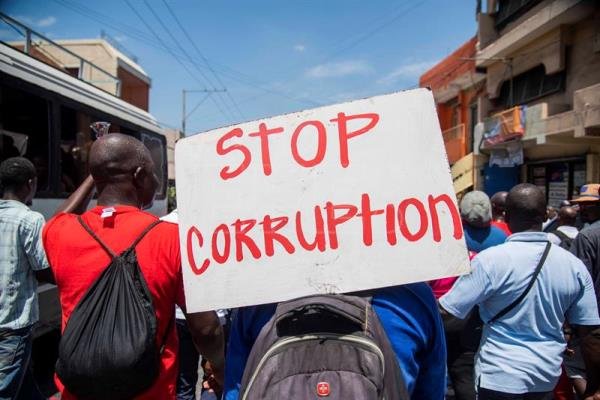
Uncover Haiti's corruption epidemic and demand accountability. Explore the latest exposé on graft and misuse of power.
The island nation of Haiti has been plagued by a corruption epidemic that has hindered its development and impoverished its citizens.
Graft and misuse of power have become rampant, with those in positions of authority often using their influence for personal gain.
The need to expose those responsible and demand accountability has never been more pressing, as the Haitian people continue to suffer the consequences of this epidemic.
As Haiti navigates its ongoing crisis, the interplay between political instability, poverty, and gang violence becomes increasingly evident. The nation’s history is marked by periods of turmoil, and understanding this context is crucial to grasping the complexity of its current state.
Haiti’s political landscape has been shaped by decades of authoritarian rule and instability.
The Duvalier regime, which lasted from 1957 to 1986, was characterized by brutal suppression and corruption. The end of this regime did not bring stability; instead, Haiti experienced a series of coups and interim governments.
The cycle of coups has significantly impacted Haiti’s democratic development. Since the overthrow of Jean-Claude Duvalier, there have been numerous coups, contributing to a fragile democracy that struggles to establish lasting stability.
Haiti faces significant economic and social challenges that exacerbate its crisis.
Haiti is among the poorest countries in the Western Hemisphere. According to the World Bank, Haiti’s GDP per capita is approximately $780, and a significant portion of the population lives below the poverty line.
| Indicator | Value | Rank |
|---|---|---|
| GDP Per Capita | $780 | Lowest in the Region |
| Human Development Index (HDI) | 0.503 | 170 out of 189 countries |
| Poverty Rate | 59% | High |
Gang violence has become a pervasive issue in Haiti, contributing to insecurity and displacement. The lack of effective governance has allowed gangs to flourish, further destabilizing the country.
Corruption in Haiti is a complex issue that requires a nuanced understanding of its systemic, cultural, and historical roots. It is a multifaceted problem that affects various aspects of Haitian society, from governance to everyday life.
Systemic corruption refers to the entrenched and institutionalized corruption within Haiti’s government and public institutions. As Transparency International notes, “Corruption is not just about bribery or embezzlement; it’s about the failure of institutions to function as they should.” This type of corruption is particularly challenging to address because it is deeply ingrained in the system.
Haiti’s cultural and historical context has contributed significantly to its corruption. The country’s history of colonialism, dictatorship, and political instability has created an environment where corruption can thrive. “Corruption is a legacy of Haiti’s past, shaped by its complex history and cultural dynamics.”
International organizations provide valuable insights into Haiti’s corruption levels through various rankings and indices.
The Corruption Perception Index (CPI) by Transparency International ranks Haiti among the most corrupt countries globally. Haiti’s low score indicates a high level of perceived corruption.
The World Bank’s Governance Indicators also assess Haiti’s governance and corruption levels, providing a comprehensive picture of the country’s challenges.
“Good governance is essential for reducing corruption and improving the business environment.”
By understanding the complexities of corruption in Haiti, including its systemic, cultural, and historical dimensions, we can better develop strategies to combat it.
The pervasive corruption in Haiti has led to several high-profile cases, underscoring the urgent need for reform. Corruption is a deeply ingrained issue in Haiti, affecting various aspects of society and governance.
Haiti has witnessed numerous high-profile corruption cases in recent years, with the PetroCaribe scandal being one of the most significant.
The PetroCaribe scandal involved the embezzlement of billions of dollars meant for development projects. Key figures implicated include former government officials and business leaders.
| Name | Position | Allegations |
|---|---|---|
| Former Official 1 | Government Minister | Embezzlement |
| Business Leader 1 | CEO, Company X | Money Laundering |
Corruption within Haiti’s Customs and Tax Authority has led to significant revenue losses. Officials have been accused of accepting bribes and facilitating tax evasion.
The network of corrupt officials in Haiti is complex, involving political patronage systems and collusion between the business elite and government.
Political patronage in Haiti often involves exchanging favours for loyalty, leading to corruption and abuse of power.
The business elite in Haiti frequently collude with government officials, resulting in corrupt practices that undermine the economy.
To combat corruption, it is essential to expose these networks and hold those responsible accountable. Transparency and accountability are crucial in the fight against corruption.
At the heart of Haiti’s governance issues is a culture of corruption that permeates from the top down. This pervasive corruption is not just a matter of individual wrongdoing but a systemic issue that affects every level of government.
The presidential administrations in Haiti have been at the center of numerous corruption allegations. These allegations have often involved high-profile cases with significant financial implications.
The Moïse administration has faced intense scrutiny over allegations of corruption, including the mismanagement of funds meant for public projects. As reported by various watchdog groups, the administration’s lack of transparency has been a major concern.
“The lack of accountability in the Moïse administration has been staggering, with billions of dollars in PetroCaribe funds remaining unaccounted for.”
Previous administrations have also been marred by corruption scandals, indicating a pattern of behaviour that transcends individual presidencies. The systemic nature of corruption is highlighted by the repeated allegations against successive governments.
Corruption is not limited to the presidential level; it also pervades the ministerial ranks. Various ministries have been implicated in corruption scandals, affecting critical sectors such as infrastructure, health, and education.
The Ministry of Public Works has been at the center of several fraud cases, involving the misappropriation of funds meant for infrastructure projects. This has resulted in delayed or abandoned projects, further exacerbating Haiti’s infrastructure challenges.
The Ministries of Health and Education have also faced corruption allegations, including the embezzlement of funds meant for healthcare services and educational programs. These scandals have had a direct impact on the quality of services provided to the Haitian people.
| Ministry | Type of Corruption | Impact |
|---|---|---|
| Public Works | Fraud in infrastructure projects | Delayed or abandoned projects |
| Health | Embezzlement of healthcare funds | Reduced quality of healthcare services |
| Education | Misappropriation of educational funds | Poor educational outcomes |
Haiti’s financial woes are deeply rooted in systemic corruption, with financial mismanagement and embezzlement at the forefront of the crisis. The country’s history of financial mismanagement has led to a significant loss of funds meant for development and humanitarian aid.
The PetroCaribe scandal is one of the most significant cases of financial mismanagement in Haiti’s recent history. The program, initiated in 2006, allowed Haiti to purchase oil from Venezuela on preferential terms. However, billions of dollars from this program have gone missing.
Investigations into the PetroCaribe scandal have revealed a complex network of corruption involving high-ranking officials and business leaders. The missing funds are estimated to be around $3.8 billion, a staggering amount for a country as economically challenged as Haiti.
The mismanagement of PetroCaribe funds has had a devastating impact on Haiti’s energy sector. Despite the influx of money, the country’s energy infrastructure has not improved significantly. This has left many Haitians without reliable access to electricity, hindering economic development and daily life.
Foreign aid misappropriation is another significant issue in Haiti, with funds meant for humanitarian aid and development being diverted for other purposes. This has been particularly evident in the response to natural disasters and health crises.
After the devastating earthquake in 2010, Haiti received a large amount of international aid for reconstruction. However, a significant portion of these funds was misappropriated or inefficiently managed, leading to a slow and ineffective recovery process.
Similarly, during the COVID-19 pandemic, funds allocated for relief efforts were subject to corruption and mismanagement. This not only affected the response to the pandemic but also eroded trust in the government’s ability to manage crises.
The human cost of corruption in Haiti is a story of suffering, inequality, and lost opportunities. Corruption permeates every aspect of Haitian life, from public services to economic opportunities, exacerbating the country’s already dire situation.
Corruption severely impacts public services in Haiti, leading to inadequate infrastructure, inefficient administrative processes, and a lack of trust in government institutions. Public servants often demand bribes for services that are supposed to be free, further burdening the poor.
The healthcare and education systems in Haiti are particularly affected by corruption. Funds meant for hospitals and schools are often misappropriated, leading to decaying infrastructure and a lack of essential supplies. This not only affects the quality of services but also discourages investment in human capital.

Corruption perpetuates poverty in Haiti by creating an environment where the rule of law is selectively applied, and economic opportunities are reserved for those with connections or wealth. This maintains a cycle of inequality and stifles economic growth.
Haiti is one of the most unequal countries in the region, with a significant portion of the population living below the poverty line. According to the World Bank, Haiti’s Gini coefficient is around 0.41, indicating a high level of income inequality.
| Indicator | Value | Year |
|---|---|---|
| Gini Coefficient | 0.41 | 2020 |
| Poverty Headcount Ratio | 58.6% | 2020 |
The lack of opportunities and corruption leads to significant migration and brain drain. Many of Haiti’s most skilled workers emigrate to other countries in search of better opportunities, further depleting the country’s human capital.
Addressing corruption is crucial to breaking the cycle of poverty and inequality in Haiti. It requires a multifaceted approach that includes strengthening institutions, promoting transparency, and ensuring accountability.
In Haiti, the media and civil society have emerged as crucial forces in the fight against corruption. Their efforts have been instrumental in bringing corrupt practices to light and pushing for accountability.
Investigative journalism has played a significant role in exposing corruption. Key exposés have revealed the depth of corruption within government institutions.
Notable investigations have led to significant repercussions, including the PetroCaribe scandal, which exposed the mismanagement of billions of dollars.
Despite their crucial role, journalists face numerous threats, including intimidation and violence, for their work in exposing corruption.
Social media has become a powerful tool for citizen reporting, allowing individuals to share information and mobilize against corruption.
Hashtag movements have gained traction, raising awareness about corruption and mobilizing public opinion.
International platforms have amplified local voices, bringing global attention to Haiti’s corruption issues.
The combined efforts of the media and civil society have been vital in the fight against corruption. As corruption remains a significant challenge, their continued vigilance is crucial.
The international community has taken notice of Haiti’s corruption epidemic, prompting a multifaceted response from various global actors. This response has been shaped by a combination of diplomatic efforts, economic sanctions, and adjustments in foreign aid policies.
The United States has been at the forefront of the international response to Haitian corruption. Key measures include:
The United Nations and other international organizations have also taken a strong stance against corruption in Haiti. The UN has supported efforts to strengthen Haitian institutions and improve transparency, while organizations like the Organization of American States have provided technical assistance to combat corruption.
Foreign donors face a difficult balancing act in their response to Haitian corruption. On one hand, they must consider aid conditionality to ensure that assistance is not misappropriated. On the other hand, they must address humanitarian needs, as Haiti remains one of the most impoverished countries in the Western Hemisphere.
To navigate this dilemma, donors are exploring alternative aid delivery mechanisms, such as direct budget support to vetted government agencies and the use of non-governmental organizations for service delivery.

As the international community continues to grapple with the complexities of responding to corruption in Haiti, it is clear that a nuanced and multifaceted approach is required. By combining diplomatic pressure, targeted sanctions, and innovative aid delivery mechanisms, there is hope for making progress in the fight against corruption.
Achieving accountability and reform in Haiti requires a multifaceted approach that involves legal, international, and grassroots efforts. To effectively combat corruption, it’s crucial to establish robust mechanisms for prosecution, recovery of assets, and public engagement.
A strong legal framework is essential for prosecuting corruption cases. Haiti needs to strengthen its judicial system by implementing laws that effectively deter and punish corrupt practices. This includes updating existing legislation to align with international standards and ensuring that judges and prosecutors are trained and equipped to handle complex corruption cases.
Recovering assets stolen through corruption is a critical aspect of combating financial crimes. International cooperation is vital in tracing, freezing, and repatriating illicit assets. Haiti can benefit from collaborating with international organizations and countries that have experience in asset recovery, such as through the Stolen Asset Recovery Initiative of the World Bank and UNODC.
Americans can play a significant role in supporting Haiti’s anti-corruption efforts through various means.
By raising awareness and applying political pressure, Americans can influence U.S. policy towards Haiti, promoting a more robust response to corruption. This can involve supporting legislation that conditions aid on anti-corruption benchmarks and advocating for the use of sanctions against corrupt officials.
Choosing to support aid organizations that prioritize transparency and accountability can help ensure that assistance reaches those who need it most. Americans can research and donate to organizations that have strong track records of transparent operations and impact.
| Ways to Support | Description | Impact |
|---|---|---|
| Advocacy | Raising awareness and influencing policy | Promotes anti-corruption legislation |
| Donations to Transparent Organizations | Supporting organizations with strong transparency | Ensures aid is effectively utilized |
Haiti’s battle against corruption is far from over, but the efforts to expose and prosecute those responsible are gaining momentum. The journey to a corruption-free Haiti requires continued international cooperation, strong legal frameworks, and an active civil society.
The future of Haiti’s fight against corruption depends on the collective actions of its citizens, government, and international partners. By naming names and demanding accountability, Haitians are paving the way for a more transparent and just society.
As Haiti moves forward, the fight against corruption will remain a top priority. It is crucial that the government implements robust anti-corruption measures and that the international community supports these efforts through sanctions and aid conditionality.
In conclusion, the path to a corruption-free Haiti is challenging, but with persistence and determination, a brighter future is possible. The ongoing efforts to combat corruption will be crucial in rebuilding trust in government and fostering economic development.
Haiti is currently facing a severe corruption epidemic, with widespread corruption affecting various aspects of society, including government, economy, and public services.
Corruption hinders Haiti’s development by diverting resources away from essential public services, perpetuating poverty, and undermining trust in government institutions.
The PetroCaribe scandal involved the mismanagement and embezzlement of billions of dollars in oil revenue, which was meant to fund development projects in Haiti. The scandal has had a significant impact on Haiti’s economy and energy sector.
International organizations, such as the United Nations and the World Bank, play a crucial role in addressing corruption in Haiti by providing technical assistance, promoting transparency, and supporting anti-corruption efforts.
Americans can support anti-corruption efforts in Haiti by advocating for policy changes, supporting transparent aid organizations, and promoting awareness about the issue of corruption in Haiti.
Potential pathways to accountability and reform in Haiti include strengthening legal frameworks for prosecution, promoting international cooperation in asset recovery, and supporting civil society efforts to promote transparency and accountability.
Corruption affects public services in Haiti by diverting resources away from essential services, such as healthcare and education, and undermining the quality of services provided.
Corruption has a significant impact on Haiti’s economy, perpetuating poverty and undermining economic growth and development.
Haitian citizens can report corruption through various channels, including social media, citizen reporting initiatives, and law enforcement agencies.