Physical Address
304 North Cardinal St.
Dorchester Center, MA 02124
Physical Address
304 North Cardinal St.
Dorchester Center, MA 02124

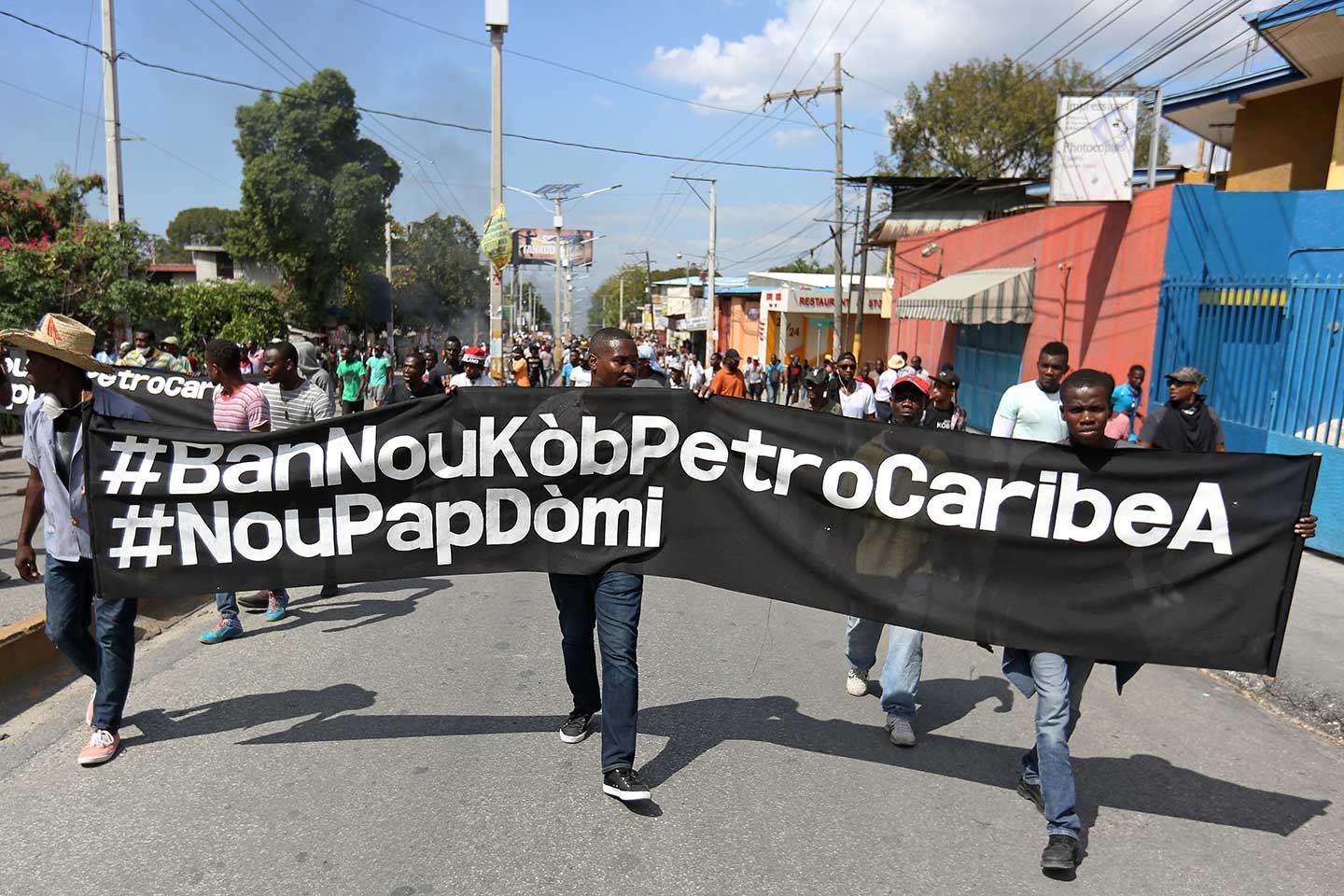
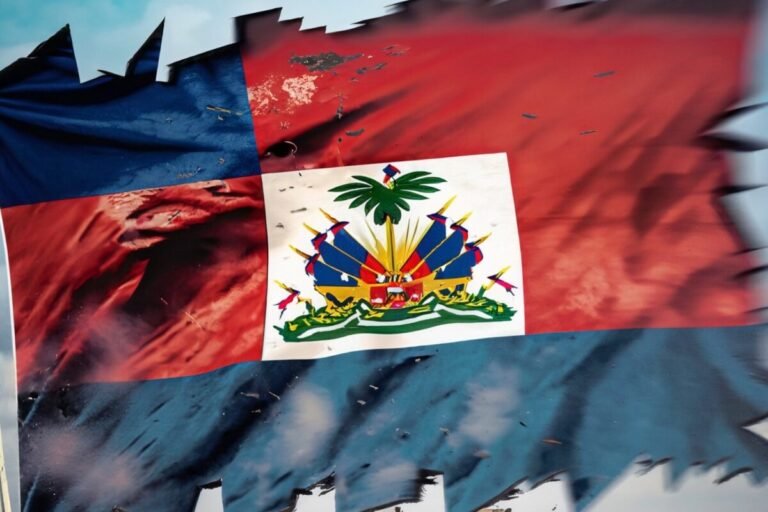
From the PetroCaribe scandal to the present day, this article examines the decades of theft from Haiti without accountability.
The PetroCaribe agreement, once hailed as a beacon of hope for economic cooperation, has left a trail of corruption and theft in its wake. For years, Haiti has struggled with the consequences of this deal, which has enabled widespread corruption and embezzlement.
The lack of accountability has perpetuated a culture of impunity, allowing those responsible for the theft of funds to act with little consequence. As we examine the history of PetroCaribe and its impact on Haiti, it becomes clear that the issue is complex and multifaceted.
For centuries, Haiti has been entangled in a web of colonial debt and resource extraction, factors that have significantly hindered its economic progress. This historical context is crucial to understanding the country’s ongoing struggles with corruption and theft.
Haiti’s history began with a significant burden: the colonial debt imposed by France in 1825. This debt, which was essentially a ransom for recognizing Haiti’s independence, has had long-lasting effects on the country’s economy. The financial strain continued through various forms of external control and exploitation.
The country’s economic vulnerability stems from its history of dependency on foreign aid and loans, which often come with stringent conditions that favour foreign interests over local needs. This vulnerability has been exploited by various actors, both domestic and international, contributing to Haiti’s persistent economic challenges.
A pattern of resource extraction has characterized Haiti’s history, from the exploitation of its natural resources during colonial times to modern-day practices that continue to drain the country’s wealth. This extraction has not only depleted Haiti’s resources but also hindered its ability to develop sustainable economic practices.
The combination of these historical factors has created a complex legacy of exploitation that continues to affect Haiti’s development. Understanding this context is essential for addressing the root causes of corruption and theft in the country.
In 2005, the PetroCaribe Agreement was born out of Venezuela’s oil diplomacy efforts, significantly impacting the energy landscape of the Caribbean region. This initiative was part of Venezuela’s broader strategy to foster economic cooperation among Caribbean nations through energy cooperation.
The PetroCaribe Agreement was established as a response to the high oil prices in the early 2000s, which severely affected the economies of Caribbean countries. Venezuela, under the leadership of Hugo Chávez, sought to provide an alternative by offering oil at discounted rates andfavourablee payment terms.
The structure of the program allowed member countries to pay for oil on a deferred payment basis, with a grace period that enabled them to manage their finances more effectively. This was particularly beneficial for Haiti, which was struggling with high energy costs.
Venezuela’s oil diplomacy through PetroCaribe was not just about energy supply; it was a geopolitical strategy to strengthen ties with neighbouring countries. By providing economic relief through affordable oil, Venezuela aimed to expand its influence in the region.
For Haiti, the PetroCaribe Agreement held significant promise for development. The agreement was expected to alleviate the country’s energy costs, allowing for more resources to be allocated to development projects.
Some of the planned infrastructure projects included the development of energy facilities, transportation networks, and other critical infrastructure. These projects were designed to enhance Haiti’s economic prospects by improving its infrastructure.
Additionally, the agreement envisioned funding for social programs aimed at improving the living standards of Haitians. This included initiatives in healthcare, education, and other social welfare areas.
The PetroCaribe Agreement represented a significant opportunity for Haiti to address its energy needs and fund critical development projects. Understanding the origins and initial promise of this agreement is crucial to grasping its impact on Haiti’s development trajectory.
The PetroCaribe agreement, once hailed as a beacon of hope for Haiti’s economic development, unravelled into a tale of massive corruption and theft. Initially designed to provide Haiti with subsidized oil from Venezuela, the program was meant to foster economic growth and stability. However, over the years, it has become synonymous with financial mismanagement and corruption.
The PetroCaribe funds were intended for various development projects across Haiti, including infrastructure improvements, energy initiatives, and social programs. However, investigations have revealed that a significant portion of these funds was misappropriated or embezzled. The lack of transparency and oversight in the management of these funds created an environment conducive to corruption.
Estimates suggest that between $1.5 billion and $2 billion of the PetroCaribe funds were misappropriated or embezzled. This staggering amount represents a significant portion of the total funds allocated to Haiti under the PetroCaribe agreement.
Several high-profile projects were supposed to be funded by PetroCaribe, but they never came to fruition. Some of these projects included:
Instead of these projects, what remained were incomplete infrastructure and a trail of financial irregularities.
Numerous government officials have been implicated in the PetroCaribe scandal, including former presidents and high-ranking ministers. These officials are accused of siphoning off funds into private accounts or using them for political gain.
| Official | Position | Allegations |
|---|---|---|
| Former President Martelly | President of Haiti | Misuse of PetroCaribe funds for personal gain |
| Former Minister of Finance | Minister of Finance | Embezzlement of funds allocated for development projects |
| Other Officials | Various Positions | Financial mismanagement and corruption |
Audit reports have revealed a pattern of financial mismanagement and corruption in the handling of PetroCaribe funds. These reports have highlighted the lack of transparency and oversight, as well as the failure to implement projects as planned.
The PetroCaribe scandal has had a lasting impact on Haiti’s economy and development. The misappropriation of funds has not only hindered the country’s progress but has also eroded trust in government institutions.
Haiti’s corruption landscape extends far beyond the PetroCaribe scandal, revealing a complex web of financial mismanagement and abuse of power. The country’s history is marred by numerous instances of corruption that have significantly hindered its development.
One of the significant areas of corruption in Haiti involves the mismanagement of foreign aid. Despite receiving substantial financial assistance from international donors, there have been numerous cases of funds being misappropriated or inefficiently used. This mismanagement has not only reduced the effectiveness of aid but also eroded trust in Haiti’s ability to manage financial resources.
Following the devastating earthquake in 2010, Haiti received a massive influx of aid intended for reconstruction efforts. However, investigations have revealed that a substantial portion of these funds was either misused or not utilized effectively. The lack of transparency and oversight in the management of these funds has been a significant concern.
Government contract irregularities are another prevalent form of corruption in Haiti. There have been numerous allegations of contracts being awarded to politically connected individuals or companies without following proper procurement procedures. These irregularities have led to overpriced and substandard projects, further draining the country’s resources.
The theft of customs and tax revenue is a persistent issue in Haiti, with significant amounts of revenue being lost due to corruption within the customs and tax administration. This not only deprives the government of much-needed revenue but also creates an uneven playing field for businesses.
The various corruption cases in Haiti, including those beyond PetroCaribe, have had a profound impact on the country’s development. Addressing these issues will require a concerted effort to improve transparency, accountability, and governance.
are crucialsteps towards mitigating corruption and fostering a more equitable and prosperous society in Haiti.
The decades-long theft and corruption in Haiti have exacted a profound human cost, hindering the nation’s development. The effects are multifaceted, touching various aspects of Haitian society and infrastructure.
One of the most visible impacts of corruption is the lack of adequate infrastructure. Roads, bridges, and public buildings remain underdeveloped or in disrepair due to misappropriated funds. For instance, a significant portion of the PetroCaribe funds was allocated for infrastructure projects, but many of these projects were either never completed or were abandoned due to corruption.
Corruption has also severely impacted Haiti’s healthcare and education systems. Funds meant for hospitals, schools, and social programs have been diverted, leaving these critical sectors under-resourced. This has resulted in inadequate healthcare services and educational opportunities, further exacerbating the country’s challenges.
“The lack of investment in human capital has had long-term consequences for Haiti’s development,” said a recent report by a leading international organization.
The pervasive corruption has contributed to political instability in Haiti. When citizens feel that their government is corrupt and ineffective, trust is eroded, leading to social unrest and political upheaval. This instability discourages investment and hinders economic growth.
Many Haitians have chosen to emigrate in search of better opportunities, leading to a significant brain drain. The loss of skilled professionals further weakens the country’s ability to develop and recover.
| Impact Area | Description | Consequence |
|---|---|---|
| Infrastructure | Lack of investment in roads, bridges, and public buildings | Hindered economic development and increased poverty |
| Healthcare | Insufficient funding for hospitals and healthcare services | Poor health outcomes and increased mortality rates |
| Education | Underfunding of schools and educational programs | Reduced opportunities for Haitian youth |
The human cost of corruption in Haiti is a complex issue that requires a multifaceted response. Addressing these challenges is crucial for the country’s development and the well-being of its citizens.
Haiti’s corruption crisis has prompted a diverse range of responses from foreign governments, international organizations, and NGOs. The international community’s reaction has been complex, reflecting the multifaceted nature of corruption in Haiti.
Foreign governments have played a significant role in addressing corruption in Haiti. The United States, in particular, has been actively involved through diplomatic channels and foreign aid policies. However, the effectiveness of these efforts has been debated, with some arguing that more stringent measures are needed to hold corrupt officials accountable.
International financial institutions, such as the International Monetary Fund (IMF) and the World Bank, have been crucial in providing financial assistance to Haiti. However, their role in combating corruption has been subject to scrutiny. Some argue that these institutions have not done enough to address corruption in their lending practices.

Non-Governmental Organizations (NGOs) have been instrumental in providing aid and services in Haiti. While many NGOs have worked to combat corruption, others have been criticized for their lack of transparency and accountability, potentially contributing to the problem.
Foreign business interests have a significant presence in Haiti, particularly in industries such as textiles and construction. While these businesses can contribute to economic growth, they can also be complicit in corrupt practices. Ensuring transparency and accountability in business dealings is crucial to combating corruption.
The international response to corruption in Haiti is multifaceted, involving various actors with different interests and levels of commitment. Understanding the roles and impacts of these actors is essential to developing effective strategies to combat corruption.
Despite decades of corruption, Haiti struggles to hold perpetrators accountable, revealing a significant accountability gap. This gap is not just a result of one factor, but a combination of systemic weaknesses and external challenges.
Haiti’s judicial system is plagued by inefficiencies and corruption. The lack of resources and infrastructure hampers the ability to investigate and prosecute crimes effectively. As “The rule of law is essential for economic development and stability, as stated by a World Bank report, highlighting the critical need for judicial reform.
Many individuals implicated in corruption cases enjoy political protection, making it difficult to bring them to justice. This protection often stems from their influence and connections within the political sphere, shielding them from accountability.
Corruption cases in Haiti often involve international actors or funds, complicating jurisdictional issues. This can lead to a lack of cooperation between countries, hindering efforts to prosecute offenders.
“International cooperation is crucial in combating corruption that transcends borders.”
Corruption creates a self-reinforcing cycle where the lack of accountability fosters more corruption. This cycle is difficult to break, as it is deeply ingrained in the political and economic fabric of Haiti.
The interplay of these factors contributes to the accountability gap in Haiti. Addressing these challenges requires a multifaceted approach, including judicial reform, increased transparency, and international cooperation.
Haiti’s battle against corruption continues to be a pressing issue in the present day. Despite the challenges, there are ongoing efforts to combat corruption at various levels.
Grassroots movements have emerged as a significant force against corruption in Haiti. These movements, often led by civil society organizations, aim to raise awareness and mobilize the public against corrupt practices. For instance, groups like the Initiative pour la Transparence dans les Industries Extractives (ITIE) have worked to promote transparency in the extractive industries.
According to a report by the Global Initiative Against Transnational Organized Crime, these grassroots movements face significant challenges, including limited resources and political repression. However, they remain crucial in pushing for accountability.
Recent investigations have shed light on various corruption cases in Haiti. For example, a report by the Senate’s Commission on Finance and Economy highlighted misappropriation of funds in government ministries. Such investigations are critical in uncovering the extent of corruption and identifying those responsible.
“Corruption is a major obstacle to Haiti’s development. It diverts resources away from essential public services and infrastructure, perpetuating poverty and inequality.”
The current political climate in Haiti is complex, with ongoing debates about constitutional reforms and electoral processes. The political instability creates an environment where corruption can thrive. However, there are also efforts to strengthen institutions and promote transparency.
| Year | Political Event | Impact on Anti-Corruption Efforts |
|---|---|---|
| 2020 | Constitutional Reform Discussions | Increased focus on judicial reforms |
| 2021 | Assassination of President Jovenel Moïse | Heightened political instability |
| 2022 | Elections Delayed | Continued political uncertainty |
Despite the efforts, reform initiatives face significant challenges, including resistance from entrenched interests and limited institutional capacity. The international community plays a crucial role in supporting Haiti’s reform efforts, providing both financial and technical assistance.
As Haiti continues to navigate its complex political landscape, the fight against corruption remains a critical priority. The success of anti-corruption efforts will depend on the ability to build strong, transparent institutions and engage the public in the reform process.
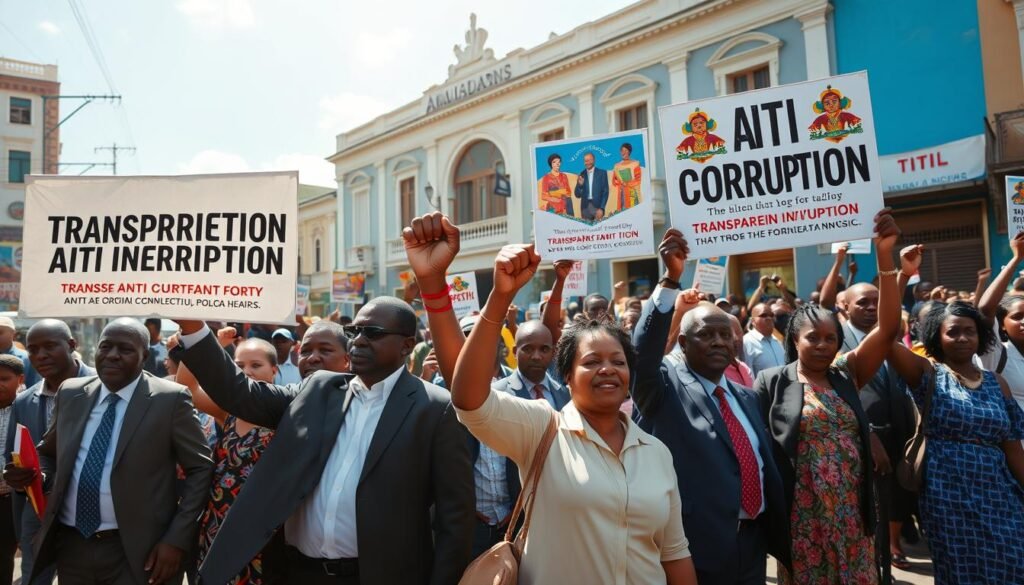
Haiti’s decades-long struggle with corruption and exploitation has left deep scars, but the path forward is clear. To achieve accountability and recovery, sustained efforts are needed to combat corruption and promote transparency and justice.
The PetroCaribe scandal and other major corruption cases have highlighted the need for robust oversight and accountability mechanisms. Strengthening Haiti’s judicial system and promoting international cooperation are crucial steps towards achieving justice.
Pathways to recovery include supporting grassroots anti-corruption movements, promoting transparency in government contracting, and ensuring that foreign aid is effectively managed. By working together, Haiti can overcome its historical legacy of exploitation and build a more equitable future.
Recovery efforts must be accompanied by a commitment to accountability, ensuring that those responsible for corruption are held to account. This will require continued international support and a strong commitment from Haiti’s leaders to promote transparency and good governance.
The PetroCaribe Agreement was a program initiated by Venezuela to provide oil to Caribbean countries, including Haiti, at discounted rates, wto promoteeconomic development and cooperation.
The misappropriation of PetroCaribe funds in Haiti involved various government officials and entities, who allegedly embezzled or mismanaged the funds intended for development projects and social programs.
Some of the planned infrastructure projects under PetroCaribe in Haiti included road construction, energy generation, and public building renovations, aimed at improving the country’s infrastructure and promoting economic growth.
Several high-ranking government officials, including former presidents and ministers, were implicated in the PetroCaribe scandal for their alleged roles in misappropriating funds.
Corruption has had a devastating impact on Haiti’s development, leading to infrastructure deficiencies, setbacks in healthcare and education, and contributing to political instability and emigration.
International actors, including foreign governments, international financial institutions, and NGOs, have played a complex role in Haiti, sometimes contributing to corruption and other times working to combat it through various initiatives and programs.
Anti-corruption efforts in Haiti face significant challenges, including weaknesses in the judicial system, political protection of perpetrators, and the self-reinforcing cycle of corruption, which hinders accountability and reform.
Grassroots anti-corruption movements, recent investigations, and reports have highlighted the ongoing struggles against corruption in Haiti, with efforts to promote transparency, accountability, and reform continuing amidst a challenging political climate.