Physical Address
304 North Cardinal St.
Dorchester Center, MA 02124
Physical Address
304 North Cardinal St.
Dorchester Center, MA 02124

Discover the alarming implications of the illegal Erik Prince contract and its potential to worsen Haiti's crisis.
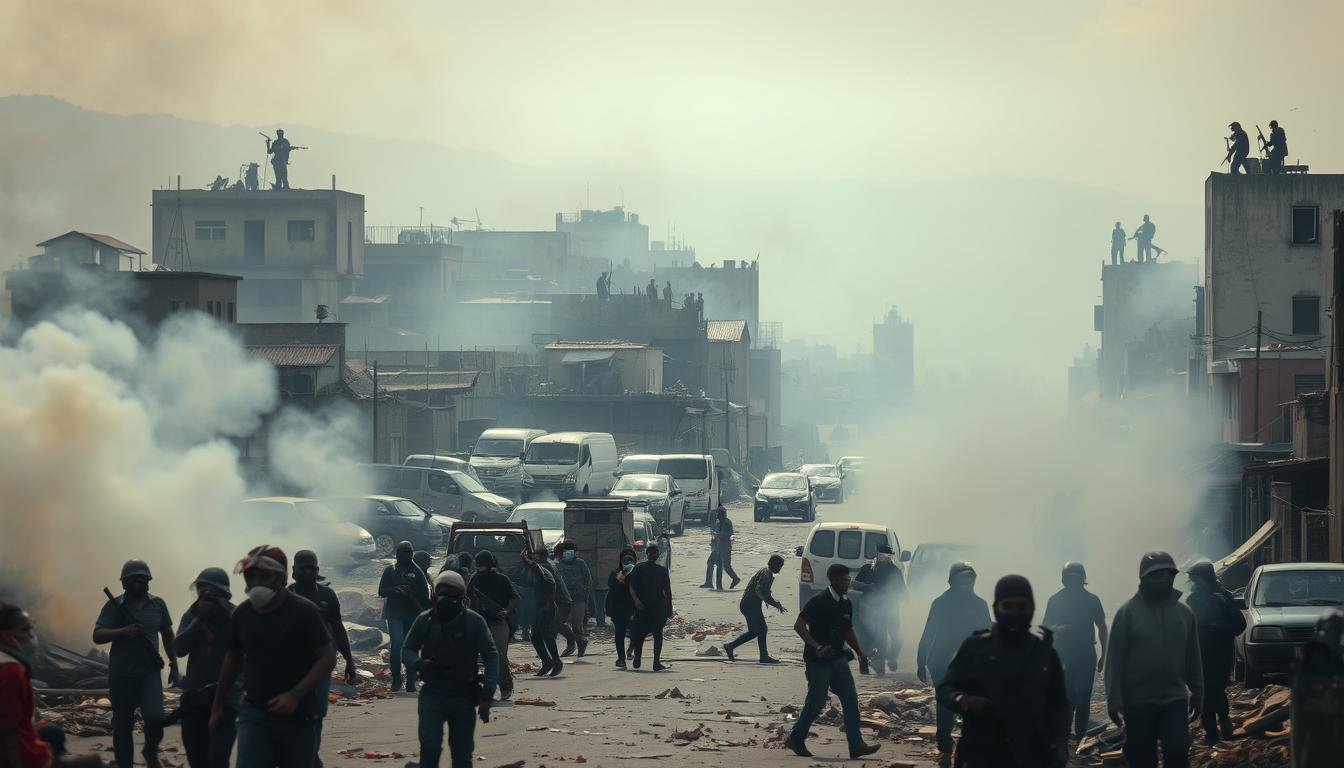
Haiti is facing an unprecedented crisis, with widespread gang violence and political instability. The situation has been further complicated by the controversial involvement of Erik Prince, a private security contractor. The proposed contract has sparked concerns about the potential for increased instability in the region.
The Erik Prince contract has been deemed illegal by many, raising questions about the legal implications of such a deal. As the situation in Haiti continues to deteriorate, it is essential to understand the historical context and potential consequences of this contract.
The ongoing Haiti crisis has been exacerbated by various factors, including gang violence and political unrest. The potential impact of the Erik Prince contract on the stability of the region is a pressing concern that needs to be addressed.
Haiti’s crisis has deepened, characterized by political instability, economic challenges, and a dire need for effective governance. The country is grappling with multiple issues that have compounded to create a complex and dire situation.
The assassination of President Moïse in July 2021 marked a significant turning point in Haiti’s political instability.
The killing of President Moïse led to a power vacuum, with various factions vying for control. This event exacerbated the existing political tensions and further destabilized the country.
The absence of a stable government has resulted in competing power centers, each with its own agenda, complicating efforts to establish a unified governance structure.
The economic situation in Haiti is dire, with widespread poverty and a lack of infrastructure.
Haiti faces significant food insecurity, with a large portion of the population lacking access to nutritious food. The public health system is also under strain, with challenges in providing adequate healthcare services.
The country’s infrastructure is crumbling, making it difficult to respond to natural disasters, which are frequent in Haiti. The recovery efforts are hampered by the lack of resources and infrastructure.
| Challenge | Description | Impact |
|---|---|---|
| Political Instability | Leadership vacuum and power struggles | Governance challenges and instability |
| Economic Challenges | Poverty and lack of infrastructure | Food insecurity and public health crisis |
| Humanitarian Concerns | Food insecurity and healthcare issues | Human suffering and displacement |
Erik Prince, a name synonymous with controversy, has been at the center of numerous debates surrounding private security and military operations. As the founder of Blackwater, Prince has been a pivotal figure in the private military company (PMC) industry.
Prince’s background is deeply rooted in military and security operations. His career has been marked by significant milestones, including his service in the U.S. Navy SEALs.
Prince’s military career laid the foundation for his later ventures in private security. He founded Blackwater in 1997, which quickly grew into one of the world’s most prominent private security companies.
Blackwater’s operations in Iraq were marred by controversy, including allegations of civilian casualties and unaccounted-for military actions. These incidents led to numerous legal challenges and heightened scrutiny of Prince’s company.
Prince has been involved in various international ventures that have sparked controversy. His activities in Africa and the Middle East have raised concerns about the role of private security companies in conflict zones.
Prince’s companies have operated in several African and Middle Eastern countries, often in regions experiencing conflict or political instability. These operations have been criticized for their lack of transparency and accountability.
Prince’s business model has been closely tied to his political connections. His ties to various governments and political figures have facilitated his company’s operations and influenced its success.
Erik Prince’s involvement in Haiti through a controversial contract has sparked debate over its adherence to Haitian law. The contract, which has been widely criticized, raises significant concerns regarding its legality and implications for the country’s stability.
The agreement between Erik Prince and the Haitian government outlines specific services to be provided and the financial arrangements associated with these services.
The contract promises security services, allegedly aimed at stabilizing the region. Financial arrangements include a payment structure that has been criticized for lacking transparency. The total cost of the contract is substantial, raising concerns about the allocation of funds and the potential for corruption.
Key players involved in the negotiation process include representatives from Erik Prince’s company and high-ranking government officials. The negotiation process has been criticized for being opaque, with little information available to the public regarding the terms and conditions of the agreement.
| Key Players | Roles |
|---|---|
| Erik Prince | Contractor |
| Haitian Government Officials | Negotiators |
The contract has been criticized for violating several aspects of Haitian law, including constitutional prohibitions on foreign security forces and procurement law violations.
Haitian law prohibits the presence of foreign security forces without explicit constitutional amendments. The contract with Erik Prince’s company potentially violates this provision, as it involves foreign personnel operating within the country.
The contract has also been criticized for violating procurement laws, as the process lacked transparency and open competition. This has raised concerns about corruption and the unfair allocation of government contracts.
The Erik Prince contract controversy in Haiti brings to the forefront complex legal questions regarding jurisdiction and international law.
Haiti’s legal system is based on the French Napoleonic Code, providing a foundation for understanding how the country approaches legal matters. However, the enforcement of laws remains a significant challenge due to the country’s fragile state.
The effectiveness of Haiti’s legal framework is hampered by institutional weaknesses and a lack of resources. This situation complicates the enforcement of laws related to the Erik Prince contract.
Despite the challenges, there is potential for legal challenges within Haiti regarding the contract. Haitian courts could play a crucial role in determining the legality of the contract under Haitian law.
The Erik Prince contract also raises significant international law considerations, including potential violations of Haitian sovereignty and international humanitarian law.
Erik Prince and his associates may face legal exposure under U.S. law for their involvement in the contract, particularly if it is deemed to violate U.S. statutes related to private military companies.
The contract may also trigger UN sanctions or fall under the jurisdiction of the International Criminal Court if it is found to violate international law or contribute to atrocities in Haiti.
Key Legal Considerations:
As legal experts point out, the situation is complex and multifaceted, requiring a nuanced understanding of both Haitian and international law.
“The involvement of private military contractors like Erik Prince in sovereign nations raises critical questions about the rule of law and the potential for human rights abuses.”
| Legal Issue | Haitian Law | International Law |
|---|---|---|
| Jurisdiction | Haitian courts have jurisdiction | Potential ICC jurisdiction |
| Private Military Contractors | Regulated under Haitian law | Subject to international humanitarian law |

The recent illegal contract involving Erik Prince is poised to deepen Haiti’s existing political and social instability. This development has raised concerns among various stakeholders, including human rights organizations and local community leaders.
The introduction of private military contractors, as seen in Erik Prince’s contract, can lead to an escalation in violence. This is because such entities often lack the accountability and transparency that national militaries or internationally recognized peacekeeping forces are expected to maintain.
The presence of private military contractors can result in the militarization of political disputes, where differences are resolved through force rather than dialogue. This can undermine the fragile political stability in Haiti.
There is a significant risk of human rights abuses when private military contractors are involved, as they often operate with impunity. This can lead to further destabilization and mistrust among the local population.
As one human rights advocate noted, “The involvement of private military contractors in Haiti is a recipe for disaster, given the country’s history of abuse and exploitation.”
“The last thing Haiti needs is another entity with the capacity to inflict harm on its people without being held accountable.”
The illegal Erik Prince contract also poses a significant threat to Haiti’s democratic institutions. By bypassing legal and constitutional processes, such contracts can erode the foundations of democracy.
The involvement of foreign private military contractors can lead to the erosion of sovereignty and self-determination. Haiti’s ability to govern itself and make decisions in the best interest of its people is compromised when external forces are at play.
Furthermore, the presence of private military contractors can facilitate corruption and resource exploitation. This can occur when contractors collude with local elites to exploit natural resources, further impoverishing the country.
The history of Haiti is intricately tied to foreign intervention, with various external actors playing significant roles in shaping its trajectory. Understanding this historical context is crucial to grasping the complexities of Haiti’s current crisis and the implications of the illegal Erik Prince contract.
Haiti has experienced numerous instances of foreign intervention throughout its history. Two significant examples include U.S. occupations and UN peacekeeping operations.
The United States occupied Haiti from 1915 to 1934, leaving a lasting legacy on the country’s political and economic structures. This period saw the establishment of a centralized government and infrastructure development, but it also perpetuated Haitian dependency on foreign powers.
The United Nations has been involved in various peacekeeping operations in Haiti since the 1990s. While these operations have had some successes in stabilizing the country during periods of turmoil, they have also faced criticism for their handling of cholera outbreaks and allegations of misconduct.
Foreign intervention in Haiti has often been characterized by patterns of exploitation and dependency. Economic interventions and the aid industry have played significant roles in shaping these patterns.
International financial institutions have imposed structural adjustment programs on Haiti, which have had mixed results. While intended to stabilize the economy, these programs have often benefited foreign creditors at the expense of Haitian citizens.
The aid industry in Haiti has faced numerous challenges, including issues of accountability and transparency. The influx of foreign aid has sometimes created dependency and undermined local capacities, rather than fostering sustainable development.
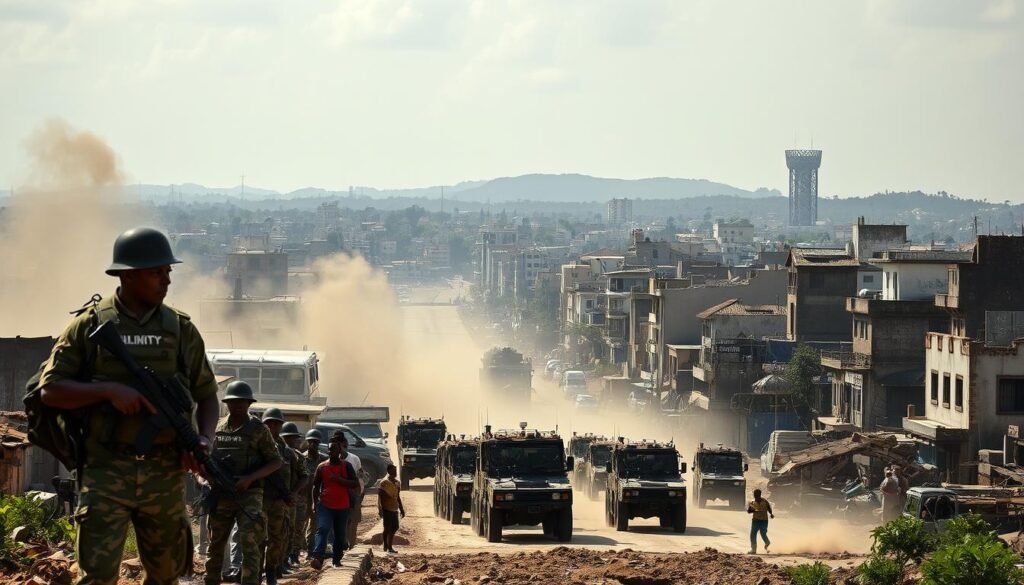
Haiti’s crisis deepens as the international community reacts to Erik Prince’s illegal contract. The controversy surrounding the contract has prompted a wide range of responses from various international actors.
The U.S. government has been at the forefront of the international response. Reactions from the State Department and Congress have been particularly significant.
The State Department has expressed concerns over the contract, citing potential destabilization. Congressional leaders have also weighed in, calling for investigations into the matter.
The contract has significant implications for U.S.-Haiti relations, potentially straining diplomatic ties further. The U.S. government’s response will be crucial in determining the future of bilateral relations.
The United Nations and regional organizations have also been vocal about the contract. Deliberations at the Security Council have highlighted the international community’s concern.
Members of the Security Council have debated the implications of the contract, with some calling for a formal investigation.
Regional organizations like CARICOM and the OAS have expressed their concerns, emphasizing the need for stability and adherence to legal frameworks.
NGOs and civil society organizations, both within Haiti and internationally, have reacted strongly against the contract.
Haitian civil society has been vocal in its opposition, seeing the contract as a threat to the country’s fragile democratic institutions.
International human rights organizations have raised concerns about the potential human rights abuses associated with the contract.
| Organization | Response |
|---|---|
| U.S. State Department | Expressed concerns over potential destabilization |
| United Nations Security Council | Debated the contract, calling for investigations |
| CARICOM | Emphasized the need for stability and legal adherence |
| Haitian Civil Society | Opposed the contract, citing threats to democracy |
The use of private military contractors in unstable regions has raised several red flags, mirroring the controversy surrounding Erik Prince’s contract in Haiti. This phenomenon is not isolated to Haiti; numerous fragile states have experienced the involvement of private military contractors, with varying outcomes.
Several case studies from Africa and the Middle East provide valuable insights into the activities of private military contractors. These regions have seen significant involvement from such contractors, often with substantial consequences.
The Wagner Group, a Russian private military company, has been active in the Central African Republic. Their presence has been associated with both security provision and human rights abuses, highlighting the complex role of private contractors in fragile states.
In Iraq and Afghanistan, private military contractors have played significant roles, often supporting coalition forces. However, their activities have also been linked to controversies, including allegations of misconduct and the blurring of lines between military and civilian roles.
The outcomes of private military contractors’ involvement in fragile states vary widely, but certain patterns have emerged. Understanding these patterns is crucial for assessing the potential impacts of such contractors.
One significant risk associated with private military contractors is their potential contribution to governance deterioration. By operating outside traditional military chains of command, they can sometimes undermine local governance structures.
Private military contractors are also often linked to resource extraction and corruption. In some cases, their presence has facilitated the exploitation of natural resources, further destabilizing fragile states.
To address Haiti’s deepening crisis, it’s essential to explore potential solutions that prioritize security sector reform and international cooperation. The complexity of Haiti’s situation demands a multifaceted approach that not only addresses immediate security concerns but also fosters long-term stability and development.
Reforming the security sector is critical to establishing a stable environment in Haiti. This involves several key strategies:
Rebuilding the Haitian National Police capacity is vital for maintaining law and order. This can be achieved through training programs, equipment provision, and institutional strengthening. Effective police reform can significantly reduce crime and enhance public trust in security institutions.
Community-based security initiatives empower local communities to take an active role in their own security. These programs focus on building trust between law enforcement and the public, promoting collaborative problem-solving, and addressing the root causes of insecurity.
International support is crucial for Haiti’s recovery. Effective mechanisms include:
Ensuring that aid is delivered transparently and is subject to robust accountability mechanisms is essential. This helps prevent corruption and ensures that resources are used effectively to support Haiti’s development goals.
Haitian-led initiatives are critical for sustainable development. By supporting Haitian leadership in both development and security sectors, international partners can help foster solutions that are tailored to the country’s specific needs and context.
Haiti’s future hangs in the balance as the country grapples with the potential consequences of the illegal Erik Prince contract. The complexities of Haiti’s crisis, including political instability, economic challenges, and humanitarian concerns, are further complicated by the involvement of private military contractors.
A comprehensive and Haitian-led approach is necessary to address the country’s challenges. This includes security sector reform and international support mechanisms that prioritize the needs and sovereignty of Haiti. The international community must work together to ensure that any support provided is legitimate, transparent, and aligned with the country’s long-term interests.
As Haiti navigates its uncertain future, it is crucial that the country’s leadership and people are at the forefront of decision-making processes. The conclusion of this crisis will depend on the ability of Haitian stakeholders to drive meaningful change, supported by the international community. Ultimately, a stable and prosperous Haiti is in the interest of the region and the global community.
Haiti is experiencing a severe crisis characterized by political instability, economic challenges, and humanitarian concerns, exacerbated by the assassination of President Moïse and the involvement of private security contractors like Erik Prince.
Erik Prince is a controversial figure and the founder of Blackwater, a private security company. He has a military background and has been involved in various international ventures, often sparking controversy and legal issues.
The contract involves private security services promised by Erik Prince, but it violates Haitian law, particularly with regard to constitutional prohibitions on foreign security forces and procurement law violations.
The contract could lead to increased violence and instability, undermine democratic institutions, and result in human rights abuses, corruption, and resource exploitation.
The U.S. government, United Nations, and regional organizations like CARICOM and the OAS have reacted with varying degrees of concern, while NGOs and civil society, including Haitian civil society, have expressed opposition and raised concerns about human rights.
Legitimate security sector reform, rebuilding the Haitian National Police capacity, community-based security initiatives, and international support mechanisms with transparent aid and accountability frameworks could help address the crisis.
Case studies from Africa and the Middle East, such as the Wagner Group in the Central African Republic, highlight the risks of governance deterioration, resource extraction, and corruption associated with private military contractors.
Haiti has experienced a legacy of external influence, including U.S. occupations and UN peacekeeping operations, which have had lasting impacts on the country’s development and contributed to patterns of exploitation and dependency.
The contract is part of a broader pattern of foreign intervention in Haiti, which has often been characterized by exploitation and a lack of accountability, highlighting the need for Haitian-led solutions and international support mechanisms that prioritize transparency and accountability.