Physical Address
304 North Cardinal St.
Dorchester Center, MA 02124
Physical Address
304 North Cardinal St.
Dorchester Center, MA 02124


Discover how Haiti's upheaval enables politicians, oligarchs, and NGOs to evade accountability.
Haiti’s ongoing crisis has led to a complex web of interests, allowing certain individuals and organizations to evade responsibility.
The situation in Haiti has become a delicate balance of power, with various actors involved, including politicians, oligarchs, and NGOs. While these entities are supposed to work towards the betterment of the country, they often prioritize their own interests.
This article will explore how these actors manipulate the system to avoid accountability, perpetuating Haiti’s turmoil.
Haiti’s ongoing turmoil is marked by a vicious cycle of gang violence, political gridlock, and economic deterioration. The country’s stability is further threatened by a complex interplay of factors.
The situation in Haiti has been deteriorating due to escalating gang violence and a significant political vacuum. This has led to:
Gangs have taken control of large areas, leading to a collapse of security. This has resulted in:
The economic situation in Haiti is dire, with food insecurity and healthcare collapse being major concerns. The crisis has led to:
The humanitarian emergency is characterized by widespread food insecurity and a healthcare system on the brink of collapse. This has resulted in:
The situation in Haiti demands immediate attention and action to address the multifaceted crisis it faces.
Understanding Haiti’s current state of turmoil requires a look into its complex history. The country’s vulnerability to various crises is deeply intertwined with its past, from colonial exploitation to contemporary foreign interventions.
Haiti’s history began with colonial exploitation under French rule, making it one of the most profitable colonies in the world due to its vast resources and slave labor. The brutal conditions led to the Haitian Revolution, resulting in Haiti’s independence in 1804. However, this independence came at a steep price, as Haiti was forced to pay an indemnity to France for the loss of its “property,” severely impacting its economic development.
Following independence, Haiti experienced decades of dictatorship, with leaders like François Duvalier ruling with an iron fist. These regimes were often supported or tolerated by foreign powers, including the United States, due to strategic interests. Foreign intervention, whether military or economic, has continued to influence Haiti’s political landscape, often to its detriment.
The 2010 earthquake was a devastating blow to Haiti, killing hundreds of thousands and displacing millions. The international response was massive, but it also highlighted issues of mismanagement and inefficiency in aid delivery. The earthquake marked a turning point in Haiti’s recent history, exacerbating existing vulnerabilities and leading to a further decline in governance and infrastructure.
The transient nature of Haitian leadership has led to a governance system where responsibility is elusive. This section examines the political landscape in Haiti, focusing on the revolving door of leadership and its contribution to a lack of accountability.
Haiti has seen numerous leaders come and go, each promising change but often perpetuating the cycle of instability. This constant change in leadership makes it challenging to implement long-term policies and ensures that those in power remain unaccountable.
Case studies illustrate how political impunity is a recurring theme in Haitian politics. For instance, former leaders often enjoy immunity from prosecution, allowing them to act with impunity.
The political chaos in Haiti creates shields against accountability, benefiting those in power. This chaos is often used as a pretext to avoid scrutiny and maintain the status quo.
The strategic benefits of instability are clear: it allows political leaders to avoid responsibility and maintain their grip on power.
| Benefit | Description |
|---|---|
| Distracts from Accountability | Instability shifts focus away from holding leaders accountable. |
| Maintains Power | Leaders use instability as a reason to stay in power. |
| Discourages Reform | The constant flux discourages meaningful reform efforts. |
In conclusion, the political power players in Haiti benefit from the lack of accountability, using the revolving door of leadership and political chaos to their advantage. Understanding these dynamics is crucial to addressing the governance issues in Haiti.
In the midst of disaster, Haiti’s oligarchs find new ways to exploit the economy for personal gain. This exploitation is not merely a byproduct of the country’s instability but is deeply intertwined with the political and economic structures that govern Haiti.
Haiti’s economic elite are closely linked with political power brokers, creating a system where economic and political influence are deeply intertwined. This nexus of power allows them to manipulate markets and policies to their advantage, often at the expense of the general population. For instance, they may influence trade policies or government contracts to favor their business interests.
During times of crisis, Haiti’s oligarchs have been known to monopolize key industries, further exacerbating the economic hardship faced by the majority. This monopolization can lead to price gouging and scarcity of essential goods, as they seek to maximize profits in a constrained market. The lack of competition stifles economic recovery and deepens the crisis.
A significant issue contributing to Haiti’s economic woes is the practice of capital flight and the accumulation of wealth offshore. Haiti’s wealthy elite often invest their capital in foreign markets or hold it in offshore accounts, depriving the country of much-needed investment. This not only hinders economic development but also reduces the government’s ability to fund public services.
| Economic Issue | Impact on Haiti | Oligarch Benefit |
|---|---|---|
| Monopolization of Industries | Price gouging and scarcity of goods | Increased profits |
| Capital Flight | Reduced domestic investment | Offshore wealth accumulation |
| Political Connections | Influenced policies favoring elite | Enhanced economic and political power |
The intertwining of economic and political power in Haiti creates a challenging environment for addressing the country’s crises. Understanding these dynamics is crucial for developing strategies to mitigate the exploitation and promote more equitable economic practices.
The turmoil in Haiti has led to a significant accountability vacuum, allowing politicians, oligarchs, and NGOs to operate with relative impunity. This environment not only hinders the country’s progress but also perpetuates a cycle of corruption and mismanagement.
In failed states like Haiti, the collapse of legal systems is a common phenomenon. This collapse is not merely a result of institutional weakness but is often exacerbated by the actions of those in power.
The legal system’s inability to function effectively creates an environment where the rule of law is undermined. As former UN Secretary-General Ban Ki-moon noted, “The challenge in Haiti is not just about rebuilding infrastructure, but also about rebuilding institutions that can uphold the law.”
“The challenge in Haiti is not just about rebuilding infrastructure, but also about rebuilding institutions that can uphold the law.”
The existence of mutual protection networks among Haiti’s elites further complicates the accountability landscape. These networks, often intertwined with business and political interests, create a business-political-criminal nexus that is difficult to dismantle.
This nexus is characterized by a complex web of relationships that protect the interests of the elites at the expense of the general population. For instance, a table illustrating the interconnectedness of these networks might look like this:
| Elite Group | Political Influence | Business Interests | Criminal Connections |
|---|---|---|---|
| Politicians | High | Moderate | Low |
| Oligarchs | Moderate | High | Moderate |
| NGOs | Low | Moderate | Low |
The interplay between these groups highlights the challenges in achieving accountability in Haiti. Addressing this issue requires a multifaceted approach that includes strengthening legal institutions and breaking down the mutual protection networks among elites.
In the aftermath of the 2010 earthquake, Haiti witnessed an unprecedented influx of NGOs, fundamentally altering its aid ecosystem. This surge in aid organizations has had a profound impact on the country’s recovery efforts and long-term development.
Following the devastating earthquake, the international community rallied to provide aid to Haiti, leading to a significant increase in the number of NGOs operating in the country. While the intention was to provide much-needed assistance, this proliferation of aid organizations has created a complex web of humanitarian efforts. The NGO industrial complex has become a major player in Haiti’s economy and social fabric.

Despite the influx of billions of dollars in aid, Haiti continues to struggle with poverty and underdevelopment. Critics argue that mismanagement of aid is a significant factor in this failure. Funds are often not used effectively, and in some cases, they are diverted for purposes other than their intended use.
A notable example of aid mismanagement is the Red Cross housing scandal. Despite receiving half a billion dollars in donations, the Red Cross built only six homes. This egregious example highlights the need for greater transparency and accountability in aid distribution.
While the intention behind humanitarian aid is to provide relief, it can sometimes have unintended consequences. In Haiti, the reliance on external aid has created dependency cycles, undermining local capacities and hindering long-term self-sufficiency. It’s crucial to strike a balance between providing immediate relief and supporting sustainable development.
International actors, particularly the U.S. and the UN, play significant roles in Haiti, but their policies sometimes exacerbate the crisis. The involvement of these actors is complex, with both positive and negative impacts on the country.
U.S. policy toward Haiti has been marked by contradictions, particularly between immigration policies and development rhetoric. While the U.S. provides significant aid to Haiti, its immigration policies often hinder the country’s development by restricting the flow of people and goods.
The U.S. has a history of providing humanitarian aid to Haiti, yet its immigration policies can have detrimental effects on the country. For instance, strict visa policies can limit Haitian entrepreneurs’ ability to travel and engage in international trade.
| Policy Area | U.S. Approach | Impact on Haiti |
|---|---|---|
| Immigration | Strict visa policies | Limits travel and trade |
| Economic Aid | Significant financial assistance | Provides short-term relief |
The UN’s involvement in Haiti has left a complicated legacy, marked by significant humanitarian efforts but also notable failures in accountability.
The UN’s introduction of cholera to Haiti in 2010 and subsequent handling of the crisis is a stark example of accountability failures. Additionally, allegations of sexual abuse by UN peacekeepers have further tarnished the organization’s reputation in Haiti.
The impact of these failures has been profound, eroding trust in international actors and highlighting the need for greater accountability in their actions.
Ordinary Haitians bear the brunt of the country’s failed governance, experiencing firsthand the devastating effects of institutional failures. The daily struggles of Haitians are a stark reminder of the human cost of the ongoing crises.
Life in Haiti is marked by uncertainty and fear. With the escalation of violence and political instability, daily activities become perilous. Basic necessities like food, water, and healthcare are scarce, and the lack of effective governance exacerbates these challenges.
As a result, Haitians face significant hardships in their daily lives, from navigating through violent neighborhoods to dealing with the psychological impact of living in constant fear.
The dire situation in Haiti has led to a significant migration crisis, with many Haitians fleeing their homeland in search of safety and better opportunities. The displacement of people, both within Haiti and to other countries, poses additional challenges, including the risk of exploitation and further marginalization.
“The migration crisis in Haiti is not just a symptom of the current turmoil but also a reflection of the long-standing failures of governance and economic management.”
The institutional failures in Haiti have a profound impact on future generations. The lack of access to quality education and economic opportunities hinders the potential of Haitian youth.
The collapse of educational infrastructure and opportunities has long-term consequences for Haiti’s development. Without access to quality education, the cycle of poverty and inequality continues, limiting the potential for future generations to break free from the shackles of institutional failures.
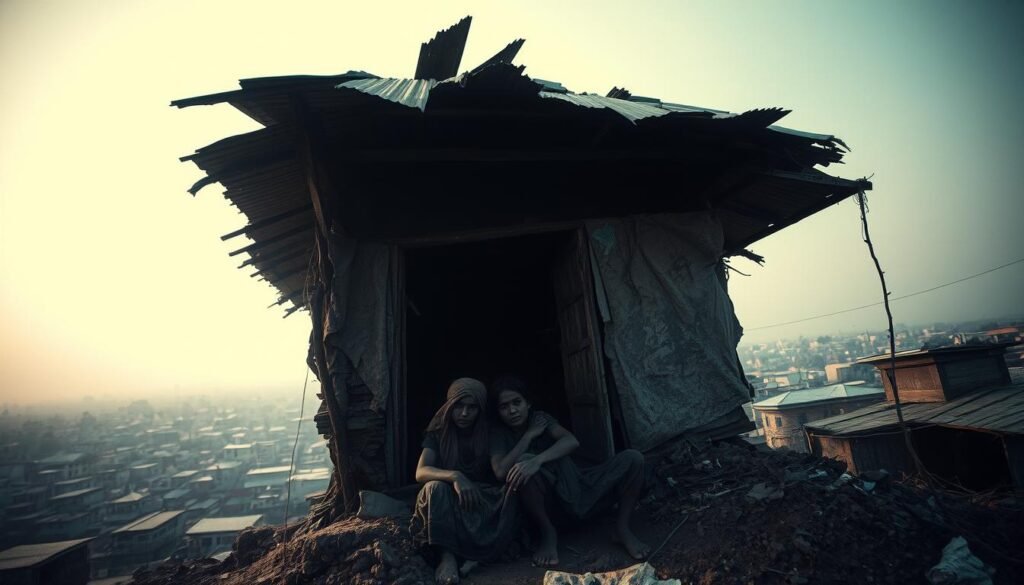
The situation in Haiti underscores the urgent need for effective governance and institutional reforms to address the human cost of the ongoing crises.
Breaking the cycle of impunity in Haiti necessitates innovative solutions that empower grassroots movements and leverage international support. To achieve genuine accountability, it’s essential to explore multiple pathways that address the complex issues plaguing the nation.
Grassroots movements and civil society organizations play a crucial role in demanding accountability from Haitian leaders. These groups have been instrumental in organizing protests, advocating for policy changes, and providing support to marginalized communities. By empowering these organizations, Haiti can foster a culture of transparency and responsibility.
International accountability mechanisms, such as independent oversight bodies and international legal frameworks, can provide an additional layer of scrutiny. These mechanisms can help deter corruption and ensure that those responsible for human rights violations are held accountable. Strengthening international cooperation and leveraging global institutions can support Haiti’s path towards accountability.
Reimagining Haiti’s governance structure involves creating more transparent and inclusive institutions. This can be achieved through constitutional reforms, enhancing parliamentary oversight, and implementing robust anti-corruption measures.
Models for transparent institution building include adopting digital technologies for public services, enhancing citizen participation in governance, and establishing independent anti-corruption agencies. For instance, implementing e-governance solutions can reduce bureaucratic inefficiencies and increase transparency. Additionally, fostering a culture of accountability within public institutions is crucial.
By combining these approaches, Haiti can break the cycle of impunity and move towards a more accountable and just society. Empowering local communities, leveraging international support, and reforming governance structures are critical steps in this journey.
Haiti’s ongoing crisis underscores the urgent need for accountability among its leaders and powerful elites. The intertwined interests of politicians, oligarchs, and NGOs have perpetuated a system where those in power evade responsibility, leaving ordinary Haitians to bear the brunt of institutional failures.
Addressing this accountability vacuum is crucial for Haiti’s future stability and development. By examining the historical context, current power dynamics, and the role of international actors, it becomes clear that a multifaceted approach is necessary to break the cycle of impunity.
Grassroots movements and civil society resistance are vital in pushing for change, while international accountability mechanisms can provide additional support. Reimagining Haiti’s governance structure to prioritize transparency and accountability can pave the way for a more equitable future.
The future of accountability in Haiti depends on the collective efforts of its citizens, leaders, and international partners to create a system that values justice and transparency. By working together, Haiti can move towards a more stable and prosperous future.
The main reason is a complex interplay of factors including political instability, gang violence, economic exploitation, and historical legacies of colonialism and foreign intervention.
Politicians and oligarchs benefit by exploiting the situation for personal gain, evading accountability, and maintaining their power and influence through various means, including monopolizing industries and accumulating wealth offshore.
NGOs have proliferated in Haiti, especially after the 2010 earthquake, but their efforts have sometimes been marred by mismanagement of aid money, creating dependency cycles, and failing to foster self-sufficiency among Haitians.
Foreign intervention, including U.S. policy and UN actions, has had mixed results, sometimes exacerbating the crisis due to contradictions in policy, such as between immigration policies and development rhetoric, and failures in accountability.
The human costs include daily struggles under failed governance, migration crises, displacement, and a generational impact due to institutional failures, including the collapse of education and opportunities.
Yes, potential pathways include grassroots movements and civil society resistance, international accountability mechanisms, and reimagining Haiti’s governance structure with models for transparent institution building.
The 2010 earthquake was a significant turning point in the mismanagement of Haiti, leading to a massive influx of aid and NGOs, which, while well-intentioned, often resulted in mismanagement and dependency.
Gang control has led to a collapse in security, contributing to economic freefall, increased food insecurity, and healthcare issues, further exacerbating the humanitarian crisis.
Yes, international accountability mechanisms can make a difference by providing frameworks and tools to hold individuals and organizations accountable for their actions in Haiti.