Physical Address
304 North Cardinal St.
Dorchester Center, MA 02124
Physical Address
304 North Cardinal St.
Dorchester Center, MA 02124

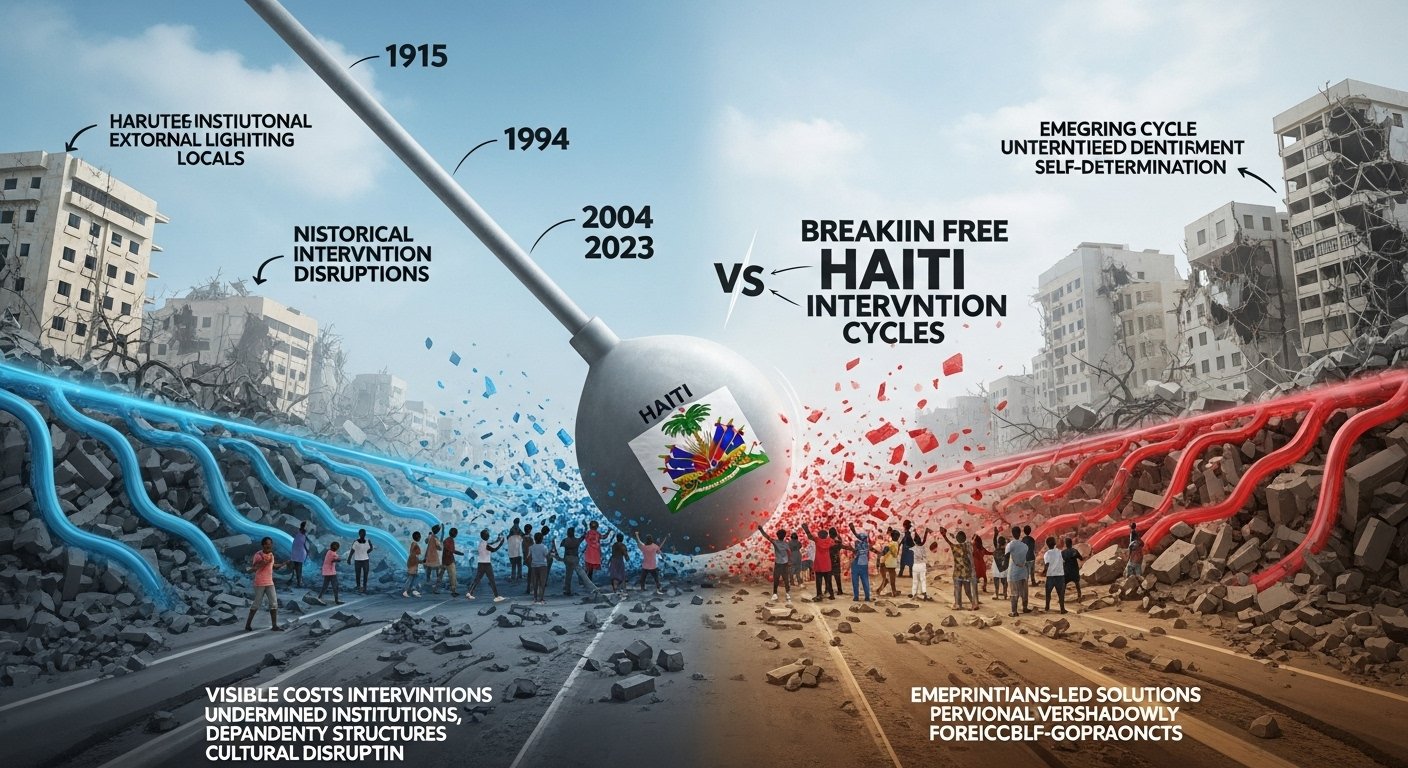
Explore why Haiti can no longer afford foreign intervention and how to end the cycle of dependence.
Haiti’s struggle for independence has been a long and arduous journey, marked by periods of foreign intervention that have significantly impacted its sovereignty. The country’s history is replete with instances where external influences have shaped its political, economic, and social landscapes.
Foreign intervention has often been justified as a means to stabilize or aid Haiti, but it has frequently resulted in undermining Haitian independence and perpetuating dependency.
The need for Haiti to break free from this cycle of dependency is more pressing than ever. By examining the historical context and current issues surrounding foreign intervention, we can better understand the imperative for change.
The journey of Haiti, the first black republic, is a complex tale of revolution and intervention. Haiti’s history is characterized by its significant struggle for independence and its subsequent interactions with the international community.
The Haitian Revolution (1791-1804) was a pivotal event that shaped the nation’s history. It was a successful slave revolt that led to the establishment of Haiti as an independent nation.
The revolution was a complex process involving various social and political forces. It began as a slave revolt in 1791 and evolved into a full-scale revolution, culminating in Haiti’s declaration of independence in 1804.
The international reaction to Haiti’s independence was largely negative. Many countries, including France and the United States, were initially reluctant to recognize Haiti as a sovereign state. This resistance was rooted in the fear of slave revolts spreading to other colonies.
One of the earliest forms of foreign interference was the imposition of the “Independence Debt” by France. In 1825, France demanded that Haiti pay an indemnity for the loss of its “property” (enslaved Africans) during the revolution. This debt had long-lasting economic impacts on Haiti.
Haiti’s history has been marked by a pattern of occupation and intervention. From the US occupation in 1915 to the more recent UN missions, external interventions have had significant impacts on Haiti’s political, economic, and social structures.
| Year | Event | Impact |
|---|---|---|
| 1791 | Start of Haitian Revolution | Beginning of the end of slavery in Haiti |
| 1804 | Haiti declares independence | Establishment of the first black republic |
| 1825 | Imposition of “Independence Debt” | Long-term economic strain on Haiti |
| 1915 | US Occupation begins | Significant political and economic control by the US |
The US occupation of Haiti from 1915 to 1934 left an indelible mark on the country’s economic, political, and social landscape. This period, though complex and multifaceted, is crucial in understanding Haiti’s contemporary challenges.
The US occupied Haiti primarily due to strategic and economic interests. During World War I, the US sought to prevent German influence in the Caribbean and secure Haiti’s financial and military infrastructure. The occupation was also motivated by a desire to stabilize Haiti’s political situation and manage its debt, largely held by American banks.
“The occupation was a manifestation of the US’s growing involvement in regional affairs, driven by both economic interests and a paternalistic attitude towards Haiti’s governance.”
The occupation had profound and lasting impacts on Haiti’s economy and political structure. One of the significant changes was the centralization of power in Port-au-Prince, which exacerbated regional disparities.
During the occupation, infrastructure development was a key focus. Roads, bridges, and public buildings were constructed, which improved connectivity and facilitated economic activities. However, this came at the cost of Haitian sovereignty, as control over many aspects of governance was ceded to the US.
| Aspect | Pre-Occupation | During Occupation | Post-Occupation |
|---|---|---|---|
| Economic Control | Haitian control | US controlled finances | Mixed control, dependency on US |
| Infrastructure | Limited infrastructure | Significant development | Maintenance challenges |
| Political Structure | Fragmented power | Centralized in Port-au-Prince | Continued centralization |
The occupation led to the centralization of political power in Port-au-Prince, marginalizing other regions. This has had a lasting impact on Haiti’s political and economic geography.
The occupation also had significant cultural and social consequences. The imposition of American values and practices affected Haitian identity and cultural practices. The promotion of English and American customs sometimes came at the expense of Haitian Creole and traditional practices.
The legacy of the US occupation of Haiti is complex, with both positive and negative outcomes. Understanding this history is crucial for addressing the current challenges faced by Haiti.
The history of UN involvement in Haiti is complex, with both positive intentions and negative outcomes. The United Nations has been involved in Haiti through various peacekeeping missions, most notably the MINUSTAH and MINUJUSTH.
The MINUSTAH mission, established in 2004, aimed to restore stability and security in Haiti following political unrest. However, the reality on the ground was far more complicated. While the mission did bring some initial stability, it was also marred by controversy, including allegations of misconduct by peacekeepers.
MINUJUSTH, which succeeded MINUSTAH in 2017, continued the effort to support Haiti’s rule of law and human rights. Despite these efforts, both missions faced significant challenges, including criticism over their handling of local issues and their impact on Haitian society.
One of the most devastating consequences of UN intervention in Haiti was the introduction of cholera in 2010. The epidemic, which was brought to the country by UN peacekeepers, resulted in a massive health crisis.
The cholera outbreak was traced back to a contaminated sewage system at a UN peacekeeping camp. The bacteria spread rapidly through Haiti’s waterways, catching the country’s health system off guard.
The UN’s response to the epidemic was initially criticized for being slow and inadequate. The organization faced lawsuits and demands for compensation from Haitian victims. Eventually, the UN acknowledged its role in the outbreak and committed to providing compensation and supporting cholera eradication efforts.
| Year | Cholera Cases | Deaths |
|---|---|---|
| 2010 | 200,000+ | 3,000+ |
| 2011 | 350,000+ | 5,000+ |
Both MINUSTAH and MINUJUSTH faced allegations of sexual abuse and exploitation by peacekeepers. These scandals highlighted significant accountability issues within the UN missions, with many cases going unpunished.
The lack of accountability for sexual misconduct by UN personnel has been a persistent criticism of UN peacekeeping operations in Haiti and elsewhere. Efforts to address these issues have included increased training and stricter policies, but challenges remain.
Haiti’s reliance on foreign aid has disrupted its market dynamics, leading to unforeseen economic challenges. The influx of foreign assistance, while aimed at alleviating poverty and promoting stability, has inadvertently created a cycle of dependency that hinders the country’s economic self-sufficiency.
The massive influx of foreign aid into Haiti has significantly disrupted its local market. This disruption is evident in two key areas: the collapse of the agricultural sector and the displacement of local businesses.
The agricultural sector, once the backbone of Haiti’s economy, has seen a significant decline due to foreign food aid. The importation of cheap, subsidized food from abroad has undercut local farmers, making it difficult for them to compete.
Similarly, local businesses have struggled to stay afloat amidst the influx of foreign goods and services. This has led to a decline in domestic entrepreneurship and a loss of economic control.
The proliferation of non-governmental organizations (NGOs) in Haiti has also had a detrimental effect on governance. Many NGOs operate independently of the Haitian government, often duplicating efforts and creating inefficiencies.
Furthermore, the presence of international organizations and NGOs has led to a brain drain, as many of Haiti’s skilled professionals are drawn to work with these entities, often at the expense of local institutions.
| Economic Impact | Cause | Effect |
|---|---|---|
| Agricultural Sector Collapse | Foreign food aid | Decline in local farming |
| Local Business Displacement | Influx of foreign goods | Loss of domestic entrepreneurship |
| Brain Drain | International job opportunities | Loss of skilled professionals |
For decades, Haiti has been entangled in a complex web of foreign intervention, raising questions about its sovereignty and economic viability. The continuous influx of foreign aid and intervention has created a dependency that hinders Haiti’s ability to develop independently.
The presence of foreign entities in Haiti’s political landscape has significantly undermined its sovereignty. Decision-making processes are often influenced or controlled by external forces, limiting the government’s ability to act in the best interest of its citizens.
“The Haitian government has been forced to navigate a complex landscape of international pressures and conditional aid, often at the expense of its own policy priorities.”
Economic self-determination is crucial for any nation’s development. However, Haiti’s economic path has been dictated by external factors, including unfair trade practices and conditional aid.
Haiti is rich in natural resources, but the extraction of these resources has often benefited foreign corporations more than the Haitian people. Unfair trade practices have further exacerbated the issue, hindering local economic growth.
| Year | Resource Extracted | Benefit to Haiti |
|---|---|---|
| 2010 | Gold | Minimal |
| 2015 | Oil | Low |
| 2020 | Iridium | Negligible |
The aid provided to Haiti often comes with conditions that favor the donor countries rather than Haiti’s development needs. Structural adjustment programs have led to austerity measures that negatively impact public services and infrastructure.
The continuous influence of foreign cultures and values has eroded Haiti’s cultural identity. The imposition of external solutions to internal problems has also undermined national confidence, making it harder for Haitians to believe in their ability to solve their own challenges.
In conclusion, Haiti’s reliance on foreign intervention has led to a sovereignty deficit, thwarted economic self-determination, and eroded cultural identity. It’s time for Haiti to chart its own course, leveraging its resources and the resilience of its people to build a more sustainable future.
Gang violence and political instability have plunged Haiti into a deepening crisis. The capital, Port-au-Prince, is particularly affected, with armed gangs controlling large swaths of territory and disrupting daily life.
The surge in gang violence has led to a humanitarian crisis, with thousands displaced and in need of assistance. The political landscape is equally volatile, with ongoing debates about governance and the role of external actors in stabilizing the country.
The international community has responded to the crisis with various proposals, including the Multinational Security Support Mission. This mission aims to provide security assistance to help stabilize the country.
The Multinational Security Support Mission is a proposed solution backed by several countries, with the goal of restoring order and enabling humanitarian aid to reach those in need. However, concerns have been raised about the potential for external intervention to undermine Haitian sovereignty.
Critics argue that the international response, while well-intentioned, may not address the root causes of the crisis. There are concerns that external solutions may not be tailored to Haiti’s specific needs and could perpetuate dependency on foreign aid.
Haitians are increasingly vocal about the need for Haitian-led solutions. Many advocate for approaches that prioritize national sovereignty and self-determination, ensuring that any external assistance is aligned with the country’s long-term interests.
The path forward requires a nuanced understanding of Haiti’s complex challenges and a commitment to supporting Haitian initiatives. By prioritizing Haitian perspectives and promoting self-determination, the international community can play a more constructive role in addressing the current crisis.
Empowering Haitian communities through alternative approaches is crucial for sustainable development and long-term stability. Rather than relying on foreign intervention, Haiti’s progress depends on strengthening local capacities and fostering self-determination.
Civil society plays a vital role in driving change in Haiti. By supporting grassroots movements, we can ensure that solutions are tailored to the needs of local communities.
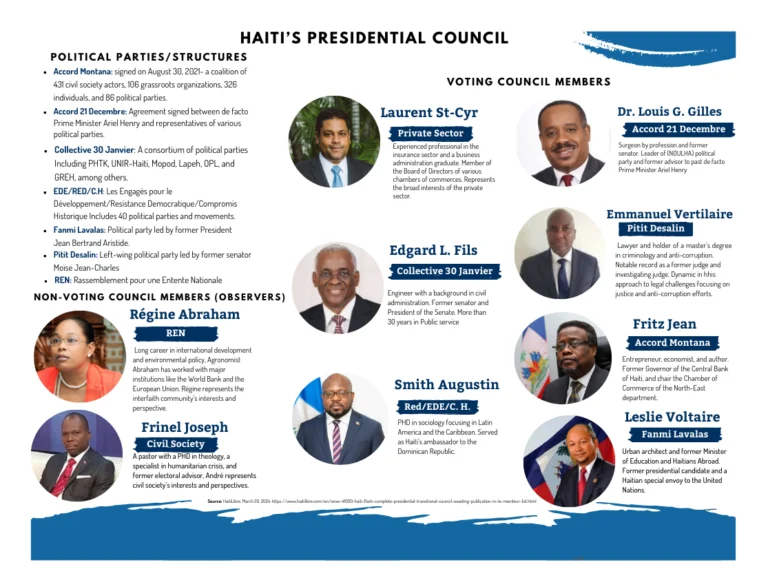
The Montana Accord is a significant civil society initiative that brings together various stakeholders to propose comprehensive solutions for Haiti’s future. Such initiatives demonstrate the potential for Haitian-led change.
Community-based security solutions offer a promising alternative to traditional security approaches. By engaging local communities in security efforts, Haiti can build trust and improve safety.
Economic dependency is a major challenge for Haiti. Shifting from aid to trade can help stimulate local economies and promote self-sufficiency.
| Economic Strategy | Benefits | Challenges |
|---|---|---|
| Aid-Based | Immediate relief | Creates dependency |
| Trade-Based | Promotes self-sufficiency | Requires infrastructure development |
The Haitian diaspora represents a valuable resource for the country’s development. Engaging diaspora communities can facilitate knowledge transfer and investment.
“The diaspora is a critical component of Haiti’s development strategy, offering skills, resources, and networks that can drive progress.”
By leveraging the skills and resources of the diaspora, Haiti can access new opportunities for growth and development. This approach not only supports economic reforms but also strengthens civil society.
The cycle of foreign intervention in Haiti can be broken by adopting a framework of international responsibility that respects Haitian autonomy. This approach involves acknowledging past injustices and taking concrete steps towards a more equitable relationship.
Haiti’s history is marked by exploitation and debt imposed by foreign powers. Reparations can play a crucial role in rectifying these historical injustices. The concept of reparations is not merely about financial compensation; it’s about acknowledging the past and taking responsibility for the impact of historical events on Haiti’s development.
Fair trade policies and debt forgiveness are critical components of a just international framework. This involves two key aspects:
The “Independence Debt” imposed on Haiti by France is a significant historical injustice. Forgiving this debt is a step towards rectifying the past. It is essential to understand that this debt was a tool of coercion, limiting Haiti’s sovereignty and economic development.
Creating equitable trade relationships means restructuring trade policies to benefit both Haiti and its international partners. This can involve reducing tariffs on Haitian goods, providing technical assistance to improve Haitian products’ competitiveness, and ensuring that trade agreements are fair and transparent.
| Policy | Description | Benefit |
|---|---|---|
| Debt Forgiveness | Cancellation of historical debts | Economic Relief |
| Tariff Reduction | Lowering tariffs on Haitian exports | Increased Competitiveness |
| Technical Assistance | Providing expertise to Haitian producers | Improved Product Quality |

Technical support should be provided on Haitian terms, meaning it should be requested and led by Haitians. This approach ensures that the support is tailored to Haiti’s specific needs and context, enhancing its effectiveness.
By adopting these measures, the international community can fulfill its responsibility towards Haiti without perpetuating the cycle of intervention. It’s about creating a partnership that is based on mutual respect and a deep understanding of Haiti’s historical and contemporary challenges.
Haiti’s history has been marked by foreign intervention, from the early “Independence Debt” to modern-day UN missions. The consequences have been devastating, undermining the country’s sovereignty, disrupting its economy, and eroding its cultural identity.
A new path forward for Haiti requires a fundamental shift towards Haitian-led development. This approach prioritizes the needs and perspectives of the Haitian people, rather than external interests. By supporting grassroots movements and civil society, Haiti can build a more equitable and sustainable future.
Haitian-led development is not just a moral imperative; it is also an economic necessity. By breaking the cycle of foreign dependency, Haiti can reclaim its economic self-determination and promote cultural identity. This new path forward is crucial for Haiti’s long-term prosperity and stability.
The international community must recognize the importance of Haitian sovereignty and support initiatives that empower the Haitian people. By doing so, we can work towards a more equitable and just future for Haiti, one that is driven by Haitian-led development and a commitment to the country’s own unique identity.
The article argues that Haiti can no longer afford foreign intervention, highlighting the sovereignty deficit, the thwarting of economic self-determination, and the erosion of cultural identity and national confidence.
The Haitian Revolution (1791-1804) and the subsequent imposition of the “Independence Debt” are cited as early instances of foreign intervention in Haiti.
The US occupation had lasting economic and political impacts, including infrastructure development at the cost of sovereignty loss, and the centralization of power in Port-au-Prince.
The cholera epidemic is cited as a case study in intervention gone wrong, highlighting the UN’s role in the outbreak and the subsequent response and accountability issues.
Foreign aid has led to aid dependency, disrupting the market, causing the collapse of the agricultural sector, and displacing local businesses.
Alternative approaches include strengthening civil society and grassroots movements, economic reforms, trade rather than aid, diaspora engagement, and knowledge transfer.
The international community is encouraged to provide reparations, implement fair trade policies, and offer debt forgiveness, as well as provide technical support on Haitian terms.
The “Independence Debt” imposed on Haiti after its independence is seen as a legacy of historical injustice, with ongoing impacts on the country’s economy and sovereignty.