Physical Address
304 North Cardinal St.
Dorchester Center, MA 02124
Physical Address
304 North Cardinal St.
Dorchester Center, MA 02124
Explore Haiti's rich history and reclaim its narrative from foreign perspectives with this insightful article on education as a tool for liberation.
For centuries, Haitian history has been shaped by foreign narratives that often distort the country’s rich cultural heritage. The struggle to reclaim and redefine this history is crucial for the Haitian people to understand their identity and assert their place in the world.
The role of education as liberation is pivotal in this process. By promoting a more accurate and inclusive representation of Haitian history, education can empower individuals to challenge dominant narratives and foster a sense of pride and ownership over their cultural heritage.
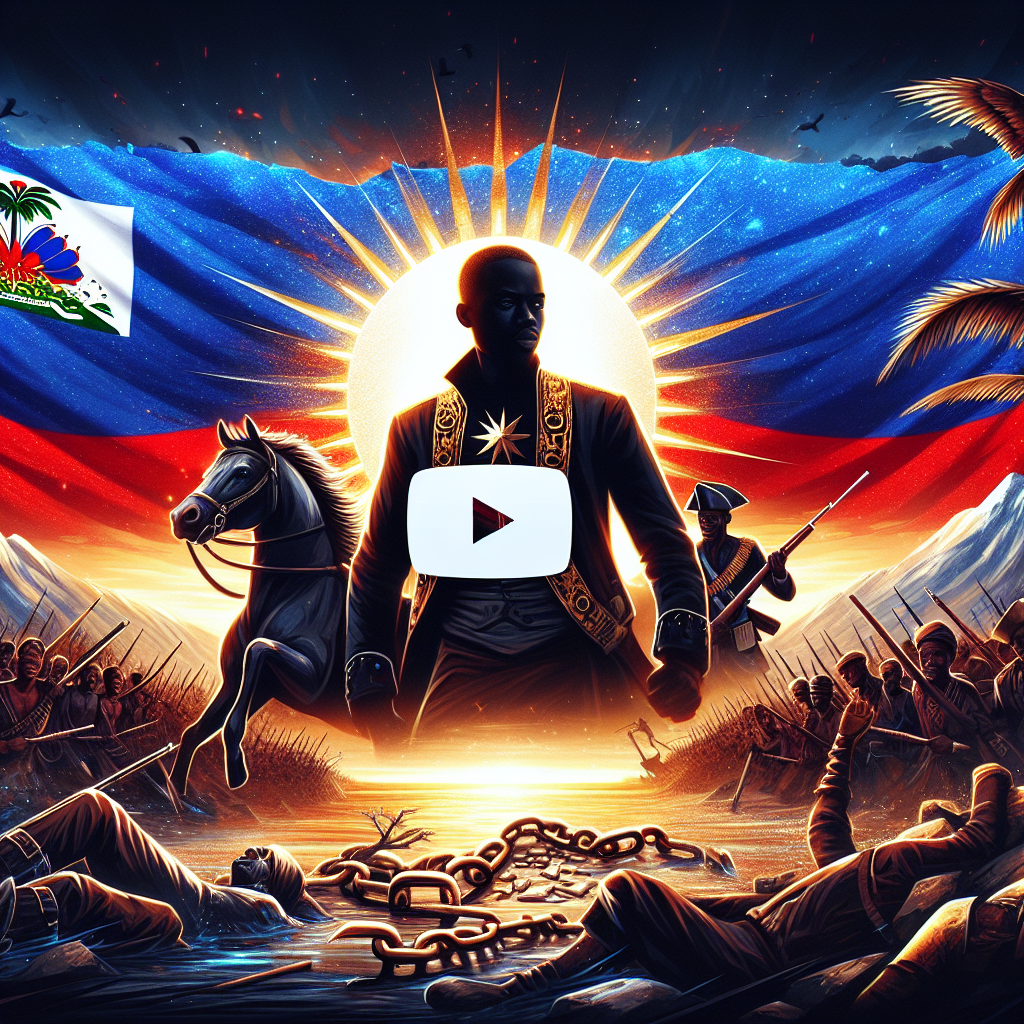
In the annals of history, the Haitian Revolution emerges as a beacon of resistance against colonial and slaveholding powers. This revolution, which took place from 1791 to 1804, was not only a pivotal moment for Haiti but also had far-reaching implications globally.
The Haitian Revolution led to the establishment of Haiti as the first black republic in the world. This achievement had a profound global impact, inspiring movements against slavery and colonial rule across the Americas and beyond. The revolution challenged the prevailing narratives of racial superiority and the legitimacy of slavery.
The Haitian Revolution’s influence on global anti-slavery movements was significant. It galvanized abolitionist movements in Europe and the Americas, providing a powerful example of successful resistance against slavery. The revolution’s emphasis on freedom, equality, and human rights resonated with people worldwide.
Despite its significant achievements, Haiti’s revolutionary history was subjected to a process of silencing. The newly independent nation faced economic embargoes and diplomatic isolation, imposed by European powers and the United States, which sought to undermine its legitimacy and economic viability.
The economic embargoes and diplomatic isolation imposed on Haiti effectively erased its revolutionary achievement from global historical narratives. This deliberate silencing contributed to a broader narrative that marginalized Haiti’s role in shaping modern history.
For centuries, Haiti’s history has been narrated by external voices, often overshadowing the nation’s own story. This phenomenon has resulted in a complex web of historical accounts, each influenced by the narrator’s perspective and agenda.
Colonial powers, particularly France, have played a significant role in shaping Haiti’s historical narrative. French historiography often portrayed the Haitian Revolution as “unthinkable”, a perspective that diminished the significance of the event.
As Michel-Rolph Trouillot noted, “The Haitian Revolution was unthinkable in the sense that it was unthinkable for the planters, for the colonial system, for the metropolitan powers, and for the vast majority of people in Europe and the Americas, white and black alike.” This perspective highlights the Eurocentric bias in historical accounts.
During the American occupation of Haiti from 1915 to 1934, U.S. military reports and travel writings became significant historical documents. These accounts often reflected the occupiers’ views on Haitian society and culture.
These documents provide insight into the American perception of Haiti during the occupation. However, they also demonstrate the limitations of external narratives in capturing the complexity of Haitian identity.
Modern media continues to influence Haiti’s narrative, often focusing on disaster narratives without providing historical context. This approach perpetuates a skewed understanding of Haiti’s history and its people.
As “Haiti’s history is not just a series of disasters,” it is a rich tapestry of cultural heritage and resilience. Yet, the prevalence of disaster narratives in modern media overshadows the nation’s achievements and historical significance.
In conclusion, the narratives surrounding Haiti’s history have been shaped by various external forces, from colonial powers to modern media. Understanding these influences is crucial for reclaiming Haiti’s authentic historical voice.
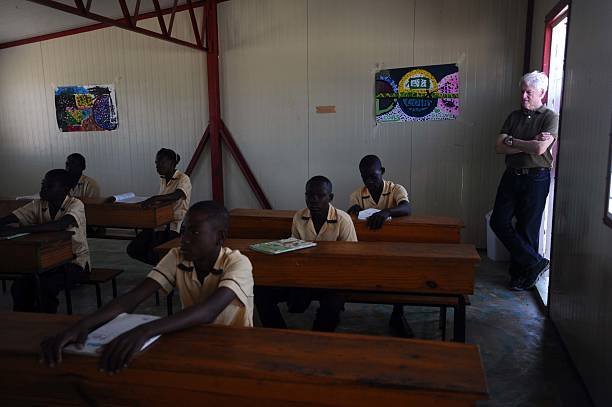
Education has long been recognized as a powerful tool for liberation, and in the context of Haiti, it plays a crucial role in reclaiming the country’s history. By empowering individuals with knowledge of their own past, education enables them to challenge dominant narratives and forge a more authentic understanding of their national identity.
Self-determined historical narratives are essential for Haiti’s development, as they allow the Haitian people to define their own identity and understand their place in the world. According to Haitian scholar Michel-Rolph Trouillot, “the production of historical narratives is a key aspect of the struggle for power and identity.”
“The past is never dead. It’s not even past.”
Several case studies illustrate the impact of education on historical narrative reclamation in Haiti. For instance, community-based education programs have successfully integrated local histories and oral traditions into the curriculum, promoting a more nuanced understanding of Haitian identity.
| Program | Location | Impact |
|---|---|---|
| Community History Project | Rural Haiti | Increased local engagement with historical narratives |
| Oral Tradition Initiative | Urban Centers | Preserved cultural heritage through storytelling |
Education is a critical tool for national identity formation in Haiti, as it enables the transmission of cultural values and historical knowledge to future generations. By incorporating Haitian history and culture into the curriculum, educators can foster a stronger sense of national identity and pride.
Curriculum development is a key aspect of national consciousness-raising in Haiti. By incorporating diverse perspectives and histories, educators can promote a more inclusive understanding of Haitian identity and culture.
The story of Haiti’s independence is more nuanced than the typical foreign narrative suggests. While Toussaint Louverture is often credited as the sole leader of the Haitian Revolution, other figures played crucial roles.
The Haitian Revolution was a complex historical event involving multiple leaders. Jean-Jacques Dessalines and Henri Christophe were instrumental in the fight for independence.
Dessalines declared Haiti’s independence in 1804, becoming the first leader of the newly formed nation. Henri Christophe contributed significantly to the northern region’s development, establishing a robust system of governance.
After gaining independence, Haiti faced significant challenges, including international isolation and economic burdens.
The 1825 indemnity imposed by France had long-lasting economic consequences for Haiti. This debt was a significant burden, impacting Haiti’s development for centuries.
| Event | Year | Impact |
|---|---|---|
| Haitian Revolution Begins | 1791 | Start of the fight for independence |
| Independence Declared | 1804 | Haiti becomes the first independent black nation |
| 1825 Indemnity | 1825 | Economic burden imposed by France |
For centuries, Haiti’s story has been told by others; now, Haitian scholars are taking back control of their history. This movement is crucial in correcting the historical erasure that has plagued Haiti’s narrative. Haitian scholars are at the forefront of this reclamation, bringing new perspectives and insights to the forefront.
Michel-Rolph Trouillot’s work, particularly his book “Silencing the Past: Power and the Production of History,” has been instrumental in understanding the mechanisms of historical erasure. Trouillot’s theoretical frameworks provide a lens through which we can analyze how certain historical events are silenced or marginalized.
Trouillot’s work challenges us to think critically about how history is produced and consumed. His theories on power dynamics and historical production are essential in understanding why certain narratives are privileged over others.
Contemporary Haitian historians continue Trouillot’s legacy by contributing to a more nuanced understanding of Haiti’s history. Scholars like Patrick Bellegarde-Smith and Carolyn Fick have made significant contributions to the field.
Patrick Bellegarde-Smith’s work on Haitian Vodou and its cultural significance has shed new light on the spiritual practices of the Haitian people. Carolyn Fick’s historical research has provided a deeper understanding of Haiti’s revolutionary past and its impact on the world.
To truly understand Haiti’s past, it’s essential to decolonize the way we teach its history. This involves moving beyond traditional Eurocentric narratives and embracing a more inclusive approach that highlights Haiti’s unique cultural and historical context.
Primary source materials play a crucial role in decolonizing the curriculum. They provide firsthand accounts of historical events, allowing students to engage directly with the past.
The digitization of historical documents has made it easier for students and researchers to access primary sources. Digital archives provide a wealth of information that was previously difficult to obtain, enhancing the study of Haitian history.
| Archive | Description | Accessibility |
|---|---|---|
| Digital Haitian Archives | A collection of historical documents related to Haiti’s history | Online |
| Haitian Revolution Archives | Primary sources from the Haitian Revolution period | Online, with some physical copies |
Oral histories and cultural practices, such as Vodou, are vital components of Haitian identity. Incorporating these elements into the curriculum provides a more comprehensive understanding of Haiti’s history and culture.
Vodou and other cultural practices offer insights into the spiritual and social fabric of Haitian society. They are essential for understanding the resilience and creativity of the Haitian people throughout history.

Liberating education in Haiti involves embracing the Kreyòl language. The significance of Kreyòl in educational settings cannot be overstated, as it represents a crucial step towards decolonizing the Haitian education system.
The legacy of colonialism has left a lasting impact on the linguistic landscape of Haitian education. Historically, French has been the dominant language in schools, often at the expense of Kreyòl.
The preference for French over Kreyòl has created linguistic hierarchies, where French is associated with prestige and education, while Kreyòl is often relegated to informal settings. As Michel DeGraff, a prominent Haitian scholar, notes, “The imposition of French as the sole language of education perpetuates a form of linguistic imperialism.”
Bilingual education models that incorporate both Kreyòl and French have shown promising results. These models aim to promote linguistic inclusivity and improve educational outcomes. By valuing Kreyòl alongside French, Haitian students can develop a stronger sense of identity and cultural connection.
Initiatives like the MIT-Haiti project have pioneered the use of Kreyòl in STEM education, demonstrating the potential for Kreyòl to be a language of technical and scientific learning. As stated in a report by the MIT-Haiti Initiative, “The use of Kreyòl in STEM education has improved student engagement and understanding.”
Haiti’s educational system has been profoundly shaped by its colonial past, leaving a lasting legacy that continues to influence the country’s approach to learning. The colonial legacy is evident in the structures and curricula that have been adopted over the years.
The French educational model, imposed during the colonial period, has had a lasting impact on Haiti’s education system. This influence is seen in the emphasis on examination systems and the structure of higher education.
The examination system, inherited from France, has been a critical factor in determining access to higher education. This system has often been criticized for being overly rigorous and not always relevant to the needs of Haitian society.
In recent years, there have been efforts to reform and decolonize Haiti’s educational structures. These efforts aim to create a more inclusive and relevant education system that reflects the country’s history and culture.
The Bernard Reform, along with subsequent educational policies, has sought to address some of the challenges posed by the colonial legacy. These reforms have aimed to make education more accessible and relevant to the needs of Haitian students.
In recent years, Haiti has seen a surge in innovative educational programs that focus on reclaiming the country’s historical narrative. These initiatives are crucial in providing a more accurate and nuanced understanding of Haitian history, moving beyond the foreign narratives that have dominated for too long.
Grassroots movements are playing a vital role in Haiti’s educational landscape. These movements are characterized by community-driven initiatives that aim to preserve and promote Haitian culture and history.
Community libraries and reading circles have become essential components of these grassroots movements. They provide spaces where individuals can access literature and resources on Haitian history that were previously unavailable or hard to find. These initiatives foster a culture of reading and learning, empowering communities to take ownership of their historical narrative.
Technology is also being harnessed to improve access to historical knowledge in Haiti. Digital platforms and mobile technologies are expanding the reach of educational content, making it more accessible to a wider audience.
Mobile learning and radio education programs are examples of how technology is being used to disseminate historical knowledge. These programs allow learners to access educational content via mobile devices or radio broadcasts, overcoming barriers related to geographical location and access to traditional educational infrastructure.

The Haitian diaspora plays a crucial role in reclaiming Haiti’s historical narrative. Through various channels, they contribute to a more accurate and nuanced understanding of Haiti’s past. This community is spread across the globe, from the United States to France and beyond, creating a transnational network that facilitates the exchange of ideas and historical perspectives.
Transnational educational networks are vital in promoting Haitian history and culture. These networks enable the sharing of resources, expertise, and knowledge across borders.
University partnerships facilitate knowledge exchange between Haitian scholars and international academics. This collaboration enhances research on Haitian history and promotes a more comprehensive understanding of the country’s past.
Cultural production is another significant means through which the Haitian diaspora contributes to narrative reclamation. Literature, art, and film serve as powerful tools for preserving historical memory and promoting cultural heritage.
Literature, art, and film not only reflect Haiti’s history and culture but also educate audiences about the country’s past. These media make complex historical narratives more accessible and engaging, fostering a deeper appreciation for Haitian heritage.
As Haiti seeks to reclaim its historical narrative, it faces several challenges, including resource limitations and educational disparities. The process of reclaiming and redefining Haiti’s history is complex and multifaceted, requiring a comprehensive approach that addresses these challenges while leveraging growth opportunities.
The disparity in educational access between rural and urban areas poses a significant challenge. Rural communities often lack the resources and infrastructure necessary for quality education.
Urban areas tend to have better-equipped schools and more qualified educators, creating an educational divide that hinders the uniform dissemination of Haitian historical narratives.
| Region | Educational Resources | Access to Historical Materials |
|---|---|---|
| Urban | Well-equipped schools, qualified educators | Access to libraries, digital archives |
| Rural | Limited resources, less qualified educators | Limited access to historical materials |
Despite these challenges, opportunities arise from international partnerships and solidarity. Collaborative research initiatives and curriculum development projects can significantly enhance Haiti’s historical narrative reclamation efforts.
Partnerships with international institutions can provide access to resources, expertise, and global networks, thereby enriching Haitian historical studies and educational materials.
By addressing the challenges and capitalizing on the opportunities, Haiti can successfully reclaim its historical narrative, fostering a more accurate and inclusive understanding of its past.
The journey to reclaim Haiti’s history from decades of foreign narratives is a crucial step towards a liberated historical consciousness. Education has emerged as a powerful tool in this endeavour, enabling Haitians to redefine their national identity and assert their place in the global community.
Through the efforts of Haitian scholars, educators, and the diaspora, a new narrative is being crafted, one that is rooted in the country’s rich history and cultural heritage. By decolonizing the curriculum and promoting the use of Kreyòl in education, Haitians are taking control of their historical narrative, challenging the dominant foreign accounts that have long silenced their voices.
As Haiti continues on this path, the importance of international solidarity and partnerships cannot be overstated. Collaborative efforts can help address the resource limitations and educational access challenges that hinder the reclamation process. Ultimately, a liberated Haitian historical consciousness will not only enrich the nation’s understanding of itself but also contribute to a more nuanced global appreciation of Haiti’s significance.
Haiti’s Revolution is considered a pivotal moment in world history as it led to the establishment of the first independent black nation in the world, influencing anti-slavery movements globally.
Foreign narratives have often silenced or distorted Haiti’s history, portraying it through the lens of colonial powers and external observers, which has contributed to the erasure of its true historical significance.
Education is crucial in reclaiming Haiti’s history as it enables the development of self-determined historical narratives, promotes national identity, and empowers communities through the accurate representation of their past.
Scholars such as Michel-Rolph Trouillot, Patrick Bellegarde-Smith, and Carolyn Fick have made significant contributions to understanding and reclaiming Haiti’s history, challenging foreign narratives and promoting a more accurate historical consciousness.
Decolonizing the curriculum involves incorporating primary source materials, digital archives, oral histories, and cultural knowledge, such as Vodou practices, to provide a more nuanced and accurate representation of Haiti’s past.
The Kreyòl language is essential in Haitian education as it promotes linguistic inclusivity, challenges the historical dominance of French, and supports the development of a more relevant and effective education system.
The Haitian diaspora has played a significant role in reclaiming Haiti’s history through transnational educational networks, cultural production, and the use of literature, art, and film as educational tools, promoting historical memory and preserving Haiti’s cultural heritage.
Challenges include resource limitations, educational access disparities, and the need for international partnerships and solidarity to support collaborative research and curriculum development.
Initiatives include grassroots educational movements, community libraries, reading circles, mobile learning, and radio education programs, which are enhancing access to historical knowledge and promoting innovative educational approaches.