Physical Address
304 North Cardinal St.
Dorchester Center, MA 02124
Physical Address
304 North Cardinal St.
Dorchester Center, MA 02124
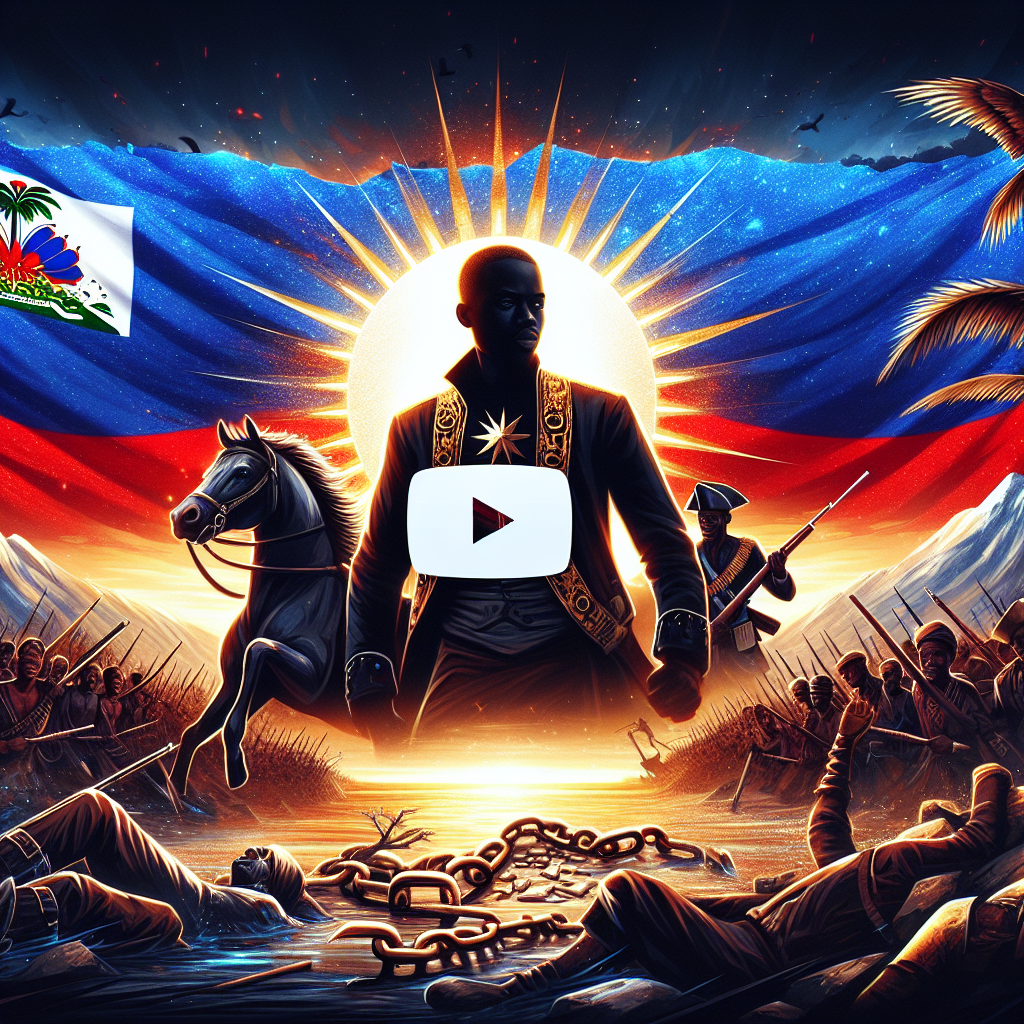
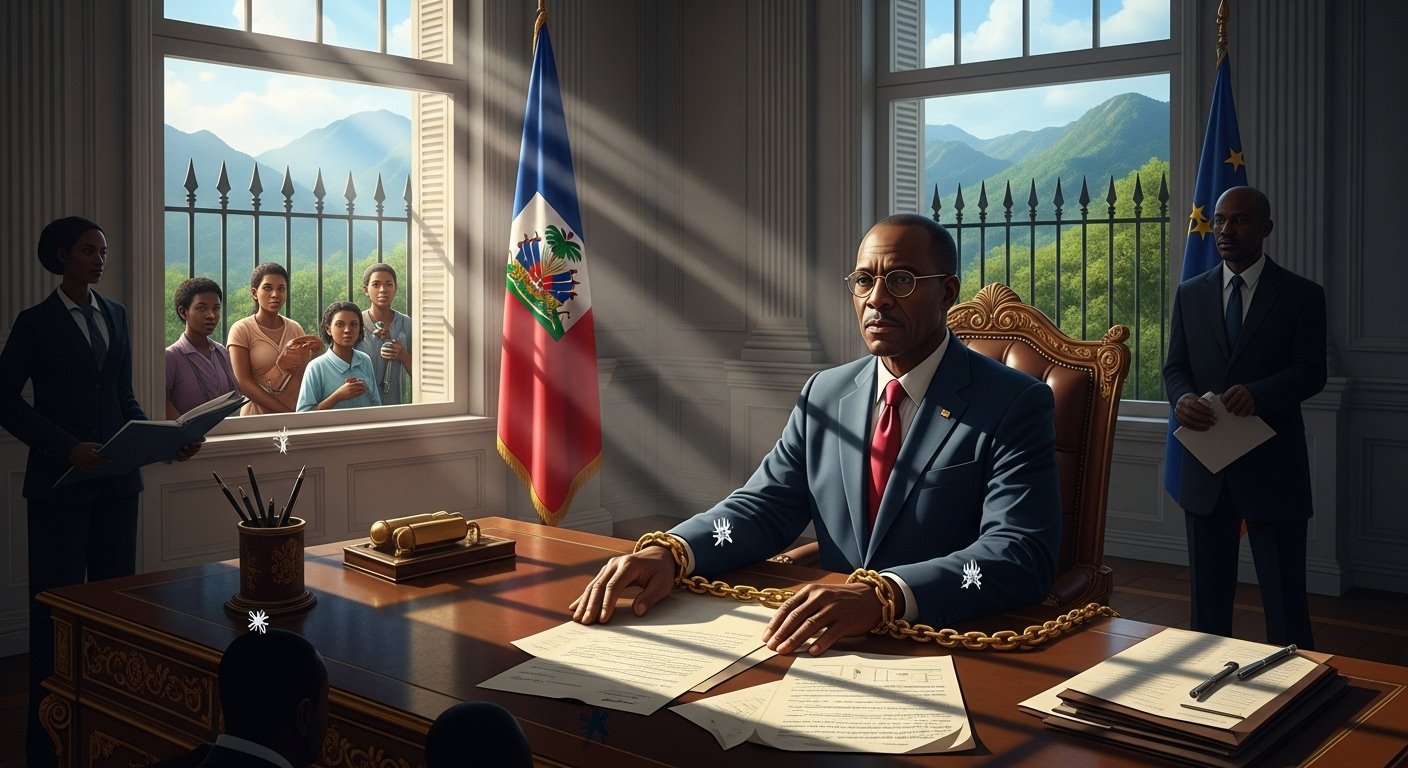
Uncover the Chains of Dependency: How Haiti's transitional government is shaped by international interests.
Haiti’s political landscape is complex, with its transitional government playing a crucial role in navigating the country’s development amidst significant international influence. The interplay between Haiti’s transitional government and international interests is multifaceted, involving various stakeholders and agendas.
The relationship between Haiti and international entities has been shaped by historical and contemporary factors, including foreign aid and diplomatic relations. This dynamic has raised questions about the extent of foreign dependency and its implications for Haiti’s sovereignty and self-determination.
Haiti’s journey to independence was fraught with challenges that ultimately led to its current reliance on foreign entities. To understand the depth of this dependency, it’s crucial to examine the historical events that have shaped the nation.
Haiti gained independence from France in 1804 after a successful slave revolt, becoming the first independent black nation in the world. However, this freedom came at a significant cost. France demanded compensation for the loss of its “property,” including slaves and plantations, effectively placing a heavy financial burden on the newly independent nation.
France’s reparation demands, known as the “indemnity debt,” were not fully paid off until 1947. This debt had a crippling effect on Haiti’s economy, diverting resources away from development and towards paying off foreign creditors. The legacy of this debt continues to impact Haiti’s economic stability.
| Year | Event | Impact on Haiti |
|---|---|---|
| 1804 | Independence from France | Establishment of the first independent black nation |
| 1825 | France demands reparation | Heavy financial burden due to “indemnity debt” |
| 1947 | Final payment of indemnity debt | Long-term economic strain |
The United States occupied Haiti from 1915 to 1934, a period that significantly influenced the country’s governance and economy. The occupation led to the establishment of a modernized military and infrastructure but also suppressed Haitian culture and reinforced foreign control over the economy. The legacy of this occupation continues to affect Haiti’s political stability and economic dependency.
The historical events described have contributed to Haiti’s current state of foreign dependency. Understanding these roots is crucial for addressing the challenges faced by Haiti today.
The assassination of President Jovenel Moïse in July 2021 triggered a power vacuum, leading to the establishment of an illegitimate transitional council. This event marked a significant turning point in Haiti’s political landscape, as the country struggled to find stability and governance.
The assassination of President Moïse on July 7, 2021, sent shockwaves through Haiti, creating a political crisis. The power vacuum that followed his death led to a period of instability, with various factions vying for control.
As stated by former US Ambassador to Haiti, Kenneth Merten, “The assassination of President Moïse has created a huge challenge for Haiti, and it’s not clear who is in charge.”
“The international community has a critical role to play in supporting Haiti during this difficult time,” Merten emphasized.
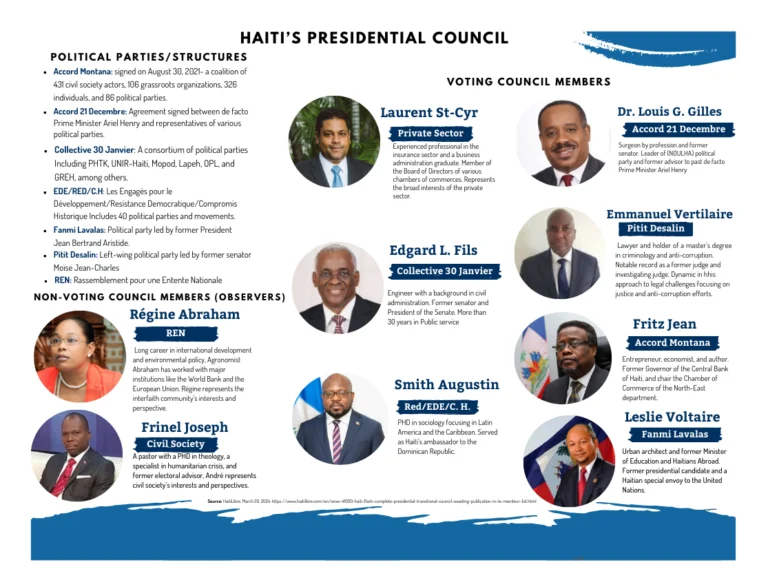
The transitional council was established to provide governance in the absence of a democratically elected president. The council comprises key figures, including Ariel Henry, who serves as the de facto Prime Minister.
| Name | Position | Background |
|---|---|---|
| Ariel Henry | Prime Minister | Neurosurgeon and politician |
| Edgard Leblanc Fils | President of the Council | Experienced politician |
| Other Members | Various Roles | Representatives from different sectors |
The formation of the de facto transitional council was influenced by international actors, including the United States, the United Nations, OAS, CARICOM and other regional organizations. These entities played a crucial role in shaping Haiti’s governance structure.
The international community’s support for the transitional council is seen as critical to Haiti’s stability. As noted by the UN Secretary-General, “The United Nations stands ready to support the people and government of Haiti during this challenging period.”
The involvement of international organizations has been multifaceted, including diplomatic efforts, financial support, and technical assistance. This support is crucial for the transitional council’s success and Haiti’s long-term stability.
The interplay between Haiti’s transitional government and international interests reveals a nuanced dynamic of economic control and political leverage. As the government navigates its current political landscape, it is crucial to understand how foreign capital and international agreements shape its decision-making processes.
Haiti’s economy is heavily influenced by foreign capital and international financial institutions. This dependency is perpetuated through various economic control mechanisms.
Trade agreements between Haiti and more powerful economies often come with unequal terms that favor foreign interests. For instance, agreements may include provisions that benefit foreign investors at the expense of local businesses. As noted by a critic, “such agreements can strangle local economies, making it difficult for them to develop sustainably.”
“The terms of these agreements can be so skewed that they essentially lock Haiti into a cycle of dependency.”
Foreign investment in Haiti is not only a matter of economic influence but also a tool for political leverage. Investors often use their economic clout to shape policy decisions that align with their interests. This can lead to a situation where the government prioritizes foreign investors’ needs over those of its citizens.
The transitional government in Haiti operates under significant external pressure from international actors. This pressure can manifest in various forms, including diplomatic efforts and conditional support.
Diplomatic recognition is a powerful tool used by foreign governments to influence Haiti’s political trajectory. Recognition can be withheld or granted based on the country’s adherence to certain political or economic conditions set by the recognizing state.
International support for Haiti’s government often comes with policy conditions that must be met. These conditions can range from economic reforms to specific governance practices. While intended to promote stability and good governance, these conditions can also limit the government’s ability to make sovereign decisions.
In conclusion, Haiti’s transitional government is deeply entangled in a web of international dependencies that affect its economic and political decisions. Understanding these dynamics is crucial for grasping the challenges faced by the Haitian people and their government in their quest for sovereignty and self-determination.
For decades, the United States has been a pivotal force in determining the trajectory of Haiti’s political landscape. The historical context of US-Haiti relations is complex, with interventions that have significantly impacted Haiti’s governance structure.
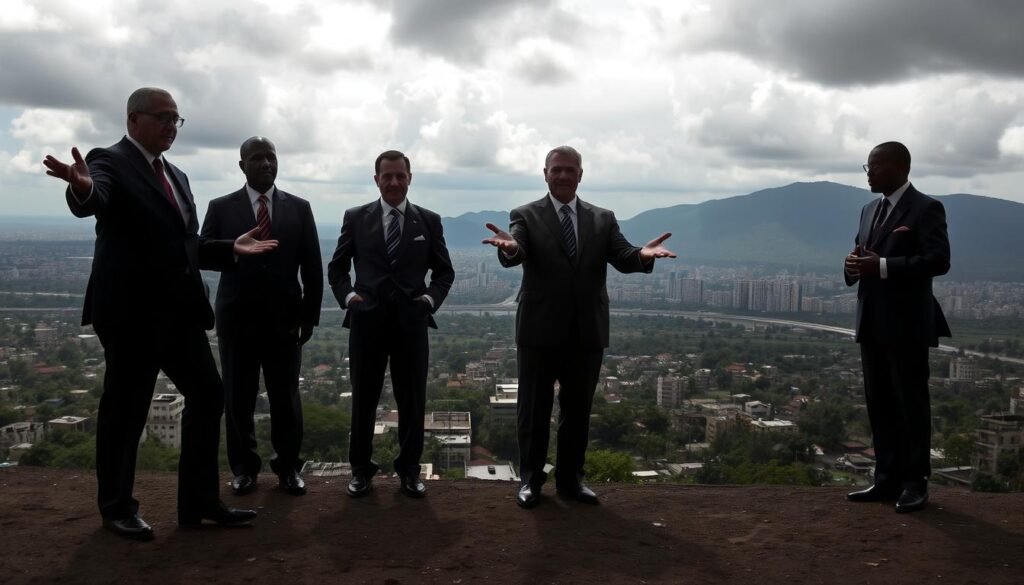
The history of US interventions in Haiti dates back to the early 20th century, with the US occupation from 1915 to 1934 being a pivotal period. This era saw the US control over Haiti’s finances, infrastructure, and even its constitution, setting a precedent for future interventions. The legacy of this occupation continues to influence US-Haiti relations today.
Currently, the US maintains a significant level of influence over Haiti’s transitional government through various means, including economic aid and diplomatic pressure. The US policy is geared towards stabilizing Haiti and promoting democratic governance, though the effectiveness and motivations behind these efforts are subjects of debate.
The Biden administration has continued the US engagement with Haiti, focusing on humanitarian aid, support for the transitional government, and efforts to address the security crisis. The administration’s strategy includes working with international partners to provide support while also emphasizing the need for Haitian leadership in determining its own future.
The multifaceted approach of the US toward Haiti underscores the complexity of their relationship. While the US has been a crucial actor in Haiti’s governance, the implications of its interventions are multifaceted, influencing both the political stability and sovereignty of Haiti.
Haiti’s relationship with international organizations is complex and deeply intertwined with its sovereignty. The country’s history of foreign intervention and dependency has shaped its interactions with global institutions.
The United Nations has had a significant presence in Haiti, particularly through its peacekeeping missions. While intended to stabilize the country, these interventions have had mixed results.
The MINUSTAH mission, established in 2004, was marred by controversy, most notably the introduction of cholera in 2010, which led to a devastating epidemic. This incident highlighted the need for greater accountability in UN operations.
Today, the UN continues to support Haiti through various programs and missions, focusing on security, development, and humanitarian assistance. The structure of these missions has evolved to address past criticisms and improve effectiveness.
The International Monetary Fund (IMF) and World Bank have played crucial roles in shaping Haiti’s economic policies through structural adjustment programs. These programs have been criticized for prioritizing fiscal discipline over social welfare.
A detailed analysis of the impact of these programs is provided in the following table:
| Year | IMF Program | World Bank Program | Economic Growth |
|---|---|---|---|
| 2010 | Extended Credit Facility | Development Policy Grant | -5.4% |
| 2015 | Staff-Monitored Program | Series of Development Policy Grants | 2.8% |
| 2020 | Emergency Assistance | COVID-19 Response Grants | -3.3% |
Regional organizations such as the Organization of American States (OAS) and the Caribbean Community (CARICOM) have also been involved in Haiti’s affairs, providing diplomatic support and development assistance.
Their involvement has contributed to regional dialogue and cooperation, helping to address some of Haiti’s challenges through a more localized approach.
The flow of humanitarian aid into Haiti has created a complex ecosystem with far-reaching implications. Humanitarian aid is crucial for addressing immediate needs, but its long-term impact on Haiti’s development and sovereignty is a subject of intense debate.
The proliferation of non-governmental organizations (NGOs) in Haiti has been remarkable, with over 10,000 NGOs operating in the country. While these organizations provide essential services, their presence also poses significant governance challenges. Many NGOs operate outside the government’s purview, creating a parallel system that can undermine state authority.
The dominance of international NGOs in service delivery has led to concerns about the bypassing of local institutions. By directly implementing projects, NGOs can inadvertently weaken the capacity of Haitian institutions, perpetuating dependency on external aid. This parallel state can hinder the development of a robust and accountable local governance structure.
The distribution of international aid is often influenced by political considerations, with certain groups or regions receiving preferential treatment. This can lead to uneven development and exacerbate existing social and economic disparities. Ensuring that aid is distributed fairly and effectively is crucial for maximizing its impact.
Haiti’s security landscape is increasingly intertwined with foreign military presence, raising questions about the country’s sovereignty. The nation has become a focal point for international security efforts, particularly through the Multinational Security Support Mission.
The Multinational Security Support Mission is designed to address Haiti’s pressing security challenges. This mission involves a coalition of international forces working together to stabilize the country. The structure of the mission is complex, involving various countries and international organizations. Its mandate is to support Haiti’s security forces in maintaining law and order, thereby creating a more stable environment for political and economic development.
Kenya has taken on a lead role in the unconstitutional Multinational Security Support Mission, with significant international backing. This leadership position underscores Kenya’s commitment to regional and global security initiatives. The international community has rallied behind Kenya’s efforts, providing both financial and logistical support to the mission.
Despite the positive intentions behind the Multinational Security Support Mission, there are growing concerns about its impact on Haiti’s sovereignty. Critics argue that the presence of foreign military forces could undermine the country’s ability to make independent decisions. Public perception of the mission varies widely, with some Haitians welcoming the security benefits while others fear the erosion of national sovereignty.
The debate surrounding the Multinational Security Support Mission highlights the complex interplay between security needs and national sovereignty in Haiti. As the situation continues to evolve, it is crucial to monitor the mission’s impact and ensure that it aligns with Haiti’s long-term interests.
Haitian communities are increasingly speaking out against external control, demanding sovereignty and self-determination. This growing resistance is manifesting in various forms across the country.
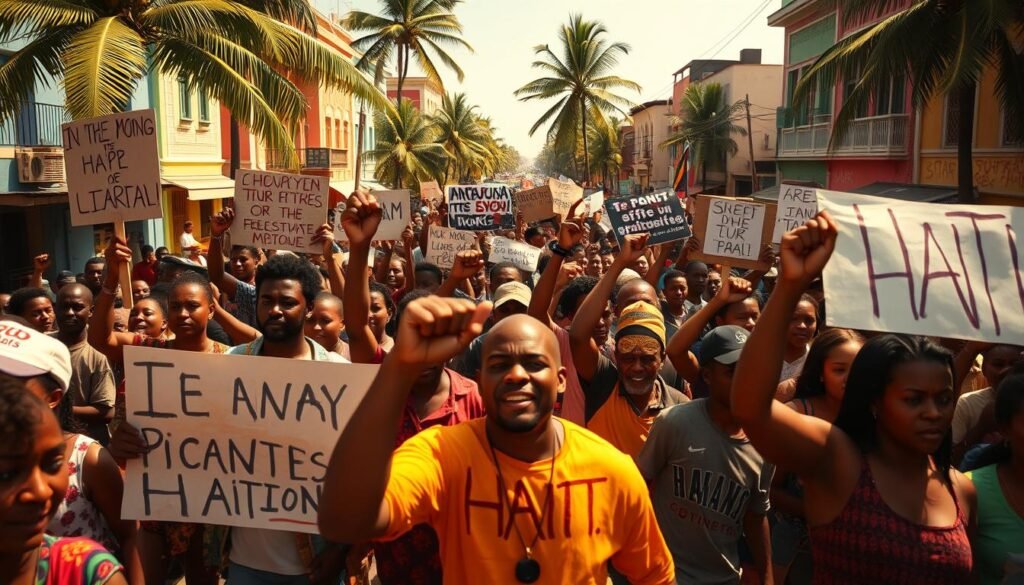
Grassroots movements are at the forefront of challenging foreign influence in Haiti. These movements are driven by local communities who are demanding a greater say in the country’s political and economic decisions. They are calling for an end to external interference and the establishment of governance structures that truly represent the Haitian people’s interests.
Civil society organizations play a crucial role in mobilizing resistance against foreign control. These organizations are working tirelessly to raise awareness about the impacts of external interference and to build a coalition of Haitians who are committed to reclaiming their country’s sovereignty. They are also providing critical support to grassroots movements, amplifying their voices, and advocating for policy changes that prioritize Haitian interests.
Haitian civil society is not just resisting foreign influence; it is also actively engaged in shaping alternative visions for the country’s political future. These visions emphasize the need for inclusive, participatory governance that reflects the needs and aspirations of all Haitians. Key elements include:
By promoting these alternative visions, Haitians are taking control of their political destiny and challenging the status quo of foreign dominance.
Breaking the chains of dependency in Haiti requires a multifaceted approach that prioritizes the country’s sovereignty and development needs. The current transitional government must navigate the complex web of international interests while seeking to empower local communities and foster self-determination.
To achieve this, Haiti needs to rethink its relationship with international organizations and foreign governments. International cooperation should be redefined to ensure it serves Haiti’s interests rather than perpetuating dependency. This can be achieved by promoting transparency, accountability, and inclusivity in decision-making processes.
Fostering Haiti’s sovereignty will also require strengthening local institutions and civil society organizations. By empowering grassroots movements and community-led initiatives, Haiti can build a more resilient and sustainable future. Ultimately, breaking the chains of dependency will enable Haiti to chart its course and realize its full potential.
Through a more equitable and sustainable approach to international cooperation, Haiti can overcome its historical legacy of foreign dependency and forge a new path towards self-determination and prosperity.
Haiti’s foreign dependency has its roots in the country’s costly independence and subsequent reparation demands imposed by France, as well as the US occupation from 1915 to 1934.
Haiti’s transitional government serves international interests through economic control mechanisms, foreign capital, and political decision-making under external pressure, including trade agreements, foreign investment, and diplomatic recognition.
International organizations, such as the UN, IMF, and World Bank, play a significant role in shaping Haiti’s governance through their policies and programs, including structural adjustment programs and humanitarian aid.
Foreign military presence, including the multinational security support mission led by Kenya, raises sovereignty concerns and affects public perception, as it can be seen as a challenge to Haiti’s self-determination.
Humanitarian aid in Haiti has both positive and negative implications, including the proliferation of NGOs, bypassing local institutions, and creating a parallel state, which can undermine the country’s governance and sovereignty.
The current US policy toward Haiti’s transitional government is shaped by historical patterns of US interventions and the Biden administration’s Haiti strategy, which has implications for Haiti’s sovereignty, security and development.
Haitian voices of resistance, including grassroots movements and civil society organizations, challenge foreign influence by advocating for sovereignty, self-determination, and alternative visions for Haiti’s political future.
Pathways to breaking the chains of dependency in Haiti include a more equitable and sustainable approach to international cooperation, prioritizing Haiti’s sovereignty and development needs, and supporting Haitian-led initiatives and self-determination.