Physical Address
304 North Cardinal St.
Dorchester Center, MA 02124
Physical Address
304 North Cardinal St.
Dorchester Center, MA 02124

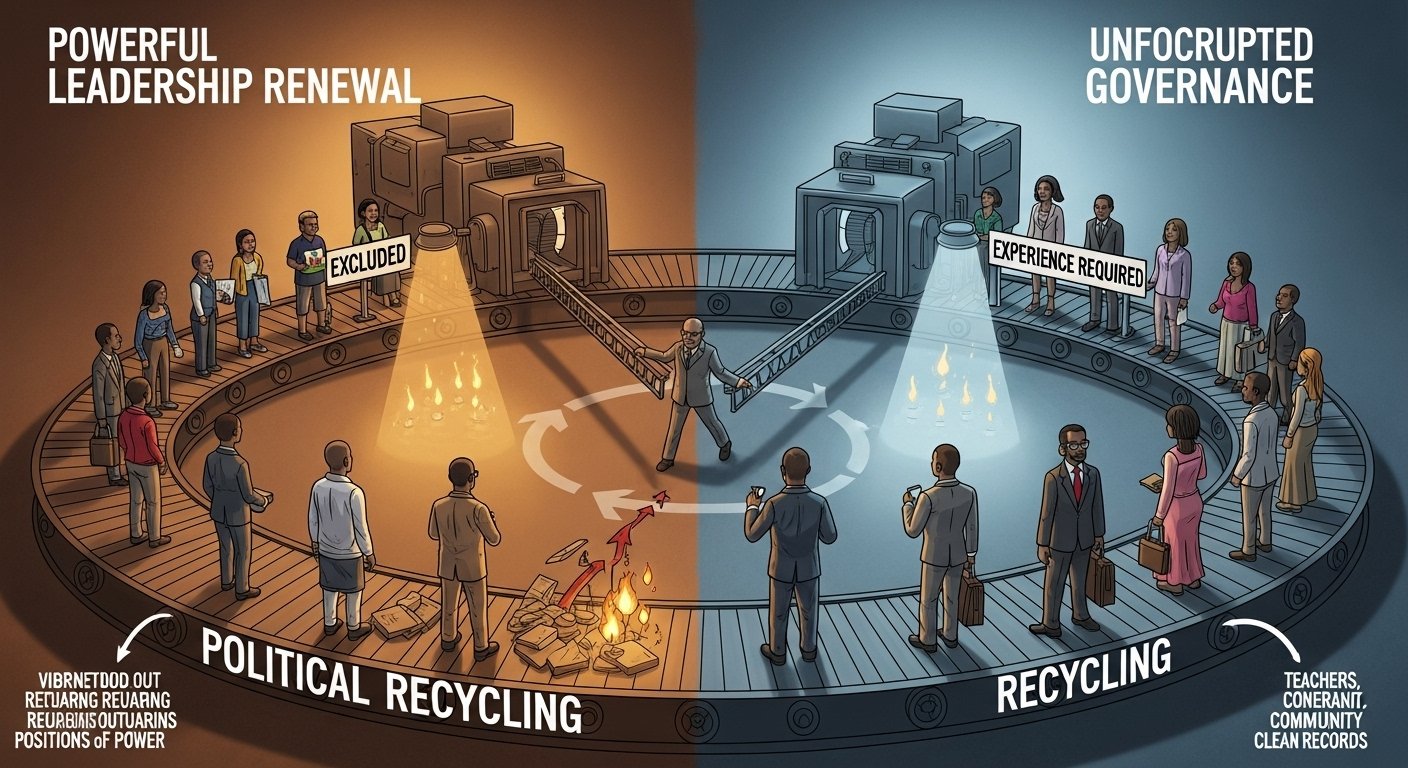
Explore the need for Haiti to break the recycling habit and embrace new, uncorrupted leadership.
Haiti has been plagued by a persistent issue: the recycling of old leaders and policies. This recycling habit has hindered the country’s progress, perpetuating corruption and stagnation.
The need for new leadership in Haiti is pressing. The current state of affairs demands a change, with a focus on transparency and accountability. By introducing fresh perspectives, Haiti can break free from the cycle of corruption and move towards a brighter future.
Haiti’s political history is marked by periods of turmoil and efforts towards achieving effective governance. The country’s journey to independence in 1804 was a significant milestone, making it the first independent nation in the Caribbean and the first black-led republic in the world.
After gaining independence from France, Haiti faced numerous challenges, including economic burdens imposed by the indemnity claimed by France, political instability, and social unrest. The early years of independence were characterized by a struggle for power among various factions, leading to a period of governance marked by authoritarian rule and instability. As Alex Dupuy notes in his analysis, “Haiti’s history has been shaped by its complex political landscape, influenced by both internal dynamics and external factors.”
The transition to modern governance has been gradual, with Haiti adopting its first constitution in 1805. Since then, the country has experienced numerous constitutional changes, reflecting ongoing efforts to establish a stable political framework. Despite these efforts, political instability has persisted, with periods of military rule and interventions affecting the country’s governance.
Throughout its history, Haiti has seen various patterns of leadership, ranging from authoritarian regimes to attempts at democratic governance. Leaders such as Jean-Jacques Dessalines and François Duvalier have left lasting impacts on the country’s political landscape. Dessalines, the leader of the Haitian Revolution, declared Haiti’s independence, while Duvalier’s regime was marked by authoritarianism and human rights abuses.
The recurrence of authoritarian leadership has been a significant pattern, often accompanied by political repression and corruption. However, there have also been movements towards democratic reforms and the empowerment of civil society. As noted by a prominent Haitian proverb, “
Men anpil, chay pa lou
” or “Many hands make the burden lighter,” highlighting the potential for collective action towards positive change in Haiti’s governance.
For decades, Haiti has struggled with a cycle of leadership that repeats itself, often referred to as the “recycling habit.” This phenomenon is characterized by the recurring presence of familiar figures in positions of power, hindering the country’s ability to adopt fresh perspectives and new leadership.
The “recycling habit” in Haitian politics refers to the tendency for past leaders to be re-elected or re-appointed to significant roles. This cycle perpetuates a system where political power is maintained within a small elite, limiting opportunities for new leaders to emerge.
The implications of this habit are far-reaching, affecting not only the political landscape but also the social and economic development of Haiti.
Several notable figures have been part of this cycle, including former presidents who have held office multiple times. These leaders often bring with them a legacy that is both recognized and controversial.
Examples include Jean-Bertrand Aristide, who was elected multiple times, and other prominent figures who have dominated the political scene.
The “recycling habit” has a significant impact on governance and development in Haiti. It leads to stagnation in policy implementation and hinders the country’s progress towards achieving sustainable development goals.
By understanding the dynamics of this cycle, it becomes clear that breaking the “recycling habit” is crucial for Haiti’s future.
Understanding the root causes of leadership recycling in Haiti requires a nuanced examination of the country’s political power dynamics, international relationships, and economic conditions. The interplay of these factors creates a complex environment that perpetuates the cycle of recycled leadership.
Haiti’s political landscape is characterized by entrenched power structures and dynasties that have dominated the country’s governance for decades. Families and individuals with significant political and economic influence often maintain their power through a combination of political maneuvering, strategic alliances, and control over key resources. This has resulted in a political environment where new leaders struggle to emerge and effect meaningful change.
The influence of political dynasties is evident in the way power is passed down through generations, often with little regard for the needs and aspirations of the broader population. This perpetuates a cycle where leaders are more accountable to their own families and networks than to the citizens they are supposed to serve.
International influence and intervention have played a significant role in shaping Haiti’s political landscape. Foreign powers and international organizations have often intervened in Haiti’s governance, sometimes with the intention of stabilizing the country, but often with unintended consequences that perpetuate the cycle of recycled leadership. External support for specific leaders or political groups can entrench existing power structures, making it difficult for new leaders to gain traction.
Moreover, international aid and assistance can sometimes be misdirected or mismanaged, further entrenching corrupt practices and undermining efforts to promote genuine political renewal.
Economic factors are also crucial in understanding the persistence of leadership recycling in Haiti. The country’s economy is often characterized by a lack of transparency, corruption, and mismanagement of resources. Leaders who control key economic sectors can maintain their power by dispensing patronage and manipulating economic opportunities.
The economic dependency on foreign aid and the influence of international financial institutions can also limit the government’s ability to implement policies that might challenge the status quo or promote new leadership.
The pervasive corruption in Haiti has resulted in significant economic, social, and institutional challenges. Corruption is not just a moral issue; it’s a practical problem that affects every aspect of Haitian life, from business and governance to the daily lives of its citizens.
Corrupt leadership in Haiti has severe economic consequences, including the misallocation of resources, embezzlement of funds, and a lack of transparency in financial dealings. This has led to stunted economic growth and a heavy reliance on foreign aid. The economy suffers as investors are deterred by the lack of accountability and the risk of corruption.
The economic impact is further exacerbated by the fact that corruption discourages foreign investment, hinders economic development, and leads to a significant loss of revenue for the government. This, in turn, affects the government’s ability to provide essential services to its citizens.
The social impact of corruption on Haitian citizens is profound. Corruption erodes trust in government and institutions, leading to widespread disillusionment among the population. It also results in the unequal distribution of resources, where those with connections or money have access to services and opportunities that are denied to the majority.
This inequality fuels social unrest and can lead to protests and conflicts. Moreover, the lack of trust in institutions hampers efforts to address social issues, as citizens become skeptical of government initiatives aimed at improving their lives.
Corruption also leads to the erosion of democratic institutions in Haiti. When leaders are more focused on personal gain than on serving the public interest, it undermines the legitimacy of democratic processes. This can result in weakened institutions that are unable to effectively govern or provide services.
The erosion of democratic institutions has long-term consequences for Haiti’s stability and development. It is crucial for the country’s future that efforts are made to strengthen these institutions and ensure they serve the people, not just the interests of a corrupt few.
The quest for a brighter future in Haiti necessitates a departure from the entrenched political elite and a shift towards fresh, uncorrupted leadership. For too long, Haiti has been plagued by a cycle of political recycling, where leaders with tarnished records return to power, hindering the country’s progress.
New leadership is crucial for Haiti’s development because it brings with it the potential for unencumbered decision-making, free from the influences of past corrupt practices. Fresh leaders are more likely to implement innovative solutions to Haiti’s longstanding issues, such as poverty, lack of infrastructure, and inadequate access to education and healthcare.
A key aspect of new leadership is its ability to foster a culture of transparency and accountability. This can be achieved through various means, including:
The leadership Haiti requires should embody certain key characteristics. It should be visionary, with a clear understanding of the country’s needs and the ability to inspire and mobilize the populace towards a common goal.
Moreover, effective leadership in Haiti must be collaborative, working closely with international partners, civil society, and the private sector to leverage resources and expertise for the country’s benefit.
| Characteristic | Description | Impact on Haiti |
|---|---|---|
| Visionary | Clear understanding of Haiti’s needs and goals | Inspires and mobilizes the populace |
| Collaborative | Works with international partners, civil society, and the private sector | Leverages resources and expertise for Haiti’s benefit |
| Transparent | Operates with openness and accountability | Reduces corruption and increases trust in government |
Achieving political renewal in Haiti requires overcoming entrenched obstacles that have stalled progress. The country’s journey towards fresh, uncorrupted leadership is complicated by several key barriers.
Haiti’s political landscape is dominated by entrenched power structures that resist change. These structures, often rooted in historical and familial ties, maintain their influence through a complex network of political and economic power. For instance:
Such entrenched systems make it difficult for new leaders to emerge and for meaningful political reform to occur.

Security challenges, exacerbated by gang influence, pose another significant barrier to political renewal. Gangs control large swaths of territory, particularly in urban areas like Port-au-Prince, and exert considerable influence over local communities. This situation:
The presence of gangs also complicates efforts to hold free and fair elections, as they often intimidate voters and manipulate electoral outcomes.
Voter disillusionment is a critical issue in Haiti, where many citizens feel disconnected from the political process. Factors contributing to this disillusionment include:
To overcome these barriers, it is essential to address the underlying causes of voter disillusionment and to work towards creating a more inclusive and transparent political process.
The future of Haiti’s governance depends on its ability to nurture new leaders through innovative and inclusive programs. Cultivating new leadership requires a comprehensive approach that addresses the root causes of the current leadership crisis.
Grassroots political movements and civil society organizations play a crucial role in promoting grassroots movements that can lead to political renewal. These movements empower citizens to demand accountability and transparency from their leaders. By supporting local initiatives, Haiti can foster a culture of participation and engagement.
Investing in educational and leadership development programs is essential for building a new generation of leaders. These programs should focus on developing skills such as strategic thinking, problem-solving, and ethical leadership. By equipping young Haitians with the necessary skills and knowledge, the country can build a robust leadership pipeline.
The Haitian diaspora represents a significant resource for the country’s development. Diaspora engagement can bring in fresh perspectives, skills, and investment. Encouraging diaspora communities to participate in Haiti’s development through initiatives such as mentorship programs, investment opportunities, and policy dialogue can help cultivate new leadership.
By leveraging these pathways, Haiti can create a conducive environment for new leadership to emerge, ultimately breaking the cycle of recycled leadership and fostering sustainable development.
As Haiti seeks to break the cycle of recycled leadership, the international community’s support becomes increasingly vital. The global community has a significant influence on Haiti’s development and stability, and their role in supporting a transition to fresh, uncorrupted leadership cannot be overstated.
The international community’s approach to foreign aid and intervention in Haiti has been a subject of debate. While aid is crucial for addressing immediate needs, it is equally important to ensure that it is delivered in a way that supports long-term development and does not perpetuate dependency. Rethinking foreign aid involves shifting from short-term fixes to sustainable solutions that empower local communities and foster self-reliance.
A critical aspect of the international community’s support is strengthening Haiti’s democratic processes and institutions. This involves providing technical assistance, capacity-building programs, and electoral support to ensure that democratic institutions are robust and can function independently. By supporting these processes, the international community can help create an environment conducive to new leadership.
Other nations that have navigated similar crises offer valuable lessons for Haiti. For instance, countries like Rwanda and Liberia have made significant strides in rebuilding their political landscapes after periods of turmoil. Examining these examples can provide insights into effective strategies for supporting leadership transition and democratic consolidation.
| Country | Post-Crisis Strategy | Outcome |
|---|---|---|
| Rwanda | National reconciliation and economic development | Stable government and economic growth |
| Liberia | Democratic elections and institutional reform | Peaceful transfer of power and strengthened institutions |
| South Africa | Truth and reconciliation commission, followed by democratic consolidation | Transition to democracy and ongoing reconciliation efforts |
By learning from these examples and adapting them to Haiti’s unique context, the international community can play a pivotal role in supporting the country’s transition to fresh, uncorrupted leadership.
Haiti stands at a crossroads, with the opportunity to break free from the cycle of recycled leadership that has hindered its progress. The need for fresh, uncorrupted leadership is clear, and it’s essential for the country’s development and prosperity.
A new chapter in Haiti’s leadership can bring about the change needed to address the country’s deep-seated issues. By understanding the historical context and the factors that have contributed to the recycling of leaders, Haitians can work towards creating a more inclusive and transparent political environment.
The international community also has a role to play in supporting this transition, by rethinking foreign aid and intervention strategies, and promoting democratic processes and institutions. With a concerted effort, Haiti can usher in a new era of leadership that prioritizes the needs of its citizens and fosters sustainable development.
As Haiti embarks on this new chapter, the focus should be on cultivating leaders who are committed to the country’s growth and well-being. This requires a sustained commitment to democratic values, transparency, and accountability, paving the way for a brighter future for Haiti’s leadership.
The “recycling habit” refers to the phenomenon of the same leaders or families repeatedly holding power in Haiti, hindering the country’s progress and development.
Haiti’s political landscape has been shaped by its history, from independence to modern governance, with various patterns of leadership emerging over the years, including the influence of power structures and dynasties.
The root causes include political power structures and dynasties, international influence and intervention, and economic factors that perpetuate the cycle, making it challenging for new leaders to emerge.
Corrupt leadership has led to economic stagnation, social unrest, and the erosion of democratic institutions, ultimately affecting the well-being of Haitian citizens and the country’s development.
New leadership is crucial for Haiti’s development and progress, as it can bring fresh perspectives, uncorrupted governance, and a commitment to the country’s prosperity, paving the way for a better future.
Haiti’s new leadership should possess qualities such as integrity, a commitment to democratic values, and a focus on the country’s development, ensuring that the needs of the citizens are prioritized.
The barriers include entrenched power structures, security challenges, gang influence, and voter disillusionment, which can hinder the emergence of new leadership and the transition to a more democratic governance.
The international community can play a crucial role by rethinking foreign aid and intervention strategies, supporting democratic processes and institutions, and drawing from successful models of other post-crisis nations.
Grassroots movements and civil society can contribute to the emergence of new leadership by promoting political engagement, supporting leadership development programs, and advocating for democratic values.
Diaspora engagement can bring valuable expertise, resources, and perspectives to Haiti, supporting the country’s development and the emergence of new leadership, and helping to foster a more prosperous future.