Physical Address
304 North Cardinal St.
Dorchester Center, MA 02124
Physical Address
304 North Cardinal St.
Dorchester Center, MA 02124

Explore how Haitians can break the patronage trap and reject elite handouts that keep the nation down.
In Haiti, a vicious cycle of dependency has taken hold, hindering the nation’s progress. The patronage trap refers to the practice of relying on elite handouts rather than fostering self-sustaining growth.
This phenomenon has far-reaching implications, stifling innovation and perpetuating inequality. By examining the patronage trap, we can better understand the complexities of Haiti’s challenges and the need for systemic change.
The consequences of this trap are multifaceted, affecting various aspects of Haitian society. It’s crucial to explore the underlying causes and potential solutions to break this cycle.
Haiti’s patronage system has its roots deeply embedded in the country’s complex history, dating back to the colonial era. The legacy of colonial rule and the struggle for independence have significantly shaped the nation’s social, economic, and political structures.
During the colonial period, Haiti was subjected to brutal exploitation by European powers, particularly France. This exploitation created deep-seated inequalities that persisted even after Haiti gained its independence in 1804. The transition from colonial rule to independence marked the beginning of a new era of social and economic disparities.
The colonial economy was based on plantation slavery, which not only exploited the labor of enslaved Africans but also created a rigid class structure. After independence, the new Haitian elite, often composed of former free people of color and military leaders, inherited this structure, perpetuating inequality.
Following independence, Haiti’s power structures were largely determined by the military and a small elite class. This elite group controlled land, resources, and political power, laying the foundation for the patronage system. The concentration of power and wealth among a few individuals created a system where loyalty and political allegiance were rewarded with economic benefits and social status.
The formation of this elite class and their control over resources and opportunities have been critical in shaping Haiti’s patronage system. This system has perpetuated inequality and dependency, hindering the country’s development and contributing to its ongoing social and economic challenges.
Understanding how patronage operates in Haiti is crucial to grasping the challenges faced by ordinary Haitians in their daily lives. The patronage system is deeply ingrained in Haitian society, affecting every aspect of life from economic opportunities to social services.
The elite in Haiti exert significant control over the distribution of resources and opportunities. This control is maintained through a network of powerful individuals and families who have held positions of influence for generations. The concentration of power and wealth among a few individuals limits access to resources such as land, education, and employment for the majority of the population. For instance, key sectors like agriculture and construction are often dominated by a few large players with close ties to those in power.
| Sector | Elite Control Mechanisms | Impact on Ordinary Haitians |
|---|---|---|
| Agriculture | Land ownership, subsidies, and market access | Limited land availability, low income |
| Construction | Influence over government contracts, access to capital | Few employment opportunities, low wages |
In Haiti’s patronage system, loyalty is often exchanged for basic necessities. The elite provide essential services or support to their followers in return for political loyalty or other forms of support. This transactional relationship perpetuates dependency and maintains the power dynamics within the society. As noted by a Haitian proverb, “Lespwa fe viv,” or “Hope makes one live,” highlighting the resilience of Haitians despite the challenging circumstances.
“The patron-client relationship is a fundamental aspect of Haitian politics and society, where those with power and resources provide benefits to their clients in exchange for loyalty and support.”
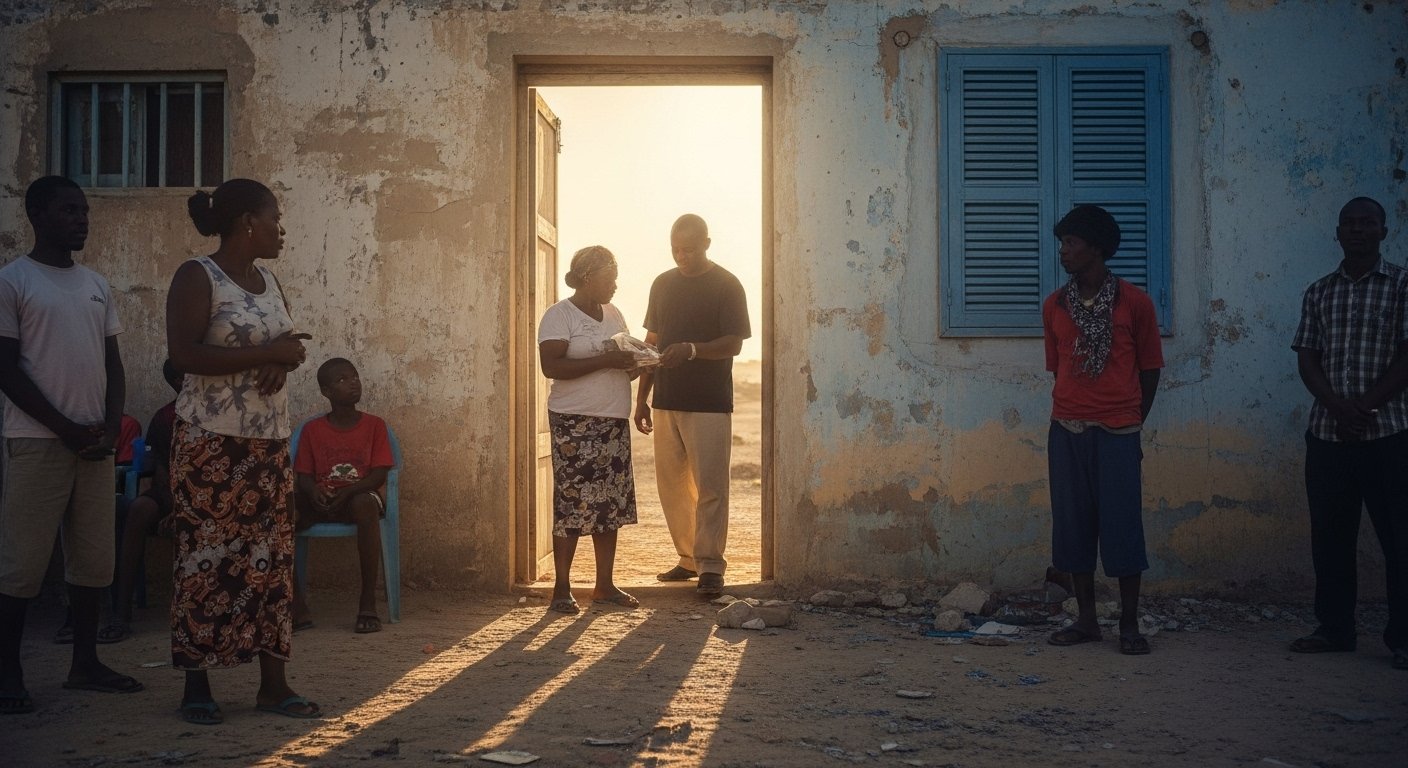
The image below illustrates the complex dynamics at play in Haiti’s patronage system.
The persistent reliance on elite handouts has stifled innovation and entrepreneurship in Haiti, keeping the nation in a state of dependency. To break this cycle, it’s essential to understand the mechanisms that perpetuate it.
Elite handouts are often presented as acts of benevolence, but they come with strings attached. These “gifts” are typically used to secure loyalty and maintain the status quo, rather than fostering genuine development. For instance, resources are often channeled through elite networks, reinforcing their control over the population.
The reality is that such handouts create a power imbalance, where those who receive aid are beholden to those who provide it. This dynamic undermines the potential for self-sufficiency and perpetuates a cycle of dependency.
When Haitians rely on elite handouts, they are trapped in a cycle that stifles their ability to achieve economic independence. This dependency is not just economic; it also erodes trust in local institutions and discourages community-led initiatives.
| Effects of Elite Handouts | Consequences |
|---|---|
| Dependency on Elite | Stifled Entrepreneurship |
| Lack of Investment in Local Economy | Persistent Poverty |
| Erosion of Trust in Institutions | Social Cohesion Undermined |
By understanding these dynamics, Haitians can begin to break the patronage trap. Rejecting elite handouts is a crucial step towards achieving true independence and fostering a more equitable society.
Patronage politics in Haiti have severe economic consequences, affecting entrepreneurship and innovation. The entrenched system of patronage creates an environment where economic opportunities are limited and controlled by a small elite, stifling competition and hindering the growth of new businesses.

The patronage system in Haiti discourages entrepreneurship and innovation by concentrating resources and opportunities in the hands of a few. This not only limits economic mobility for the majority but also reduces the incentive for innovation, as success is often tied to political connections rather than merit.
Key effects on entrepreneurship include:
As a result, Haiti misses out on the dynamism that new businesses and innovative ideas could bring to its economy.
The patronage system also creates significant barriers to sustainable economic development in Haiti. By prioritizing short-term political gains over long-term economic strategies, the government fails to invest in critical infrastructure and human capital necessary for sustainable growth.
“Sustainable development is not just about economic growth; it’s about ensuring that growth is equitable and environmentally sustainable.” –
The consequences include:
Addressing these issues requires a shift away from patronage politics towards policies that promote sustainable economic development and equitable growth.
The social impacts of Haiti’s patronage system are multifaceted, influencing various aspects of Haitian society, from community trust to class divisions. This system not only affects the economy but also has profound effects on the social fabric, making it challenging to build a cohesive and equitable society.
The patronage system in Haiti erodes social cohesion by creating an environment where loyalty is bought and trust is exploited. When individuals are forced to rely on patronage to meet their basic needs, it undermines the sense of community and mutual support. Social trust is compromised as people begin to view each other as competitors for the limited resources controlled by the elite.
This erosion of trust extends beyond personal relationships to institutions. When the elite use their power to maintain control, it diminishes faith in the fairness and effectiveness of social and political institutions. As a result, Haitian society becomes increasingly fragmented.
The patronage system also reinforces class divisions and inequality in Haiti. By concentrating resources and opportunities in the hands of a few, it perpetuates a cycle of poverty and dependency among the majority. This not only hampers social mobility but also exacerbates the existing disparities between the elite and the general population.
As the elite continue to consolidate their power, the gap between the rich and the poor widens. This inequality is not just economic; it also manifests in access to education, healthcare, and other essential services, further entrenching the social and economic disparities.
Foreign aid and international organizations have become critical components in understanding Haiti’s patronage problem, presenting both challenges and opportunities for change. The influx of foreign aid into Haiti has often been substantial, aimed at alleviating poverty and supporting development projects. However, this aid can sometimes perpetuate the very problems it seeks to solve.
The flow of foreign aid into Haiti has a tendency to reinforce the existing power structures, as it often ends up in the hands of the elite. This can create a dependency on external funding, undermining local capacities and initiatives. The elite, in turn, use this aid to maintain their grip on power, distributing it as patronage to their loyalists.
Foreign aid, when not carefully managed, can thus become a tool for perpetuating patronage. It is crucial for international donors to implement mechanisms that ensure aid reaches the intended beneficiaries directly, bypassing the elite-controlled distribution networks.

International organizations play a significant role in Haiti, often providing not just financial aid but also technical assistance and policy guidance. While their intentions are generally to support development and good governance, their efforts can be undermined by the existing patronage system.
To effectively break the patronage cycle, international organizations must work closely with grassroots organizations and community leaders, supporting initiatives that empower local communities. This approach can help in building a more equitable society where opportunities are not limited to those with connections to the elite.
By adopting a nuanced understanding of Haiti’s patronage dynamics and engaging with a wide range of stakeholders, international organizations can play a crucial role in fostering sustainable development and reducing inequality.
In the quest to break free from patronage, Haiti can draw inspiration from other nations that have faced similar challenges. Various post-colonial countries have struggled with the shackles of patronage, yet some have successfully implemented strategies to overcome them.
Southeast Asia provides valuable examples of breaking patronage cycles. Countries like Indonesia have made significant strides in this area. Indonesia’s transition to democracy in the late 1990s marked a significant turning point, as it opened up the political space and reduced the control of the elite over the political and economic systems.
The role of civil society in Indonesia was crucial, as it mobilized to demand reforms and greater accountability from the government. This movement not only helped in transitioning the political system but also in fostering a more inclusive economic environment.
Latin America has seen numerous grassroots movements that have challenged elite control and contributed to breaking patronage cycles. For instance, Brazil’s Landless Workers’ Movement has been instrumental in advocating for land reform and social justice, directly challenging the existing power structures.
| Country | Strategy | Outcome |
|---|---|---|
| Indonesia | Democratization and civil society mobilization | Reduced elite control, more inclusive politics |
| Brazil | Grassroots movements advocating for land reform | Challenged existing power structures, promoted social justice |
These examples illustrate that breaking patronage cycles is possible through a combination of political reform, civil society engagement, and grassroots movements. Haiti can learn from these experiences to forge its own path towards a more equitable society.
To overcome the current economic challenges, Haitians need practical pathways to independence. Achieving economic independence is a complex task that requires a multifaceted approach, focusing on sustainable development and self-sufficiency.
One of the key strategies for achieving economic independence is by building self-sufficient communities. This involves empowering local communities to produce their own food, generate their own energy, and manage their own resources. By doing so, Haitians can reduce their reliance on external aid and elite-controlled resources.
For instance, initiatives like community gardens and local cooperatives can help in creating sustainable livelihoods. Community-led projects not only foster economic resilience but also promote social cohesion.
Education and skill development are crucial for economic independence. By establishing educational programs outside the control of the elite, Haitians can acquire skills that are relevant to their local context. This includes vocational training, agricultural education, and entrepreneurship programs.
Such initiatives can help in creating a workforce that is capable of driving local economic growth. Moreover, education can empower individuals to make informed decisions about their economic activities.
The Haitian diaspora represents a significant resource for the country’s economic development. However, it is crucial to leverage diaspora resources in a way that does not perpetuate dependency on external aid. This can be achieved by encouraging diaspora investment in local businesses and community projects.
For example, diaspora communities can invest in local infrastructure, such as renewable energy projects or sustainable agriculture initiatives. This not only brings in much-needed capital but also helps in creating sustainable economic opportunities.
| Strategy | Description | Potential Impact |
|---|---|---|
| Building Self-Sufficient Communities | Empowering local communities to produce their own food and manage resources | Reduced reliance on external aid, increased food security |
| Education and Skill Development | Providing vocational training and entrepreneurship programs outside elite control | Empowered workforce, local economic growth |
| Leveraging Diaspora Resources | Encouraging diaspora investment in local businesses and projects | Increased capital, sustainable economic opportunities |
Haiti’s journey toward a self-determined future hinges on breaking the patronage trap that has long hindered its development. By understanding the historical roots and mechanics of this system, Haitians can begin to envision a different path forward.
The key to unlocking this future lies in rejecting elite handouts that perpetuate dependency and poverty. Instead, Haitians must focus on building self-sufficient communities, leveraging education and skill development outside elite control, and harnessing diaspora resources without perpetuating dependency.
By adopting successful models from other post-colonial nations and learning from grassroots movements that have challenged elite control, Haiti can chart a new course. This path forward requires a collective effort to foster entrepreneurship, innovation, and social cohesion, ultimately leading to a more equitable society.
As Haitians work together toward this self-determined future, they can create a brighter, more prosperous Haiti, where opportunities are available to all, not just the privileged few. This vision for a Haitian future is within reach, and it is through unity and determination that it will be achieved.
The patronage trap refers to a system where the elite control resources and opportunities, exchanging basic necessities for loyalty, thus perpetuating dependency and poverty among Haitians.
Haiti’s patronage system has its roots in colonial rule and the subsequent independence period, which laid the groundwork for the current power structures and elite formation.
The patronage system stifles entrepreneurship and innovation by concentrating resources and opportunities in the hands of the elite, making it difficult for new businesses and ideas to emerge.
International organizations can either break or reinforce the patronage system, depending on how they provide aid and support. Some organizations may inadvertently reinforce elite power, while others may work to empower grassroots movements and promote sustainable development.
Haitians can achieve economic independence by building self-sufficient communities, pursuing education and skill development outside of elite control, and leveraging diaspora resources in a way that does not perpetuate dependency.
Yes, there are successful models from other post-colonial nations that have broken patronage cycles, often through a combination of grassroots movements, policy changes, and international support.
Foreign aid can sometimes reinforce elite power, as it may be channeled through existing power structures, thus perpetuating the patronage system.
The patronage system erodes social cohesion and trust, reinforces class divisions, and perpetuates inequality, leading to significant social and human impacts.
Yes, grassroots movements have the potential to challenge elite control and promote change in Haiti by organizing communities, advocating for policy changes, and supporting alternative forms of economic development.