Physical Address
304 North Cardinal St.
Dorchester Center, MA 02124
Physical Address
304 North Cardinal St.
Dorchester Center, MA 02124


Discover the path to ending parliamentary corruption in Haiti. A Governors' Council may be the key to restoring accountability and good governance.
Haiti’s governance has long been plagued by parliamentary corruption, hindering the country’s development and eroding public trust. The persistent issue has led to a call for reform, with many advocating for the establishment of a Governors’ Council to oversee and regulate governmental activities.
A Governors’ Council could provide a much-needed check on parliamentary corruption, promoting transparency and accountability within Haiti’s government. By introducing a new layer of oversight, Haiti can take a significant step towards improving governance and restoring public faith in its institutions.
Understanding Haiti’s current political situation requires a look into its past governance and recent upheavals. The country’s political landscape is a complex tapestry woven from historical events and contemporary challenges.
Haiti’s governance history is marked by periods of instability and authoritarian rule. Since gaining independence in 1804, Haiti has experienced numerous coups, dictatorships, and short-lived democracies. This turbulent past has significantly impacted the development of its political institutions and contributed to the current state of Haitian politics.
In recent years, Haiti has faced a series of political crises, including corruption scandals, protests, and governmental instability. These challenges have further eroded public trust in the government and highlighted the need for reform. The recent political crises have underscored the urgency of addressing the systemic issues that plague Haiti’s governance.
The situation is compounded by economic hardship and social unrest, making it imperative to find sustainable solutions to Haiti’s political and governance challenges.
Haiti’s struggle with parliamentary corruption is a multifaceted challenge that requires a comprehensive solution. Corruption within the parliament not only undermines the legislative process but also erodes public trust in government institutions.
Corruption in Haiti’s parliament manifests in various forms, including embezzlement, bribery, and nepotism. These practices divert public resources away from essential services and infrastructure, hindering the country’s development. For instance, embezzlement of funds allocated for public projects is a common occurrence, leading to incomplete or poorly executed infrastructure projects.
The economic impact of parliamentary corruption is profound. Corruption discourages foreign investment, as investors are wary of the risks associated with corrupt practices. Moreover, it leads to the misallocation of resources, as funds are siphoned off for personal gain rather than being used for public benefit. This misallocation results in underdeveloped infrastructure and inadequate public services, further exacerbating poverty and inequality.
The social consequences of parliamentary corruption are equally severe. Citizens suffer from reduced access to essential services such as healthcare and education due to the misallocation of funds. Furthermore, corruption fosters a sense of disillusionment and mistrust among the populace, leading to social unrest and decreased civic engagement. The perpetuation of corruption also undermines efforts to achieve social justice and equality.
In conclusion, addressing parliamentary corruption is crucial for Haiti’s development and the well-being of its citizens. It requires a concerted effort to reform governance structures and ensure accountability within the parliament.
The cycle of corruption in Haiti’s parliament has persisted despite various anti-corruption initiatives. Understanding why these efforts have fallen short is crucial to devising a more effective strategy.
Haiti has seen numerous anti-corruption programs over the years, ranging from legislative reforms to international aid packages aimed at improving governance. However, these initiatives have often been hampered by lack of political will and inadequate implementation mechanisms.
The structural and cultural barriers to reform in Haiti are significant. The political system is characterized by patronage and clientelism, making it difficult to implement genuine change. Moreover, cultural attitudes towards corruption can sometimes perpetuate the status quo.
To break this cycle, it is essential to address both the structural and cultural dimensions of corruption. This requires a multifaceted approach that includes not only legal and institutional reforms but also efforts to change societal attitudes towards corruption.
A Governors’ Council represents a promising anti-corruption mechanism that could help Haiti overcome its governance challenges. This innovative body is designed to provide oversight and ensure accountability within Haiti’s parliament, addressing the root causes of corruption.
The Governors’ Council is envisioned as an independent entity tasked with monitoring parliamentary activities. Its primary role is to promote transparency and integrity within the legislative process. By doing so, it aims to prevent the kinds of corrupt practices that have historically undermined Haiti’s development.
The effectiveness of the Governors’ Council hinges on several core principles, including independence, transparency, and accountability. To function effectively, the Council must be insulated from political pressures and equipped with the necessary legal and financial tools.
By implementing these measures, the Governors’ Council can play a pivotal role in reforming Haiti’s governance structure and breaking the cycle of parliamentary corruption.
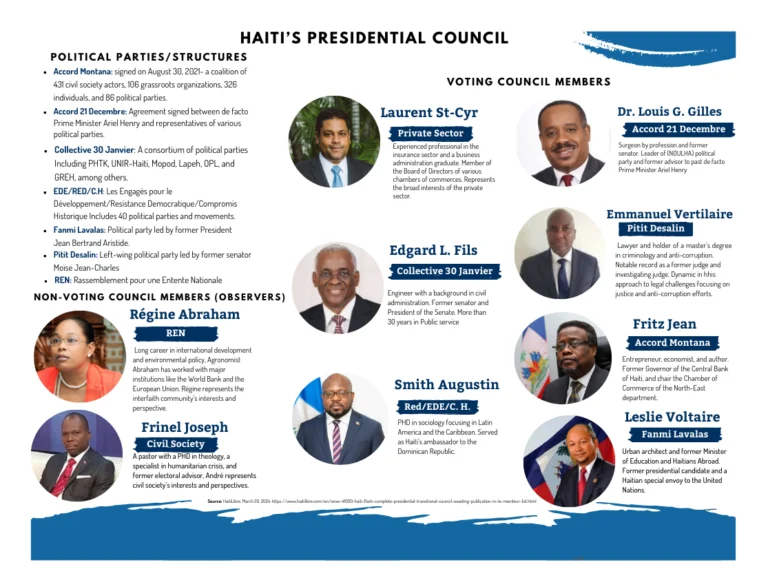
To break the cycle of corruption, Haiti needs a Governors’ Council that is both legitimate and effective. The council’s structure and composition are critical to achieving this goal.
The membership selection criteria should be transparent, merit-based, and designed to attract individuals with a proven track record of integrity and expertise. This could involve a mixed selection process, combining nominations from various stakeholders, including civil society organizations, the private sector, and government entities.
A robust membership selection process is vital. It should include:
Implementing term limits and rotation mechanisms can prevent the concentration of power and ensure fresh perspectives. This can be achieved by:
Diverse representation is crucial for the council’s legitimacy. This includes:
By focusing on these aspects, Haiti can establish a Governors’ Council that is not only effective but also representative of its people’s interests.
To combat corruption, Haiti’s proposed Governors’ Council must be endowed with substantial authority. The council’s effectiveness will depend on its ability to exercise oversight capabilities, ensuring that parliamentary actions are transparent and accountable.
The Governors’ Council should have the power to monitor and investigate parliamentary activities, including financial transactions and legislative decisions. This oversight capability will help prevent corrupt practices and ensure that parliamentarians are held accountable for their actions.
To be effective, the Governors’ Council should have veto authority over certain parliamentary decisions, allowing it to check actions that may be corrupt or detrimental to the public interest. This authority will help maintain a balance of power and prevent abuse.

Implementing robust accountability mechanisms is crucial for the Governors’ Council. This includes transparent reporting, public hearings, and independent audits to ensure that the council itself remains accountable to the Haitian people.
By endowing the Governors’ Council with these powers and responsibilities, Haiti can take a significant step towards breaking the cycle of parliamentary corruption and fostering a more transparent and accountable governance system.
By studying governance systems in post-conflict nations and innovative Caribbean models, we can identify potential solutions for Haiti. Various countries have implemented governance structures that have successfully addressed corruption and promoted stability.
Several international governance models have shown promise in combating corruption and enhancing governmental accountability. These models can be adapted to Haiti’s unique context.
Countries like Rwanda and Liberia have implemented innovative governance structures post-conflict. For instance, Rwanda has focused on building a strong, centralized government with robust anti-corruption measures. Liberia has also made significant strides in reforming its governance structure.
The Caribbean region has seen various governance innovations, particularly in countries like Jamaica and Trinidad and Tobago. These nations have implemented measures such as the establishment of independent integrity commissions and strengthening of parliamentary oversight.
Post-conflict societies offer valuable lessons in governance reform. Key takeaways include the importance of establishing robust accountability mechanisms, promoting transparency, and ensuring inclusive decision-making processes.
| Governance Aspect | Post-Conflict African Nations | Caribbean Innovations |
|---|---|---|
| Anti-Corruption Measures | Strong centralized government, robust anti-corruption agencies | Independent integrity commissions, strengthened parliamentary oversight |
| Accountability Mechanisms | Robust auditing and inspection bodies | Enhanced transparency in public procurement |
| Inclusive Decision-Making | National dialogue and reconciliation processes | Participation of civil society in governance |
These examples demonstrate that effective governance models can be adapted and implemented in various contexts, offering hope for Haiti’s governance reform.
Implementing a Governors’ Council in Haiti requires a strategic roadmap that addresses constitutional amendments, transition considerations, and public engagement. This roadmap is crucial for ensuring a smooth transition and garnering support from both the public and political stakeholders.
The introduction of a Governors’ Council necessitates constitutional amendments to define its role, powers, and responsibilities within Haiti’s governance structure. These amendments must be carefully crafted to ensure they align with the existing legal framework while providing the necessary legal basis for the Council’s operations.
During the transition period, it is essential to establish a clear timeline for implementing the Governors’ Council, including phased introductions of its functions and responsibilities. This approach will help in managing expectations and ensuring a stable transition.
Building public support is critical for the success of the Governors’ Council. Strategies should include public awareness campaigns and community engagement initiatives
The success of Haiti’s Governors’ Council hinges on effective international support and oversight. This support is crucial not only for the initial establishment but also for the long-term sustainability of the Council.
Several international organizations and countries can play a significant role in supporting Haiti’s governance reform. These include:
These partners can provide technical expertise, financial support, and political backing necessary for the Council’s success.

While international support is vital, it’s equally important to balance this assistance with Haitian sovereignty. This can be achieved by ensuring that the Governors’ Council remains under Haitian leadership, with international partners playing an advisory role.
A key aspect is to involve Haitian citizens in the decision-making process, ensuring that the Council serves the nation’s best interests. By doing so, Haiti can maintain its sovereignty while benefiting from international expertise and resources.
A Governors’ Council could potentially address the longstanding issues of corruption and inefficiency in Haiti’s government. By introducing a new layer of oversight and accountability, Haiti can take a crucial step towards enhancing its governance and development.
In the short term, the establishment of a Governors’ Council is expected to bring about significant governance improvements. This includes more transparent decision-making processes and enhanced oversight capabilities, which can lead to reduced corruption and more effective governance.
Over the long term, the Governors’ Council is anticipated to contribute to institutional strengthening. By establishing clear guidelines and checks on power, the Council can help build robust institutions that are less susceptible to corruption and more capable of driving development.
The introduction of a Governors’ Council can also unlock economic and social development opportunities. With improved governance, Haiti can attract more investment, enhance public services, and improve the overall quality of life for its citizens.
| Benefits | Short-term | Long-term |
|---|---|---|
| Governance Improvements | Enhanced Oversight | Institutional Strengthening |
| Economic Development | Increased Investment | Sustainable Growth |
| Social Development | Improved Public Services | Better Quality of Life |
While the proposal for a Governors’ Council aims to address Haiti’s parliamentary corruption, it is crucial to address the potential criticisms and concerns surrounding this initiative.
One of the primary concerns is that the Governors’ Council could become another corrupt institution, mirroring the problems it aims to solve. To mitigate this risk, it’s essential to implement robust selection processes and ongoing monitoring mechanisms. These could include:
Another criticism is that the Governors’ Council might infringe upon Haiti’s sovereignty or undermine democratic representation. To address these sovereignty concerns, the council’s structure and powers should be carefully defined within the context of Haiti’s constitutional framework. Ensuring that the council complements rather than supplants democratic institutions is crucial.
The key is to strike a balance between empowering the council to effectively oversee and check parliamentary power, while also safeguarding democratic principles and national sovereignty.
By thoughtfully addressing these potential criticisms and concerns, the proposal for a Governors’ Council can be strengthened, enhancing its potential to positively impact Haiti’s governance landscape.
Haiti’s path to a more transparent and accountable government is paved with challenges, but the introduction of a Governors’ Council offers a promising solution to the entrenched issue of parliamentary corruption. By establishing a robust oversight mechanism, Haiti can take a significant step towards governance reform, ultimately securing a brighter future.
The proposed council, with its diverse representation and defined powers, is designed to check the abuses of parliamentary power, ensuring that the government serves the people’s interests. Successful implementation will require careful planning, including constitutional amendments and a transition period, as well as international support and oversight.
As Haiti moves forward, the potential benefits of this governance reform are substantial, ranging from short-term improvements in governance to long-term institutional strengthening and economic development opportunities. By embracing this reform, Haiti can break the cycle of corruption and move towards a more stable and prosperous future.
The primary goal is to break the cycle of parliamentary corruption and improve governance in Haiti.
By providing oversight capabilities, veto authority, and accountability mechanisms to check the actions of parliament and ensure transparency.
The core principles include ensuring diverse representation, implementing term limits, and establishing a robust selection process for council members.
International support can provide valuable assistance in governance reform, but it’s crucial to balance this support with maintaining Haitian sovereignty.
The expected benefits include short-term improvements in governance, long-term institutional strengthening, and opportunities for economic and social development.
The council would be formed with careful consideration of membership selection criteria, term limits, and rotation mechanisms to ensure diverse representation and prevent the concentration of power.
Potential criticisms include the risk of creating another corrupt institution and concerns about sovereignty and democratic representation. These can be mitigated by implementing robust accountability mechanisms and ensuring that the council is representative of Haitian society.
Yes, examples from post-conflict African countries and Caribbean governance innovations can provide valuable lessons for Haiti’s governance reform.
The roadmap includes constitutional amendments, a transition period, and strategies for building public support and engagement.
By improving governance and reducing corruption, a Governors’ Council can create opportunities for economic growth and social development, ultimately improving the lives of Haitian citizens.
Term limits and rotation mechanisms are crucial in preventing the concentration of power and ensuring that the council remains dynamic and representative of Haitian society.