Physical Address
304 North Cardinal St.
Dorchester Center, MA 02124
Physical Address
304 North Cardinal St.
Dorchester Center, MA 02124

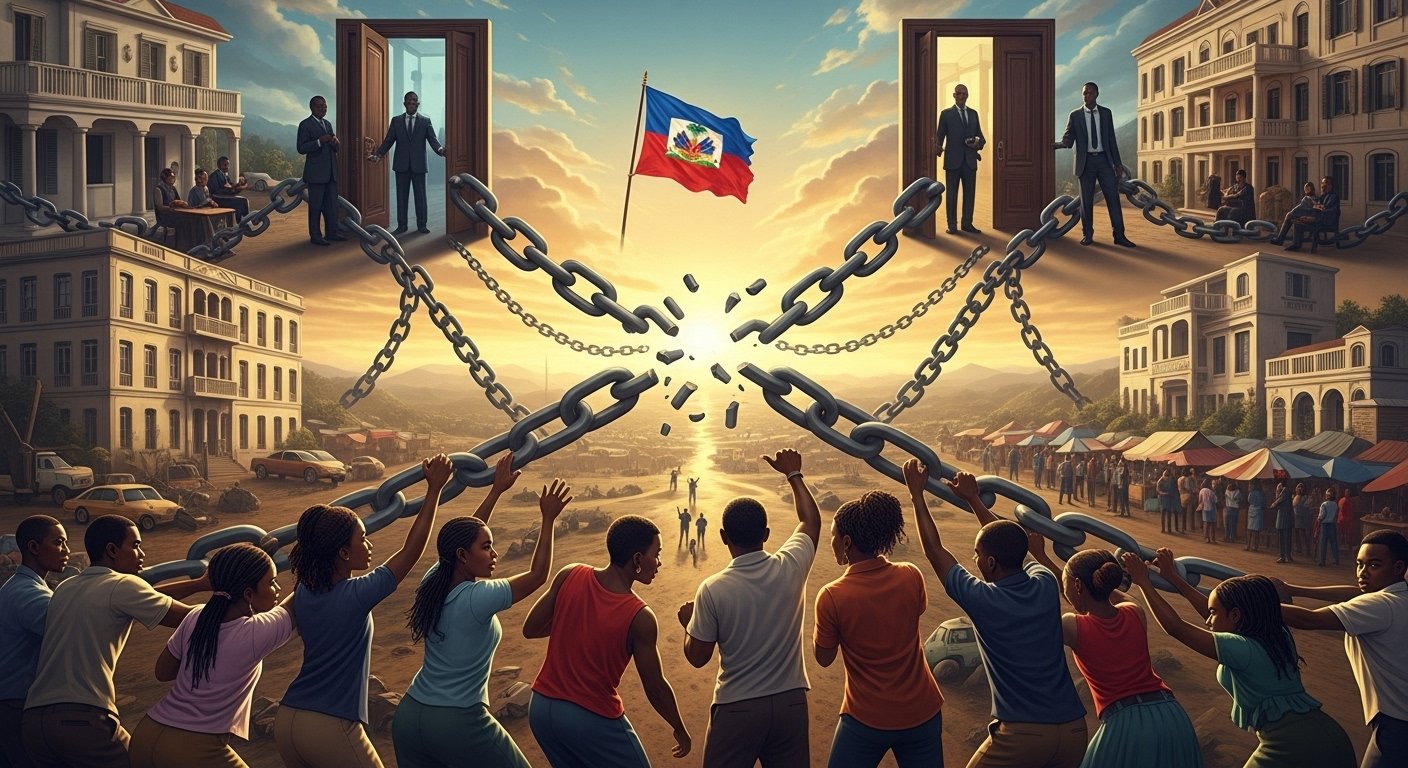
Uncover the truth behind Haiti's corruption and oligarchy in this powerful exposé. "Breaking the Chains: How Corruption and Oligarchy Hold Haiti Back."
Haiti, a nation with a rich history and culture, has been plagued by corruption and oligarchy for decades. The intertwining of these issues has led to a complex web of challenges that hinder the country’s progress.
The effects of Haiti corruption and Haiti oligarchy are far-reaching, impacting various aspects of Haitian society, from economic inequality to the lack of access to basic services. The struggle against these entrenched issues is not just about reform; it’s about the human aspect of the crisis, affecting the daily lives of Haitian citizens.
Understanding the depth of these challenges is crucial to addressing them effectively.
Haiti stands at a critical juncture, grappling with severe economic and political turmoil. The country’s economic woes are multifaceted, involving high poverty rates, significant income inequality, and a crumbling infrastructure.
The economic landscape in Haiti is dire. Poverty is rampant, with a significant portion of the population living below the poverty line.
Haiti faces stark income inequality, with a small elite controlling a disproportionate amount of the country’s wealth. This has led to widespread poverty, with over 60% of the population living in poverty. The gap between the rich and the poor continues to widen, exacerbating social tensions.
The collapse of infrastructure and public services has further compounded Haiti’s economic woes. Roads are in disrepair, and access to clean water and healthcare is limited. The lack of reliable public services has devastating effects on daily life, making it difficult for citizens to access basic necessities.
Haiti’s political landscape is marked by instability and governance challenges. Recent years have seen numerous leadership crises, contributing to an environment of uncertainty.
The country has experienced a series of leadership crises, with frequent changes in government and a lack of stable leadership. This has hindered efforts to address the country’s pressing issues, creating a cycle of instability.
Gang violence has become a significant concern, with armed groups controlling large swaths of territory. This has led to increased insecurity, displacement of populations, and human rights abuses. The situation remains volatile, with ongoing concerns about the government’s ability to maintain order.
The interplay between economic hardship and political instability has created a complex crisis in Haiti. Addressing these challenges will require a multifaceted approach that tackles both the symptoms and the root causes of the country’s problems.
The story of Haiti is one of the most tumultuous in the Americas, shaped by centuries of colonization and resistance. Understanding the historical context is crucial to grasping the complexities of Haiti’s current challenges.
Haiti’s history began as a French colony, known as Saint-Domingue, which became one of the most profitable colonies in the world due to its vast slave labor and resources.
The Haitian Revolution, which started in 1791, was a successful slave revolt that led to Haiti becoming the first independent nation in the Caribbean in 1804. The revolution was a pivotal moment in world history, influencing other independence movements globally.
Following its independence, Haiti faced international isolation and was forced to pay reparations to France for the loss of its “property” (enslaved people and assets), a debt that was only fully paid off in 1947. This financial burden significantly hindered Haiti’s economic development.
After gaining independence, Haiti’s power structures were shaped by its early leaders and the emerging elite class.
The Haitian elite class emerged as a dominant force in the country’s politics and economy, often at the expense of the broader population. This elite has played a significant role in shaping Haiti’s governance and economic policies.
Haiti’s history has been marked by periods of dictatorship and political instability, with various leaders vying for power and external forces influencing the country’s governance.
The legacy of these historical events continues to influence Haiti’s current state, with ongoing struggles related to governance, economy, and social justice.
Understanding the oligarchy in Haiti requires examining the elite families who have controlled the country’s resources and political landscape for generations. This complex system has deep historical roots and continues to influence Haiti’s development and governance.
The elite families in Haiti have maintained their power through a combination of wealth, political influence, and strategic alliances. They are often referred to as the “morally repugnant elite” due to their exploitative practices.
This term highlights the elite’s role in perpetuating inequality and exploiting Haiti’s resources for their benefit. Their actions have contributed significantly to the country’s economic stagnation.
Wealth and power are often transferred from one generation to the next within these elite families, ensuring their continued dominance. This intergenerational transfer is a key factor in the persistence of Haiti’s oligarchy.
Economic concentration is a hallmark of Haiti’s oligarchic system, with key industries controlled by a few powerful families. This concentration leads to monopolies that stifle competition and innovation.
Industries such as agriculture, finance, and trade are often under the control of these elite families, who use their dominance to manipulate markets and prices.
Import monopolies allow these families to control the flow of goods into Haiti, enabling them to manipulate prices and further exploit the population.
| Industry | Control | Impact |
|---|---|---|
| Agriculture | Elite families control major agricultural resources | Limiting access to land and resources for the general population |
| Finance | Dominance in banking and financial services | Restricting access to credit for small businesses and individuals |
| Trade | Monopolies on key imports | Price manipulation affecting consumer goods |
As highlighted by a report, “The concentration of economic power in the hands of a few families has been a major obstacle to Haiti’s development.”
“The oligarchic structure in Haiti perpetuates inequality and hinders economic growth.”
Corruption and oligarchy are deeply entrenched in Haiti, hindering its development and perpetuating inequality. The mechanisms through which these forces operate are complex and multifaceted, affecting various aspects of Haitian society.
The control exerted by corrupt and oligarchic forces in Haiti is maintained through several key mechanisms. These include political patronage networks and media ownership, which play crucial roles in shaping public opinion and maintaining the status quo.
Political patronage networks are a significant tool used by those in power to maintain control. These networks involve exchanging favors, jobs, and other benefits for political loyalty. This system not only perpetuates corruption but also stifles opposition and dissent.
Control over media outlets allows the oligarchy to shape public discourse and suppress critical reporting. By owning or influencing media, they can dictate the narrative, limiting the public’s access to unbiased information.
Key aspects include:
The cycle of poverty and dependence is another critical issue perpetuated by corruption and oligarchy. Limited economic mobility and the suppression of democratic processes are key factors in this cycle.
Limited economic mobility traps Haitians in a cycle of poverty. Without access to quality education, job opportunities, or fair economic conditions, individuals are unable to improve their socio-economic status.
The suppression of democratic processes ensures that the oligarchy maintains its grip on power. This is achieved through various means, including electoral fraud, intimidation, and manipulation of political institutions.
This results in:
Breaking the chains of corruption and oligarchy in Haiti requires addressing these mechanisms of control and the cycle of poverty and dependence. It is a complex challenge that necessitates a multifaceted approach, including reforms in governance, media, and economic policies.
Government corruption in Haiti is a complex issue, involving bribery, embezzlement, and judicial failures. This multifaceted problem affects various government institutions, hindering the country’s development and perpetuating inequality among its citizens.
The misuse of public funds is a significant issue in Haiti, with bribery and embezzlement being widespread practices. Officials often divert public resources for personal gain, depriving the country of much-needed funds for infrastructure, healthcare, and education.
The PetroCaribe scandal is a notable example of corruption involving the mismanagement of funds meant for development projects. Between 2008 and 2016, Haiti received over $2 billion in oil subsidies from Venezuela, but a significant portion of these funds was misappropriated or embezzled. This scandal highlights the depth of corruption within government institutions.
“The PetroCaribe affair is a stark reminder of the corruption that plagues Haiti’s government and the need for transparency and accountability.”
Corruption in public procurement is another area where government officials often engage in bribery and embezzlement. Contracts are frequently awarded to favoured companies without competitive bidding, leading to inflated costs and substandard work. This not only wastes public funds but also results in poor infrastructure and services.
The judicial system in Haiti is marred by failures, under the control of the same oligarchy, including politicized courts and a lack of accountability mechanisms. This environment fosters impunity, as those in power often escape prosecution for their crimes.
Courts in Haiti are frequently politicized, leading to selective justice where the outcomes are influenced by political affiliations or personal connections. This erodes trust in the judicial system and undermines the rule of law.
The absence of robust accountability mechanisms within the judicial system means that corrupt officials rarely face consequences for their actions. Establishing independent bodies to oversee government activities is crucial for promoting transparency and accountability.
International aid to Haiti has been a double-edged sword, bringing both relief and complications to the nation. While foreign assistance has been crucial in providing humanitarian aid and supporting development projects, it has also introduced significant challenges that complicate Haiti’s path to sustainable development.
Foreign aid to Haiti has led to an unprecedented proliferation of non-governmental organizations (NGOs). As of recent counts, over 10,000 NGOs are operating in Haiti, a number that is unusually high for a country of its size and helps more corruption, insecurity.
The sheer number of NGOs has undermined the Haitian government’s ability to govern, as many NGOs operate independently of government oversight. This has led to a fragmented aid landscape where coordination is challenging, corruption and resources are often duplicated or misallocated.
There’s an ongoing debate between the provision of humanitarian aid and investments in sustainable development. While humanitarian aid is crucial for immediate relief, sustainable development projects are essential for long-term economic growth and stability. Striking a balance between these two approaches is critical.
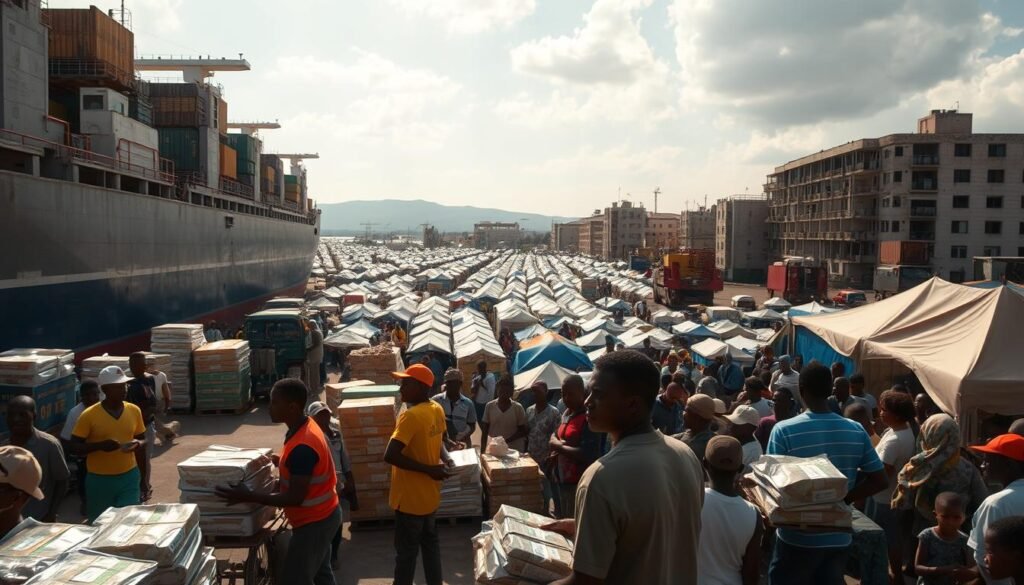
Aid money has often been associated with corruption in Haiti. The lack of effective oversight and monitoring mechanisms has led to the diversion of funds meant for development projects.
There have been numerous instances where aid funds have been diverted, and ghost projects have been created, siphoning off money intended for the Haitian people. This not only undermines the effectiveness of aid but also erodes trust in international aid efforts.
The international community also bears responsibility for these failures, as inadequate oversight mechanisms have allowed corruption to flourish. Strengthening these mechanisms is crucial to ensuring that aid reaches its intended beneficiaries.
In conclusion, while international aid is crucial for Haiti, it’s imperative to address the complications associated with it. By understanding these dynamics and working towards more effective aid delivery mechanisms, we can help Haiti break the chains of corruption and oligarchy.
The humanitarian crisis in Haiti is a stark reminder of the devastating impact of corruption and oligarchy on ordinary citizens. The effects are far-reaching, touching every aspect of daily life.
Life in Haiti is a daily struggle for many. Corruption and oligarchy have led to a severe deterioration in living conditions.
Access to basic services like healthcare and education is limited. Many hospitals lack essential supplies, and schools are often underfunded. “The lack of access to quality healthcare is a major concern,” says Dr. Jean-Pierre, a Haitian healthcare professional.
To survive, many Haitians resort to informal economic activities. As one Haitian citizen noted,
“We have to be creative to make ends meet, but it’s a constant struggle.”
Remittances from abroad also play a crucial role in supporting families.
The dire situation in Haiti has led to significant migration and brain drain. Many Haitians seek better opportunities abroad.
Diaspora communities are vital to Haiti’s economy, sending remittances that help sustain families. These remittances are a lifeline for many, providing essential financial support.
However, the brain drain represents a significant loss of human capital. “When our brightest minds leave, it’s a loss for the entire nation,” remarks a Haitian educator. The departure of skilled professionals and future leaders hampers Haiti’s development.
The humanitarian crisis in Haiti underscores the urgent need for reform. Addressing corruption and oligarchy is crucial to improving the lives of Haitian citizens.
As Haiti continues to grapple with corruption and oligarchy, a glimmer of hope emerges from the grassroots resistance. This movement is characterized by the determination of civil society organizations to challenge the status quo and push for meaningful change.
Civil society organizations are at the forefront of Haiti’s fight against corruption. They are working tirelessly to promote transparency and accountability.
Transparency initiatives and watchdog groups are crucial in monitoring government activities and exposing corruption. For instance, organizations like Transparency International have been instrumental in highlighting corrupt practices and advocating for reform.
Community-based development models are empowering local communities to take charge of their development. These models focus on sustainable practices and community engagement, ensuring that the benefits of development are equitably distributed.
International reform approaches are also playing a critical role in addressing Haiti’s corruption. The international community is increasingly recognizing the need for targeted measures to combat corruption.
Targeted sanctions against corrupt officials are being implemented to deter malpractices. By freezing assets and imposing travel bans, these sanctions aim to hold officials accountable.
Ensuring accountability in foreign aid distribution is another key strategy. This involves rigorous monitoring and evaluation to ensure that aid reaches its intended recipients and is used effectively.
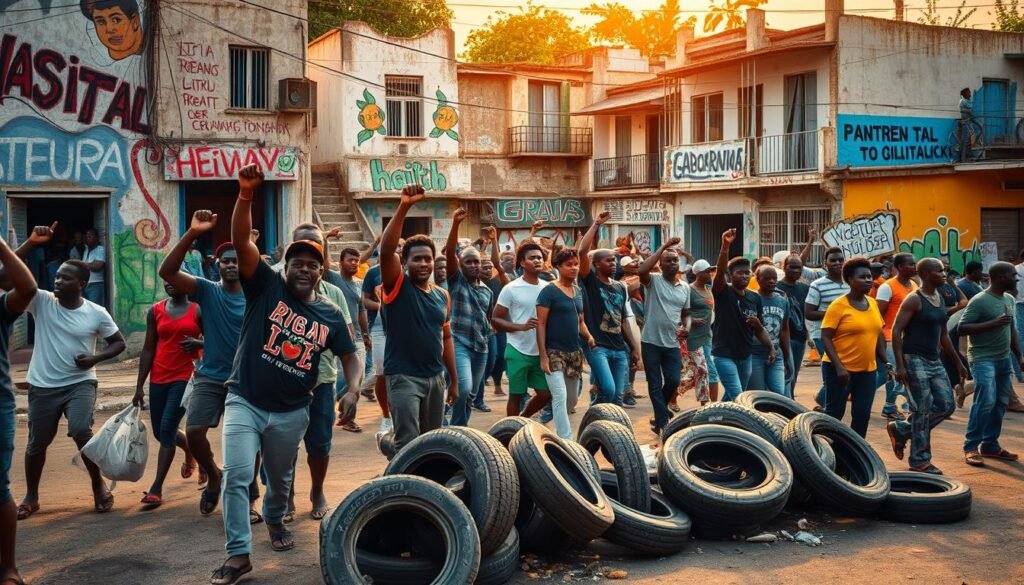
The combination of grassroots resistance and international reform approaches offers a promising pathway to breaking Haiti’s chains of corruption and oligarchy. By supporting civil society and implementing targeted reforms, Haiti can move towards a more equitable and just society.
Haiti’s development challenges are deeply rooted in its history of corruption and oligarchy. To break these chains, a multi-faceted approach is necessary, addressing the complex interplay of economic, social, and political factors.
Understanding the mechanisms of control and exploitation is crucial in identifying pathways to reform. By supporting civil society organizations and international reform approaches, Haitians can work towards a more equitable society.
Addressing Haiti’s development challenges requires a sustained commitment to transparency, accountability, and good governance. By promoting these values, Haiti can begin to break free from the cycle of poverty and dependence that has held it back for so long.
The journey towards reform will be long and challenging, but with the support of the international community and the determination of the Haitian people, there is hope for a brighter future. Focusing on pathways to reform can help Haiti overcome its current crises and build a more prosperous and stable nation.
The main cause of Haiti’s ongoing crisis is the intertwined issues of corruption and oligarchy, which have led to significant economic, political and social challenges.
Corruption has severely impacted Haiti’s government institutions, with widespread bribery and embezzlement of public funds, as seen in the PetroCaribe scandal, and corruption in public procurement.
Elite families in Haiti control a significant portion of the country’s economy and politics, justice, perpetuating their power through intergenerational wealth transfer and maintaining monopolies over key industries.
International aid to Haiti is a double-edged sword; while it provides necessary humanitarian assistance, it can also fuel corruption through diverted funds and ghost projects, and undermine governance by proliferating NGOs.
Haitian citizens face significant challenges due to corruption and oligarchy, including limited access to basic services, economic survival struggles, and a brain drain as many seek opportunities abroad.
Yes, there are efforts by civil society organizations to fight corruption through transparency initiatives and community-based development models, as well as calls for international reform approaches like targeted sanctions against corrupt officials.
The judicial system in Haiti is plagued by politicized courts and a lack of accountability mechanisms, contributing to impunity and allowing corruption to flourish.
Haiti’s history, from colonial rule to independence and subsequent international isolation and interference, has shaped its power structures and contributed to the current state of corruption and oligarchy.