Physical Address
304 North Cardinal St.
Dorchester Center, MA 02124
Physical Address
304 North Cardinal St.
Dorchester Center, MA 02124
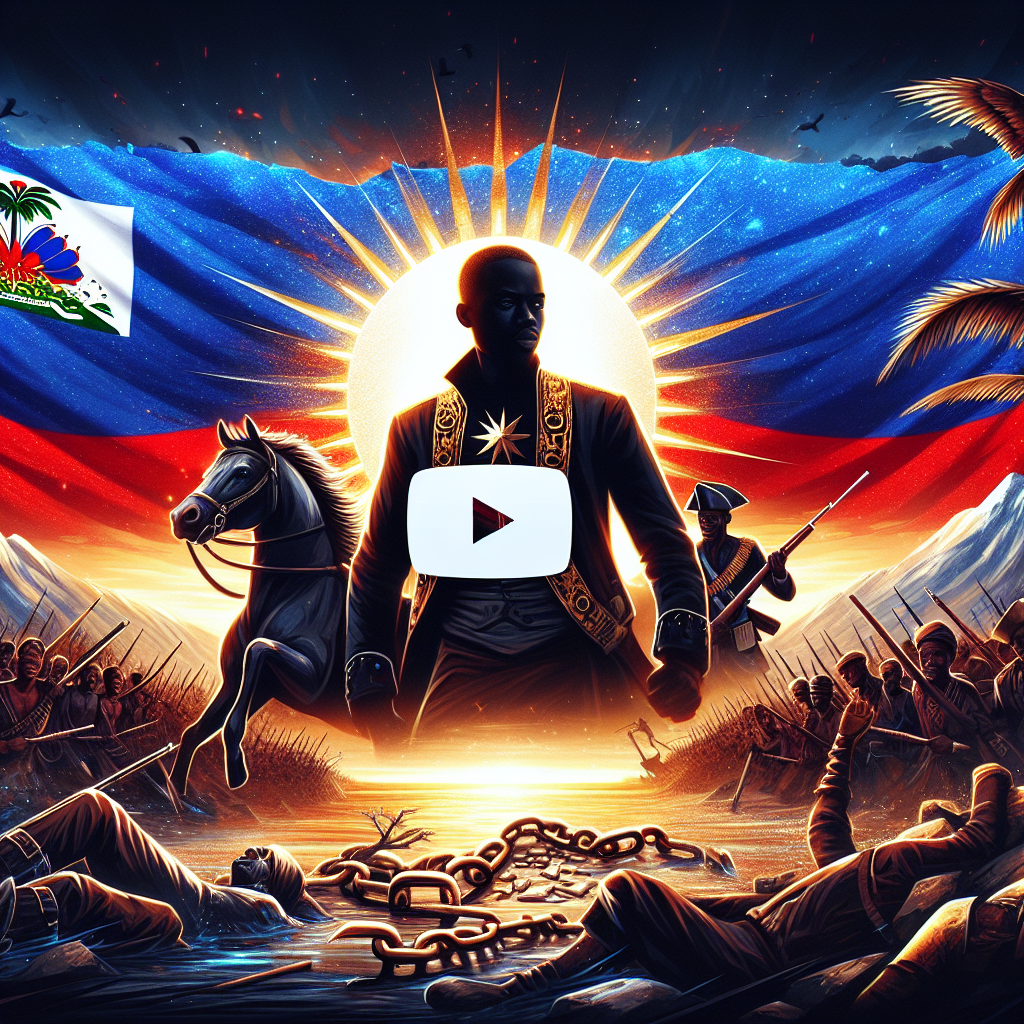
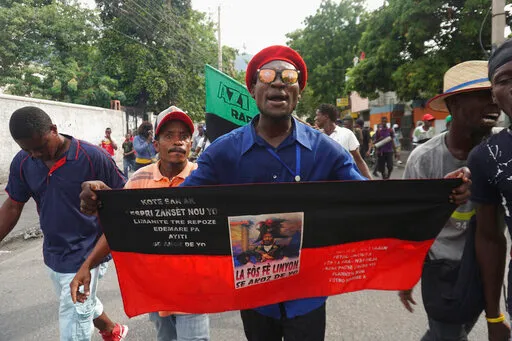
"Breaking Free: Haiti's Path to Genuine Independence from Foreign Domination" chronicles the nation's struggle to liberate itself from external control.
Haiti, the first independent black nation in the world, has a rich history of struggle for Haitian sovereignty. From its revolutionary beginnings to the present day, Haiti has faced numerous challenges in maintaining its independence amidst foreign domination.
The country’s journey to self-determination has been marked by periods of foreign intervention, which have significantly impacted its economic and political stability. Understanding the complexities of foreign domination and its effects on Haiti’s development is crucial for grasping the nation’s ongoing quest for independence.
Haiti’s history is rooted in the complex interactions between its indigenous people and European colonizers. The island was first inhabited by the Taíno people, who had a sophisticated society and culture.
The Taíno people were the first to encounter Christopher Columbus and the Spanish colonizers. This encounter had devastating consequences for the Taíno, who were subjected to forced labour, violence, and disease brought over by Europeans. The Spanish colonization of Haiti, then known as Hispaniola, marked the beginning of a long period of exploitation and suffering for the indigenous population.
In 1697, Spain ceded the western part of Hispaniola to France, which became known as Saint-Domingue. The French established a plantation economy based on slavelabourr, producing crops such as sugar, coffee, and indigo. The plantation economy was highly profitable, but it was built on the backs of enslaved Africans who were subjected to harsh conditions.
Slavery in Saint-Domingue was particularly brutal. Enslaved people were forced to work long hours in harsh conditions, and they were subjected to physical punishment and violence. The treatment of enslaved people was a key factor in the Haitian Revolution, which would eventually lead to Haiti’s independence.
| Period | Colonial Power | Economic System |
|---|---|---|
| Pre-1697 | Spanish | Gold mining and agriculture |
| 1697-1804 | FrencThe plantation | An economy based on slave labour |
As the first successful slave revolt, the Haitian Revolution is a testament to the indomitable spirit of the enslaved. This revolution, which began in 1791, was a complex and multifaceted process that ultimately led to Haiti’s independence in 1804.
The revolution began with a Vodou ceremony at Bois Caïman, where enslaved individuals gathered to plan their uprising. Key leaders emerged, including Toussaint Louverture, Boukman Dutty, and Jean-Jacques Dessalines, each playing crucial roles in the fight for freedom.
Toussaint Louverture, a former slave turned military leader, was instrumental in organizing the resistance. His strategic brilliance and diplomatic skills were pivotal in the early successes of the revolution, as he unified various factions and negotiated with foreign powers.
Following Toussaint’s capture, Jean-Jacques Dessalines took the reins, leading the final push for independence. On January 1, 1804, Dessalines declared Haiti’s independence, making it the first independent black nation in the world. This act was a culmination of years of brutal fighting and marked a significant turning point in world history.
Gaining independence was just the beginning; Haiti soon found itself entangled in a web of international isolation and financial obligations. The newly independent nation faced significant challenges from the international community, particularly from France, which had significant economic interests in the former Saint-Domingue.
In 1825, France recognized Haiti’s independence but at a steep price. The French government demanded 150 million gold francs as compensation for the loss of its “property” – the enslaved people and plantations. This demand was a crushing blow to Haiti’s fragile economy.
The so-called “Independence Debt” was a significant burden that Haiti struggled to pay off. The debt was eventually reduced to 90 million francs, but it took Haiti decades to pay it off, finally completing the payment in 1947. This debt drained Haiti’s resources, hindering its ability to invest in infrastructure and development.
Haiti’s international isolation had severe economic consequences. The country was excluded from international trade and commerce, limiting its ability to engage in global markets. This isolation, combined with the heavy debt burden, stifled Haiti’s economic growth and contributed to its long-term poverty.
The economic consequences of Haiti’s independence continue to be felt today. Understanding this history is crucial to grasping the complexities of Haiti’s current economic challenges and its struggle for genuine independence.
The quest for genuine independence in Haiti is deeply rooted in its history of foreign domination. To understand Haiti’s current challenges, it’s essential to examine the historical patterns of external control and key moments in its struggle for true sovereignty.
Haiti has faced various forms of external control throughout its history, from colonial rule to modern-day interventions. The French colonial period and subsequent American occupation are significant examples of how foreign powers have shaped Haiti’s political and economic landscape.
Several key moments have defined Haiti’s struggle for sovereignty, including the Haitian Revolution, the U.S. occupation in 1915, and contemporary interventions by international organizations. These events have contributed to the complexities of Haiti’s path to genuine independence.
Genuine independence for Haiti means achieving self-determination in political, economic, and social spheres. It involves overcoming the legacy of foreign domination and building a sovereign nation that can determine its own future.
| Aspect | Historical Context | Current Challenge |
|---|---|---|
| Political Sovereignty | Foreign occupations and interventions | External political influence |
| Economic Independence | Colonial exploitation | Dependency on foreign aid |
| Social Self-Determination | Cultural suppression | Preserving cultural identity |
Haiti’s journey to genuine independence requires a comprehensive understanding of its historical and contemporary challenges. By examining the past and present, Haitians can forge a path towards true sovereignty and self-determination.
Neocolonialism in Haiti was starkly illustrated during the U.S. occupation from 1915 to 1934, a period marked by significant resistance and lasting impacts. This era was characterized by the U.S. exerting control over Haiti’s government and economy, effectively limiting its sovereignty.
The U.S. occupation of Haiti was motivated by a combination of strategic and economic interests. The U.S. sought to secure Haiti’s financial and political stability to protect its own investments and to counter European influence in the region.
Despite the U.S. efforts to legitimize its presence, the occupation faced fierce resistance from Haitian nationalists. Leaders like Charlemagne Péralte rallied against the foreign forces, symbolizing the Haitian people’s struggle for independence.
The occupation had profound and lasting effects on Haiti’s economy and political structure. The U.S. controlled key sectors of Haiti’s economy, including finance and infrastructure, setting a precedent for future foreign interventions.
The legacy of the U.S. occupation continues to influence Haiti’s political and economic landscape, serving as a critical example of neocolonialism’s enduring impact.
The Duvalier regime’s rise to power was deeply intertwined with the geopolitical tensions of the Cold War. François “Papa Doc” Duvalier’s ascension to the presidency in 1957 was facilitated by his portrayal as a strong anti-communist leader, which garnered him support from the United States.
Duvalier’s initial support came from the Haitian elite and the U.S., who saw him as a bulwark against communism. He cleverly manipulated this perception to consolidate his power, creating a regime characterized by authoritarianism and repression.
The U.S. continued to support Duvalier due to his anti-communist stance, despite his regime’s human rights abuses. This foreign backing was crucial in maintaining his power and influence over Haitian politics.

After François Duvalier died in 1971, his son Jean-Claude “Baby Doc” Duvalier took over, continuing the family’s grip on power. The regime remained heavily influenced by foreign powers, with the U.S. maintaining its support due to Haiti’s strategic importance in the region.
The Duvalier dictatorships exemplify how Cold War politics directly impacted Haiti’s sovereignty, with foreign influence shaping the country’s political landscape for decades.
In recent years, Haiti has experienced a surge in international interventions, ranging from UN missions to a complex web of foreign aid and NGOs. This influx of external involvement has significantly impacted Haiti’s journey towards genuine independence.
The United Nations Stabilization Mission in Haiti (MINUSTAH) was one of the most significant UN interventions in Haiti, operating from 2004 to 2017. While its primary goal was to stabilize the country, MINUSTAH’s presence was not without controversy. Critics argue that the mission sometimes exacerbated local unrest and introduced cholera, leading to a devastating epidemic.
“The introduction of cholera by UN peacekeepers was a tragic reminder of the unintended consequences of foreign intervention.”
Foreign aid has been a double-edged sword for Haiti. On one hand, it has provided crucial support during times of crisis. On the other hand, it has created dependency and undermined local capacities. The aid system often prioritizes short-term solutions over long-term development, further complicating Haiti’s path to self-sufficiency.
Haiti has been termed the “Republic of NGOs” due to the vast number of non-governmental organizations operating within its borders. While NGOs have provided essential services, their proliferation has also led to a fragmented and often uncoordinated response to Haiti’s challenges. This phenomenon has raised concerns about the sustainability of NGO-led development and its impact on Haiti’s governance and economy.
| Year | Number of NGOs | Aid Received (USD) |
|---|---|---|
| 2010 | 10,000 | 1.2 billion |
| 2015 | 12,000 | 1.5 billion |
| 2020 | 15,000 | 2.0 billion |
The complex interplay between UN missions, foreign aid, and NGOs continues to shape Haiti’s development trajectory. Understanding these dynamics is crucial for navigating the country’s path towards genuine independence.
The economic challenges faced by Haiti are deeply intertwined with external control. For decades, Haiti has struggled with economic instability, largely due to external influences that have shaped its economic policies and practices.
One of the primary factors contributing to Haiti’s economic woes is the intervention of international financial institutions. IMF and World Bank Structural Adjustment Programs have been particularly impactful.
The implementation of Structural Adjustment Programs (SAPs) by the IMF and World Bank has had significant consequences for Haiti’s economy. These programs, designed to promote economic stability, often come with conditions that favour foreign interests over local needs.
Such measures have led to a loss of economic sovereignty and exacerbated poverty in Haiti.
Haiti’s trade policies have also been influenced by external forces, leading to a dependency on imported goods and a decline in local agricultural production. The country, once self-sufficient in food production, now relies heavily on imports, making it vulnerable to global market fluctuations.

The garment industry is another area where external control is evident. Foreign investment in this sector has created jobs but also perpetuates dependency on foreign capital and expertise. The industry’s growth has not translated into sustainable economic development for Haiti.
In conclusion, Haiti’s economic challenges are complex and multifaceted, with external control playing a significant role. Understanding these dynamics is crucial for developing effective solutions to promote economic independence and stability.
Foreign interference continues to undermine Haiti’s ability to exercise its political sovereignty. This interference manifests in various forms, including influence over electoral processes and external political pressure from international actors.
Haitian elections have historically been subject to foreign influence, which can significantly impact the outcome. International observers and aid often come with conditions that can sway the political landscape.
For instance, the 2010 Haitian presidential election was marred by controversy and allegations of foreign interference, leading to widespread protests.
The Core Group, comprising representatives from various foreign embassies and international organizations, plays a significant role in Haitian politics. While intended to promote stability, their interventions often result in external political pressure that can undermine Haiti’s sovereignty.
“The Core Group’s influence can be seen as both a stabilizing force and a challenge to Haiti’s self-determination.”
The culmination of foreign influence and external political pressure poses significant challenges to Haiti’s democratic self-determination. The ability of Haitians to choose their leaders and policies without undue influence is compromised.
| Challenge | Impact |
|---|---|
| Foreign Influence in Elections | Skewed electoral outcomes |
| External Political Pressure | Undermined sovereignty |
| Lack of Self-Determination | Compromised democratic processes |
The path to genuine independence requires addressing these challenges and ensuring that Haitians can exercise their political sovereignty without external interference.
Grassroots resistance is redefining Haiti’s struggle for true independence. For decades, Haitians have been actively working towards achieving genuine sovereignty through various movements and forms of resistance.
The Lavalas movement, which emerged in the 1990s, is a significant example of grassroots resistance. Led by figures such as Jean-Bertrand Aristide, Lavalas sought to address the socio-economic inequalities that plagued Haiti. This movement represented a push for democratic governance and social justice, resonating with the broader population.
Cultural resistance has also played a crucial role in Haiti’s struggle for sovereignty. Vodou, in particular, has been a powerful symbol of Haitian identity and resistance against colonial and neocolonial forces. Vodou’s significance extends beyond religious practice; it is a cultural touchstone that has helped Haitians maintain their autonomy and cultural heritage.
Today, young Haitians continue to drive the movement towards sovereignty through contemporary activism. Youth-led movements are addressing issues such as corruption, environmental degradation, and economic inequality, ensuring that the struggle for genuine independence remains vibrant and relevant.
These grassroots efforts collectively contribute to Haiti’s ongoing quest for sovereignty, demonstrating the resilience and determination of its people.
Haiti’s path to genuine independence is deeply rooted in its revolutionary legacy. The nation’s history, marked by colonialism, slavery, and foreign domination, has shaped its struggle for true sovereignty. Understanding this complex past is crucial for navigating Haiti’s present and future challenges.
Throughout its history, Haiti has faced numerous external influences that have impacted its development. From the French colonial era to modern-day interventions, the nation has struggled to assert its independence. However, the resilience of the Haitian people and their commitment to their revolutionary ideals remain a powerful force.
Reclaiming Haiti’s revolutionary legacy is essential for shaping its future. By embracing its history and cultural identity, Haiti can forge a path that is truly its own. As the nation moves forward, it is crucial to prioritize self-determination and sovereignty, ensuring that Haiti’s future is guided by the principles of its revolutionary past.
Haiti’s independence is significant as it was the first successful slave revolt in history, leading to the establishment of the first independent black nation in the world.
The French colonial rule established a plantation economy based on enslaved Africans, which had a lasting impact on Haiti’s economic stability and sovereignty.
Toussaint Louverture was a key leader in the Haitian Revolution, playing a crucial role in the fight for independence against French colonial rule.
The “Independence Debt” was a debt imposed by France on Haiti as a condition for recognizing its independence, which had a crippling effect on Haiti’s economy.
The U.S. occupation had lasting economic and political impacts on Haiti, illustrating the effects of neocolonialism and external control.
The Core Group is a coalition of foreign ambassadors and representatives that have significant influence over Haitian politics, often exerting external pressure on the country’s government.
International aid and NGOs play a significant role in Haiti’s development, but their impact is often complex and double-edged, creating both opportunities and challenges for the country.
Haiti’s economic sovereignty is challenged by external factors such as IMF and World Bank structural adjustment programs, trade policies, and foreign investment.
Haitians are working towards achieving genuine independence through grassroots resistance, cultural resistance, and contemporary activism, including movements like Lavalas and youth movements.
Vodou is a significant aspect of Haitian culture and identity, serving as a form of cultural resistance and a symbol of Haitian heritage.