Physical Address
304 North Cardinal St.
Dorchester Center, MA 02124
Physical Address
304 North Cardinal St.
Dorchester Center, MA 02124


Delve into the need for a complete system reset in Haiti, moving beyond the constraints of political parties. Discover the path forward.
Haiti’s political landscape is plagued by instability and corruption, hindering effective governance. The country’s reliance on traditional political parties has created an illusion of progress, while actual reform remains elusive.
To truly move forward, Haiti must consider a system reset, focusing on governance reform that prioritizes the needs of its citizens. This involves dismantling the existing political party illusion and embracing a more inclusive, transparent approach to governance.
A deep-seated power vacuum has come to define Haiti’s political landscape, leading to significant governance challenges. This vacuum is characterized by a lack of effective leadership and the presence of various power brokers vying for control.
The absence of a strong, centralized government has led to a fragmentation of power, with various groups filling the void. This has resulted in significant governance challenges, as different factions vie for influence.
Gang violence has become a pervasive issue, contributing to a climate of fear and insecurity among the population. This violence is often linked to the power vacuum, as various gangs seek to assert their control.
The lack of elected leadership is a critical factor in Haiti’s political instability. Without legitimate, elected officials, the government lacks the authority and mandate to effectively govern.
Haiti’s political history is marked by recurring patterns of instability, with periods of relative calm often giving way to new crises. This cycle is perpetuated by a combination of factors, including the absence of effective leadership and the presence of external influences.
The recurrence of political failure in Haiti is a symptom of deeper systemic issues. These include a lack of institutional capacity and a reliance on short-term solutions rather than long-term reforms.
The impact of political instability on everyday Haitians is profound, affecting access to basic services, economic opportunities, and overall security. The ongoing crisis has led to a decline in living standards and a growing sense of disillusionment.
| Challenge | Description | Impact |
|---|---|---|
| Power Vacuum | Lack of effective leadership | Fragmentation of power |
| Gang Violence | Pervasive violence and insecurity | Fear and displacement among the population |
| Absence of Elected Leadership | Lack of legitimate government authority | Ineffective governance |
“The situation in Haiti is a complex web of political, economic, and social factors that require a comprehensive approach to address the ongoing crisis.”
From its revolutionary beginnings to modern-day politics, Haiti’s history is a tale of struggle and resilience. The country’s political evolution has been marked by significant events that have shaped its current landscape.
Haiti gained independence in 1804, becoming the first independent nation in the Caribbean. This revolutionary beginning was followed by early challenges, including internal power struggles and external pressures.
The Haitian Revolution led to the establishment of a new nation, but it also set the stage for future political instability. Leadership challenges and economic strain were among the early hurdles.
Over the years, Haiti has seen numerous attempts at political transition, often hindered by internal conflicts and external interference. These setbacks have contributed to the country’s ongoing political challenges.
The period of authoritarian rule, particularly under the Duvalier regime, has had a lasting impact on Haiti’s political culture.
The Duvalier era was characterized by brutal suppression and corruption, leaving a legacy that continues to influence Haiti’s politics.
Following the end of the Duvalier regime, Haiti struggled to establish a democratic political culture, facing challenges such as political fragmentation and a lack of institutional capacity.
The historical context of Haiti’s political evolution highlights the complexity of its current political situation. Understanding this history is crucial for addressing the challenges that lie ahead.
The inefficacy of political parties in Haiti stems from deep-seated issues, including the personalization of power and lack of ideological foundations. These factors have led to a political environment characterized by instability and a lack of coherent governance.
In Haiti, political power is often concentrated in the hands of a few individuals, leading to a cult of personality that overshadows party ideologies. This personalization of power results in political decisions being made based on personal interests rather than the public good.
The political landscape in Haiti is dominated by charismatic leaders who wield significant influence over their followers. This cult of personality hinders the development of institutional continuity, as political loyalty is often directed towards individuals rather than parties or policies.
The lack of institutional continuity in Haitian political parties means that there is little stability or long-term planning. Political appointments and policies change frequently with leadership changes, disrupting the implementation of sustained development programs.
Haitian political parties often lack clear ideological foundations, leading to opportunistic political alliances. Without a strong ideological base, parties are more likely to form alliances based on short-term gains rather than shared values or policy goals.
Political alliances in Haiti are frequently formed with the aim of gaining power or accessing resources, rather than advancing specific policy agendas. This opportunism undermines the potential for cohesive governance.
The absence of policy-based governance in Haiti’s political parties results in a lack of direction and coherence in government policies. This void hinders effective governance and the ability to address the country’s pressing issues.
The fabric of Haiti’s political system is weakened by inherent flaws that contribute to its instability. Understanding these structural deficiencies is crucial to addressing the challenges faced by the country’s political parties.
Haiti’s constitution has several weaknesses that impact the functioning of its political parties. Two significant areas of concern are the distribution of power and attempts at reform.
The current constitution concentrates power in the hands of the president, leading to an imbalance in governance. This centralization of power often results in authoritarian tendencies and marginalizes other branches of government.
Several attempts have been made to reform the constitution, but these efforts have been met with resistance and ultimately failed to materialize. The inability to reform the constitution has perpetuated the existing power dynamics, hindering progress.
The electoral system in Haiti is another critical area where structural deficiencies are evident. Issues such as electoral disputes and voter disenfranchisement have plagued the system.
Electoral disputes have become a recurring feature of Haiti’s political landscape. These disputes often lead to political gridlock and undermine the legitimacy of elected officials.
Voter disenfranchisement is a significant problem, with many citizens facing barriers to exercising their right to vote. This issue is compounded by inadequate electoral infrastructure and a lack of transparency.
| Structural Deficiency | Impact on the Political System | Potential Solution |
|---|---|---|
| Constitutional Weaknesses | Imbalance of Power | Constitutional Reform |
| Electoral System Flaws | Electoral Disputes and Voter Disenfranchisement | Electoral Reform and Infrastructure Improvement |
Haiti’s future hinges on abandoning the illusion of party-based solutions. For decades, political parties have dominated the landscape, yet the country remains mired in instability and underdevelopment. The limitations of this approach are clear: political parties have failed to address the fundamental issues plaguing Haiti.
Party-based solutions have been tried and have failed. The personalization of power and lack of ideological foundations have rendered political parties ineffective.
Incremental change has not worked because it fails to address the root causes of Haiti’s problems. Superficial reforms have not led to meaningful change.
A fundamental rethink is necessary to create a system that prioritizes the needs of Haitian citizens. This involves rethinking governance structures and creating new foundations for stability.
Systemic restructuring is not just desirable; it’s necessary. Other failed states have successfully recovered through comprehensive reforms.
Countries like Rwanda have shown that recovery is possible after systemic collapse. Comprehensive reforms and a focus on building robust institutions are key.
For Haiti, this means creating new economic, judicial, and social foundations. It’s about building a resilient system that can withstand future challenges.
| Aspect | Current State | Proposed Change |
|---|---|---|
| Governance | Party-dominated politics | Inclusive, citizen-centric governance |
| Economic Institutions | Aid dependency | Sustainable, self-reliant economy |
| Judicial System | Lack of the rule of law | Established rule of law and accountability |
Establishing a robust economic foundation is crucial for Haiti’s future stability and growth. A strong economy can help Haiti become more self-sufficient and less dependent on external aid.
Haiti has long been reliant on foreign aid, which has created a culture of dependency rather than self-sustainability. To move beyond this, Haiti needs to focus on creating self-sustaining economic models that can support its development without relying heavily on external assistance.
Developing economic models that are driven by internal resources and capabilities is crucial. This includes investing in local industries and promoting entrepreneurship.
Corruption and mismanagement of resources have hindered Haiti’s economic progress. Addressing these issues through transparent governance and accountability mechanisms is essential for building trust and ensuring that resources are used effectively.
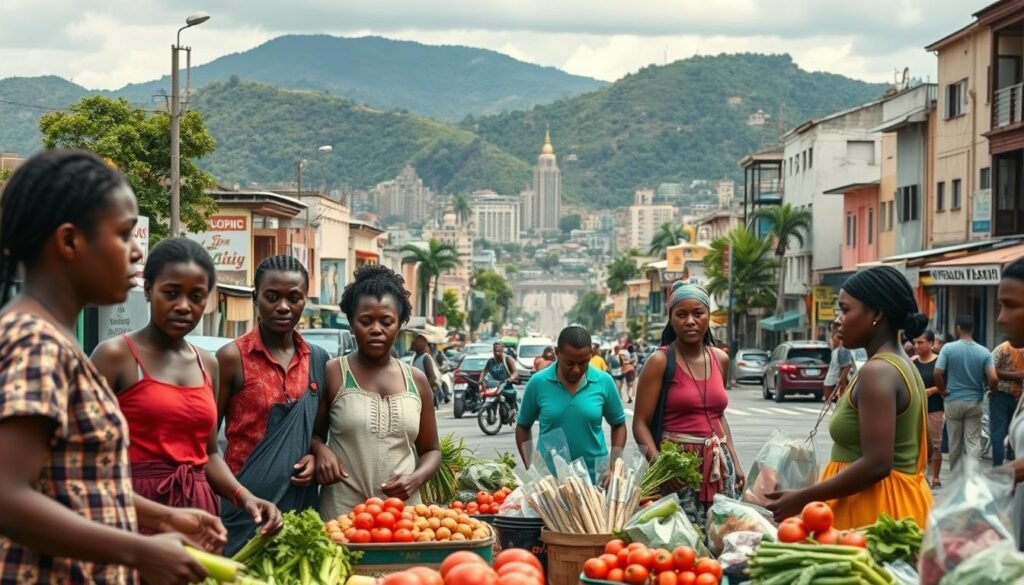
Sustainable economic institutions are the backbone of a robust economy. These institutions need to be strong, transparent, and accountable to support economic growth and development.
Reforming the banking and financial systems is critical to ensure that they are stable, secure, and capable of supporting economic activities. This includes improving access to financial services for small businesses and individuals.
Small businesses are vital for economic growth as they create jobs and stimulate innovation. Providing support to small businesses through training, access to capital, and market access can significantly boost Haiti’s economy.
The path to a stable Haiti lies in overhauling its judicial and legal frameworks. A well-functioning judicial system is essential for ensuring the rule of law, protecting human rights, and promoting economic development.
Establishing the rule of law in Haiti requires significant reforms in its judicial and legal systems. This involves several key measures, including:
Reconstructing Haiti’s police force is vital for maintaining law and order. This involves training programs, infrastructure development, and ensuring that the police force is accountable to the people.
Ensuring judicial independence is crucial for preventing political interference in the judiciary. This can be achieved through constitutional amendments and laws that protect the judiciary’s autonomy.
Creating accountability mechanisms is essential for preventing corruption and ensuring that those in power are held accountable. This includes:
Anti-corruption frameworks are critical for detecting and punishing corrupt practices. These frameworks should include independent anti-corruption agencies and robust legal frameworks.
Transparent governance structures are essential for ensuring that government operations are open and accountable. This can be achieved through the use of technology, such as e-government platforms, and through legal requirements for transparency.
By implementing these reforms, Haiti can establish a judicial and legal system that supports the rule of law, protects human rights, and promotes economic development.
Haiti’s future hinges on its ability to foster a cohesive society through civic education and community engagement. A well-informed and engaged citizenry is crucial for the country’s development and stability.
Rebuilding national identity is a critical step towards achieving social cohesion in Haiti. This involves promoting shared values beyond political divisions and fostering a sense of unity among citizens.
Shared values are the foundation upon which a stable society is built. In Haiti, promoting values such as respect for human rights, equality, and justice can help bridge the gaps created by political divisions.
Cultural renewal and pride are essential for rebuilding Haiti’s national identity. By celebrating its rich cultural heritage, Haiti can foster a sense of pride and unity among its citizens. Cultural events and education programs can play a significant role in this process.
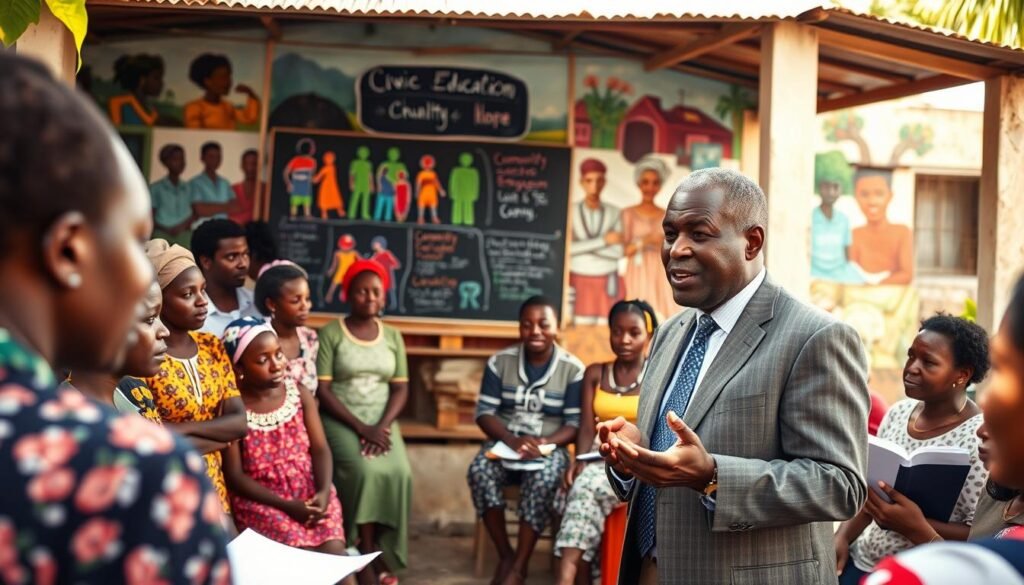
Empowering grassroots movements is vital for promoting social cohesion and civic engagement in Haiti. These movements can drive positive change at the community level.
Community-based leadership development programs can empower local leaders to drive positive change in their communities. These programs can provide training and resources to help leaders address local challenges effectively.
Strengthening civil society is crucial for promoting civic engagement and social cohesion. A strong civil society can hold leaders accountable and advocate for the rights of citizens.
| Initiative | Description | Impact |
|---|---|---|
| Civic Education Programs | Educating citizens about their rights and responsibilities | Informed citizenry, active participation in democracy |
| Community-Based Leadership | Training local leaders to drive positive change | Effective community development, empowered local leaders |
| Cultural Renewal Events | Celebrating Haiti’s cultural heritage | Promotes national pride, unity among citizens |
As Haiti seeks to rebuild its political and economic systems, the diaspora’s contribution is vital. The Haitian diaspora, spread across various countries including the United States, has the potential to drive significant positive change.
The diaspora can facilitate the transfer of knowledge and resources back to Haiti, enhancing its development. This can be achieved through various means.
Expertise-sharing programs can be established to allow professionals from the diaspora to share their skills with Haitian counterparts, thereby enhancing local capacity.
The diaspora can also explore investment opportunities in Haiti, providing much-needed capital for development projects and stimulating economic growth.
The diaspora’s political engagement must be balanced to avoid domination. This can be achieved by supporting local leadership and adopting balanced participation models.
Implementing balanced participation models ensures that the diaspora’s involvement complements local efforts rather than overshadowing them.
By supporting local leadership, the diaspora can help empower Haitian leaders to drive their own development agendas.
Haiti’s governance can be revolutionized through the strategic implementation of technology and innovation. By leveraging digital solutions, Haiti can enhance transparency, improve accountability, and foster citizen engagement.
Digital technologies offer a range of tools to improve governance in Haiti. Two key areas of focus are:
Blockchain technology can be used to create an immutable record of government transactions, contracts, and decisions. This enhances transparency and reduces the risk of corruption.
Citizen reporting platforms empower citizens to hold their government accountable. By providing a direct channel for reporting issues, these platforms can help identify areas needing improvement and foster a sense of community involvement.
To support the effective use of technology, Haiti must prioritize infrastructure development. Key areas include:
Investing in renewable energy sources and improving energy infrastructure can help Haiti achieve energy independence. This is crucial for supporting the widespread adoption of digital technologies.
Enhancing communication networks is vital for facilitating the exchange of information between citizens, businesses, and government entities. This can be achieved through investments in telecommunications infrastructure.
Haiti’s journey towards a stable and prosperous future requires a fundamental transformation of its political and governance structures. The current system, dominated by political parties, has failed to deliver meaningful change, perpetuating a cycle of instability and inequality.
A complete system reset is necessary to break free from the constraints of party politics and create a more inclusive and equitable society. This involves not only reforming governance structures but also addressing the underlying economic, social, and judicial challenges that have hindered Haiti’s development.
By focusing on governance reform and implementing a system reset, Haiti can unlock new opportunities for growth and prosperity. This includes leveraging technology and innovation to enhance transparency and accountability, empowering grassroots movements, and engaging the Haitian diaspora in the renewal process.
Ultimately, Haiti’s future beyond political parties depends on its ability to create a more just and equitable society. By working together towards a common goal, Haitians can build a brighter future, one that is shaped by the needs and aspirations of its people, rather than the interests of political elites.
The main issue is the lack of effective governance, corruption, and instability, which have led to a cycle of political instability and hindered the country’s progress.
Political parties in Haiti have been characterized by the personalization of power, a lack of ideological foundations, and opportunistic alliances, ultimately leading to the absence of policy-based governance.
The structural deficiencies include constitutional weaknesses, such as problematic power distribution, and electoral system flaws, including chronic electoral disputes and voter disenfranchisement issues.
A complete system reset is necessary because party-based solutions have limitations, and incremental change has failed. Fundamental rethinking and systemic restructuring are required to create a more stable and equitable society.
The Haitian diaspora can contribute through knowledge and resource transfer, expertise sharing programs, and investment opportunities, as well as balanced participation models that support local leadership.
Technology and innovation can improve governance through digital solutions for transparency, blockchain for government accountability, and citizen reporting platforms, as well as infrastructure development priorities such as energy independence initiatives and communication networks enhancement.
The key economic foundations include moving beyond aid dependency, creating self-sustaining economic models, addressing corruption and resource mismanagement, and building sustainable economic institutions through banking and financial system reforms and small business development.
Civic education and social cohesion can be promoted by rebuilding national identity, empowering grassroots movements, and fostering shared values beyond political divisions, as well as cultural renewal and community-based leadership development.
Necessary reforms include establishing the rule of law, creating accountability mechanisms, police force reconstruction, judicial independence measures, and implementing anti-corruption frameworks and transparent governance structures.