Physical Address
304 North Cardinal St.
Dorchester Center, MA 02124
Physical Address
304 North Cardinal St.
Dorchester Center, MA 02124

Explore the challenges Haiti faces in providing basic services to its citizens, as detailed in "Beyond Patience: Why Haiti Can No Longer Tolerate the Absence of Basic Services."
The citizens of Haiti have been facing numerous challenges in accessing basic services. The absence of these essential services has led to a growing sense of frustration among the population.
The situation in Haiti has been dire for quite some time, testing the patience of its citizens. The lack of access to fundamental necessities has sparked concerns about the future of the country.
As the situation continues to unfold, it becomes increasingly clear that the absence of basic services is a critical issue that needs to be addressed urgently.
The situation in Haiti has deteriorated to an alarming state, with citizens facing severe shortages in essential services. The country’s infrastructure is crumbling, leaving its people in dire need.
Haiti is on the verge of collapse due to the prolonged absence of basic services. The impact is felt across the nation, from the capital city to rural areas.
The daily life of Haitian citizens is marked by struggle and hardship. From navigating dilapidated infrastructure to facing shortages of essential goods, the challenges are multifaceted.
Citizens in both urban and rural areas share heart-wrenching stories of survival. In Port-au-Prince, residents describe the constant struggle to access basic necessities, while in rural areas, the isolation is compounded by a lack of infrastructure.
The resilience of the Haitian people is evident, yet the strain is beginning to show. The international community is called upon to acknowledge the severity of the crisis and respond accordingly.
Haiti’s history is marked by colonization, dictatorship, and natural disasters. The country’s struggle for development is deeply intertwined with its complex past, which has left lasting impacts on its infrastructure, economy, and social fabric.
The legacy of colonial rule has contributed significantly to Haiti’s current state. As Claudia Charles, a Haitian historian, notes, “The colonial past has bequeathed to Haiti a landscape of inequality and underdevelopment.” The exploitation of resources and the displacement of indigenous peoples set the stage for centuries of struggle.
The Duvalier regime, which lasted from 1957 to 1986, further entrenched corruption and mismanagement. As stated by Alex Dupuy, author of “The Prophet and Power”, “The Duvalier regime’s authoritarian rule and corruption stifled economic growth and perpetuated poverty.”
Natural disasters have also played a significant role in Haiti’s development challenges. The 2010 earthquake and Hurricane Matthew in 2016 brought widespread destruction, exposing the country’s vulnerability.
“Haiti’s infrastructure is woefully unprepared to handle such disasters, leading to devastating consequences,”
said a report by the International Red Cross.
The recovery efforts following these disasters were hampered by inadequate planning and resource allocation. As a result, many Haitians continue to live in precarious conditions, with limited access to basic services like healthcare and clean water.
The historical context of Haiti’s struggle for development underscores the need for a comprehensive approach to address the country’s challenges. By understanding the past, we can better navigate the path forward for Haiti’s development.
The collapse of Haiti’s healthcare infrastructure has led to a significant deterioration in the health and wellbeing of its citizens. This crisis is multifaceted, involving shortages of healthcare facilities, a lack of skilled medical professionals, and insufficient medical supplies.
Haiti faces a severe shortage of hospitals and healthcare facilities, particularly in rural areas. This scarcity is compounded by a significant brain drain of medical professionals who seek better opportunities abroad.
Key statistics highlighting the issue:
| Indicator | Pre-Crisis | Current Status |
|---|---|---|
| Number of Hospitals | 50 | 30 |
| Medical Professionals | 1,000 | 600 |
The shortage of critical medications and medical equipment further exacerbates the healthcare crisis. Hospitals often lack basic supplies, making it challenging to provide adequate care.
Maternal and child health is a significant concern in Haiti. The lack of proper healthcare infrastructure results in high rates of maternal and infant mortality.
The situation is dire, with preventable deaths occurring due to the absence of basic healthcare services.
Disease outbreaks are common due to poor sanitation and lack of access to clean water. The healthcare system’s inability to respond effectively to these outbreaks results in preventable deaths.
The situation in Haiti underscores the urgent need for investment in healthcare infrastructure, including hospitals, medical training, and equipment. Addressing the medical brain drain and ensuring the availability of critical medications are crucial steps towards improving healthcare outcomes.
The quest for clean water is a daily battle for many Haitians. Water insecurity affects various aspects of life, from health to economic stability.
Access to clean water is a significant challenge in Haiti. Many communities lack reliable sources of clean water, forcing residents to rely on contaminated water sources.
The challenges vary between urban and rural areas. Urban areas face issues related to infrastructure and overcrowding, while rural areas often lack any form of piped water infrastructure.
Sanitation challenges exacerbate the issue of water insecurity, leading to frequent disease outbreaks. The lack of proper waste management and sewage systems contributes to the spread of waterborne diseases.
The cholera outbreak that began in 2010 had a devastating impact on Haiti. The disease spread rapidly due to poor sanitation and lack of clean water.
The aftermath of the cholera crisis highlighted the need for improved sanitation infrastructure and access to clean water.
In conclusion, water insecurity is a multifaceted issue in Haiti that requires immediate attention. Addressing the challenges in both urban and rural areas, improving sanitation, and preventing disease outbreaks are crucial steps towards a more stable future.
Haiti’s struggle with its energy crisis is multifaceted, involving economic, social, and safety dimensions. The lack of reliable electricity affects not only the daily lives of Haitian citizens but also the overall development of the country.
The unreliability of electricity in Haiti has severe consequences, including economic losses and safety risks. Businesses suffer from the lack of consistent power, leading to reduced productivity and increased operational costs.
The economic implications are significant, with businesses losing revenue due to power outages. Moreover, the safety risks are heightened, particularly at night, when poorly lit areas become hotspots for criminal activity.
Economic Losses: Businesses face increased costs due to the need for backup generators.
Safety Concerns: Poor lighting increases the risk of accidents and crime.
To mitigate the energy crisis, Haiti is exploring alternative energy solutions. One promising avenue is solar energy, which can provide reliable and clean power.
Solar initiatives are gaining traction, with several projects aimed at establishing micro-grids that can serve local communities. These micro-grids have the potential to provide consistent electricity, reducing reliance on the national grid.
| Energy Source | Reliability | Cost |
|---|---|---|
| Traditional Grid | Low | High |
| Solar Energy | High | Medium |
| Micro-Grids | Medium | Low |
By diversifying energy sources and investing in alternative solutions, Haiti can begin to address its energy crisis, paving the way for economic growth and improved safety.
Haiti’s education sector is facing an unprecedented crisis, with far-reaching consequences for the nation’s future. The system’s collapse is not just a matter of inadequate funding; it’s a complex issue intertwined with the country’s historical, social, and economic challenges.
The physical state of many schools in Haiti is alarming. Classrooms often lack basic facilities, such as desks, chairs, and blackboards. In some cases, classes are held in makeshift structures or under trees due to the absence of proper buildings.
Students in Haiti face significant barriers to learning due to the lack of basic facilities. Inadequate classrooms mean that many students are forced to study in overcrowded or unsuitable conditions, hindering their ability to learn effectively.
The shortage of qualified teachers is another critical issue affecting Haiti’s education system. Many teachers are underqualified or lack proper training, which directly impacts the quality of education provided.
For many Haitian families, accessing quality education means turning to private schools, which can be prohibitively expensive. The financial burden of private education can lead to difficult choices for families, often at the expense of other essential needs.
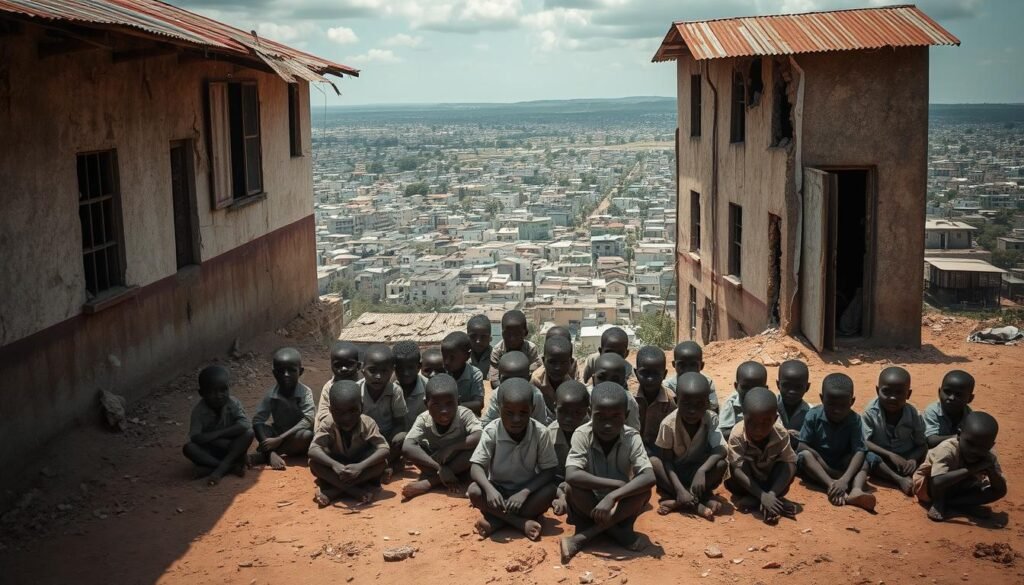
The situation in Haiti’s education sector demands urgent attention. Addressing the deficiencies in school infrastructure, teacher shortages, and the burden of private education will be crucial steps toward rebuilding the education system and securing a better future for Haiti’s youth.
The Haitian people’s tolerance for the lack of basic services has been exhausted, and the situation demands immediate attention. For years, Haiti has struggled to provide its citizens with fundamental necessities like healthcare, clean water, and reliable electricity.
The absence of basic services has taken a devastating toll on the Haitian population. The human cost is evident in the daily struggles of citizens who are forced to live without essential services.
The psychological impact of living without basic services is profound. Citizens experience heightened levels of stress and anxiety due to the uncertainty and insecurity that pervades their daily lives. As one Haitian citizen noted,
“Living without basic services is like living in a constant state of emergency.”
The societal trauma is also significant, with communities becoming increasingly fragmented and disillusioned with the lack of progress.
The lack of basic services has contributed to growing social unrest and political instability in Haiti. Protests and demonstrations have become commonplace as citizens demand action from their government.
Service failures often act as catalysts for protests. When citizens feel that their basic needs are not being met, they are more likely to take to the streets to demand change. For instance, a recent survey found that 70% of Haitians cited the lack of basic services as a primary reason for their participation in protests.
| Service | Impact of Absence | Consequence |
|---|---|---|
| Healthcare | Increased mortality rates | Public health crises |
| Clean Water | Waterborne diseases | Outbreaks and epidemics |
| Reliable Electricity | Economic stagnation | Increased poverty |
The situation in Haiti is dire, and the international community must take notice. The absence of basic services is not just a domestic issue; it has regional and global implications.
As Haiti continues to face these challenges, it is clear that the absence of basic services can no longer be tolerated. The Haitian people deserve a better future, and it is imperative that immediate action is taken to address these critical issues.
Service failures in Haiti have a profound impact on the country’s economic landscape. The absence of reliable basic services such as healthcare, clean water, and electricity creates an environment that is not conducive to economic growth.
Businesses in Haiti face significant challenges due to the lack of basic infrastructure. Unreliable electricity and poor transportation networks increase operational costs and reduce competitiveness. For instance, many businesses rely on expensive private generators for electricity, which can be up to 10 times more costly than public electricity in other countries.
Despite these challenges, Haitian entrepreneurs show remarkable resilience. Many start small businesses, such as street vending or local services, to survive. However, these ventures often remain small-scale due to infrastructure limitations.
The lack of basic services perpetuates a cycle of poverty. Without access to quality healthcare and education, individuals are less productive, earning lower incomes. This, in turn, reduces the government’s ability to fund essential services, further exacerbating the issue.
The interplay between service deprivation and poverty creates significant barriers to economic development. Foreign investment is deterred by the lack of infrastructure, and local businesses struggle to expand. This cycle hinders Haiti’s economic progress and stability.
In conclusion, the economic impact of service failures in Haiti is multifaceted, affecting businesses and individuals alike. Addressing these service failures is crucial for breaking the cycle of poverty and fostering economic development.
Haiti’s government faces mounting scrutiny over its role in perpetuating a cycle of corruption and service deprivation. The country’s inability to provide basic services to its citizens is a complex issue, deeply rooted in governance failures and corruption.
The absence of effective public administration is a significant factor in Haiti’s service delivery crisis. Governance failures have led to a lack of accountability, allowing corruption to flourish.
Effective public administration is crucial for delivering basic services. However, in Haiti, the absence of a functional administrative system has hindered service delivery. This has resulted in a lack of trust in governmental institutions.
| Governance Aspect | Current Status | Impact |
|---|---|---|
| Public Administration | Ineffective | Service delivery hindered |
| Corruption | Prevalent | Resources misappropriated |
| Transparency | Limited | Lack of accountability |
International aid plays a crucial role in supporting Haiti’s development. However, the misappropriation of aid has undermined its effectiveness. Transparency initiatives are essential to ensure that aid reaches its intended recipients.
Several transparency initiatives have been implemented to combat corruption and ensure accountability. These include open budgeting and public procurement reforms. While these initiatives are steps in the right direction, their effectiveness remains to be seen.

The role of government and corruption in Haiti’s service delivery crisis is multifaceted. Addressing these issues requires a comprehensive approach that includes improving governance, enhancing transparency, and ensuring accountability.
As Haiti continues to grapple with its worst crisis in decades, the role of international response and responsibility comes into sharp focus. The country’s struggle to access basic services has been a longstanding issue, and the global community’s response has been varied.
Foreign intervention in Haiti has a complex history, with various forms of assistance and interference over the years. While the intention behind international aid is often to alleviate suffering and support development, there have been instances where such intervention has had unintended consequences.
One of the significant challenges associated with foreign aid is the risk of creating dependency. When Haiti becomes too reliant on external assistance, it can undermine the country’s ability to develop its own capacities and infrastructure. This dependency can also lead to a lack of accountability among local leaders, as they may rely more on international donors than on their citizens.
Given the historical context and the challenges associated with traditional forms of aid, there is a growing consensus on the need for a new framework for international support. This framework should prioritize Haitian sovereignty while providing necessary assistance.
To achieve this balance, international partners should focus on capacity-building initiatives that empower local governments and communities. This could involve training programs for healthcare workers, support for local businesses, and infrastructure projects designed to enhance Haiti’s self-sufficiency. By doing so, the international community can help Haiti overcome its current challenges while respecting its sovereignty.
By leveraging technological solutions, Haiti can leapfrog traditional infrastructure barriers, paving the way for rapid development and improved service delivery. This approach not only offers a faster route to progress but also provides a more sustainable and adaptable solution to the country’s challenges.
Haiti has the opportunity to bypass conventional infrastructure development by adopting cutting-edge technologies. This leapfrogging can enable the country to establish a modern and efficient service delivery system.
Mobile technology can play a crucial role in enhancing healthcare and education. For instance, telemedicine can expand access to medical services, while e-learning platforms can improve educational outcomes.
The Haitian diaspora can significantly contribute to the development of technological solutions. Their expertise and resources can be channeled into creating innovative service delivery models.
Through knowledge transfer and remote support, the diaspora can provide critical assistance in implementing and maintaining technological solutions. This collaboration can help build local capacity and ensure the sustainability of these initiatives.
The crisis in Haiti demands immediate attention and collective action. The absence of basic services has pushed the nation to a breaking point, affecting the daily lives of its citizens. As discussed, the historical context, healthcare infrastructure collapse, water insecurity, energy crisis, and education system disarray have all contributed to the current state of distress.
It is imperative that comprehensive solutions are implemented to address these issues. The international community must come together to provide support and solidarity to the Haitian people. Urgent action is required to restore basic services, promote economic stability, and foster a brighter future for Haiti.
By working together and leveraging technological innovations, we can help Haiti overcome its challenges. The time for action is now, and it is our collective responsibility to support Haiti in its time of need.
Haiti faces numerous challenges, including a lack of infrastructure, inadequate healthcare, water insecurity, unreliable electricity, and a struggling education system.
Haiti’s colonial past and historical events, such as the Duvalier regime and natural disasters like the 2010 earthquake and Hurricane Matthew, have significantly contributed to its current development challenges.
Haiti’s healthcare infrastructure is severely underdeveloped, with shortages of hospitals, medical professionals, and critical medication and equipment, leading to preventable deaths and disease outbreaks.
Water insecurity is a daily battle for many Haitians, with challenges in accessing clean water, particularly in rural areas, and inadequate sanitation leading to recurrent disease outbreaks, including the cholera crisis.
Haiti’s energy crisis has significant economic and safety implications, but alternative energy solutions, such as solar initiatives and micro-grids, offer potential for improvement.
Haiti’s education system is in disarray, with deficiencies in school infrastructure, teacher shortages, and concerns over education quality, placing a significant burden on families.
Service failures in Haiti often serve as catalysts for protests and contribute to social unrest and political instability, as citizens become increasingly frustrated with the lack of basic services.
The economic impact of service failures in Haiti is significant, with businesses facing challenges due to the lack of basic infrastructure, contributing to a cycle of poverty and service deprivation.
Corruption and governance failures in Haiti exacerbate the service delivery crisis, with misappropriation of international aid and a lack of accountability hindering efforts to address the country’s challenges.
Technology can play a significant role in addressing Haiti’s service delivery challenges, with mobile solutions for healthcare and education, and diaspora contributions to service solutions offering potential for improvement.
The international community can support Haiti by providing assistance while respecting Haitian sovereignty, and adopting a new framework for international support that prioritizes Haitian-led solutions.