Physical Address
304 North Cardinal St.
Dorchester Center, MA 02124
Physical Address
304 North Cardinal St.
Dorchester Center, MA 02124


Uncover the surprising connections behind UN involvement in Haiti and Africa in this insightful article.
The United Nations has been involved in numerous peacekeeping operations around the world, but its interventions in Haiti and various African countries stand out due to their frequency and scope.
The presence of UN interventions in these regions has sparked intense debate among scholars and policymakers. While some argue that these interventions are necessary to maintain stability and security, others contend that they often have unintended consequences.
This article aims to explore the reasons behind the UN’s focus on Haiti and Africa, examining the implications of these interventions for global governance and conflict resolution.
UN peacekeeping operations have evolved significantly since the first mission was deployed in 1948. The United Nations has played a crucial role in maintaining global peace and security through its peacekeeping efforts.
The history of UN peacekeeping can be divided into two distinct periods: early peacekeeping efforts and post-Cold War expansion.
During the Cold War, UN peacekeeping missions were primarily focused on maintaining ceasefires and stabilizing conflict zones between nations. The first UN peacekeeping mission was established in 1948, with the deployment of the United Nations Truce Supervision Organization (UNTSO) in the Middle East.
The end of the Cold War marked a significant shift in UN peacekeeping, with an increase in the number and complexity of missions. The UN began to intervene more frequently in intra-state conflicts, addressing issues such as civil wars, humanitarian crises, and state collapse.
A statistical analysis of UN peacekeeping operations reveals varying patterns of intervention across different regions. According to a report by the UN, as of 2023, Africa hosts the majority of UN peacekeeping missions, with over 80,000 personnel deployed.
A comparison of mission duration and resources allocated to different regions highlights the varying levels of commitment by the UN. For instance, missions in Africa tend to be longer in duration and require more resources compared to those in other regions.
As UN Secretary-General António Guterres noted, “The United Nations has a crucial role to play in maintaining peace and security around the world.”
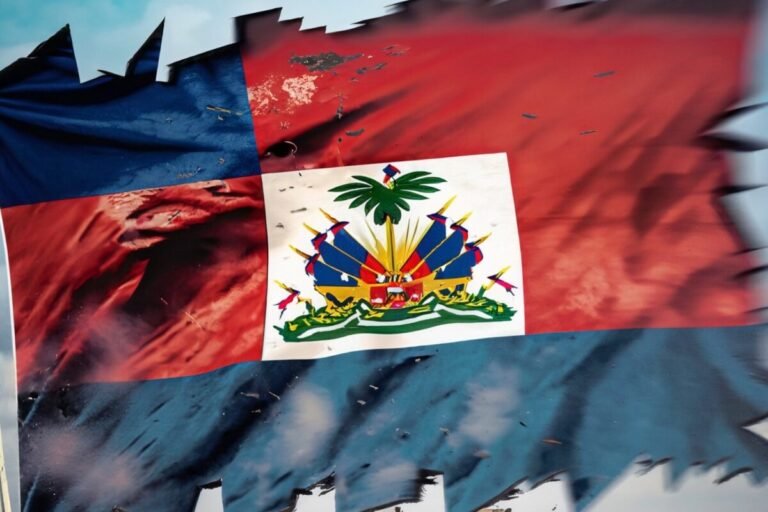
Haiti’s experience with UN peacekeeping missions offers valuable insights into the dynamics of international intervention and its impact on local communities. The country’s history with UN interventions is complex, involving multiple missions over several decades.
The UN has been involved in Haiti since the early 1990s, with various missions aimed at stabilizing the country.
The United Nations Mission in Haiti (UNMIH) was one of the first significant interventions, focusing on modernizing the Haitian armed forces and maintaining a stable environment.
The MINUSTAH mission, although intended to stabilize Haiti, was marred by controversies, including allegations of misconduct and the introduction of cholera, which had severe humanitarian consequences.
Today, the UN continues to be involved in Haiti, addressing ongoing humanitarian challenges and security concerns.
Haiti faces significant humanitarian needs, including the aftermath of natural disasters and internal displacement. The security situation remains fragile, with gang violence being a major concern.
The recent surge in gang-related violence has prompted calls for new international intervention, raising questions about the effectiveness of past UN missions and the potential for future engagement.
The situation in Haiti highlights the complexities of international intervention and the need for nuanced approaches to address the country’s multifaceted challenges.
As the world’s largest peacekeeping operations hub, Africa has been the site of extensive UN interventions aimed at promoting peace and stability. The continent’s complex geopolitical landscape and numerous conflict zones have necessitated a significant UN presence.
The UN has been involved in various peacekeeping missions across Africa, addressing a range of challenges from armed conflicts to humanitarian crises. These missions have evolved over time, adapting to changing circumstances on the ground.
The scale of UN deployments in Africa is substantial, with thousands of peacekeepers deployed across the continent. The scope of these missions varies, from monitoring ceasefires to providing humanitarian assistance and supporting disarmament processes.
Several UN missions in Africa have been ongoing for extended periods, reflecting the complexity and depth of the challenges faced. Notable examples include MONUSCO in the Democratic Republic of Congo, UNMISS in South Sudan, and MINUSMA in Mali.
MONUSCO, established in 1999, is one of the UN’s longest-running missions. It has played a crucial role in stabilizing the DRC, despite facing numerous challenges, including armed groups and humanitarian crises.
UNMISS and MINUSMA are other significant examples of long-term UN interventions in Africa. UNMISS has worked to protect civilians and support peace processes in South Sudan, while MINUSMA has focused on stabilizing Mali amidst complex security challenges.
Compared to other continents, Africa hosts the majority of UN peacekeeping operations. This reflects the continent’s unique challenges and the international community’s commitment to addressing them. A comparative analysis highlights the different approaches taken in various regions and the lessons that can be drawn from Africa’s experiences.
UN interventions have been notably concentrated in Haiti and various African nations, prompting questions about the underlying reasons. This section delves into the statistical evidence supporting the disproportionate focus on these regions and explores the common socio-political factors that may explain this phenomenon.
The extent of UN involvement in Haiti and Africa can be quantified through budget allocation patterns and personnel deployment statistics. These metrics provide insight into the scale of resources dedicated to interventions in these regions.
The UN’s budget allocation for peacekeeping operations reveals a significant bias towards Haiti and Africa. For instance, in the fiscal year 2022, approximately 70% of the UN’s peacekeeping budget was allocated to missions in Africa, with a substantial portion also dedicated to Haiti.
| Region | Budget Allocation (2022) |
|---|---|
| Africa | $4.5 billion |
| Haiti | $0.5 billion |
| Other Regions | $1 billion |
Personnel deployment statistics further underscore the concentration of UN interventions. As of 2022, Africa hosted over 80% of the UN’s peacekeeping personnel, with Haiti accounting for a significant additional percentage.
Governance challenges, state fragility, and economic vulnerabilities are common factors that may explain the UN’s focus on Haiti and Africa.
Many African nations and Haiti face significant governance challenges, including weak institutions and political instability. These conditions often necessitate international intervention to maintain peace and security.
Economic vulnerabilities, such as poverty and dependence on external aid, are also prevalent in these regions. The UN’s interventions often aim to address these vulnerabilities and promote economic stability.
The UN Security Council’s decision-making process is a complex interplay of global politics and diplomacy. As the primary organ responsible for maintaining international peace and security, its decisions have far-reaching implications.
The five permanent members of the Security Council—China, France, Russia, the United Kingdom, and the United States—hold significant influence due to their veto power. This dynamic can both facilitate and hinder decision-making.
The use of veto power by permanent members has been a contentious issue, often sparking debate about its impact on the Council’s effectiveness. Historically, the veto has been used to protect national interests, sometimes at the expense of timely intervention in global crises.
| Permanent Member | Number of Vetoes | Most Recent Veto |
|---|---|---|
| United States | 82 | 2020 |
| Russia | 121 | 2022 |
| China | 14 | 2014 |
Regional organizations play a crucial role in shaping UN interventions. The African Union and the Caribbean Community have significant influences on mission authorization in their respective regions.
These regional bodies provide valuable insights into local dynamics, helping tailor UN missions to specific contexts. Their endorsement can lend legitimacy to UN interventions.
The funding of UN peacekeeping operations is a complex process, involving both assessed and voluntary contributions from member states. Financial considerations can significantly influence mission selection and duration.
The interplay between funding mechanisms and mission objectives is critical. Understanding these dynamics is essential for assessing the effectiveness of UN interventions.
Colonial legacies play a significant role in understanding the patterns of UN interventions. The historical contexts of nations frequently targeted by these interventions reveal a complex web of factors that contribute to their current state.
The history of Haiti and many African nations is deeply intertwined with colonialism. Haiti’s unique history as the first black republic has shaped its interactions with international organizations.
Haiti’s successful slave revolt in the late 18th century led to its independence, but it also set the stage for centuries of international intervention. The country’s early independence and distinct cultural identity have influenced its relationship with the UN.
The Scramble for Africa in the late 19th and early 20th centuries had a profound impact on the continent, leading to artificial borders and governance structures that continue to affect African nations today.
Nations with a history of colonialism often face significant governance challenges, including institutional weaknesses and external dependencies.
The legacy of colonial rule can lead to weak institutions that are heavily reliant on external support. This can create a cycle of dependency that is difficult to break.
The language and culture of a region can significantly impact the accessibility and nature of UN interventions. Effective communication is crucial for successful intervention.

The UN must navigate complex cultural landscapes to provide effective support. Understanding local cultures and languages can enhance the impact of interventions.
The United Nations’ intervention patterns reveal a complex interplay of resource interests and strategic considerations. Understanding these factors is crucial for analyzing the concentration of UN peacekeeping operations in specific regions.
Many areas where the UN deploys peacekeeping missions are rich in natural resources. These resources can significantly impact the geopolitical dynamics surrounding an intervention.
Africa, being a primary operational theater for UN peacekeeping, hosts numerous countries with substantial mineral wealth. For instance, the Democratic Republic of Congo is rich in cobalt, copper, and coltan, making it a focal point for UN intervention due to the strategic importance of these minerals.
Haiti’s geographical location in the Caribbean makes it strategically important, particularly for maritime and trade routes. The UN’s prolonged presence in Haiti can be partly attributed to these strategic considerations.
The geopolitical interests of major powers also play a significant role in shaping UN interventions.
China has been increasingly active in UN peacekeeping, often deploying troops to regions where it has significant economic interests, such as in Africa where it has substantial investments in infrastructure projects.
Western powers, on the other hand, have their own strategic priorities, often focusing on regions that are critical to global security or where they have historical ties.
The economic relationships between intervening countries and the target nations often undergo significant changes before and after UN interventions. Understanding these dynamics is essential for assessing the effectiveness and motivations behind UN peacekeeping missions.
By examining the interplay of resource interests and strategic considerations, we can gain a deeper understanding of the complexities surrounding UN interventions.
Assessing the impact of UN interventions involves examining both their achievements and shortcomings. The complexity of these operations necessitates a comprehensive evaluation to understand their effectiveness.
The humanitarian outcomes of long-term UN presence can be seen in various health and development indicators. In some cases, UN missions have contributed to improved healthcare infrastructure and enhanced security, which are crucial for the well-being of local populations.
For instance, in Haiti, UN interventions have led to improvements in vaccination programs and maternal healthcare. However, these achievements are often overshadowed by challenges such as inadequate infrastructure and resource constraints.
While UN missions have provided security improvements in various regions, there is a risk of creating dependencies on international forces. This dependency can hinder the development of local security capabilities and perpetuate a cycle of reliance on external actors.
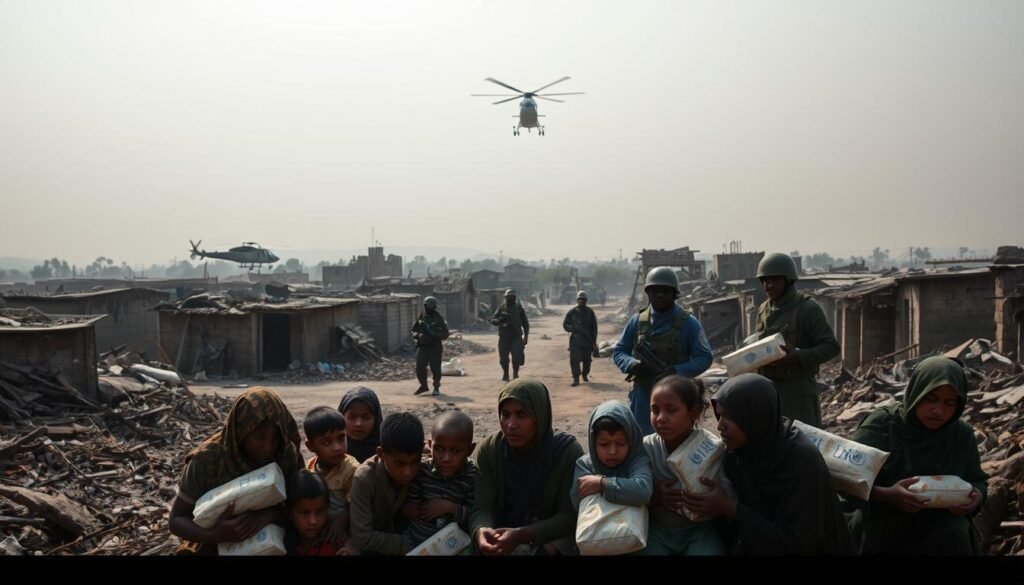
Despite their best intentions, UN interventions can have significant unintended consequences. These include the introduction of cholera in Haiti and allegations of sexual exploitation and abuse by peacekeepers.
The introduction of cholera by UN peacekeepers in Haiti led to a devastating epidemic, resulting in thousands of deaths and widespread suffering. This incident highlighted the need for better accountability and risk assessment in UN operations.
Allegations of sexual exploitation and abuse by UN peacekeepers have tarnished the reputation of these missions and undermined trust in international interventions. Addressing these issues is crucial for maintaining the integrity and effectiveness of UN operations.
The balance between local empowerment and international dependency is a critical aspect of UN interventions. While the intention is to empower local communities, there is a risk of creating long-term dependencies on external assistance.
To mitigate this, the UN should focus on capacity-building initiatives that enhance the ability of local governments and institutions to manage their own affairs. This approach can help ensure that the benefits of UN interventions are sustainable in the long term.
The success or failure of UN missions often hinges on how they are perceived and received by local communities. To understand the true impact of these interventions, it’s crucial to listen to the voices of those directly affected.
Haitian communities have experienced prolonged UN interventions, shaping their perceptions in various ways. Civil society organizations have been vocal about their critiques, often highlighting issues related to accountability and transparency.
Organizations such as the Haitian Platform for an Alternative Development have expressed concerns regarding the long-term presence of UN troops, citing issues like environmental degradation and the displacement of local authorities.
Surveys conducted among Haitian populations reveal mixed opinions on UN interventions. While some view the UN presence as a necessary measure for maintaining stability, others criticize the lack of tangible improvements in their daily lives.
Similarly, in Africa, the reception of UN operations varies widely across different countries and communities.
In some regions, UN interventions have been credited with improving security and facilitating humanitarian aid. However, there are also reports of negative impacts on local economies and social structures.
Various resistance movements across Africa have raised concerns about the motivations behind UN interventions, often questioning their impartiality and long-term goals.
The way UN interventions are reported in the media significantly influences public perception.
There is a notable difference between Western and local media coverage of UN interventions. Western media often focuses on the geopolitical aspects, while local media tends to highlight the immediate impacts on communities.
The concentration of UN interventions in Haiti and Africa underscores the need for a more equitable global governance framework. As highlighted in the previous sections, the current distribution of UN peacekeeping operations raises important questions about the factors driving these interventions.
Achieving more equitable governance requires reforms in the UN decision-making process. This includes addressing power dynamics among permanent members of the Security Council and ensuring that regional politics do not unduly influence mission authorization. A more nuanced understanding of local contexts is also crucial, taking into account the historical, cultural, and socio-political factors that shape the environments in which UN interventions occur.
By prioritizing local empowerment over international dependency, the UN can work towards more sustainable and effective interventions. This balanced approach, coupled with reforms in the UN decision-making process, can help create a more equitable global governance framework. As the global community continues to navigate complex conflicts and humanitarian crises, embracing these pathways is essential for fostering a more just and peaceful world.
The main focus of UN peacekeeping operations is to maintain peace and security in conflict-affected regions, primarily in Africa and Haiti, through a combination of military, police, and civilian personnel.
The UN intervenes in countries where there is a significant threat to international peace and security, often due to conflict, humanitarian crises, or governance challenges, and where there is a request for assistance from the host country or regional organizations.
UN peacekeeping operations face various challenges, including operating in complex and dynamic conflict environments, navigating local politics and power dynamics, addressing humanitarian needs, and managing resources effectively.
The UN Security Council decides which countries to intervene in, based on assessments of the situation on the ground, the level of threat to international peace and security, and the availability of resources, as well as input from regional organizations and other stakeholders.
The UN Security Council has the primary responsibility for authorizing peacekeeping operations, determining the mandate and scope of the mission, and overseeing its implementation.
UN peacekeeping operations can have both positive and negative impacts on local communities, including providing security and humanitarian assistance, but also potentially causing unintended harm, such as displacement or exploitation.
Haiti and Africa are significant regions for UN peacekeeping operations due to the high concentration of conflicts, humanitarian crises, and governance challenges, which require sustained international attention and support.
Historical and colonial legacies can shape UN intervention patterns by influencing the nature of conflicts, governance challenges, and local contexts, as well as the interests and priorities of external actors.
Criticisms of UN peacekeeping operations include concerns about effectiveness, accountability, and transparency, as well as allegations of misconduct, such as sexual exploitation and abuse.
The UN can improve its peacekeeping operations by enhancing its planning and coordination, strengthening its partnerships with local and regional actors, and addressing the root causes of conflicts, as well as improving accountability and transparency.