Physical Address
304 North Cardinal St.
Dorchester Center, MA 02124
Physical Address
304 North Cardinal St.
Dorchester Center, MA 02124
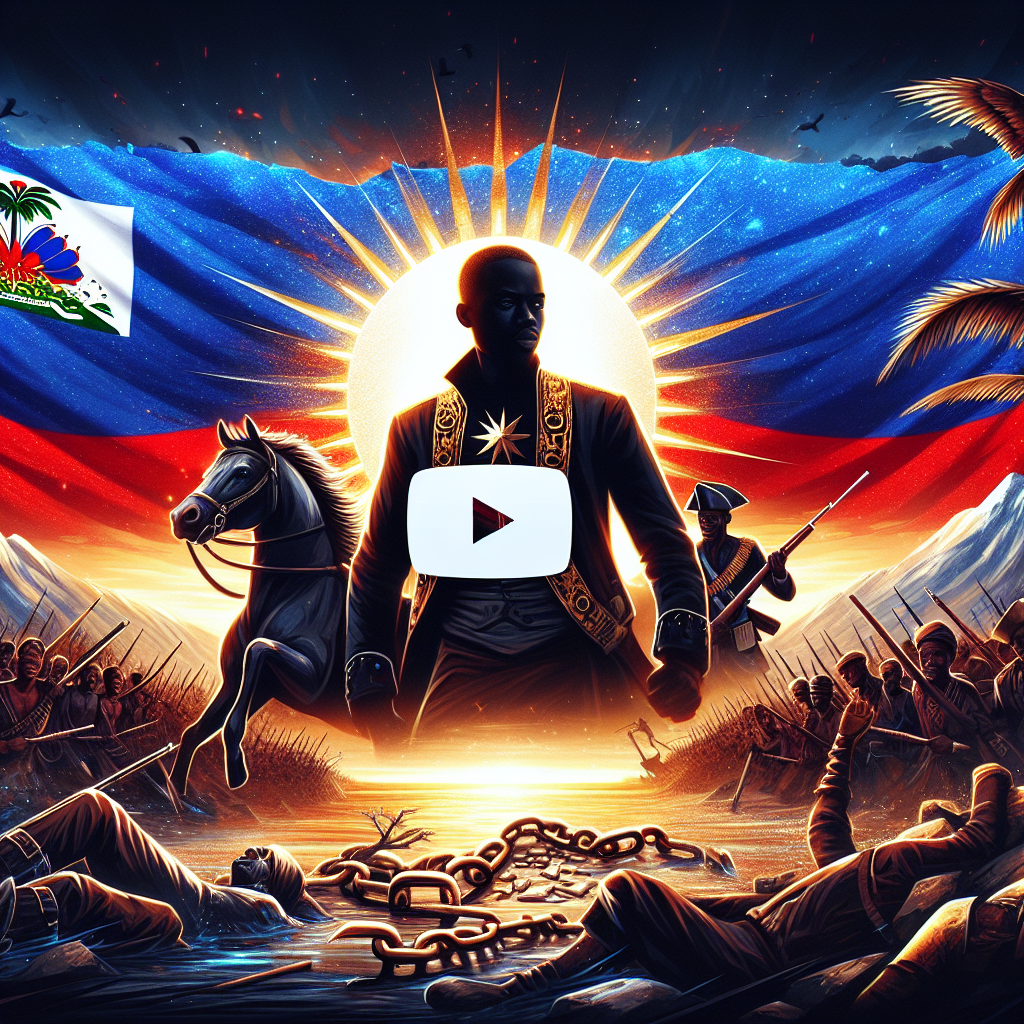
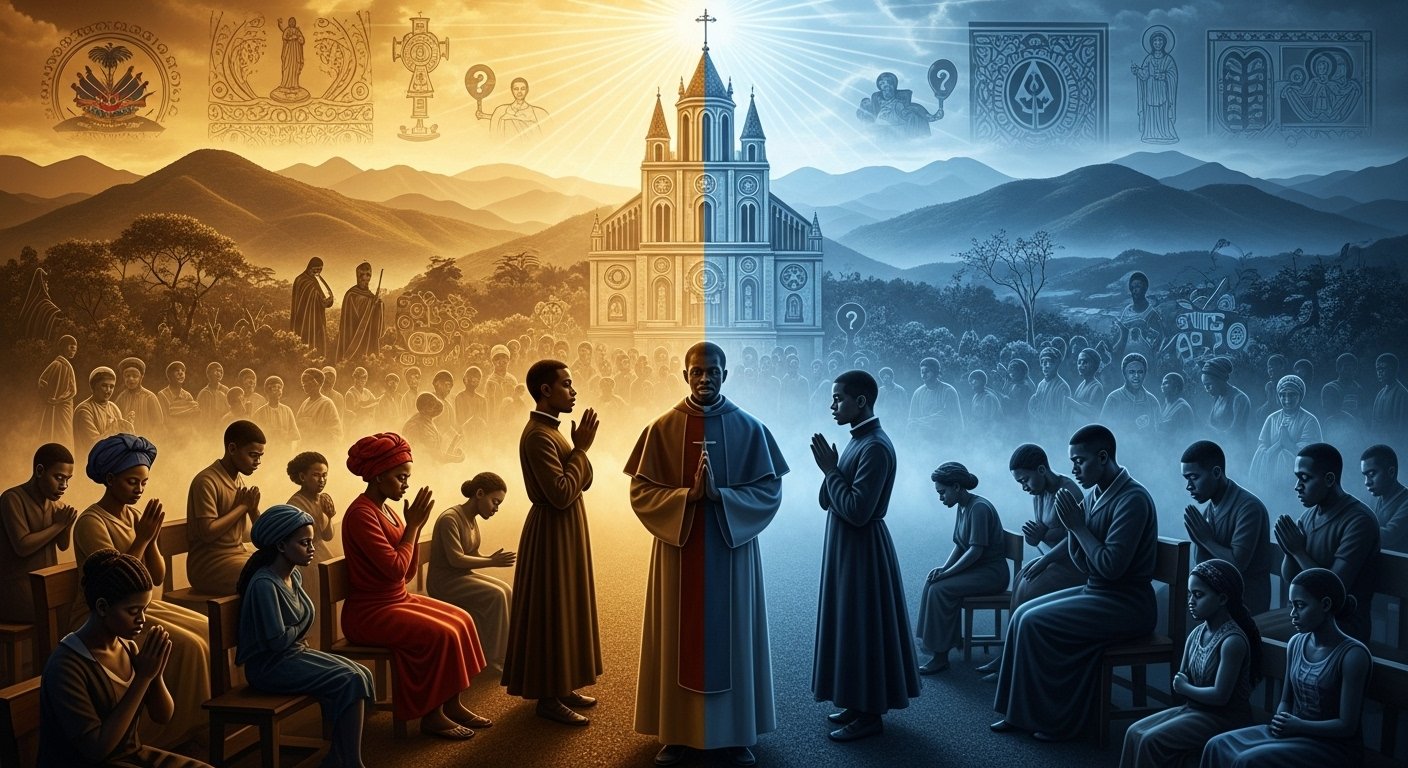
Explore the complex interplay between devotion and deception in Haiti's religious landscape.
Haiti’s complex religious landscape is a breeding ground for religious manipulation. The country’s history is marked by a blend of traditional and modern beliefs, creating a unique cultural identity.
The interplay between devotion and deception is a delicate one, with some religious leaders using their influence for personal gain, while others genuinely work towards the betterment of their communities.
The history of Haiti is deeply intertwined with its religious beliefs, creating a unique tapestry that reflects the nation’s past and present. This complex religious landscape has been shaped by centuries of historical events, cultural influences, and the resilience of its people.
Haiti’s religious heritage began long before the arrival of European colonizers. The indigenous Taino people had their own spiritual practices, which were later influenced by the forced conversion to Christianity during the colonial era.
Before colonization, the Taino people practiced a form of spirituality that was deeply connected to nature and their ancestors. Their beliefs were characterized by a complex pantheon of gods and goddesses associated with natural phenomena.
The transatlantic slave trade brought enslaved Africans to Haiti, who were forcibly converted to Christianity. However, they managed to retain elements of their African spiritual practices, which later blended with indigenous and European beliefs.
Today, Haiti’s religious landscape is a vibrant mix of different faiths. The country’s religious demographics are characterized by a significant presence of Vodou, Catholicism, and an increasing number of Protestant denominations.
| Religion | Percentage of Population | Characteristics |
|---|---|---|
| Vodou | Significant cultural presence | Blend of African, Taino, and European spiritual practices |
| Catholicism | Predominant Christian denomination | Influenced by colonial legacy, rituals, and sacraments |
| Protestantism | Growing presence | Diverse denominations, emphasis on personal conversion and evangelism |
Haiti’s religious diversity is not just a reflection of its history but also a vital part of its contemporary identity. Understanding this complex religious tapestry is essential to grasping the nuances of Haitian society and culture.
In the heart of Haitian society lies Vodou, a complex spiritual practice frequently misinterpreted by outsiders. This rich tradition is woven into the fabric of Haitian daily life, influencing cultural norms, social behaviors, and individual identities.
Vodou is a syncretic religion that originated from African traditions, blending with indigenous and European influences. At its core, Vodou is about the veneration of Loa, spirits believed to possess supernatural powers and intervene in human affairs.
The Loa are central to Vodou practices, with practitioners venerating various spirits associated with different aspects of life, such as love, fertility, and death. This veneration is not merely about worship; it’s a complex interaction involving offerings, prayers, and rituals to maintain balance and harmony.
Vodou ceremonies are vibrant expressions of faith, characterized by music, dance, and trance. These rituals serve multiple purposes, including healing, protection, and initiation. They are communal events that strengthen social bonds and reinforce cultural identity.
Despite its rich cultural significance, Vodou has been subject to numerous misconceptions, largely perpetuated by Hollywood portrayals and media stereotypes that depict it as dark magic or primitive superstition.
Films and popular culture often sensationalize Vodou, focusing on the exotic and the bizarre, rather than its true spiritual and cultural dimensions. This not only misinforms the public but also contributes to the stigmatization of Vodou practitioners.
Beyond its spiritual significance, Vodou has historically served as a form of cultural resistance, particularly during the Haitian Revolution. It provided a unifying force against colonial powers, demonstrating its role in shaping Haitian identity and resilience.
Vodou is a multifaceted spirituality that encompasses a wide range of beliefs and practices. By understanding its core tenets and cultural context, we can move beyond the stereotypes and appreciate Vodou’s true significance in Haitian society.
Haiti’s religious tapestry was significantly influenced by Catholicism, brought by European colonizers, which intertwined with indigenous beliefs. This blending of faiths is a hallmark of Haitian Catholicism, setting it apart from its European counterpart.
The introduction of Catholicism to Haiti was a byproduct of European colonization. Over time, the Church adapted to the local culture, leading to a unique form of Catholicism that incorporated elements of Vodou and other indigenous practices.
This syncretism is evident in the way Haitian Catholics often blend Catholic rituals with Vodou practices. For example, many Haitians honor Catholic saints while also venerating Vodou spirits, creating a complex spiritual landscape.
The Catholic Church in Haiti has played a dual role throughout history. On one hand, it has supported political regimes, sometimes aligning with oppressive governments. On the other hand, it has been a force for liberation, advocating for the rights of the poor and marginalized.
Historically, the Church has supported various political regimes in Haiti, sometimes providing legitimacy to authoritarian governments. This support has been controversial, with critics arguing that it enabled oppression.
Conversely, the Church has also been at the forefront of liberation theology movements, advocating for social justice and human rights. This aspect of the Church’s role has been instrumental in empowering marginalized communities.
The complex role of Catholicism in Haiti is a reflection of the country’s broader religious and cultural landscape. Through its adaptation and syncretism, the Church has become an integral part of Haitian identity, influencing both the spiritual and socio-political fabric of the nation.
In recent years, Haiti has witnessed a significant surge in Protestantism, reshaping the country’s religious landscape. This shift has been particularly pronounced in the growth of evangelical communities, which have become influential in various aspects of Haitian society.
The evangelical movement in Haiti has seen substantial growth over the past few decades, driven in part by the influence of American missionaries. American Protestant missionaries have played a crucial role in establishing churches, providing social services, and promoting their religious beliefs.
American missionaries have not only brought new religious practices but have also introduced various social and educational programs. These initiatives have contributed to the appeal of Protestantism among Haitians seeking both spiritual and material improvement.
The rise of Protestantism has led to the emergence of competing religious narratives in Haiti. One significant aspect of this competition is the anti-Vodou sentiment promoted by some Protestant groups, who view Vodou as incompatible with Christian beliefs.
Some Protestant groups have launched campaigns against Vodou practices, labeling them as “satanic” or “backward.” This has contributed to tensions between different religious communities in Haiti.
In contrast, many Protestant churches, especially those with a Pentecostal or evangelical orientation, offer a message of salvation and prosperity. This message resonates with many Haitians facing economic hardship and social challenges.
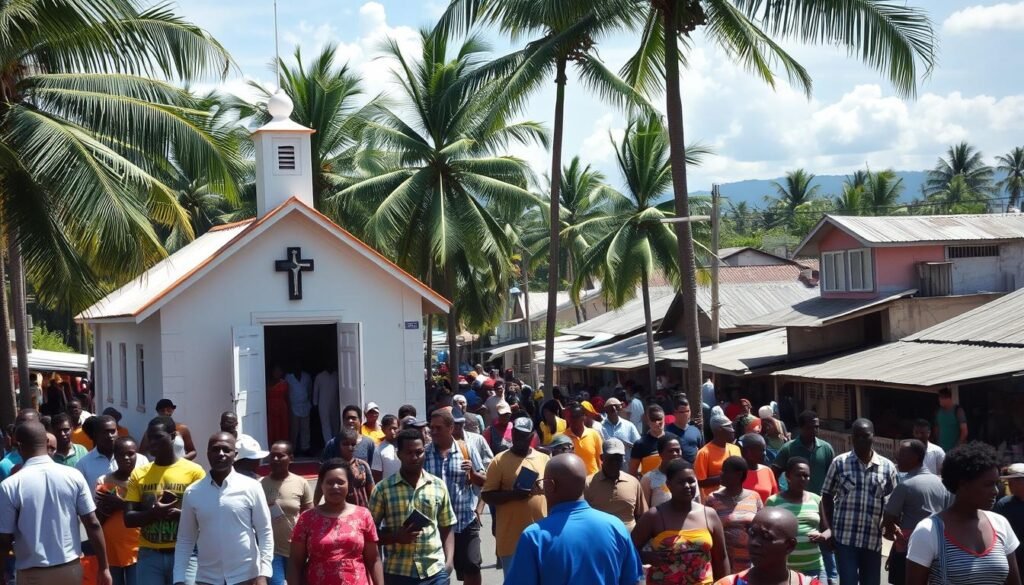
The Protestant surge in Haiti reflects broader trends in global Christianity, where evangelical and Pentecostal movements are gaining ground. Understanding these dynamics is crucial for grasping the complexities of Haitian society and its religious future.
Haiti’s religious scene is marked by a thin line between genuine faith and exploitation. The country’s history and cultural identity are deeply intertwined with religious beliefs and practices.
The distinction between sincere religious devotion and manipulative practices can be difficult to discern. Religious leaders often wield significant influence over their followers, and in some cases, this influence is used for personal gain rather than the well-being of the community.
There have been numerous instances where religious leaders in Haiti have been accused of manipulating their followers for financial or personal benefits. For example, some leaders have been known to use fear and intimidation to control their followers.
Religious control in Haiti is often exercised through various mechanisms, including fear and financial exploitation.
Fear is a powerful tool used by some religious leaders to maintain control over their followers. By instilling fear of supernatural consequences or social exclusion, leaders can ensure compliance and loyalty.
Financial exploitation is another common mechanism of control, often achieved through the practice of tithing. Followers are encouraged to give a significant portion of their income to the church or religious organization, sometimes under the threat of spiritual consequences if they fail to comply.
| Mechanisms of Control | Description | Impact on Followers |
|---|---|---|
| Fear | Instilling fear of supernatural consequences or social exclusion | Ensures compliance and loyalty |
| Financial Exploitation | Encouraging followers to give a significant portion of their income | Can lead to financial hardship for followers |
| Emotional Manipulation | Using emotional appeals to control followers | Can result in emotional distress for followers |
The use of these mechanisms can have significant effects on the followers, ranging from financial hardship to emotional distress. Understanding these dynamics is crucial to addressing the issue of religious manipulation in Haiti.
Haiti’s economic vulnerability has made its population more susceptible to spiritual promises, often blurring the line between faith and exploitation. The country’s history of economic challenges has created an environment where spiritual leaders can significantly influence their followers.
Poverty has become a significant factor in shaping religious beliefs and practices in Haiti. When people struggle to meet their basic needs, they often turn to faith as a coping mechanism.
In times of economic hardship, faith can provide comfort and hope. Many Haitians view their religious beliefs as a way to cope with the difficulties they face daily.
The prosperity gospel, a belief that wealth and health are always the will of God, has gained traction in Haiti. This movement is characterized by its emphasis on financial prosperity as a sign of divine favor.
Some religious leaders display their wealth as a testament to their faith and divine blessing. This display can be seen in their luxurious lifestyles, which are often presented as evidence of God’s favor.
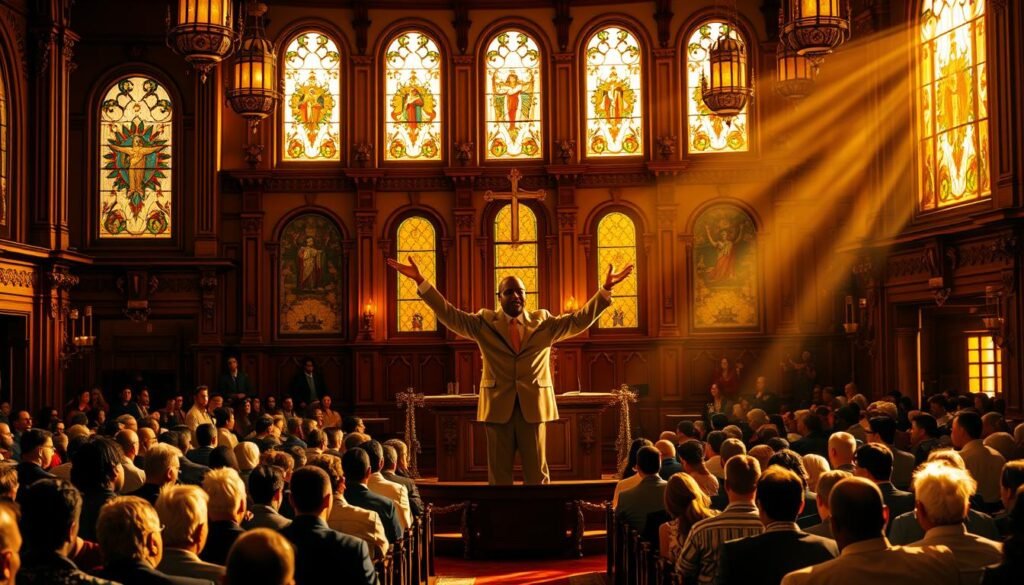
Testimonials from followers who claim to have benefited from their faith are commonly used to attract new adherents. However, these testimonials can sometimes be accompanied by false promises of prosperity and healing.
The interplay between economic vulnerability and spiritual promises in Haiti is complex. While faith can be a powerful coping mechanism, it can also be exploited by those seeking to manipulate the faithful.
In Haiti, the boundaries between religious authority and political power are often blurred, leading to a distinctive form of governance. This complex interplay has historical roots and continues to shape the country’s political landscape.
The use of religion in Haitian politics is not a new phenomenon. One of the most significant examples is the Duvalier regime, which exploited Vodou for political control.
During the Duvalier regime, Vodou was manipulated to legitimize the ruler’s power and suppress opposition. This strategic use of religious beliefs for political ends had a lasting impact on Haitian society.
Religious leaders have often played crucial roles in Haitian politics, sometimes acting as kingmakers in times of political instability. Their influence can be significant, shaping public opinion and political outcomes.
Today, religious influence continues to be felt in Haitian governance. Church statements on political issues are common, reflecting the ongoing role of religion in shaping public discourse.
The Catholic Church and other religious organizations frequently issue statements on political matters, calling for transparency, justice, and human rights. These statements can have a significant impact on public opinion and political decision-making.
The intertwining of religious authority and political power in Haiti is a complex and multifaceted issue. Understanding this dynamic is crucial for grasping the nuances of Haitian politics and society.
American religious organizations have played a pivotal role in shaping Haiti’s religious tapestry. Their influence extends beyond spiritual guidance, impacting various aspects of Haitian society.
Many American religious organizations are actively involved in Haiti, providing humanitarian aid alongside their religious agendas. This dual approach can sometimes blur the lines between charity and proselytization.
Some organizations offer essential services such as healthcare, education, and disaster relief. However, these services are often accompanied by religious teachings, which can influence the recipients’ spiritual beliefs.
The media’s portrayal of Haiti’s religious practices often perpetuates stereotypes, contributing to cultural misunderstandings. Sensationalized reports can distort the reality of Haitian Vodou and other religious practices.
Foreign religious narratives can significantly impact Haiti’s religious landscape. The influx of various Christian denominations and other religious influences has led to a diverse spiritual environment.
The complex interplay between international influences and Haiti’s religious identity continues to shape the country’s spiritual future. Understanding these dynamics is crucial for fostering a more nuanced appreciation of Haitian religious practices.
As Haitians seek authentic spirituality, grassroots movements are emerging to reshape the religious narrative. These movements are not just about resisting manipulation but also about reclaiming faith as a source of empowerment and positive change.
At the forefront of this spiritual reformation are community-based religious leaders who are redefining the role of faith in Haitian society. They are focusing on community-based leadership that prioritizes the needs and well-being of their congregations.
These leaders are characterized by their commitment to transparency, accountability, and social responsibility. They are not only spiritual guides but also advocates for social justice and community development. By empowering their communities, they are helping to break the cycle of dependency on manipulative religious practices.
The emphasis on authentic spirituality is a key driver of these grassroots movements. It’s about fostering a deep, personal connection with faith that is not exploited for power or financial gain. This approach is empowering individuals and communities to take control of their spiritual lives.
A crucial aspect of this empowerment is religious education. By educating their followers about the true principles of their faith, these leaders are promoting a more informed and critical approach to spirituality. Transparency in religious practices and finances is also being emphasized, reducing the potential for exploitation.
The youth are playing a significant role in driving religious reform in Haiti. Through various initiatives and movements, young people are challenging traditional practices and advocating for a more progressive and inclusive approach to faith. Their energy and creativity are vital in shaping the future of Haitian spirituality.
In conclusion, the resistance and reclamation of faith in Haiti through grassroots movements are signs of a vibrant and evolving spiritual landscape. As these movements continue to grow, they hold the potential to bring about profound positive change in Haitian society.
Haiti’s spiritual landscape is a complex tapestry woven from diverse religious beliefs and practices. The interplay between devotion and deception has significant implications for the country’s social, economic, and political fabric.
To move forward, it is essential to strike a balance in Haiti’s spiritual landscape, respecting the role of faith while protecting against manipulation and exploitation. This balance can be achieved by promoting transparency, accountability, and education within religious institutions.
By fostering a culture of critical thinking and spiritual awareness, Haitians can reclaim their faith and reduce the risk of exploitation. As the country continues on its path towards a more stable and prosperous future, finding this balance will be crucial in shaping a more equitable and just society.
The journey towards achieving balance in Haiti’s spiritual landscape is ongoing, requiring continued dialogue, reflection, and commitment to the well-being of all Haitians.
Vodou is a complex spiritual practice that plays a significant role in Haitian culture, serving as a means of cultural resistance, identity, and community building.
Catholicism has had a complex and multifaceted impact on Haitian society, from its colonial legacy to its adaptation and syncretism with indigenous beliefs, serving as both an oppressor and liberator.
The prosperity gospel phenomenon in Haiti refers to the belief that faith can lead to material wealth and prosperity, often promoted by evangelical leaders and televangelists, which can be seen as a form of spiritual manipulation.
International religious organizations, particularly from America, have influenced Haiti’s religious landscape through humanitarian aid with religious agendas, contributing to the growth of Protestantism and shaping local religious narratives.
Faith serves as a coping mechanism for many Haitians living in poverty, providing comfort, hope, and a sense of community, but can also be exploited by religious leaders for financial gain.
The Protestant surge in Haiti has led to a shift in the country’s religious demographics, with implications for the traditional Vodou and Catholic practices, as well as the rise of competing religious narratives.
Religion has played a significant role in Haitian politics, with religious leaders often serving as political kingmakers, and church statements influencing governance, highlighting the complex interplay between devotion and political power.
Authentic spirituality is characterized by transparency, community-based leadership, and a focus on empowerment, whereas manipulation often involves the use of fear, financial exploitation, and false promises.
Foreign religious narratives, particularly those promoted by American missionaries and televangelists, have contributed to the growth of Protestantism and shaped local religious practices, but can also lead to cultural misunderstandings and the erosion of traditional practices.
Grassroots religious movements can promote positive change in Haiti by fostering community-based spiritual leadership, promoting religious education and transparency, and empowering local communities to take control of their spiritual practices.