Physical Address
304 North Cardinal St.
Dorchester Center, MA 02124
Physical Address
304 North Cardinal St.
Dorchester Center, MA 02124
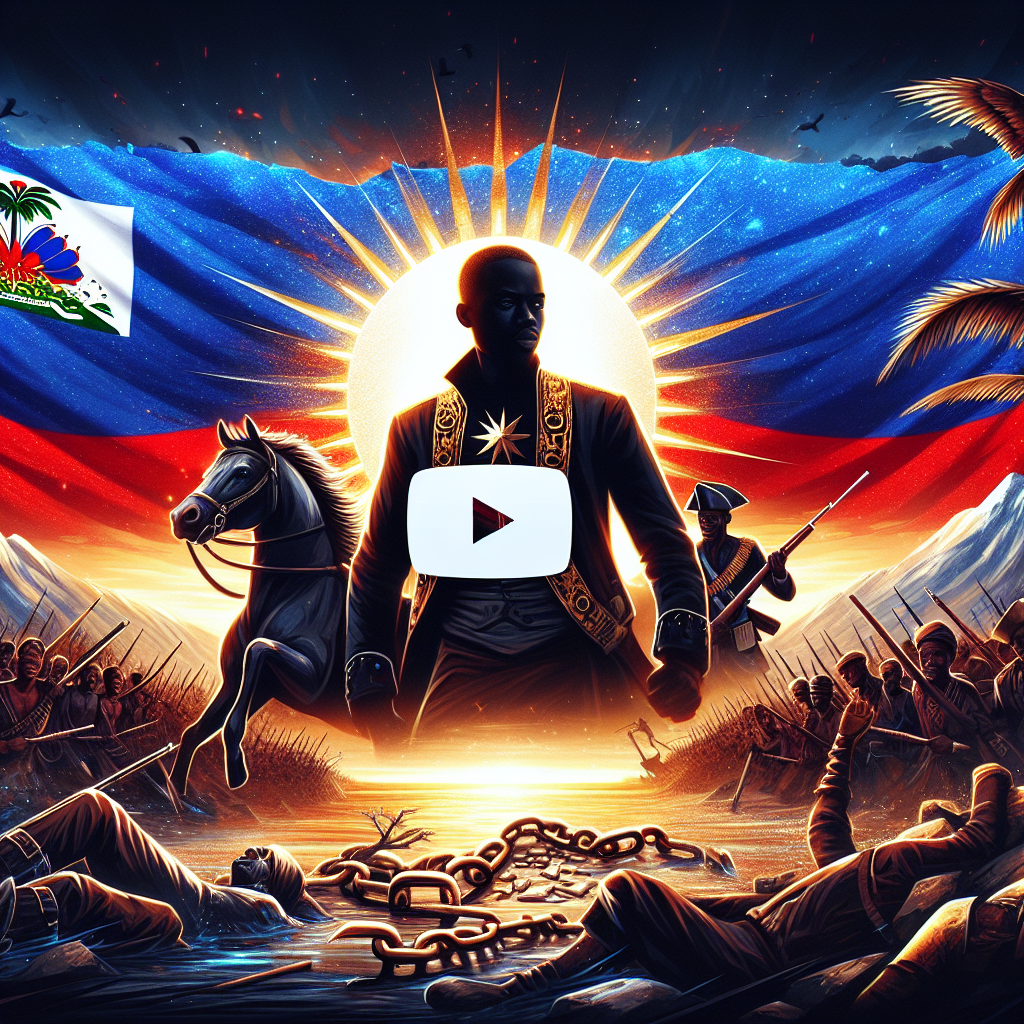
Haiti’s economic landscape presents one of the starkest examples of wealth concentration in the Western Hemisphere. While approximately 60% of Haitians live below the poverty line, a handful of families—many descended from European, Middle Eastern, and Syrian immigrants who arrived with nothing in the late 19th and early 20th centuries—control vast business empires that dominate virtually every sector of the economy. This concentration of wealth began during the colonial period but solidified during the Duvalier dictatorships (1957-1986), when “Papa Doc” and later “Baby Doc” also Aristide granted monopoly rights and exclusive import licenses to select families in exchange for political support.
These economic arrangements survived the fall of the Duvaliers and even intensified during subsequent periods of political instability. While Haiti experienced coups, foreign interventions, and natural disasters, these families diversified their holdings, established international connections, and maintained their grip on key economic sectors. Their power extends beyond business into politics, with documented influence over elections, policy decisions, and even armed groups that maintain control over strategic territories.
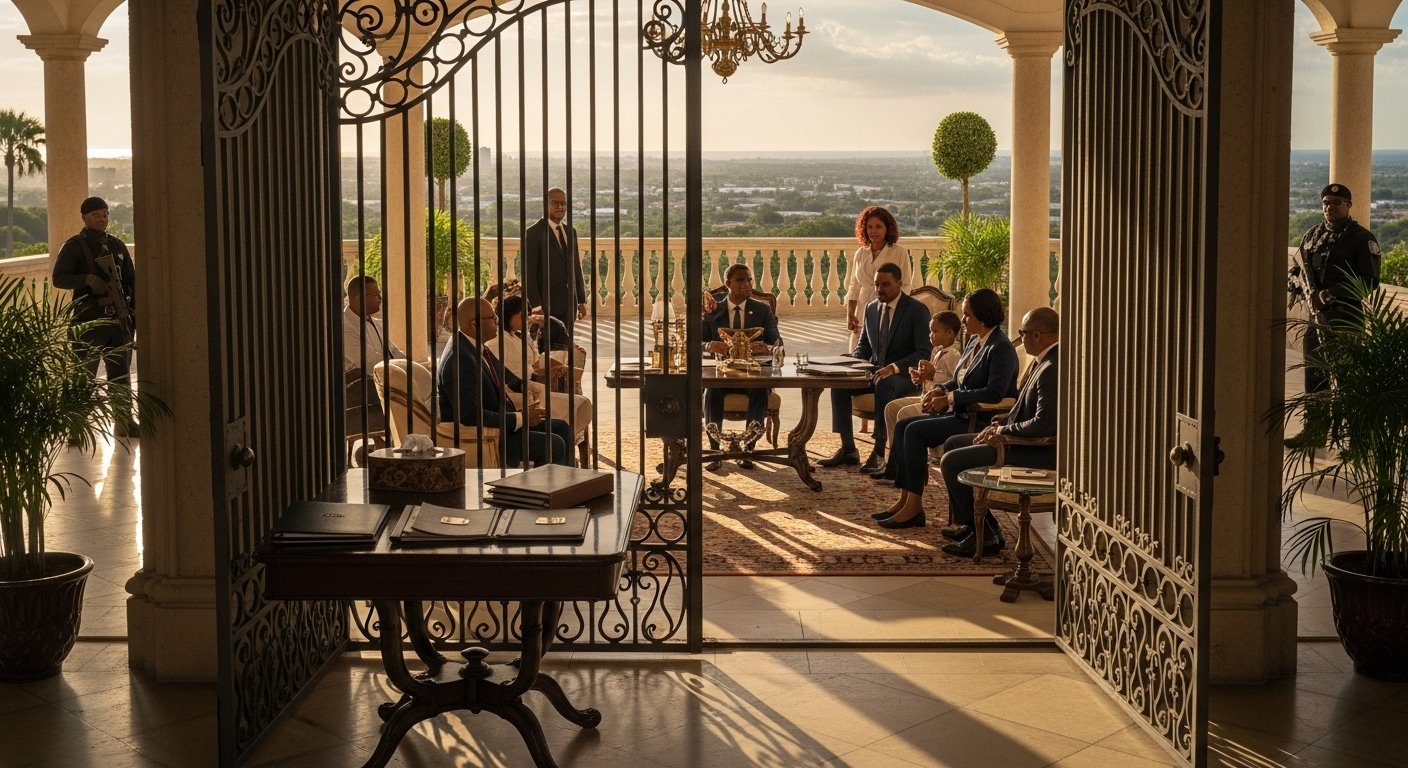
Understanding Haiti’s extreme inequality requires examining not just the poverty that affects millions but also the concentrated wealth that flows to a small group often referred to by Haitians as the “BAM BAM”—an acronym derived from the first letters of six powerful families: Brandt, Acra, Madsen, Bigio, Apaid, and Mevs.Also Deeb, Abdallah, Boulos, Baussan and Sama. These 12 families, along with a few others like the Vorbes, control an estimated 90% of Haiti’s wealth, forming an oligarchy that operates largely behind closed gates—both literally in their secured compounds and figuratively in their opaque business operations.
This economic dominance has contributed to Haiti’s persistent underdevelopment and political instability. As former U.S. Ambassador Vicki J. Huddleston observed, “This tiny white or whitish minority controls the resources of the country… and they’re not terribly good about putting them back into the country”. Their business practices, political connections, and response to Haiti’s crises reveal the mechanics of how extreme wealth concentration perpetuates itself amid national poverty.
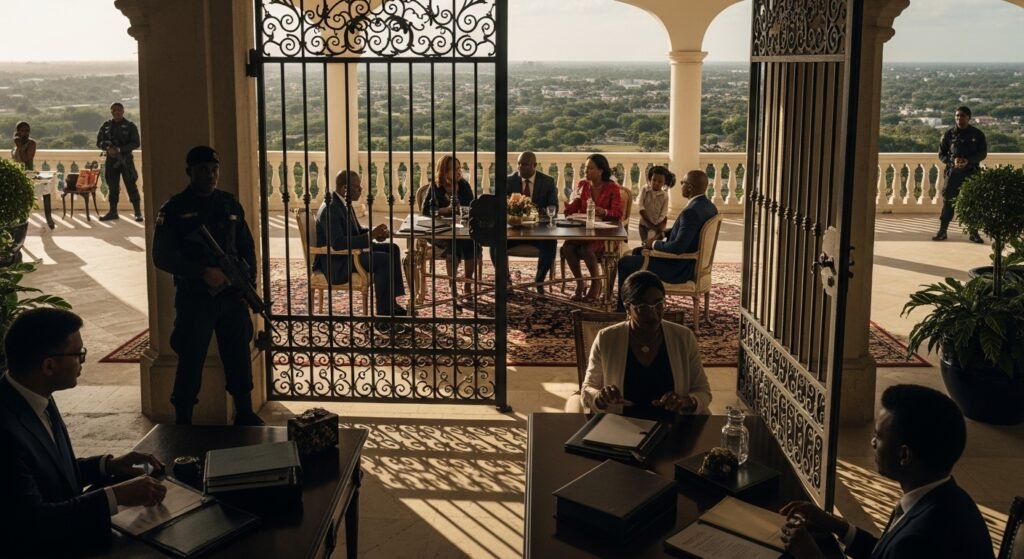
The role of Haiti’s oligarchic families in shaping the nation’s economy and politics has been systematically obscured through multiple mechanisms. International media coverage of Haiti typically focuses on gang violence, political instability, and natural disasters without examining the economic power structures that underlie these crises. As The Globe and Mail noted, “While the roles of foreign powers and corrupt politicians are well known, the oligarchy has received little attention outside Haiti”.
This erasure operates on multiple levels. First, the complex ownership structures of major Haitian businesses often conceal ultimate beneficial ownership. The Pandora Papers investigation revealed how wealthy Haitian families use offshore structures in tax havens like the British Virgin Islands, Bahamas, and Panama to shield their assets from public scrutiny and potentially from taxation. These financial arrangements make it difficult for ordinary Haitians—and even researchers—to track exactly who owns what in the country.
Second, narratives about Haiti’s problems typically emphasize corruption among political leaders while downplaying the role of economic elites who finance and benefit from this corruption. The focus on governmental failure shifts attention away from the private sector actors who have actively shaped Haiti’s economic and political landscape for generations. This selective framing portrays Haiti’s problems as stemming primarily from state failure rather than from a system designed to concentrate wealth in specific hands.
Third, the oligarchic families themselves maintain intentionally low public profiles despite their enormous influence. As reporting on Gilbert Bigio—often described as Haiti’s only billionaire—reveals, these powerful figures prefer to operate behind the scenes while their conglomerates touch virtually every aspect of Haiti’s economy. Their media appearances are rare, their business dealings opaque, and their political connections often exercised through intermediaries.
The Haitian press, much of which depends on advertising from these same businesses, rarely investigates the oligarchy’s role in maintaining extreme inequality. As one Haitian source bluntly stated, “The corrupt Haitian press protects the interests of the haves”. This self-censorship creates an information void that further obscures the mechanisms of wealth concentration.

The most visible face of Haiti’s economic elite is the Bigio family, headed by Gilbert Bigio, often described as Haiti’s only billionaire. The family’s presence in Haiti dates back to 1896 when Gilbert’s father, a Sephardic Jew from Aleppo, Syria (then part of the Ottoman Empire), immigrated to the Caribbean nation. This early arrival gave the family a significant head start in establishing themselves in Haiti’s business community.
Through their GB Group conglomerate founded in 1972, the Bigio family controls vast segments of Haiti’s economy. Their business interests extend across multiple sectors:
The Miami Herald’s investigation into the Pandora Papers revealed that “much of what is bought, sold or consumed in Haiti is likely to touch some corner of the Bigio empire”. Despite this economic dominance within Haiti, the family maintains residences in exclusive areas like Indian Creek Island in Florida, with their properties held through offshore shell companies.
In December 2023, Canada imposed sanctions on Gilbert Bigio, accusing him of using his economic power “to protect and enable the illegal activities of the armed criminal gangs” that are destabilizing Haiti. The sanctions highlighted concerns that Bigio’s private port might be used for weapons imports that arm criminal gangs—allegations that underscore the complex relationship between economic power and security in Haiti.
The Mevs family represents another pillar of Haiti’s oligarchy. Their most strategic asset is Terminal Varreux, Haiti’s largest fuel terminal that accounts for approximately 70% of the country’s fuel imports. This facility gives the family extraordinary leverage over Haiti’s energy supply—and by extension, its entire economy.
The terminal’s strategic importance became starkly evident in 2022 when the G9 gang coalition led by Jimmy “Barbecue” Chérizier blockaded the facility for over a month, creating a nationwide fuel crisis that paralyzed transportation, hospitals, and businesses. The blockade highlighted both the vulnerability of Haiti’s infrastructure and the complex relationships between gangs and business interests.
The Mevs family also owns SHODECOSA, Haiti’s largest industrial park, which warehouses most of the 93% of the nation’s food that is imported. This control over both fuel and food storage gives the family enormous influence over Haiti’s basic necessities. Youri Mevs, a prominent family member, maintains connections to politics as well, serving as campaign manager for a presidential candidate while navigating extortion demands from gangs.
Family gatherings at the Mevs compound reveal the stark contrast between elite lifestyles and Haiti’s broader reality. As AP reported, while the 92nd birthday of family matriarch Huguette Mevs was celebrated with traditional songs and domestic workers in attendance, outside the compound, most Haitians struggled with food insecurity and violence.
Beyond the Bigio and Mevs families, several other dynasties comprise Haiti’s economic elite:
Together, these families form what Haitians sometimes call the “BAM BAM” (Brandt, Acra, Madsen, Bigio, Apaid, Mevs), an oligarchy that controls an estimated 90% of Haiti’s wealth. Their businesses frequently intersect and collaborate, creating a networked economic power structure that transcends individual family interests.
What unites these families is not just their wealth but their origins—most descend from immigrants who arrived in Haiti in the late 19th or early 20th centuries, primarily from Europe and the Middle East. This “Syro-Lebanese elite,” as it’s sometimes called, established itself during periods of political instability by leveraging international connections and gradually expanding control over key economic sectors.
Many maintain dual citizenship and residences abroad, particularly in the United States and France, allowing them to move assets offshore easily. This transnational presence has helped them weather Haiti’s political storms while maintaining their economic dominance regardless of who holds formal political power.
The concentration of wealth among Haiti’s oligarchic families has profound consequences for the nation’s development and stability. These impacts manifest across multiple dimensions:
Haiti’s extreme inequality directly constrains the country’s economic development. With key sectors monopolized by a handful of families, new entrants face nearly insurmountable barriers to market entry. This concentration stifles innovation, limits job creation, and keeps prices artificially high for basic goods.
The control of critical infrastructure—like the Mevs family’s Terminal Varreux and the Bigio family’s Port Lafito—gives these families enormous leverage over Haiti’s import-dependent economy. When Terminal Varreux was blockaded in 2022, the entire nation faced fuel shortages that crippled transportation, healthcare, and manufacturing. This vulnerability stems directly from the concentration of essential services in the hands of a few private actors.
Haiti collects one of the Western Hemisphere’s lowest tax revenues as a percentage of GDP—just 13% compared to a regional average of 24.5%. This limited tax collection directly constrains the government’s ability to fund essential services like healthcare, education, and infrastructure.
The Pandora Papers revealed how wealthy Haitian families use complex offshore structures to potentially shield assets from taxation. These arrangements, while often technically legal, deprive Haiti of crucial revenue that could fund development. As Gary Kalman of Transparency International noted, these offshore structures “raise all kinds of red flags, and create enormous problems for the host country”.
The oligarchy’s influence extends deep into Haitian politics. During the 1991 coup against President Jean-Bertrand Aristide, many of these same families backed the military takeover. During the 2004 coup, oligarch André Apaid reportedly offered to pay gang leaders to help remove Aristide from power.
This political involvement isn’t limited to coups. The families maintain connections across the political spectrum, hedging their bets to ensure their interests are protected regardless of who holds office. Their economic power gives them significant leverage over politicians who depend on their support—or at least their neutrality—to govern effectively.
Perhaps most disturbing are the alleged connections between Haiti’s economic elite and armed gangs that control much of Port-au-Prince. In December 2023, Canada imposed sanctions on Gilbert Bigio and other business figures, accusing them of using “their economic power to protect and enable the illegal activities of the armed criminal gangs”.
The relationship between gangs and business is complex. Gang leader Jimmy “Barbecue” Chérizier has positioned himself as “a man of the people and an enemy of the elite,” particularly targeting the port facilities owned by the Mevs family. Yet some observers believe certain gang activities serve the interests of business elites by eliminating competition, maintaining territorial control, or creating pressure for foreign intervention that preserves the status quo.
Understanding the role of Haiti’s oligarchic families in maintaining extreme inequality is essential for addressing the root causes of the country’s persistent poverty and instability. Here are concrete steps that various stakeholders can take to challenge this concentration of wealth and power:
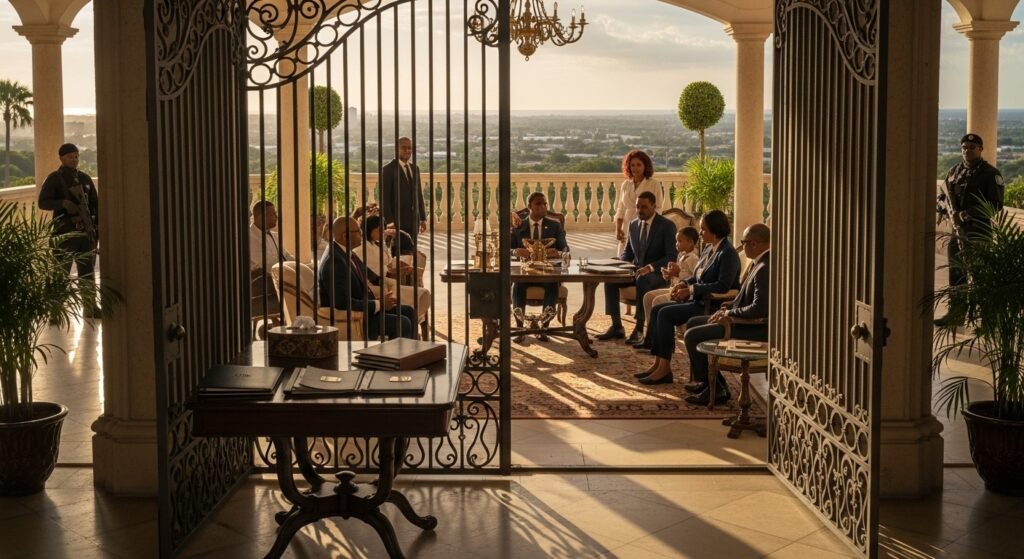
Haiti’s extreme inequality is not an accident of history or the result of abstract market forces—it is the product of specific economic arrangements that have concentrated wealth and power in the hands of a small group of families for generations. The Bigio, Mevs, Acra, Brandt, Apaid, and other oligarchy dynasties have built business empires that dominate virtually every sector of Haiti’s economy while maintaining low public profiles and leveraging political connections to protect their interests.
This concentration has profound consequences for Haiti’s development. It limits tax revenue, stifles competition, constrains job creation, and creates dangerous dependencies on privately controlled infrastructure. The allegations of connections between business elites and armed gangs highlight how economic power can translate into security threats that further destabilize the nation.
Addressing Haiti’s challenges requires confronting this concentration of wealth directly. Technical solutions like improved governance and foreign aid will have limited impact if they fail to challenge the fundamental power structures that maintain inequality. True transformation requires breaking monopolies, expanding economic opportunity, and building political movements that represent the interests of ordinary Haitians rather than a privileged few.
Behind Haiti’s closed gates lies not just extreme wealth but a system that perpetuates poverty for the majority. Opening these gates—through transparency, accountability, and structural economic change—is essential for creating a Haiti where prosperity is shared rather than hoarded.
1. Who are the main families controlling Haiti’s economy? The main oligarchic families include the Bigio, Mevs, Acra, Brandt, Apaid, and Madsen families, sometimes collectively referred to as the “BAM BAM.” Together, they control an estimated 90% of Haiti’s wealth through businesses spanning virtually every sector of the economy. 2. How did these families accumulate their wealth? Most of these families descended from European and Middle Eastern immigrants who arrived with nothing in Haiti in the late 19th or early 20th centuries. Their wealth expanded significantly during the Duvalier dictatorships (1957-1986), also post Duvalier when they received monopoly rights and exclusive import licenses in exchange for political support. 3. What specific sectors do these families control? The Bigio family controls steel imports, private port facilities, and interests across construction, food, energy, and telecommunications. The Mevs family owns Terminal Varreux (Haiti’s largest fuel depot) and SHODECOSA (Haiti’s largest industrial park). Other families dominate banking, textiles, manufacturing, and retail sectors. 4. How does their wealth compare to Haiti’s overall poverty? The contrast is stark—while these families control an estimated 90% of Haiti’s wealth, approximately 60% of Haitians live below the poverty line, with nearly 25% in extreme poverty. Gilbert Bigio, often described as Haiti’s only billionaire, purchased a Mercedes Maybach luxury auto for $132,000 in 2020—at a time when an estimated 4.7 million Haitians were experiencing “acute food insecurity”. 5. What evidence exists of connections between these families and armed gangs? In December 2023, Canada imposed sanctions on Gilbert Bigio and other business figures, accusing them of using “their economic power to protect and enable the illegal activities of the armed criminal gangs”. Earlier reporting suggested connections between oligarchs and gangs, with André Apaid allegedly offering to pay gang leaders during the 2004 coup against President Aristide. 6. How do these families influence Haiti’s politics? Their influence operates through multiple channels: financing political campaigns, maintaining connections across the political spectrum, justice system, security forces, gangs, controlling media outlets that shape public opinion, and sometimes supporting coups against leaders who threaten their interests. Their economic dominance gives them significant leverage over politicians who depend on their support to govern effectively. 7. What steps have been taken to address this concentration of wealth? Recent efforts include Canada’s sanctions against business figures like Gilbert Bigio over alleged connections to gang violence. The International Monetary Fund has begun acknowledging the role of elite wealth concentration in limiting Haiti’s development, though concrete policy measures addressing this issue remain limited. Calls for progressive taxation and anti-monopoly enforcement continue, but implementation faces significant political obstacles.