Physical Address
304 North Cardinal St.
Dorchester Center, MA 02124
Physical Address
304 North Cardinal St.
Dorchester Center, MA 02124


Explore the "Architects of Chaos" behind Haiti's manufactured insecurity, incompetent leadership, and corrupt systems.
Haiti’s ongoing struggle with insecurity is a complex issue, deeply rooted in incompetent leadership and corrupt systems. The country’s manufactured insecurity is a result of decades of poor governance and institutional failures.
The Haitian crisis is multifaceted, involving political, economic, and social factors. Incompetent leadership has led to a lack of effective governance, while corrupt systems have perpetuated inequality and instability.
The consequences of these issues are far-reaching, affecting not only the Haitian people but also the international community.
Understanding the Haitian crisis requires a deep dive into its security challenges and human cost. The situation in Haiti is dire, with manufactured insecurity affecting every aspect of life.
Haiti is currently grappling with severe security issues, including gang violence and kidnappings. These challenges are not only a result of internal strife but also of systemic failures and corruption.
The rise of armed groups has led to a surge in violent crimes, creating an atmosphere of fear among the populace. As a result, many areas are considered no-go zones, further exacerbating the crisis.
The human cost of Haiti’s manufactured insecurity is staggering. Innocent civilians are caught in the crossfire, facing displacement, violence, and loss.
Daily life in Haiti is a struggle, with citizens living under the constant threat of violence. As one resident poignantly put it,
“We’re living in a state of perpetual fear, never knowing when violence will strike.”
The psychological impact is profound, with many suffering from trauma and anxiety. The crisis has also led to a significant deterioration in living conditions, with many lacking access to basic necessities like food, water, and healthcare.
The situation in Haiti underscores the need for a comprehensive approach to address the security challenges and the human cost of manufactured insecurity. It is crucial to understand these dynamics to devise effective solutions.
Understanding Haiti’s current governance issues requires a look into its complex past. The country’s history is marked by periods of authoritarian rule, foreign occupation, and economic dependency, all of which have contributed to its contemporary governance challenges.
The regime of François Duvalier, known as Papa Doc, and his son Jean-Claude Duvalier, or Baby Doc, left a lasting impact on Haiti. Their rule was characterized by authoritarianism, human rights abuses, and corruption. The Duvalier regime’s legacy of misrule has influenced subsequent governments, contributing to ongoing governance issues.
Haiti’s history as a French colony and its struggle for independence have also shaped its governance. The country faced significant challenges after becoming the first independent nation in the Caribbean, including economic isolation and external interference. These historical factors have had a lasting impact on Haiti’s development and governance.
One of the critical historical factors is the debt imposed on Haiti by France after independence, known as the “independence debt.” This financial burden, along with periods of international isolation, has significantly hindered Haiti’s economic development and contributed to its governance problems.
The combination of these historical factors has created a complex governance landscape in Haiti. Understanding this context is crucial for addressing the country’s current challenges.
Haiti’s insecurity is not accidental; it is the product of deliberate actions by its leaders and corrupt institutions. The term “architects of chaos” refers to those individuals and systems that, through their incompetence and corruption, have created and sustained an environment of insecurity in Haiti.
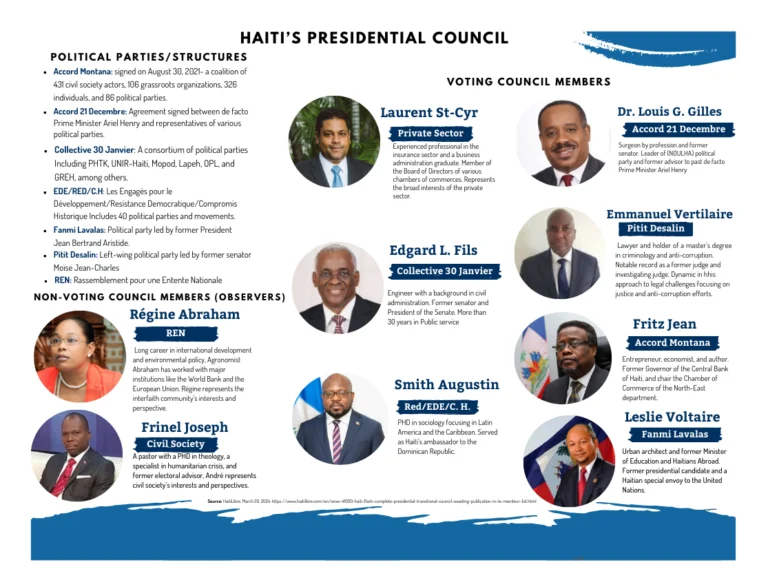
The “architects of chaos” in Haiti are primarily composed of incompetent political leaders and corrupt government officials. These individuals have consistently prioritized personal gain over the welfare of the Haitian people, leading to a systemic failure in governance.
Leadership failures in Haiti have directly contributed to the country’s insecurity. By failing to address the root causes of insecurity, such as poverty and lack of opportunities, leaders have allowed conditions to deteriorate.
One of the most significant ways in which leadership failures have manufactured insecurity is through the deliberate weakening of state institutions. This has been achieved by:
The result is a state that is incapable of providing basic services, including security, to its citizens. This creates an environment in which insecurity can thrive, perpetuating a cycle of violence and instability.
Understanding the role of the “architects of chaos” in Haiti’s manufactured insecurity is crucial for developing effective solutions to the country’s security challenges. It requires a comprehensive approach that addresses both the symptoms and the root causes of insecurity.
Understanding the anatomy of incompetent leadership in Haiti is crucial to addressing its manufactured insecurity. Incompetent leadership in Haiti has manifested through various characteristics and actions that have exacerbated the country’s security challenges.
Failed leadership in Haiti often exhibits a lack of vision, corruption, and a disconnect from the populace. Leaders have frequently prioritized personal or political gain over the welfare of the citizens, leading to widespread disillusionment.
Key characteristics include:
Examining specific case studies can provide insight into how incompetent leadership has affected Haiti.
The administration of President Jovenel Moïse faced numerous criticisms, including allegations of corruption and authoritarianism. The aftermath of his tenure saw heightened gang violence and political instability.
Interim governments in Haiti often struggle to establish stability, leading to power vacuums that are exploited by criminal elements. These periods are characterized by a lack of clear direction and ineffective governance.
The cycle of incompetent leadership in Haiti is a complex issue that requires a multifaceted approach to resolve. Understanding its anatomy is the first step towards creating meaningful change.
Systemic corruption in Haiti is a critical issue that affects not only the economy but also the security infrastructure. It is a complex problem that is deeply entrenched in the country’s institutions and economy.
Institutional corruption in Haiti refers to the systemic and entrenched practices within government and public institutions that undermine their ability to function effectively. This includes bribery, nepotism, and the misuse of public funds for personal gain.
The economics of corruption in Haiti involves the misallocation of resources, distortion of economic policies, and the draining of public funds. This not only hampers economic development but also perpetuates inequality and poverty.
Corruption significantly impacts Haiti’s security infrastructure by weakening the police and justice systems. Funds allocated for security are often misappropriated, leaving these institutions under-resourced and ineffective.
The police and justice systems in Haiti are critical components of the security infrastructure. However, corruption has led to a significant hollowing out of these institutions. Resources meant for training, equipment, and personnel are often diverted, leaving them unable to effectively maintain law and order.
This systemic issue requires a comprehensive approach to reform and rebuild these institutions, ensuring they are equipped to address the security challenges facing Haiti.
The intertwining of gang violence and political patronage has become a defining feature of Haiti’s manufactured insecurity. This complex issue is characterized by the rise of armed groups and their intricate relationships with political actors.
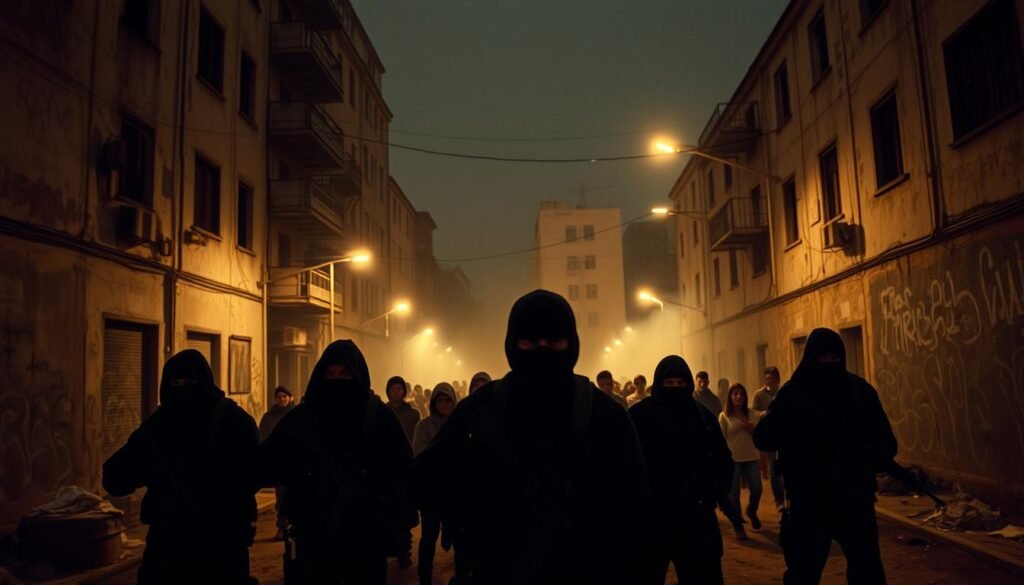
Armed groups in Haiti have proliferated, exerting significant control over various territories. These groups often emerge as a result of political patronage, where politicians support or tolerate gang activities in exchange for loyalty or electoral support.
The growth of these groups is fueled by a combination of factors, including poverty, lack of opportunities, and the historical legacy of violence in the country.
Political actors often provide protection to criminal elements, allowing them to operate with relative impunity. This protection enables armed groups to expand their influence and control over territories, further entrenching gang violence.
Insecurity has become a political tool in Haiti, with various actors using it to achieve their objectives. By manipulating the situation, politicians can create an environment that justifies their actions or maintains their grip on power.
The G9 gang federation is a notable example of how armed groups have become entrenched in Haiti’s political landscape. Formed initially as a coalition of gangs, the G9 has evolved into a significant force, with its influence extending beyond mere violence to include political clout.
The G9 and similar federations demonstrate the complex interplay between gang violence and political patronage, highlighting the challenges faced in addressing Haiti’s insecurity.
The global community’s actions and inactions have inadvertently contributed to Haiti’s crisis, highlighting a complex web of international complicity. Haiti’s path to the current state of insecurity is multifaceted, involving various international factors.
Foreign policy decisions made by international powers have often prioritized their own interests over Haiti’s needs, leading to detrimental consequences. For instance, interventions have sometimes disrupted local governance structures without providing sustainable solutions.
Economic interventions, though intended to stabilize Haiti, have frequently resulted in dependency rather than self-sufficiency. Key issues include:
International organizations, including the UN, have played significant roles in Haiti. UN peacekeeping efforts have had both successes and failures.
While UN peacekeeping has contributed to stabilizing certain areas, it has also faced criticism for its handling of local issues and for introducing new problems, such as the introduction of cholera. Effective peacekeeping requires a nuanced understanding of local dynamics.
Amidst the turmoil in Haiti, a beacon of hope emerges from the resilience of its civil society and grassroots movements. Despite the challenges posed by incompetent leadership and corrupt systems, Haitian communities are finding ways to resist and rebuild.
Various community organizations are at the forefront of this resistance, working tirelessly to address the security challenges and social injustices faced by Haitians. These organizations often operate with limited resources but have a significant impact on their communities.
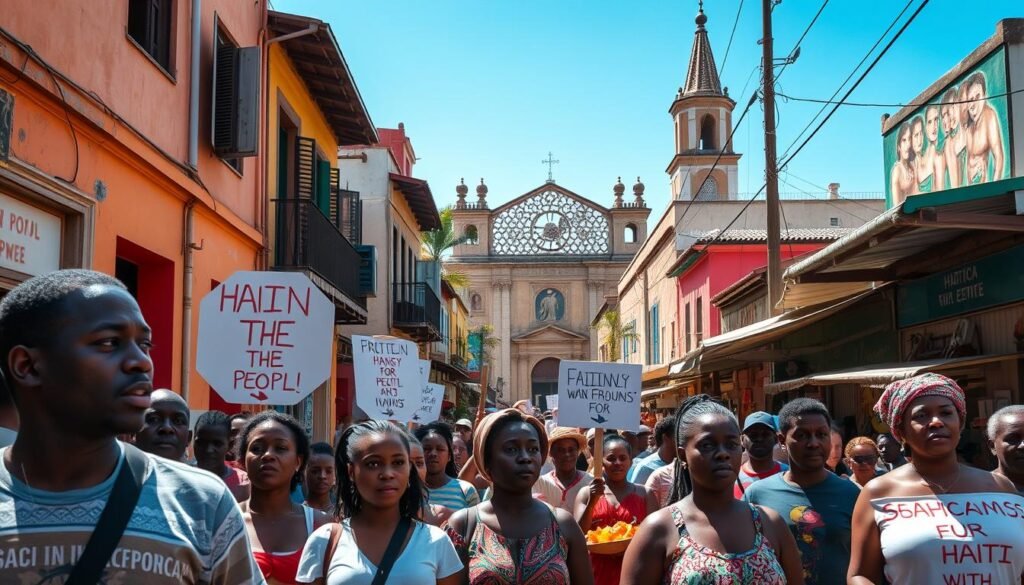
Haitian-led initiatives are crucial in developing solutions to the country’s security challenges. By understanding the local context and needs, these initiatives can provide effective and sustainable solutions that external interventions might overlook.
Diaspora communities play a vital role in supporting Haitian resilience. Through remittances, advocacy, and direct involvement in community projects, they contribute significantly to the efforts of civil society and grassroots movements.
The collective efforts of these groups underscore the strength and resilience of Haitian communities. As they continue to push for change, there is a growing sense of hope for a more stable and secure future in Haiti.
To overcome the challenges posed by incompetent leadership and corrupt systems, Haiti needs to adopt comprehensive pathways to reform. This involves a multi-faceted approach that addresses governance, security, and international cooperation.
Effective governance reforms are crucial for Haiti’s stability. This includes:
Community-based security solutions are vital for addressing the root causes of insecurity. This can be achieved by:
International support is necessary, but it must be provided in a way that empowers Haitians rather than controlling their destiny. This includes:
Effective partnerships can be modeled after successful collaborations between international organizations and local communities. For instance, initiatives that focus on capacity building and resource sharing can be particularly effective.
Haiti’s journey toward stability and security requires a fundamental shift away from the “architects of chaos” who have perpetuated incompetent leadership and corrupt systems. By understanding the historical context and current landscape of Haiti’s crisis, it’s clear that reclaiming Haiti’s future demands a multifaceted approach.
This involves promoting governance reforms, supporting community-based security solutions, and ensuring international support empowers rather than controls Haitian-led initiatives. By moving away from the systems that manufacture insecurity, Haiti can begin to build a more stable and secure future.
Reclaiming Haiti’s future is a collective effort that requires the engagement of Haitian civil society, the diaspora, and the international community. Together, they can work toward breaking the cycle of chaos and fostering an environment where Haitians can thrive.
Incompetent leadership and corrupt systems are the primary factors contributing to Haiti’s manufactured insecurity, as discussed in the article “Architects of Chaos: Incompetent Leadership and Corrupt Systems in Haiti’s Manufactured Insecurity.”
Gang violence in Haiti is often linked to political patronage, with certain political actors providing protection to armed groups, as explored in the section on “Gang Violence and Political Patronage.”
International organizations, including the UN, have played a significant role in Haiti’s crisis, with both positive and negative consequences, as discussed in the section “International Complicity in Haiti’s Crisis.”
Potential pathways to reform in Haiti include governance reforms, community-based security solutions, and international support that empowers rather than controls, as outlined in the section “Pathways to Reform: Breaking the Cycle of Chaos.”
Haiti’s history, including the legacy of Duvalier’s rule, colonialism, and post-independence struggles, has contributed to its current governance issues, as examined in the section “Historical Context: Roots of Haiti’s Governance Problems.”
Haitian civil society and grassroots resistance are crucial in working towards change and providing Haitian-led solutions to security challenges, as highlighted in the section “Haitian Resilience: Civil Society and Grassroots Resistance.”
Corruption has a debilitating effect on Haiti’s security infrastructure, particularly the police and justice systems, as discussed in the section “Corruption as a System: Beyond Individual Actors.”