Physical Address
304 North Cardinal St.
Dorchester Center, MA 02124
Physical Address
304 North Cardinal St.
Dorchester Center, MA 02124
Explore why Haiti's transitional leaders are favored by oligarchs and global powers in this insightful article.
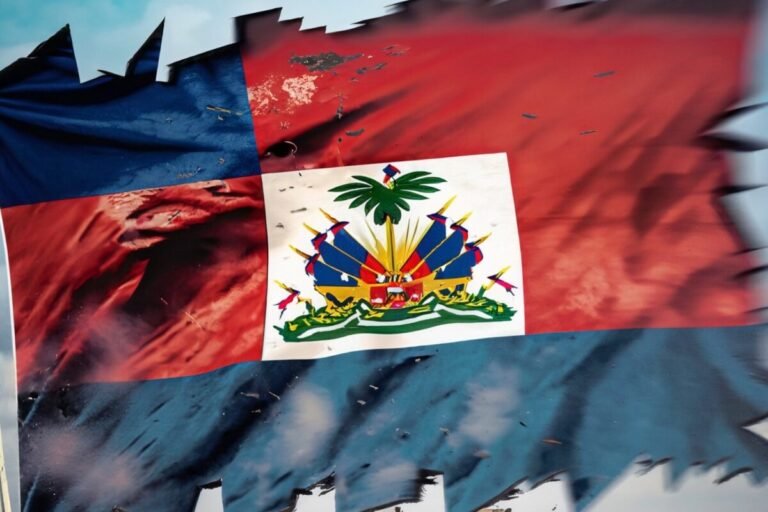
Haiti’s political landscape is complex, with various stakeholders vying for influence. Haiti’s transitional leaders have become a focal point for both domestic and international interests.
Oligarchs and global powers have shown a preference for these leaders, largely due to the convenience they offer in maintaining the status quo. This preference is rooted in the desire to exert control over Haiti’s governance without the need for significant reform.
The implications of this dynamic are far-reaching, affecting not only Haiti’s political stability but also its economic development and social welfare.
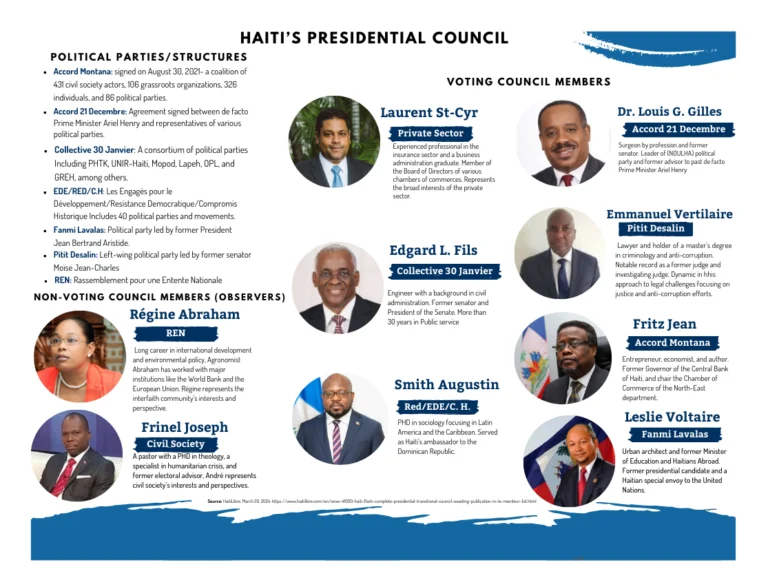
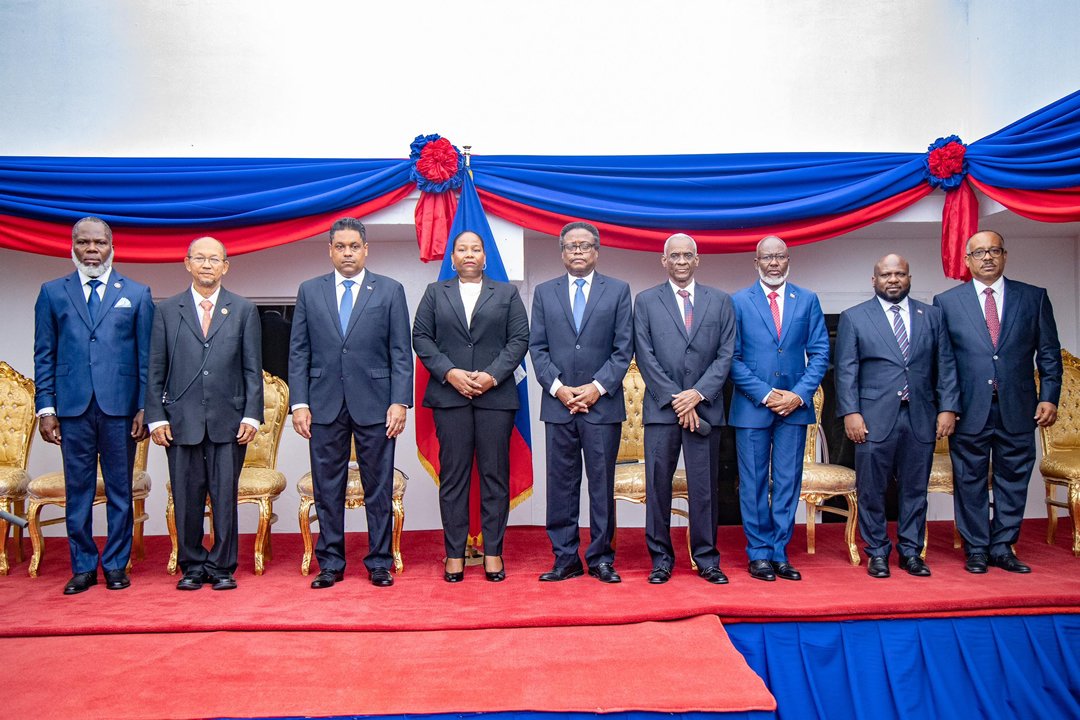
The current political landscape in Haiti is characterized by the emergence of a Transitional Presidential Council, signaling a shift in the country’s governance.
The Transitional Presidential Council was formed in response to the growing political instability in Haiti. This council represents a coalition of various political factions and stakeholders aiming to stabilize the country. The formation of this council is seen as a step towards addressing the political vacuum and restoring order.
The key players in Haiti’s current government include members of the Transitional Presidential Council, who are tasked with making crucial decisions for the country’s future. These individuals come from diverse backgrounds, including politics, civil society, and the private sector. Their roles are critical in shaping Haiti’s political trajectory.
Haiti is currently facing a severe security crisis, exacerbated by gang violence that has plagued the country. The security situation is dire, with gangs controlling large areas of the capital, Port-au-Prince. The Transitional Presidential Council faces the daunting task of restoring security and combating gang violence to stabilize the country.
The list of challenges includes:
Addressing these issues is crucial for the council’s success and the overall stability of Haiti.
Haiti’s history has been marked by a recurring pattern of transitional governments, often backed by external forces. This phenomenon is not a recent development but rather a continuation of historical trends that have shaped the country’s political landscape.
Historically, transitional governments in Haiti have been established in the wake of political crises or regime changes. For instance, after the fall of Jean-Claude Duvalier in 1986, Haiti experienced a series of transitional governments. These governments were characterized by their temporary nature and the significant influence of external actors.
Foreign intervention in Haiti dates back to 1915 when the United States occupied the island. This period of occupation had a lasting impact on Haiti’s political and economic structures. Since then, various forms of foreign intervention have continued, shaping the outcomes of transitional governments. Key patterns include:
The legacy of these interventions and the resultant transitional governments is a landscape of political instability. This instability is characterized by frequent changes in government, lack of institutional continuity, and ongoing social unrest. The impact on Haiti’s development has been profound, hindering long-term economic growth and social progress.
In conclusion, understanding Haiti’s cycle of transitional governments requires a grasp of the historical context, including the role of foreign intervention and its lasting impact on political stability.
Behind Haiti’s transitional governments lies a complex web of economic elites who shape the nation’s policies to their advantage. These individuals and families have significant financial interests in various sectors, including agriculture, manufacturing, and finance.
Haiti’s economic elites are primarily composed of influential families and business leaders who have built their wealth through strategic investments and connections. They often have ties to international markets and investors, giving them a unique position of power.
The business interests of Haiti’s oligarchs span multiple sectors, including energy, telecommunications, and construction. Their political influence is exerted through various means, such as campaign financing, lobbying, and strategic alliances with politicians.
| Sector | Key Players | Influence |
|---|---|---|
| Energy | Large corporations | Significant control over energy policies |
| Telecommunications | Major telecom companies | Influence over regulatory policies |
| Construction | Major construction firms | Impact on infrastructure development |
The relationship between Haiti’s oligarchs and transitional leaders is one of mutual benefit. Oligarchs provide financial and political support to transitional governments, which in turn create policies favorable to their business interests.
This symbiotic relationship underscores the significant influence of economic elites on Haiti’s political landscape, often shaping the course of the country’s development to serve their interests.
Global powers have significant stakes in Haiti, influencing the country’s political landscape and economic future. The complex interplay of foreign interests in Haiti is driven by a mix of political, economic, and strategic considerations.
The United States has historically played a significant role in Haitian affairs, with its foreign policy toward Haiti being shaped by a combination of humanitarian, economic, and security concerns. The U.S. has been involved in various capacities, from providing humanitarian aid to intervening in times of political instability.
U.S. interests in Haiti are multifaceted, including maintaining regional stability, promoting democratic governance, and addressing humanitarian crises. The U.S. has also been a key player in supporting international efforts to stabilize Haiti, often working through organizations like the United Nations.
International organizations, including the United Nations, the Organization of American States, and various non-governmental organizations (NGOs), play crucial roles in Haiti. These organizations provide a range of support, from humanitarian aid and development assistance to peacekeeping and electoral support.
The involvement of these organizations helps to address some of the pressing challenges in Haiti, such as poverty, lack of infrastructure, and security concerns. However, the effectiveness of their interventions can be influenced by the complex political landscape and the priorities of global powers.
Regional powers, particularly from the Caribbean and Latin America, also have significant interests in Haiti. Countries like the Dominican Republic, Jamaica, and Brazil have engaged with Haiti through regional organizations and bilateral agreements, focusing on areas such as trade, security, and cultural exchange.
These regional actors bring a nuanced perspective to their interactions with Haiti, often emphasizing the importance of regional solidarity and cooperation. Their involvement can help to balance the influence of more distant global powers and promote a more inclusive approach to addressing Haiti’s challenges.
Oligarchs and global powers have shown a clear preference for Haiti’s transitional leaders, but why? The answer lies in the unique characteristics of these leaders that make them appealing to external actors.
Transitional leaders in Haiti offer a level of flexibility that is attractive to oligarchs and global powers. Without a strong democratic mandate, these leaders are often more willing to negotiate and compromise on policies that favor external interests.
One of the key reasons external actors favor transitional leaders is that they are not subject to the same level of democratic accountability as elected officials. This allows for decisions to be made without the scrutiny of the public or the press, making it easier to implement policies that benefit a select few.
The economic policies implemented by transitional leaders can be tailored to attract foreign investment and favor the interests of global powers and oligarchs. By creating favorable economic conditions, these leaders can stimulate growth that benefits external stakeholders.
In conclusion, the preference for Haiti’s transitional leaders among oligarchs and global powers stems from their malleability, the lack of democratic accountability, and their ability to create economic conditions that favor external interests. This dynamic underscores the complex interplay between Haiti’s governance structure and the interests of powerful external actors.
The transitional government in Haiti has been criticized for enabling economic exploitation. This exploitation is multifaceted, involving various sectors and interests.
Under transitional rule, Haiti’s natural resources have become vulnerable to resource extraction by foreign entities. This often occurs without adequate oversight or benefit to the local population. Foreign investment is encouraged, but it frequently prioritizes the interests of the investing countries over Haiti’s development needs.
The privatization of public assets is another facet of economic exploitation. Essential services and resources are sold to private, often foreign, companies. This not only reduces government revenue but also limits access to these services for the general population.
Haiti’s economy is heavily reliant on international aid, leading to aid dependency. This dependency can undermine the government’s ability to make independent decisions. Furthermore, international debt obligations divert significant portions of the national budget away from essential public services and towards debt repayment.
The combination of resource extraction, privatization of public assets, and aid dependency creates a challenging environment for sustainable economic development in Haiti. Addressing these issues is crucial for the country’s future prosperity.
In response to Haiti’s ongoing governance issues, the international community has adopted a range of approaches, from humanitarian aid to political support. This multifaceted engagement reflects the complexity of Haiti’s challenges and the diverse interests of global stakeholders.
The United Nations has played a significant role in Haiti through various missions aimed at stabilizing the country and promoting development. These missions have included peacekeeping forces, humanitarian assistance, and support for governance reforms.
U.S. policy toward Haiti has varied across different administrations, reflecting changing priorities and approaches to foreign policy. Understanding these shifts is crucial for grasping the dynamics of Haiti’s governance.
Key aspects of U.S. policy include:
The international community’s response to Haiti’s challenges involves a delicate balance between providing humanitarian aid and offering political support. While humanitarian aid addresses immediate needs, political support can influence the country’s governance trajectory.
The distinction between humanitarian aid and political support is not always clear-cut, as both can have significant implications for Haiti’s stability and development.
Social control in Haiti is exercised through a multifaceted approach, impacting civil society and public discourse. The current political landscape has seen a rise in measures aimed at suppressing grassroots movements, which are perceived as threats to the existing power structure.
Civil society organizations play a crucial role in promoting democracy and human rights. However, in Haiti, these organizations face significant challenges, including funding constraints and restrictive legislation. This has led to a weakening of their capacity to effectively advocate for change.
Controlling public discourse is another mechanism used to suppress dissent. This is achieved through various means, including media manipulation and the spread of misinformation. As a result, the public’s ability to access accurate information is compromised.
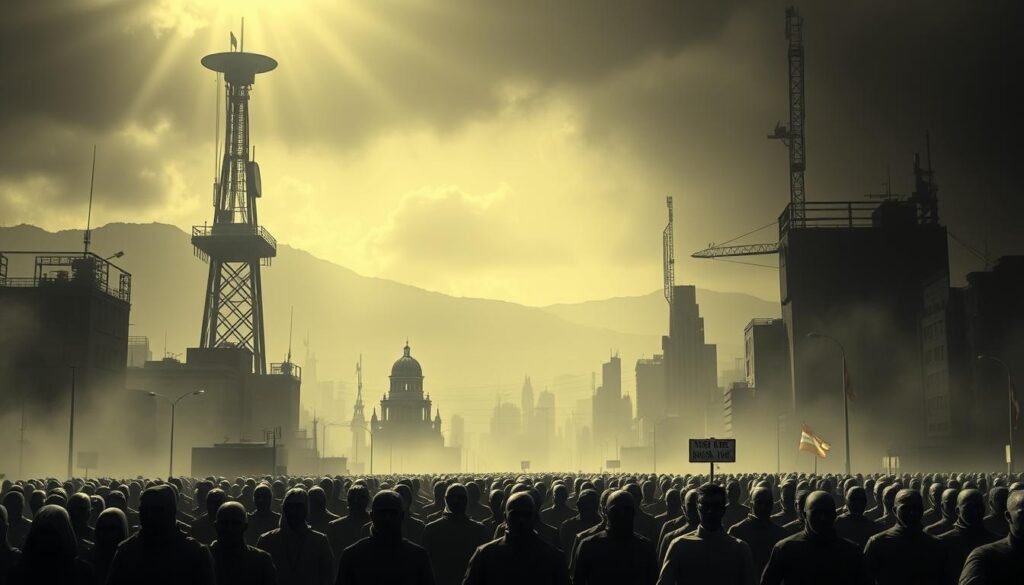
Security forces in Haiti are often used to serve the interests of the elite, rather than protecting the general population. This has led to a situation where security forces are seen as instruments of oppression, further eroding trust in these institutions.
Haiti’s political trajectory has been significantly influenced by transitional leaders who have served external interests. This phenomenon is not new and has been observed in various periods of Haiti’s history.
After President Jean-Bertrand Aristide’s ousting in 2004, Haiti was governed by a transitional council. This period was marked by significant international involvement, with the international community playing a crucial role in shaping Haiti’s governance.
Following the devastating 2010 earthquake, Haiti received substantial international aid, which led to a significant presence of foreign actors in the country’s governance. Transitional leaders during this period were often influenced by external donors and organizations.
The current transitional council in Haiti continues this trend, with various external powers and organizations having a stake in its decisions. Understanding these dynamics is crucial to grasping the complexities of Haiti’s current political landscape.
Key Takeaways:
The governance structure in Haiti has resulted in substantial human costs, particularly in terms of poverty and inequality.
Poverty and economic inequality are rampant in Haiti, largely due to the ineffective governance and lack of economic opportunities. The transitional government has failed to address these issues effectively, leading to a widening gap between the rich and the poor.
| Indicator | Value |
|---|---|
| Poverty Rate | 60% |
| Economic Inequality (Gini Coefficient) | 0.6 |
As noted by a recent report, “Haiti’s economic woes are deeply rooted in its political instability and lack of effective governance.”
“The country’s inability to provide basic services to its citizens has led to widespread poverty and inequality.”
The healthcare and education systems in Haiti are underdeveloped and underfunded, suffering greatly under the transitional government. This has led to inadequate healthcare services and limited access to quality education.
The dire conditions in Haiti have resulted in significant migration crises and displacement, both within the country and to other regions.
The human cost of convenience governance in Haiti is a complex issue that requires a multifaceted approach to resolve. Addressing poverty, improving healthcare and education, and mitigating migration crises are crucial steps toward a more stable future.
Haiti’s reliance on transitional leaders has become a persistent pattern, favored by oligarchs and global powers due to the flexibility it offers in governance.
The lack of democratic accountability under transitional rule allows external interests to exert significant influence over Haiti’s economic and political landscape.
This dynamic has led to the exploitation of Haiti’s resources, perpetuating poverty and inequality among its population.
The international community’s response, including humanitarian aid and political support, often inadvertently supports this cycle by propping up transitional governments.
To break this cycle, it is crucial to support grassroots movements and civil society organizations that advocate for democratic governance and accountability in Haiti’s governance.
Ultimately, the future of Haiti’s governance depends on the ability of its people and the international community to prioritize long-term stability and democracy over the convenience of transitional leaders.
The Transitional Presidential Council plays a crucial role in Haiti’s current government, serving as a key decision-making body that oversees the country’s governance during periods of political instability.
Global powers, including the United States and international organizations, exert significant influence over Haiti’s governance through various means, such as foreign aid, diplomatic pressure, and economic investment.
Haiti’s transitional leaders face numerous challenges, including gang violence, economic instability, and the need to balance competing demands from various stakeholders, both domestic and international.
Haiti’s economic elites, often referred to as oligarchs, wield considerable influence over the country’s politics through their control of key sectors of the economy and their relationships with government officials.
Foreign intervention has had a complex and multifaceted impact on Haiti’s governance, with some interventions aimed at promoting stability and others criticized for exacerbating the country’s problems.
Transitional governments in Haiti often prioritize short-term stability over long-term economic development, which can lead to a lack of investment in critical infrastructure and social services.
The human costs of having a government of convenience in Haiti include increased poverty and economic inequality, inadequate healthcare and education, and migration crises and displacement.
Civil society organizations play a vital role in promoting good governance in Haiti by advocating for the rights of marginalized communities and holding government officials accountable for their actions.
Haiti’s transitional leaders often rely heavily on the international community for financial and technical assistance, which can create a complex dynamic of dependence and influence.
Improving Haiti’s governance will require a sustained effort to promote transparency, accountability, and inclusivity, as well as a commitment to addressing the country’s deep-seated economic and social challenges.