Physical Address
304 North Cardinal St.
Dorchester Center, MA 02124
Physical Address
304 North Cardinal St.
Dorchester Center, MA 02124
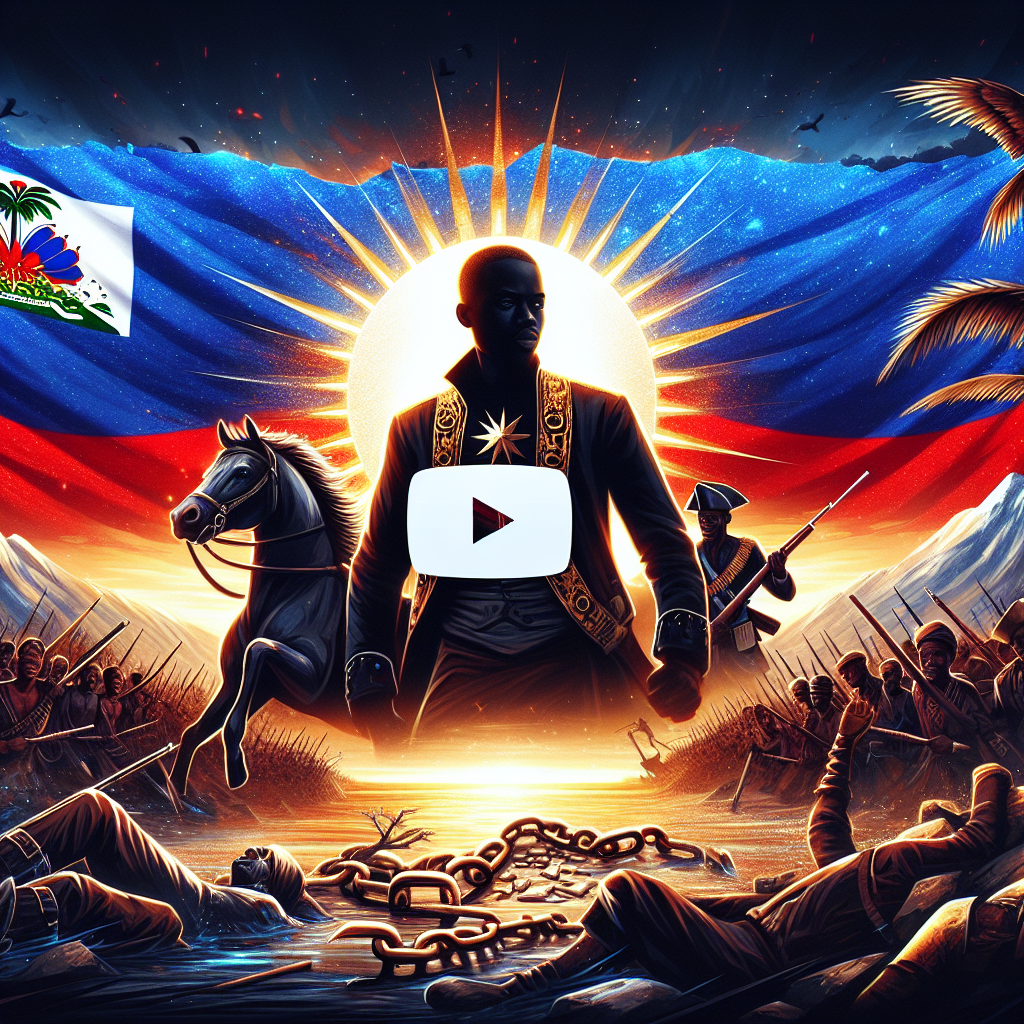

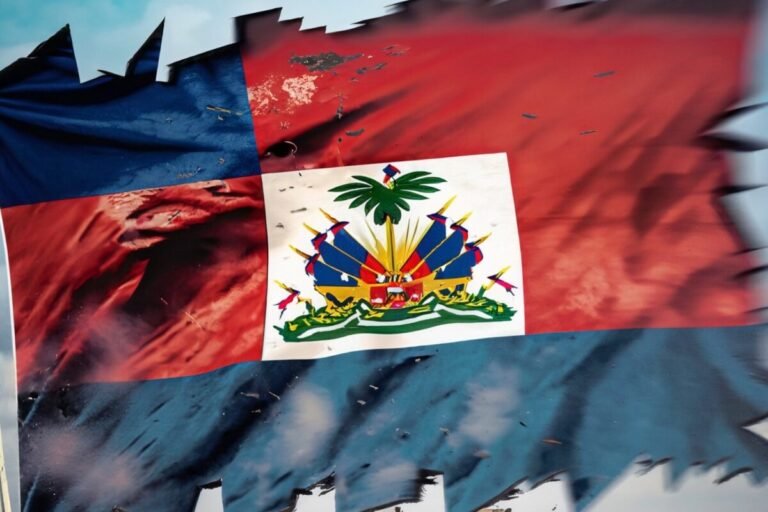
Haiti stands at a critical crossroads in its storied history. As the world’s first Black republic, born from the only successful slave revolution in history, Haiti’s political landscape has been shaped by complex forces both internal and external. Since gaining independence in 1804, the nation has weathered numerous political storms – from the early post-revolutionary governments to the U.S. occupation (1915-1934), the Duvalier dictatorships (1957-1986), and the tumultuous democratic transitions of recent decades.
The contemporary political environment in Haiti bears the deep scars of this complicated past. Established political forces have dominated the landscape for generations, often representing a small elite rather than the broader population. These entrenched powers have maintained control through patronage networks, strategic international alliances, and sometimes outright force. Traditional political parties and figures have consistently failed to address the fundamental challenges facing ordinary Haitians – widespread poverty, inadequate infrastructure, environmental degradation, and chronic institutional weakness.
Foreign interference has further complicated Haiti’s political development. From early diplomatic isolation and crushing reparations to France, to more recent interventions by the United States, United Nations, and various international organizations, external actors have consistently undermined Haitian sovereignty and self-determination. This constant external meddling has created a political culture where legitimacy is often sought from international approval rather than domestic popular support.
The resulting governance has created a vicious cycle of instability, corruption, and missed opportunities. Established political forces have become adept at navigating this system to maintain power while delivering little substantial change for the Haitian people. This history explains why many Haitians today view traditional political actors with deep skepticism and why there’s growing sentiment that true progress requires a fundamental break from these established powers.

Haiti’s established political class has repeatedly demonstrated an inability to address the nation’s core challenges. Decades of governance under traditional parties and leaders have yielded disappointingly similar results: short-term political calculations trumping long-term development needs, personalistic leadership rather than institution building, and corruption that drains public resources.
These political forces operate within a system that incentivizes maintaining power through patronage rather than performance. Political parties in Haiti have rarely represented coherent ideologies or policy platforms, functioning instead as vehicles for individual ambitions and networks of influence. This has created a revolving door of familiar faces claiming to offer change while perpetuating the same fundamental dynamics.
The track record speaks for itself. Despite billions in international aid following the devastating 2010 earthquake, established political figures failed to channel these resources toward sustainable reconstruction or institutional strengthening. Instead, much of this assistance was lost to corruption, mismanagement, or projects that primarily benefited the already privileged. Similar patterns have played out across sectors from healthcare and education to security and economic development.
Perhaps most damaging has been the established political class’s willingness to sacrifice national sovereignty for personal gain. Negotiations with international financial institutions, foreign governments, and multinational corporations have often prioritized maintaining elite privilege over defending Haiti’s autonomy and resources. This has perpetuated Haiti’s position of dependency in the global system rather than building toward true self-determination.
Against this backdrop of traditional political failure, new voices and movements have emerged across Haitian society. These alternatives come from diverse sources – grassroots social movements, community organizations, diaspora networks, youth activists, and independent intellectuals. What unites them is a rejection of the established political order and a commitment to more fundamental transformation.
Many of these alternative movements emphasize participatory democracy over top-down authority. They seek to build political power from the ground up, starting with community-level organizing and direct citizen engagement. This approach challenges the traditional Haitian political model where power flows from Port-au-Prince outward and where rural communities are largely marginalized from decision-making.
These emerging forces also typically center economic justice in their vision for Haiti. They recognize that political democracy is meaningless without addressing the extreme inequality that characterizes Haitian society. Their proposals often focus on sustainable development, land reform, environmental protection, and building domestic productive capacity rather than depending on foreign aid or remittances.
Significantly, these alternative movements tend to be more inclusive of historically marginalized groups. Women’s leadership, in particular, features prominently in many of these organizations, bringing perspectives that have been systematically excluded from traditional Haitian politics. Similarly, youth voices play a central role, representing both the demographic reality of Haiti’s population and a rejection of the generational dynamics that have dominated political leadership.
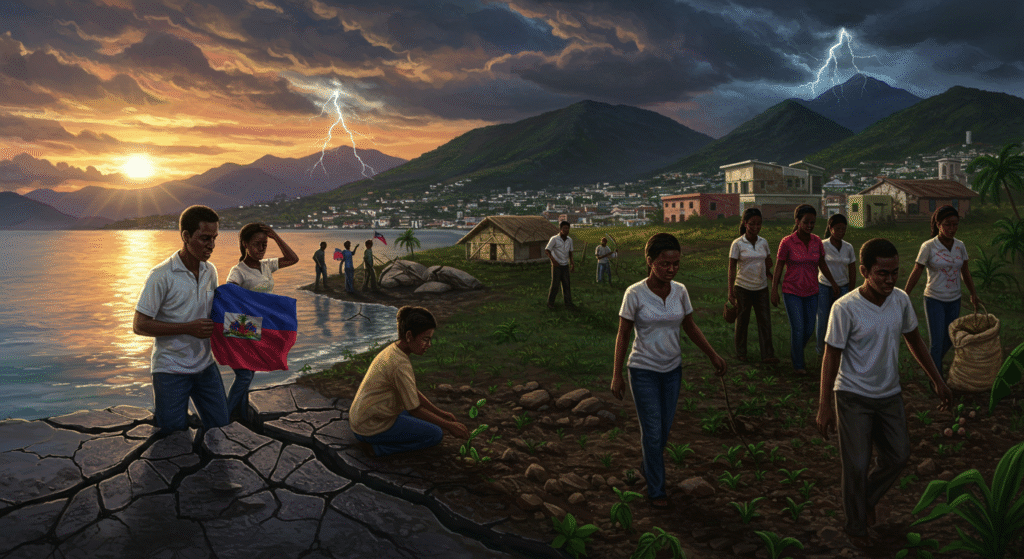
Haiti’s challenges are too profound and too urgent to be addressed through incremental reform of the existing political system. The nation requires a clean break from established political forces for several compelling reasons:
First, the legacy of corruption and self-interest is too deeply embedded in traditional political networks to be reformed from within. The same figures who have benefited from dysfunction cannot credibly lead the way toward functionality. New leadership, unburdened by this history, can approach governance with genuine public service as its motivation.
Second, the established political class lacks both the vision and the capacity to imagine and implement the transformative changes Haiti needs. Their worldview has been shaped by decades of operating within a broken system, limiting their ability to conceive of fundamentally different approaches. Fresh perspectives are needed to generate innovative solutions to persistent problems.
Third, Haiti’s international relationships require complete recalibration. Established political forces have accepted and perpetuated a subordinate position in global affairs, undermining sovereignty for short-term advantage. Alternative leadership could assert a more principled stance in foreign relations, focused on mutual respect and genuine partnership rather than dependency.
Fourth, public trust in government has been severely damaged by generations of unfulfilled promises and self-serving leadership. This trust deficit cannot be overcome by the same figures who created it. New political forces, demonstrating consistent commitment to transparency and accountability, are essential for rebuilding the social contract between state and citizens.
A genuine break from established political forces will not happen spontaneously or easily. Several key pathways can facilitate this necessary transition:
Constitutional reform represents a critical starting point. Haiti’s current political framework reinforces centralization and personalistic leadership. A participatory constitutional process could redistribute power, strengthen checks and balances, and create mechanisms for more direct citizen involvement in governance. This would provide the legal foundation for a more democratic and inclusive political system.
Grassroots mobilization must continue and expand. Alternative political movements need to strengthen their organizational capacity and broaden their base beyond urban centers. Building networks that connect rural communities, urban neighborhoods, and diaspora groups can create the necessary critical mass for political transformation. These movements should prioritize concrete local improvements while maintaining focus on systemic change.
Electoral reform is essential for translating growing political consciousness into representation. The current electoral system has repeatedly failed to produce legitimate outcomes that reflect popular will. Comprehensive reforms to ensure fair competition, prevent fraud, and reduce barriers to participation would open space for new political actors to compete meaningfully.
Youth leadership development deserves particular investment. With over 50% of Haiti’s population under 25, young people represent both the present majority and the future of the nation. Intentional efforts to cultivate leadership skills, political knowledge, and civic engagement among youth can accelerate the transition away from established political forces dominated by older generations.
Haiti’s diaspora community, numbering millions across North America, Europe, and elsewhere, has a crucial role to play in supporting political renewal. The diaspora brings valuable resources – financial, intellectual, and relational – that can strengthen alternative political movements.
Diaspora Haitians often maintain deep connections to their homeland while gaining exposure to different political systems and ideas. This unique perspective allows them to bridge traditional and innovative approaches, helping to contextualize international best practices within Haitian realities. Many diaspora members have developed professional expertise in areas critical to Haiti’s development – from healthcare and education to infrastructure and finance.
However, the diaspora’s role must be collaborative rather than directive. Genuine partnership with Haiti-based movements is essential, recognizing the primacy of those living the daily reality of Haiti’s challenges. The most effective contributions will support locally-defined priorities rather than imposing external agendas.
The diaspora can also use its political influence in host countries to advocate for international policies that support Haiti’s sovereignty and development. Challenging harmful interventions while encouraging constructive engagement represents an important form of solidarity that respects Haitian agency.
As Haiti pursues a break from established political forces, the international community’s approach requires fundamental recalibration. For too long, external actors have undermined Haiti’s political development through direct intervention, conditional aid, and support for compromised leaders who serve foreign interests.
True international solidarity begins with respect for Haitian sovereignty and self-determination. This means recognizing the right of Haitians to chart their own political course, even when this challenges established patterns of international engagement. It requires moving beyond superficial notions of democracy focused solely on elections toward supporting deeper democratic transformation.
Foreign governments and multilateral institutions should shift from imposing political solutions to facilitating Haitian-led processes. This might include providing requested technical assistance, supporting transparent electoral mechanisms, or helping to create space for inclusive national dialogue – all without predetermined outcomes.
International civil society has a distinct role to play in building solidarity beyond government channels. Direct relationships between social movements, labor organizations, and citizen groups can create networks of mutual support that bypass traditional diplomatic and development frameworks.
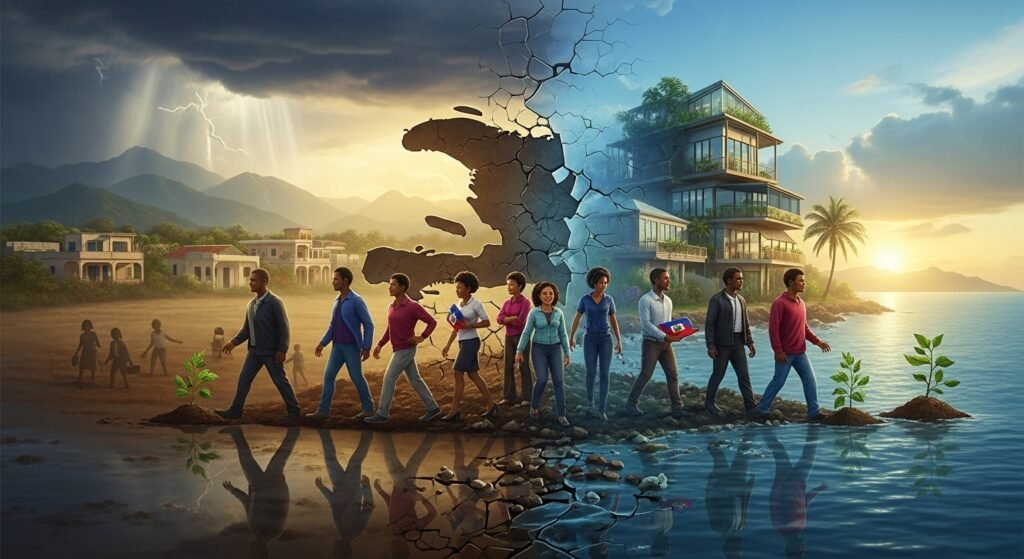
Haiti’s path forward requires courage to imagine possibilities beyond the limitations of its established political forces. The nation’s extraordinary history – from revolutionary triumph to persistent struggle – demonstrates both the potential for transformative change and the resilience to pursue it against formidable odds.
Breaking from established political forces does not mean abandoning Haiti’s rich political traditions altogether. Rather, it means reclaiming the revolutionary spirit of self-determination and popular sovereignty that animated the founding of the nation. It means building on indigenous knowledge and community practices while engaging critically with global political currents.
The journey toward political renewal will inevitably face resistance from entrenched interests and their international allies. Progress will not be linear, and setbacks will occur. However, the alternative – continuing under the leadership of those who have consistently failed to deliver meaningful improvement – offers no viable path toward the dignity and prosperity that Haitians deserve.
A new political future for Haiti is not merely possible but essential. By supporting emerging alternative voices, strengthening grassroots movements, reforming fundamental institutions, and recalibrating international relationships, Haiti can break the cycle of disappointing governance that has characterized recent decades. The first step is recognizing that true progress requires a decisive break from the established political forces that have consistently failed the Haitian people.
Why have Haiti’s established political forces failed to deliver progress? Established political forces have maintained power through patronage networks rather than effective governance, prioritized personal enrichment over public service, and compromised sovereignty for external support, creating a system that benefits elites while failing to address fundamental challenges facing ordinary Haitians. What distinguishes emerging alternative political movements in Haiti? Emerging movements typically emphasize participatory democracy, economic justice, environmental sustainability, and inclusive leadership. They often build from grassroots community organizing and feature stronger representation of women, youth, and historically marginalized communities. How can constitutional reform support political renewal in Haiti? Constitutional reform could redistribute power away from centralized authority, strengthen checks and balances, create mechanisms for direct citizen participation, and establish a more solid foundation for democratic governance and accountability. What role should the Haitian diaspora play in political transformation? The diaspora can provide valuable financial, intellectual, and relational resources to support locally-led movements, while using its influence in host countries to advocate for international policies that respect Haitian sovereignty and self-determination. How should the international community change its approach to Haiti? International actors should shift from imposing political solutions to respecting Haitian sovereignty and self-determination, providing requested assistance without predetermined outcomes, and building relationships based on mutual respect rather than dependency. What are the most important first steps toward breaking from established political forces? Critical early steps include supporting grassroots movement building, investing in youth leadership development, pursuing electoral reform to enable fair competition, and initiating an inclusive constitutional reform process that redistributes power more democratically. Is political renewal in Haiti really possible given the challenges the country faces? Yes. Despite significant challenges, Haiti’s revolutionary history demonstrates the capacity for transformative change. Building on indigenous knowledge and community resilience while addressing structural barriers can create pathways toward a political system that truly serves the Haitian people.